
PREview Basics
The 9 AAMC PREview Competencies, Explained
The AAMC PREview measures nine professional competencies. Here is what each one means, how it shows up in a scenario, and the common rating mistake that costs points.
Peter Takacs, MD, Founder ·
The AAMC PREview exam never asks you to recall a fact. Every scenario is built to surface something harder to fake: how you handle the professional situations medical students and physicians actually face. Underneath all of it sits a defined list of nine professional competencies. Learn them, and you stop guessing at what a scenario is really testing.
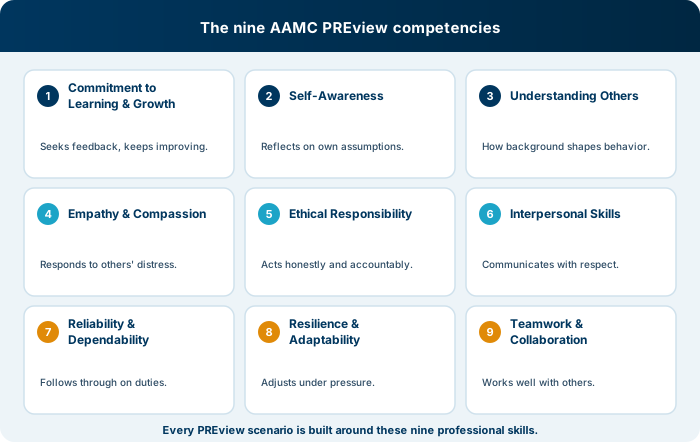
Here is what each competency means, how it tends to show up in a PREview scenario, and the rating mistake that quietly costs people points.
Where the nine come from
PREview is a situational judgment test. It gives you a scenario and several possible responses, then asks you to rate how effective each response would be. The strongest rating reflects how well a response protects the professional duty on the line, and those duties map to nine competencies the AAMC expects entering medical students to show. None of them is medical knowledge. They are the human skills that make someone safe and trusted around patients and teammates.
For the full exam format, scoring, and registration, see what the AAMC PREview is.
How you grow
Commitment to Learning and Growth. Seeking feedback, owning your gaps, and actually changing. In a scenario where you receive hard feedback, the strongest response takes it seriously and acts on it. The common miss is rating a polite-but-defensive response too high because it sounds mature.
Resilience and Adaptability. Staying functional under stress and adjusting when the situation shifts. When a plan falls apart mid-shift, the strong response adapts while keeping the duty intact. Watch for overrating rigid “stick to the original plan” answers.
How you treat people
Empathy and Compassion. Recognizing another person’s distress and responding to it, not just to the task. A technically correct but cold response is rarely the strongest one, even when it solves the problem.
Self-Awareness. Reflecting on your own assumptions and reactions, and noticing how they color the way you treat the person in front of you. The common miss is trusting a confident first impression that is really an unexamined assumption.
Understanding Others. Recognizing that people’s experiences and backgrounds shape how they behave, and taking that into account before you judge. Self-awareness is about your own lens; understanding others is about their context.
Interpersonal Skills. Communicating clearly and respectfully, listening, and defusing tension. The classic miss here is overrating a decisive action that skips the conversation it needed to have.
How you carry responsibility
Ethical Responsibility to Self and Others. Honesty, integrity, and doing the right thing when it costs you something, including reporting what genuinely needs reporting. When you witness something dishonest, the strong response addresses it appropriately rather than avoiding it to keep the peace.
Reliability and Dependability. Following through and being accountable for what you committed to. Be careful not to reward “someone else will handle it” responses that quietly drop the ball.
Teamwork and Collaboration. Working well with others, sharing credit, and handling conflict without making it worse. A response that solves the problem solo while bruising the team is usually not the best one available.
How to use this when you review
When you miss a PREview question, do not just note the letter. Name the competency the scenario was testing and the duty you failed to protect. Over a few sessions a pattern shows up: maybe you consistently underrate accountability, or overrate fast action that skips communication. That pattern, not the raw score, is what your prep should target.
The competencies also explain why the rating scale is the whole game. Most responses are reasonable. The strongest one protects the competency on the line most completely without creating a new problem. Calibrating to that standard is exactly what we drill in PREview tutoring and on the practice platform, and for how the competencies turn into a 1 to 9 score, see the PREview score guide.
Learn the nine, review by competency instead of by letter, and the exam stops feeling random. It starts looking like the same handful of professional judgments, asked over and over.
Want to go deeper? Our free PREview study guide covers all nine competencies with everyday examples and fully worked, rated answer sets, plus the rating method behind them.
Turn PREview articles into calibrated practice.
Use tutoring and timed drills to find the judgment patterns behind missed scenarios.