
PREview Basics
AAMC PREview vs. Casper: What Is the Difference?
A practical comparison of AAMC PREview and Casper for pre-med applicants, including how to prepare for situational judgment without confusing the two exams.
Peter Takacs, MD, Founder ·
PREview and Casper both live in the situational judgment family, but don’t assume they’re the same test. The smartest way to prep is to master the skill underneath both: professional judgment under constraints.
That shared skill means reading a scenario carefully, spotting the stakeholders, protecting the right duty, and choosing a response that’s ethical, practical, and professional.
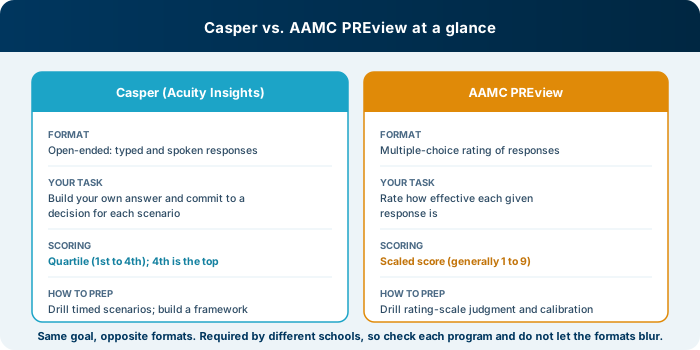
What PREview Emphasizes
PREview asks you to judge how effective each possible response is. That puts calibration front and center. You can’t just decide whether a response is acceptable. You have to know how strong it is next to the others.
The classic trap is rating every reasonable action as highly effective. PREview rewards finer distinctions than that.
What Casper Emphasizes
Casper usually shows up as a typed (or spoken) response test. You generate and explain your own approach, so structure, empathy, clarity, and speed matter a lot.
The classic trap here is writing a nice-sounding answer that never commits to a concrete decision.
How Prep Overlaps
The common ground is professional reasoning. For both exams, practice:
- Identifying the conflict.
- Naming the stakeholders.
- Separating facts from assumptions.
- Communicating with respect.
- Escalating when it’s warranted.
- Taking responsibility when it’s on you.
Those habits pay off across PREview, Casper, interviews, and even your secondary essays.
How Prep Differs
PREview prep should lean on rating-scale drills. Casper prep should lean on building and writing (or speaking) responses under time.
If you’re prepping for both, don’t let one format bleed into the other. For PREview, rank response quality. For Casper, explain one clear professional action.
Premier PREview Prep keeps that line bright, so you build real judgment instead of blurring the two formats together.
Turn PREview articles into calibrated practice.
Use tutoring and timed drills to find the judgment patterns behind missed scenarios.