
Study Strategy
How to Study for the AAMC PREview Exam
A focused PREview study plan for pre-med applicants: learn the competencies, calibrate your rating scale, practice timed scenarios, and review missed patterns.
Peter Takacs, MD, Founder ·
Studying for PREview should feel nothing like studying for the MCAT. You’re not cramming more facts. You’re making your professional judgment more consistent.
The skill that actually moves your score is calibration: seeing why a response is ineffective, effective, or very effective in the context of the scenario.
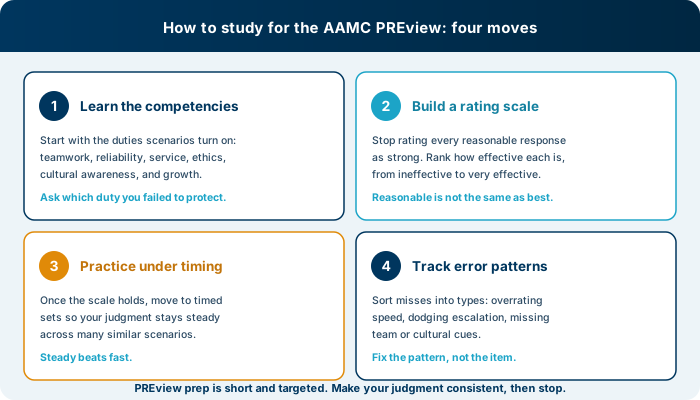
Step 1: Learn the Competencies
Start with the professional qualities the exam is measuring. PREview scenarios usually turn on duties like teamwork, reliability, empathy, ethical responsibility, and improving after feedback. Our free PREview study guide walks through all nine competencies with everyday examples, and lays out the full rating method behind them.
When you miss a question, don’t just ask “What was the answer?” Ask “Which duty did I fail to protect?”
Step 2: Build a Rating Scale
The most common mistake is rating every reasonable response as strong. On PREview, a response can be perfectly reasonable and still not be the best action available.
Build a simple ladder:
- Does the response ignore or worsen the problem?
- Does it help one person while creating a new professional problem?
- Does it handle the immediate duty?
- Does it handle the duty while protecting trust, communication, and accountability?
That ladder will teach you more than memorizing one answer explanation at a time.
Step 3: Practice Under Timing
Untimed review is great early on, but your real score depends on holding steady judgment across a lot of similar scenarios. Once the scale makes sense, move into timed sets.
The goal isn’t to rush. It’s to stop rereading every option like it has nothing to do with the others.
Step 4: Track Error Patterns
Turn your misses into categories. You might notice that you:
- Avoid escalating when escalation is the right call.
- Overrate actions that solve the problem fast but skip communication.
- Underrate responses that involve feedback, reflection, or accountability.
- Miss the cultural or team dynamics in the scenario.
Those patterns are exactly what a good PREview tutor will help you pin down.
A Practical Prep Timeline
For most students, PREview prep should be tight. Learn the competencies, run several timed sets, review your misses by pattern, and do one final calibration pass before test day.
That’s the model behind Premier PREview Prep: scenario drills, high-scoring coaches, and a dedicated practice platform at preview.premierexamprep.com.
Turn PREview articles into calibrated practice.
Use tutoring and timed drills to find the judgment patterns behind missed scenarios.