
Study Strategy
How to Study for the LSAT
A phase-by-phase LSAT study plan that moves from reasoning fundamentals to timed practice tests, plus the blind-review habit that turns practice into points.
The LSAT rewards preparation more predictably than almost any other admissions test, because it does not test how much you know. It tests how well you reason. There is no biology to memorize, no formulas to drill. The same logical structures and the same trap answers appear over and over, and once you learn to see them, your score climbs.
That is the good news. The catch is that reasoning skill is built slowly, through deliberate practice and honest review, not through cramming. So the plan below is built around two ideas: move through phases in the right order, and review every question as if your score depends on it, because it does.
How long you actually need
Most people who reach their target spend three to five months in serious preparation, somewhere between 150 and 300 total hours. The range is wide because it depends on two things: where you start and where you want to end up.
The honest way to set your timeline is to take a diagnostic test first. Sit a full official practice test under timed conditions before you study anything. The gap between that diagnostic and your target tells you how much runway you need. A jump from 155 to 162 is a few months of focused work. A jump from 148 to 168 is a longer, more serious commitment.
Whatever the gap, do not compress the work into a few frantic weeks. The skills do not consolidate that fast. For a point-by-point estimate of the hours and months a given jump takes, see how long to study for the LSAT.
The three phases
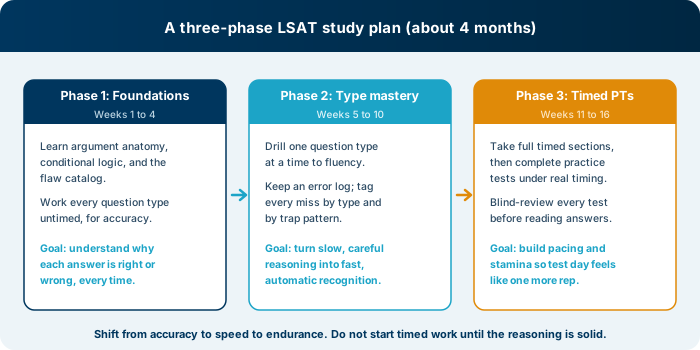
Order matters more than people expect. Working timed practice tests before you understand the question types just teaches you to make the same mistakes faster. Build the foundation first.
Phase 1: Foundations (roughly weeks 1 to 4). Learn the machinery of arguments before you touch a single timed section. That means argument anatomy (premise, conclusion, assumption), conditional logic, and the common reasoning flaws the test reuses. Work every question type untimed, prioritizing understanding over speed. Your only goal in this phase is to be able to explain, for every question, exactly why the right answer is right and why each wrong answer is wrong.
Phase 2: Type mastery (roughly weeks 5 to 10). Now drill one question type at a time until it feels automatic. Spend a few days on Weaken questions, then Strengthen, then Inference, and so on. Keep an error log and tag every miss by question type and by trap pattern. The log is where the real diagnosis happens. After a few weeks you will see that most of your points are leaking from two or three specific places, and that is where your attention goes.
Phase 3: Timed practice tests (roughly weeks 11 to 16). Only now do you bring in the clock. Start with single timed sections, then build to full practice tests under realistic conditions. This phase trains the two things untimed work cannot: pacing and stamina. The reasoning is already there; now you are learning to apply it at speed across a full test without fading in the final section.
These week ranges are a template, not a law. Stretch or compress them to fit your timeline, but keep the sequence: accuracy, then speed, then endurance.
The habit that separates plateaus from progress
Here is the single highest-leverage habit in LSAT prep, and most self-studiers skip it: blind review.
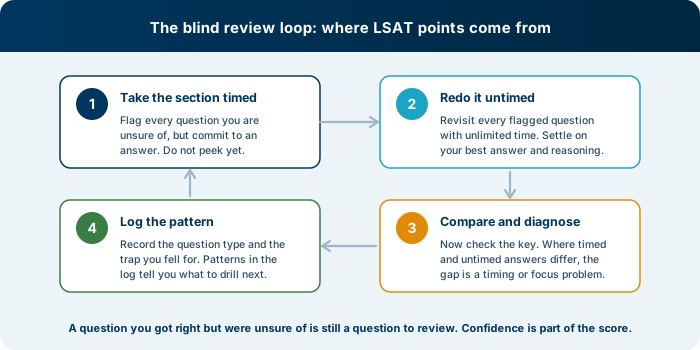
When you finish a timed section, do not check the answers yet. Instead, go back through every question you flagged as uncertain and redo it with unlimited time. Settle on your best answer and write down why. Only then check the key.
This one extra step is diagnostic gold, because it splits your misses into two completely different categories:
- You got it wrong timed, but right on blind review. This is a timing or focus problem. You can reason it out; you just could not do it fast enough under pressure. The fix is pacing practice, not content review.
- You got it wrong both times. This is a genuine understanding gap. You do not yet see what the question is testing. The fix is going back to the fundamentals for that question type.
If you skip blind review and just read the explanations, every miss looks the same and you cannot tell which fix you need. That is exactly how people grind through dozens of practice tests without improving. They are practicing, but they are not diagnosing.
One more rule: a question you got right but were unsure about is still a question to review. On the real test that uncertainty costs you time and sometimes the point. Confidence is part of the score.
Use official material, and use it carefully
Prep with real, previously administered questions whenever possible. Third-party questions can be useful for drilling a concept, but the official questions are written to a standard that imitations rarely match, especially in how the wrong answers are constructed. Save a few recent full tests, untouched, for the end of your prep so your final practice scores are a clean signal.
Be deliberate about how you spend official tests. Burning through them quickly with shallow review wastes your most valuable resource. One practice test with three hours of blind review and error-logging teaches you more than three tests you barely look at again.
When to get help
Plenty of people self-study to their target with a good plan and the discipline to review honestly. Outside help earns its keep mainly in one situation: you have plateaued and you cannot see your own pattern. When you have been stuck at the same score for weeks, it is usually because there is a blind spot in your reasoning that is invisible from the inside. A second set of eyes on your error log finds it fast.
That is the kind of support our LSAT instructors are being set up to provide. For now, the complete method is already free to read in The LSAT Reasoning Method, and once you know your target you can sanity-check your plan against what counts as a good LSAT score.
Build the foundation, drill to fluency, then practice under the clock, and review everything in between like it matters. Do that consistently and the score follows. The full drill bank and practice tests are free during early access; join the early-access list and we’ll set you up.
Frequently asked questions
How long should I study for the LSAT?
Most people need three to five months of consistent study, roughly 150 to 300 total hours. The exact number depends on your diagnostic score and your target. Cramming rarely works because the LSAT tests reasoning skills that take time to build.
How many hours a week should I study for the LSAT?
Aim for 10 to 20 focused hours per week. Quality matters more than raw volume. Three deliberate hours with careful review beat six rushed hours of passive practice.
What is blind review on the LSAT?
Blind review means redoing every question you were unsure of with unlimited time before you check the answer key. It separates timing problems from understanding problems, which need completely different fixes.
How many practice tests should I take?
Plan for roughly 10 to 20 full practice tests across your prep, concentrated in the final phase. The point is not the number of tests but the depth of your review of each one.
Can I study for the LSAT on my own?
Yes. Many people self-study successfully with a structured plan, official practice material, and disciplined review. Instruction helps most when you have plateaued and cannot see your own error patterns.
Prepping for the LSAT?
Start with the LSAT prep options available today, or join the update list for new releases.