
Study Strategy
How Long to Study for the LSAT
Most people need 3 to 6 months and roughly 250 to 300 hours to prepare for the LSAT. Here is how to estimate your timeline from your diagnostic score and target, with a study-hours table.
“How long should I study for the LSAT?” has a real answer, but it is not a single number. It depends almost entirely on one thing: the gap between where you score today and where you need to be. A few points is a couple of months. Twenty points is a serious, multi-month project. The good news is that this gap is measurable, so you can estimate your timeline honestly instead of guessing. Here is how.
The short answer
Most people who reach their target spend three to six months in serious preparation, which usually adds up to roughly 250 to 300 total hours. That is the typical middle of the range, and it is a reasonable default to plan around if you have not taken a diagnostic yet.
But “typical” hides a lot. The same 300 hours that takes one person from 155 to 165 might take another from 150 to 162, and someone aiming for a 20-point jump from a low starting score will need more. So before you commit to a timeline, size your own gap.
Step one: take a diagnostic
You cannot estimate your study time without knowing your starting point. Sit a full, official, previously administered practice test under realistic timed conditions before you study anything. That diagnostic score is the single most useful number for planning, because the distance between it and your target tells you how much runway you need.
Set your target from your school list, not from a round number. We cover how to do that in what counts as a good LSAT score: in short, aim for at or above the median LSAT of the schools you actually want to attend. Once you have a diagnostic and a target, the table below turns that gap into a rough study plan.
Study hours and months by score jump
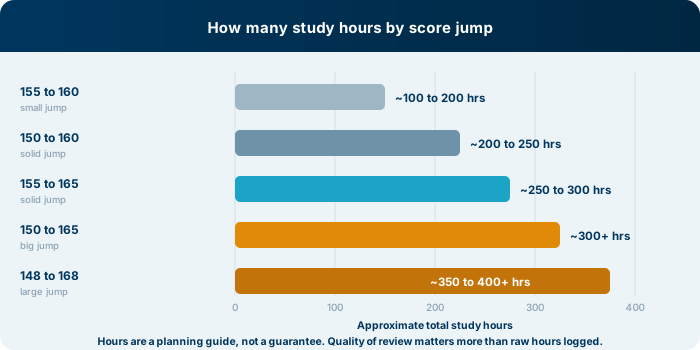
These ranges assume consistent study with honest, disciplined review. They are planning estimates, not promises. Where you land inside each range depends mostly on how well you review, not how many questions you grind.
| Starting diagnostic | Target score | Point jump | Typical hours | Typical timeline |
|---|---|---|---|---|
| ~155 | 160 | +5 | ~100 to 200 | 2 to 3 months |
| ~150 | 160 | +10 | ~200 to 250 | 3 to 4 months |
| ~155 | 165 | +10 | ~250 to 300 | 3 to 5 months |
| ~150 | 165 | +15 | ~300+ | 4 to 6 months |
| ~148 | 168 | +20 | ~350 to 400+ | 5 to 7 months |
Two patterns are worth seeing in this table.
First, points get more expensive as you climb. Moving from 150 to 160 is a different project than moving from 165 to 170, even though both are listed as smaller jumps elsewhere. The scale is compressed at the top, so each additional point near the high end represents a much thinner slice of test-takers and takes more focused work to earn.
Second, the timeline is not just hours divided by a week. You could in theory log 250 hours in six weeks, but the skills do not consolidate that fast. Reasoning ability is built through spaced, repeated practice with review in between, which is why the month ranges matter as much as the hour totals.
Hours per week: the sustainable range
Most people do best at 10 to 20 focused hours per week. That is enough to make steady progress without burning out or letting earlier material fade before you get to test day.
A few honest caveats on what counts:
- Focused hours, not seat time. Three deliberate hours of timed practice plus careful blind review beat six hours of passive question-grinding with the TV on.
- Review is study time too. Reviewing a practice test thoroughly can take longer than taking it. That review is where your score actually moves, so budget for it; it is not overhead on top of “real” studying.
- Consistency beats intensity. Fifteen hours every week for four months will take you further than alternating crash weeks and dead weeks that total the same amount.
If you can only manage eight or ten hours a week, that is fine. It just means your calendar stretches further, which is exactly why you back-plan from your test date rather than hoping it all fits.
Can you cram the LSAT in a month?
Usually not, and here is the honest reason. The LSAT does not test how much you know; it tests how well you reason. There is no body of content to memorize in a weekend. The gains come from internalizing argument structures and recognizing trap patterns on sight, and that recognition is built through repetition over time. One intense month tends to produce small gains and a lot of fatigue.
The one exception: if your diagnostic is already at or very near your target, a few weeks of timed practice and review to sharpen pacing can be enough. But if you have a real gap to close, the better move is almost always to pick a later test date rather than compress the work. A rushed score you have to retake costs you more time than starting on a realistic timeline would have. Use the 2026-2027 LSAT calendar to find an administration that actually fits your runway.
Turn the estimate into a plan
Hours and months tell you the size of the job. They do not tell you what to do inside that time, and pouring hours into the wrong activities is the most common way people stall. The structure that makes those hours count is a phased plan: build the reasoning fundamentals first, drill question types to fluency, then move to full timed practice tests, reviewing everything along the way. That sequence, and the blind-review habit that powers it, is laid out in how to study for the LSAT.
Because the current test is two-thirds Logical Reasoning, that is also where most of your hours should land. If you are budgeting 250 to 300 hours, the largest single block belongs to improving your Logical Reasoning, which is both the heaviest-weighted and the most learnable section.
What this means for your timeline
Put it together and the planning sequence is simple:
- Take a diagnostic to find your starting score.
- Set your target from your school list.
- Use the table above to estimate hours and months for your specific gap.
- Divide by a sustainable 10 to 20 hours per week to get a calendar.
- Pick a test date whose score release lands before your deadlines, with room for a retake.
Do that and you will have a timeline grounded in your actual starting point rather than a generic number, and you will avoid the two most common mistakes: underestimating a large jump and cramming a test you are not ready for.
The LSAT rewards patient, well-reviewed preparation more reliably than almost any other admissions test. Size your gap honestly, give it the months it needs, and protect the quality of your review. Join the early-access list and our LSAT instructors will help you turn your diagnostic into a realistic study timeline.
Frequently asked questions
How long does it take to study for the LSAT?
Most people need about three to six months of consistent study, which usually works out to roughly 250 to 300 total hours. The exact number depends on the gap between your diagnostic score and your target. A small jump may take 150 to 200 hours, while a large jump can take 350 hours or more.
How many hours should I study for the LSAT?
Plan for roughly 250 to 300 hours as a typical target, spread over several months. Aim for about 10 to 20 focused hours per week. The quality of your review matters more than the raw hours, so deliberate practice with honest review beats grinding through extra questions.
Can you study for the LSAT in one month?
One month is rarely enough unless you are already scoring at or very near your target on a diagnostic. The LSAT tests reasoning skills that build slowly through practice and review, so cramming tends to produce small gains. If your timeline is tight, consider a later test date rather than compressing the work.
How many hours a week should I study for the LSAT?
About 10 to 20 focused hours per week is a sustainable, effective range. Three deliberate hours with careful blind review beat six rushed hours of passive practice. Consistency over months matters more than occasional long cramming sessions.
How long does it take to improve your LSAT score by 10 points?
A 10-point jump, for example from 150 to 160, typically takes around 200 to 250 hours over three to five months of consistent, well-reviewed practice. The exact time depends on your starting point and how disciplined your review is, since higher starting scores get harder to move.
Is 3 months enough to study for the LSAT?
Three months is enough for many people, especially for a moderate score increase of around 5 to 10 points, if you study consistently at 15 to 20 hours per week. Larger jumps or lower starting points generally need four to six months. Take a diagnostic first to size your specific gap.
Prepping for the LSAT?
Start with the LSAT prep options available today, or join the update list for new releases.