
Test Logistics
How Much Does the Casper Test Cost?
The Casper test costs about $85 for US applicants, including distribution to roughly seven programs, with about $18 per additional program and fee assistance that can bring it to $0. Here is the full breakdown.
Before you schedule Casper, it helps to know exactly what it will cost, including the parts that are easy to miss, like the fee to send your results to extra programs. The short version: for US applicants the base fee is about $85, which covers the test plus distribution to a set number of programs, and additional programs cost roughly $18 each. Fee assistance can bring the whole thing to $0. Here is the full breakdown, plus the one thing to verify before you pay.
One caveat that matters more than a clean number: fees change between cycles and can vary by region and profession. The figures here are representative for US applicants and accurate to the best current information, but the only authoritative source is the official Casper site, where you register. Use this article to plan and budget, then confirm the current pricing before you commit.
The cost at a glance
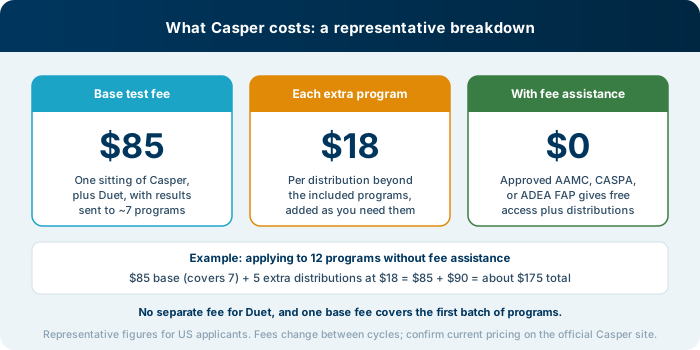
Here is what the typical US fee structure looks like, line by line.
| Item | Representative cost | What it covers |
|---|---|---|
| Base test fee | About $85 | One Casper sitting, plus the Duet assessment where required, with results sent to a set number of programs (commonly around 7) |
| Each additional program | About $18 | One extra distribution beyond the included programs |
| Duet assessment | Included | Generally bundled into the base fee for programs that require it, not charged separately |
| With approved fee assistance | $0 | Free access including program distributions, for applicants approved through a recognized fee assistance program |
A couple of notes on reading this table. The number of programs included in the base fee is commonly cited as around seven, but this is exactly the kind of detail that can shift between cycles, so treat it as approximate and confirm it when you register. And “about” is doing real work in every row: these are representative figures, not a price guarantee.
What the base fee actually includes
The base fee is not only for sitting the test. It typically bundles three things: the Casper assessment itself, the Duet value-alignment assessment for programs that require it, and the distribution of your results to a set number of programs. That bundling is worth understanding, because it means you are not charged separately for Duet, and your first batch of program distributions is already covered.
Because the fee includes a fixed number of distributions, the cost question really turns on how many programs you are applying to. If your list fits within the included number, the base fee is close to your total. If you apply more broadly, the per-program distribution fee is where your cost grows.
The cost that catches people: extra distributions
The fee most applicants underestimate is the per-program distribution charge. Once you exceed the programs included in the base fee, each additional school costs roughly $18 to send your results to. For an applicant applying to a handful of programs, that is negligible. For someone applying broadly, it adds up.
A simple worked example makes it concrete. Suppose you apply to 12 Casper-requiring programs and do not qualify for fee assistance. The base fee covers about 7 of them, leaving 5 additional distributions at about $18 each, which is $90, for a total of roughly $175. Scale that up for a larger list and the distributions can rival the base fee itself. This is one more reason to confirm which schools actually require Casper before you pay, so you are not distributing to programs that do not need it.
Fee assistance can make Casper free
This is the part many applicants do not realize: if you qualify for fee assistance, Casper can cost you nothing. Acuity Insights honors several recognized fee assistance programs, and approved applicants generally receive Casper at no cost, including all program distributions.
The programs commonly recognized include:
- AAMC Fee Assistance Program, for medical school applicants.
- CASPA fee assistance, for physician assistant applicants.
- ADEA fee assistance, for dental applicants.
If you have approved status through one of these, it is well worth using, since it can cover both the base fee and the distributions that would otherwise add up. The process typically involves submitting proof of your fee assistance approval to Acuity Insights, and the exact steps and the list of honored programs can change, so confirm the current details and eligibility with Acuity Insights directly. If affording Casper is a concern, check your fee assistance eligibility early, because these programs have their own application timelines.
What you are paying for: the test itself
It helps to remember what the fee actually buys, because it frames whether the cost is worth it. Casper is a situational judgment test of 11 scenarios, split between a video-response section and a typed-response section, taking roughly 65 to 85 minutes including setup and a break. We break the structure down in what the Casper test is. The exact scenario count and timing can change between cycles, so confirm those alongside the fee.
For most applicants, Casper is a required part of an application to programs they care about, so the more useful frame than “is it worth it” is “how do I make the most of the money I am spending.” That means preparing well enough that your one sitting reflects your real judgment, since a strong quartile is worth far more than the fee.
Budgeting for Casper, sensibly
Putting it together, here is how to think about your Casper budget:
- Confirm the current base fee and the number of included distributions on the official Casper site.
- Count how many of your programs actually require Casper, using the official program list, and budget about $18 for each one beyond the included number.
- Check whether you qualify for fee assistance through AAMC, CASPA, ADEA, or another recognized program, which could make the whole thing free.
- Schedule early, both to secure a test date and to leave room if you need to sort out fee assistance.
The fee is real but modest relative to the rest of an application, and fee assistance removes it entirely for those who qualify. The bigger investment is your preparation. Once the logistics are settled, put your energy where it changes outcomes: build a framework, rehearse on practice questions, and follow a realistic prep plan.
Casper costs about $85 for most US applicants, plus roughly $18 per extra program, and potentially nothing with fee assistance. Confirm the current figures on the official site, budget for your distributions, and then focus on the part that actually moves your result. Explore Casper prep for timed exams, human scoring, and written feedback.
Frequently asked questions
How much does the Casper test cost?
For US applicants, Casper costs about $85, which includes distributing your results to roughly seven programs and access to the Duet assessment where required. Each additional program beyond the included number is about $18. Fees change between cycles, so confirm the current price on the official Casper site before you register.
Does the Casper fee include sending scores to schools?
Yes. The base fee includes distribution of your results to a set number of programs, commonly around seven. Sending results to additional programs costs roughly $18 each. The number of included distributions can change, so verify it when you register.
Is there fee assistance for the Casper test?
Yes. Acuity Insights honors several fee assistance programs, including the AAMC Fee Assistance Program for medical applicants, the CASPA fee assistance program for PA applicants, and the ADEA fee assistance program for dental applicants. Approved applicants generally get Casper at no cost, including program distributions. Confirm eligibility and the current process with Acuity Insights.
How much does it cost to send Casper to more schools?
Beyond the programs included in the base fee, each additional distribution costs roughly $18. If you apply broadly, those add up, so factor the per-program fee into your budget alongside the base test fee.
Is Duet included in the Casper fee?
Yes. For programs that require it, the Duet assessment is generally included in the Casper fee rather than charged separately. Confirm the specifics for your cycle and programs on the official Casper site.
Prepping for the Casper?
Start with the Casper prep options available today, or join the update list for new releases.