
Eukaryotic Gene Regulation
Eukaryotic gene regulation happens at multiple levels. A gene can be silenced via chromatin state, blocked from transcription by repressors, subjected to alternative splicing, regulated at translation, or tagged for rapid degradation after being made. Cells use all of these simultaneously.
The Five Levels
- Chromatin (epigenetic): DNA methylation, histone modifications, chromatin remodeling. Determines whether a gene can be accessed at all.
- Transcription: transcription factors, enhancers, silencers.
- Post-transcriptional: alternative splicing, mRNA stability, nuclear export.
- Translation: miRNAs, translation factors, eIF2 phosphorylation.
- Post-translational: phosphorylation, ubiquitination, etc.
Chromatin and Epigenetics
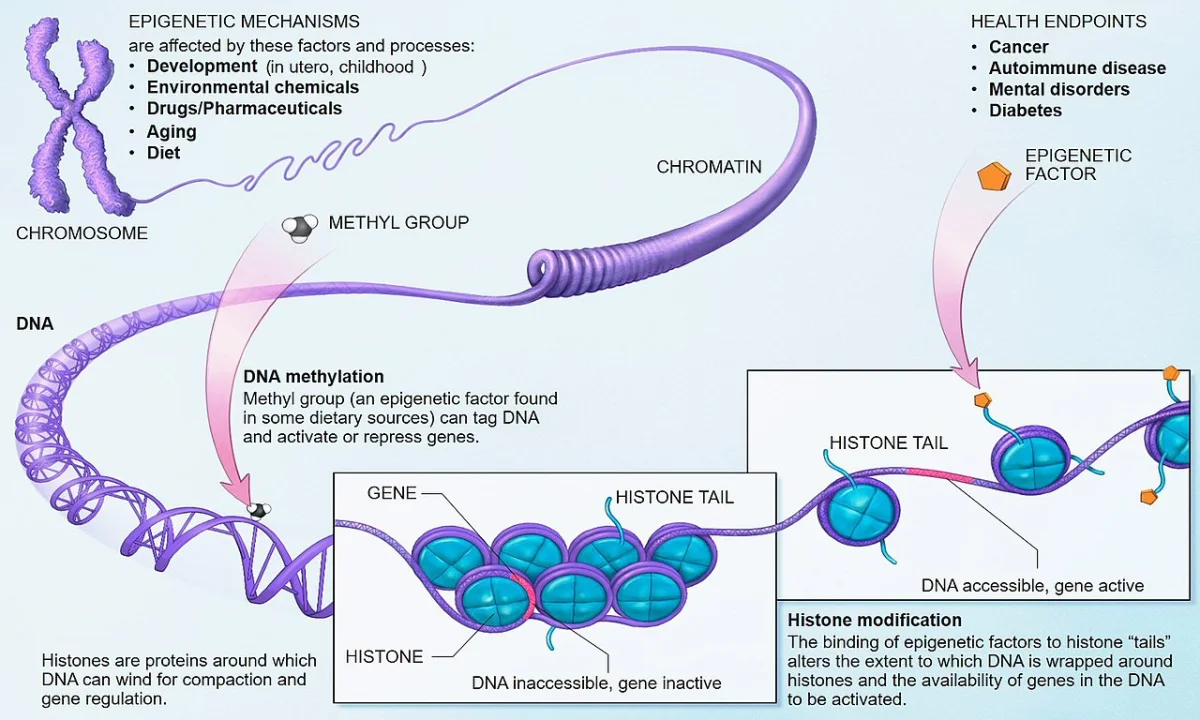
- DNA methylation: methyl groups added to cytosine in CpG dinucleotides. Heavy methylation at a gene’s promoter typically silences the gene. CpG island hypermethylation is a common mechanism for silencing tumor suppressor genes in cancer.
- Histone modifications: acetylation (generally activates), methylation (can activate or repress depending on site), phosphorylation, and ubiquitination. Histone tails stick out and are the substrates.
- Chromatin remodeling: ATP-dependent complexes slide, eject, or restructure nucleosomes, exposing or hiding DNA.
Transcription Factors, Enhancers, and Silencers
Enhancers are DNA elements that can activate transcription from thousands of base pairs away. They loop through space to contact the promoter. Activator transcription factors bind enhancers and recruit coactivators (including chromatin remodelers and general transcription machinery).
Silencers are the opposite - they bind repressor transcription factors and reduce gene expression, sometimes through recruitment of histone deacetylases or DNA methyltransferases.
Other Regulation
- Alternative splicing: same gene, different mRNAs, different proteins (Section 7.5).
- mRNA stability: miRNAs, AU-rich elements, and deadenylation control how long an mRNA lasts in the cytoplasm.
- Translation initiation: eIF2 phosphorylation halts global translation during stress (integrated stress response).
- Protein degradation: ubiquitin-proteasome system marks specific proteins for destruction.
X-Inactivation
In female mammals, one of the two X chromosomes is silenced in each cell early in development. The silenced X forms a Barr body and is heavily methylated and histone-modified. This dosage compensation ensures females and males produce similar amounts of X-linked gene products. The choice of which X is inactivated is random and heritable within a cell lineage.