Demographics is the statistical study of populations - age, sex, race, income, geography, and similar characteristics. This section covers the major demographic dimensions.
Age
Cohorts and Generations
A cohort is a group of people who share a time-based life experience - typically birth within a specific span of years. Generational cohorts (Baby Boomers, Gen X, Millennials, Gen Z) are defined by shared cultural and economic experiences at similar ages.
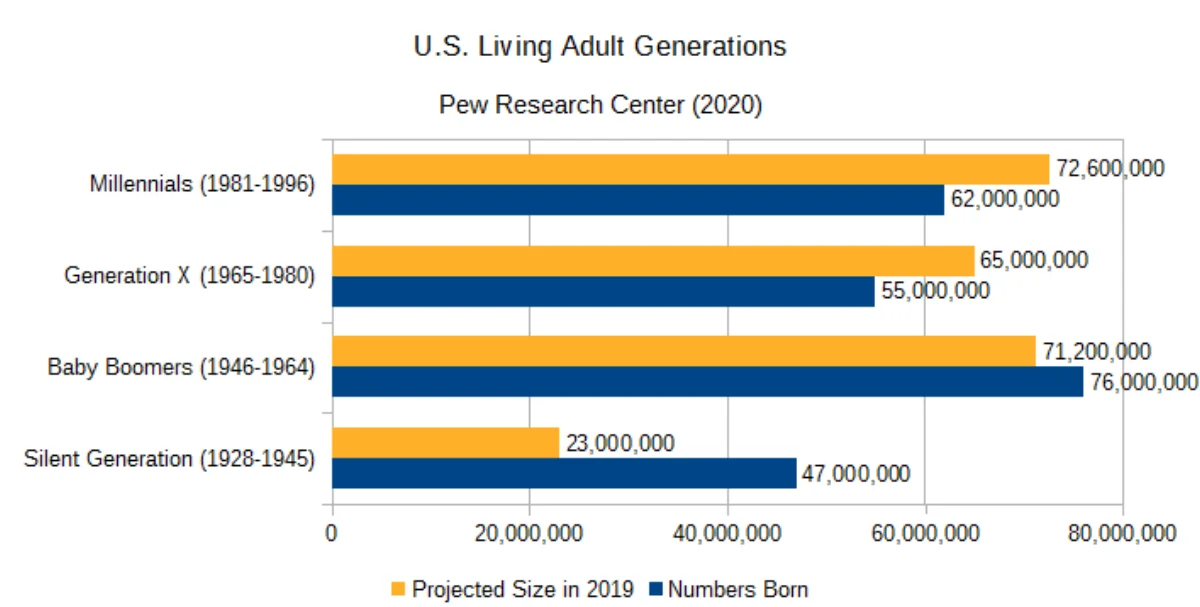
U.S. living adult generational cohorts. Birth cohorts shrink as members die; immigration can add to a cohort over time. Note that Millennials have surpassed Boomers in size despite a smaller original birth count. Credit: Nerd271 via Wikimedia Commons (CC BY-SA 4.0).
Age Structure and Pyramid
A population pyramid shows the distribution of ages and sexes in a population. Shapes reveal:
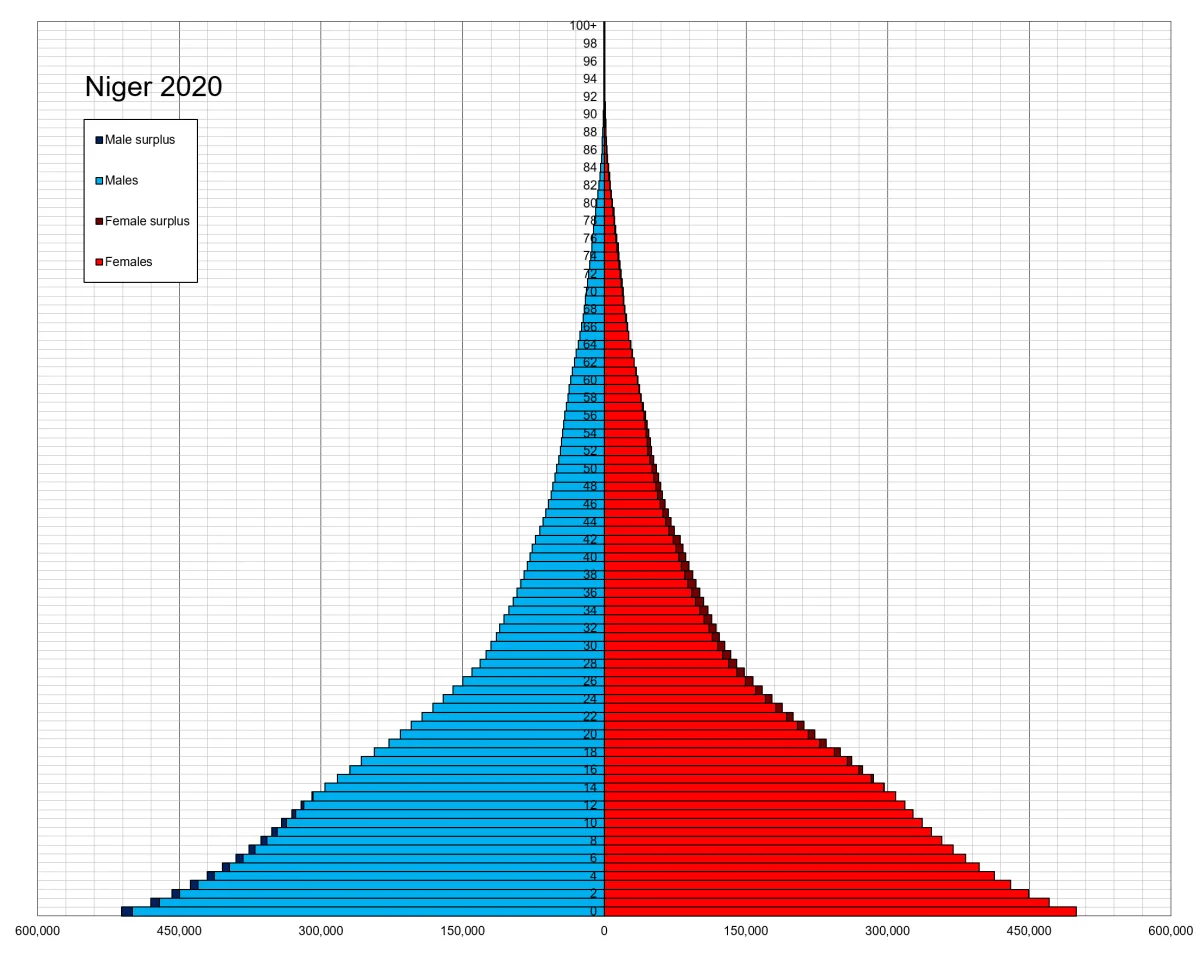
Expanding (pyramid-shaped). Many young people, few elderly. Typical of high-birth-rate developing countries.
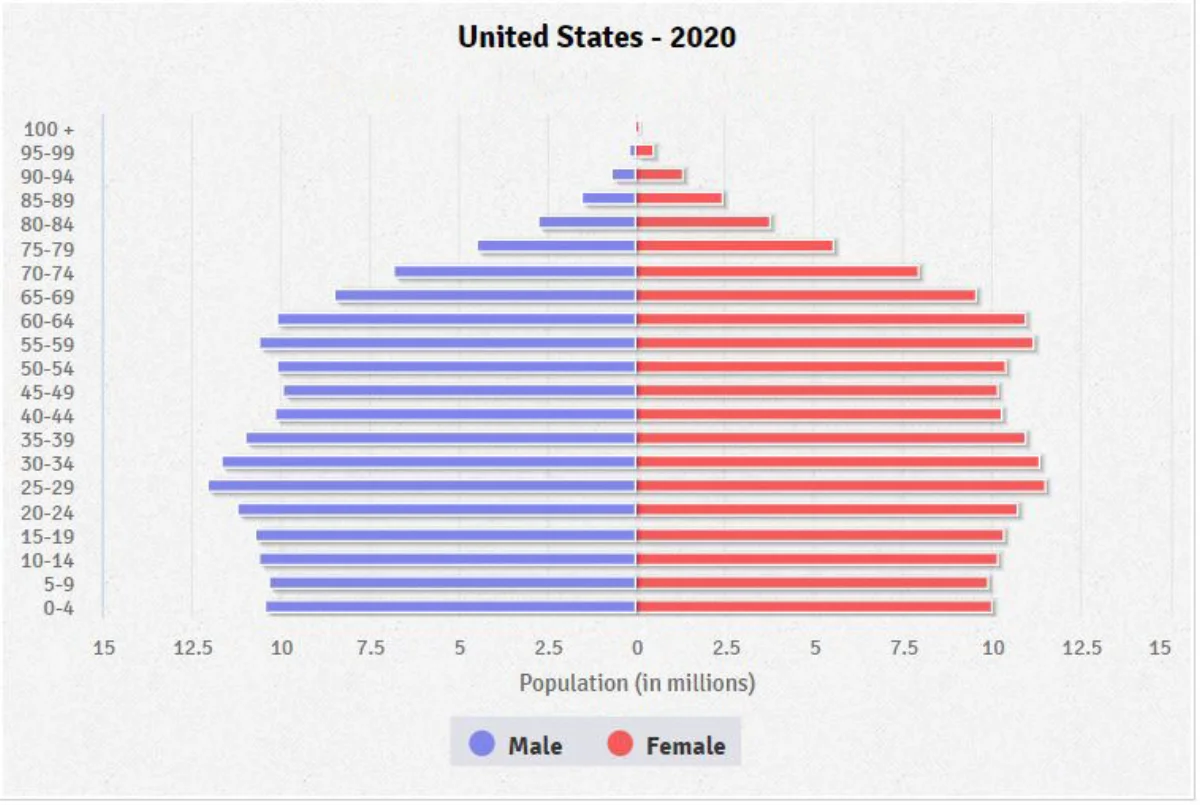
Stationary (column-shaped). Even distribution. Typical of stable industrialized countries.
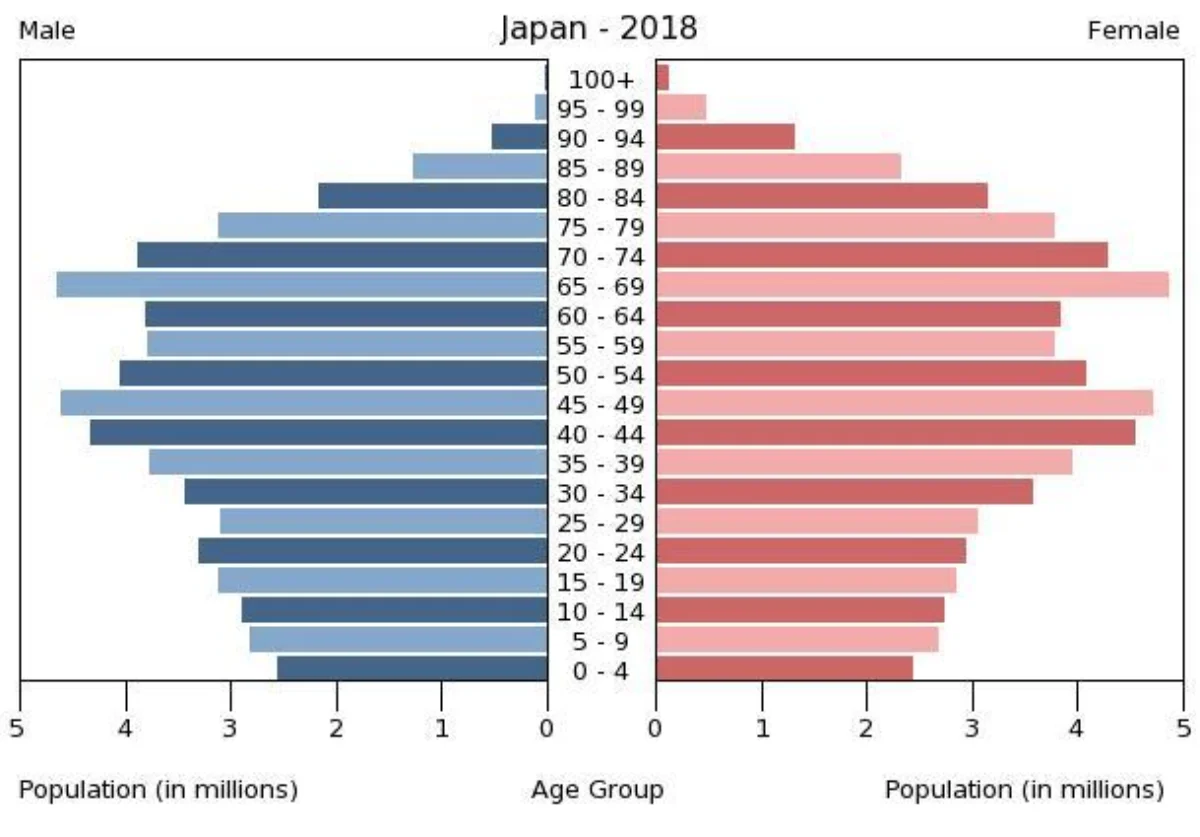
Contracting (inverted-pyramid). Few young people, many elderly. Typical of low-birth-rate, aging societies like Japan, Italy.
Niger 2020: a textbook expanding (pyramid-shaped) age structure. High fertility produces a huge base of children; few people survive into old age. Typical of high-birth-rate, low-life-expectancy countries early in the demographic transition. Credit: Sdgedfegw via Wikimedia Commons (CC BY-SA 4.0).United States 2020: a near-stationary (column-shaped) structure. Bands are roughly similar from infancy to early sixties, with a Boomer bulge near the top and a Millennial bulge in the middle. Characteristic of stable industrialized countries. Credit: CIA World Factbook 2020 (Public Domain) via Wikimedia Commons.Japan 2018: a contracting (inverted-pyramid) structure. The youngest cohorts are smaller than the working-age and older cohorts above them. This shape signals an aging population and an above-1 dependency ratio in the future. Credit: CIA World Factbook 2019 (Public Domain) via Wikimedia Commons.
Dependency Ratio
Dependency ratio = (population < 15 + population > 64) / (population 15-64). The ratio of dependents to working-age people. High dependency ratios strain social services; aging populations are a growing concern in most developed countries.
Aging Populations
Most wealthy countries are aging. Implications:
Strained pension systems.
Rising healthcare costs.
Labor shortages in care industries.
Political conflict between generations over entitlements.
Race and Ethnicity
Race. A socially constructed category, typically based on perceived physical differences. Biologically weak concept; socially powerful reality.
Ethnicity. Shared cultural heritage, including language, religion, ancestry, traditions. More overtly cultural than racial.
Race and ethnicity often overlap but aren’t identical. A person can share ethnic heritage (Italian-American culture) without being assigned the same “race” by societal categorization.
Racial categories change over time. Italian, Irish, and Jewish Americans were not always considered “white” in the United States. Latino/Hispanic categories were formalized in U.S. census only in 1980. These categorical shifts illustrate the social construction of race.
Immigration and Emigration
Immigration. Moving into a country.
Emigration. Moving out of a country.
Migration. The broader term for either.
Push and Pull Factors
Push factors - reasons to leave the home country: war, persecution, economic collapse, climate change, political instability.
Pull factors - reasons to move to a destination: economic opportunity, family reunification, political freedom, educational or cultural attractions.
Most real migration decisions involve both push and pull.
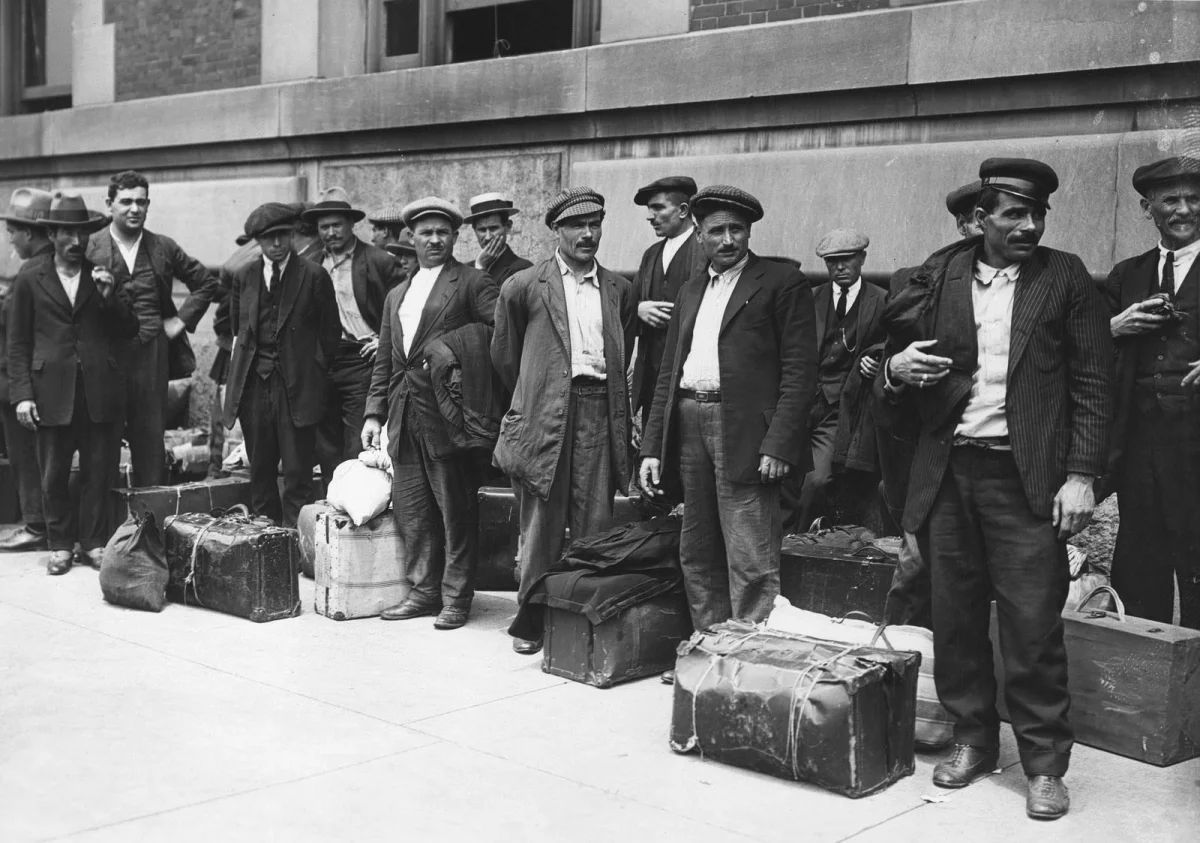
Italian immigrants at Ellis Island, early 20th century. Push factors (rural poverty, political instability) and pull factors (jobs, family already in America) drove one of the largest migration waves in modern history. Notably, Italians were not initially considered "white" in U.S. racial classification - a textbook example of race as a socially constructed, shifting category. Credit: mákvirágok via Wikimedia Commons (Public Domain).
Assimilation vs. Multiculturalism
Two models for how societies absorb newcomers:
Assimilation. Immigrants adopt the dominant culture, shed distinct identity. The classic “melting pot” model in the U.S.
Multiculturalism. Immigrants retain their cultural heritage while participating in broader society. “Salad bowl” metaphor - distinct flavors coexisting.
Most actual societies mix elements of both. Second- and third-generation immigrants often navigate layered identities.
Sex, Gender, and Sexual Orientation
The MCAT distinguishes these carefully:
Sex - typically biological categorization based on chromosomes, anatomy, and hormones (male, female, intersex).
Gender - a social construction relating to behaviors, roles, and identities associated with being a man, woman, or other gender.
Gender identity - a person’s internal sense of their gender.
Gender expression - how a person outwardly expresses their gender.
Sexual orientation - the pattern of attraction to others (heterosexual, homosexual, bisexual, asexual, etc.).
These dimensions are independent. A person’s sex, gender identity, and sexual orientation can align in any combination.
Transgender and Cisgender
Cisgender. Gender identity matches sex assigned at birth.
Transgender. Gender identity differs from sex assigned at birth.
Transgender individuals face significant health disparities related to discrimination, access to gender-affirming care, and mental health outcomes.
The transgender pride flag (Monica Helms, 1999). The blue and pink stripes flank a central white stripe representing nonbinary and intersex identity, signaling that gender identity exists independently of sex assigned at birth. The MCAT consistently distinguishes biological sex, gender identity, gender expression, and sexual orientation as separate axes. Credit: SVG by Dlloyd, design by Monica Helms, via Wikimedia Commons (Public Domain).
What is the dependency ratio?
Click to reveal answer
(Population < 15 + Population > 64) / (Population 15-64). The ratio of dependents to working-age people. High dependency ratios strain pensions, healthcare, and labor markets.
Distinguish push from pull factors in migration.
Click to reveal answer
Push factors: reasons to LEAVE the home country (war, economic collapse, persecution). Pull factors: reasons to MOVE TO a destination (jobs, freedom, family reunification, education). Most migration decisions involve both.
What is the difference between sex and gender?
Click to reveal answer
Sex is typically the biological categorization (chromosomes, anatomy). Gender is the social construction - roles, behaviors, and identities associated with being a man, woman, or other gender. Gender identity is a person's internal sense; sexual orientation is the pattern of attraction. These dimensions are independent.
Populations change: they grow, shrink, move, and age. This section covers the dynamics.
Urbanization
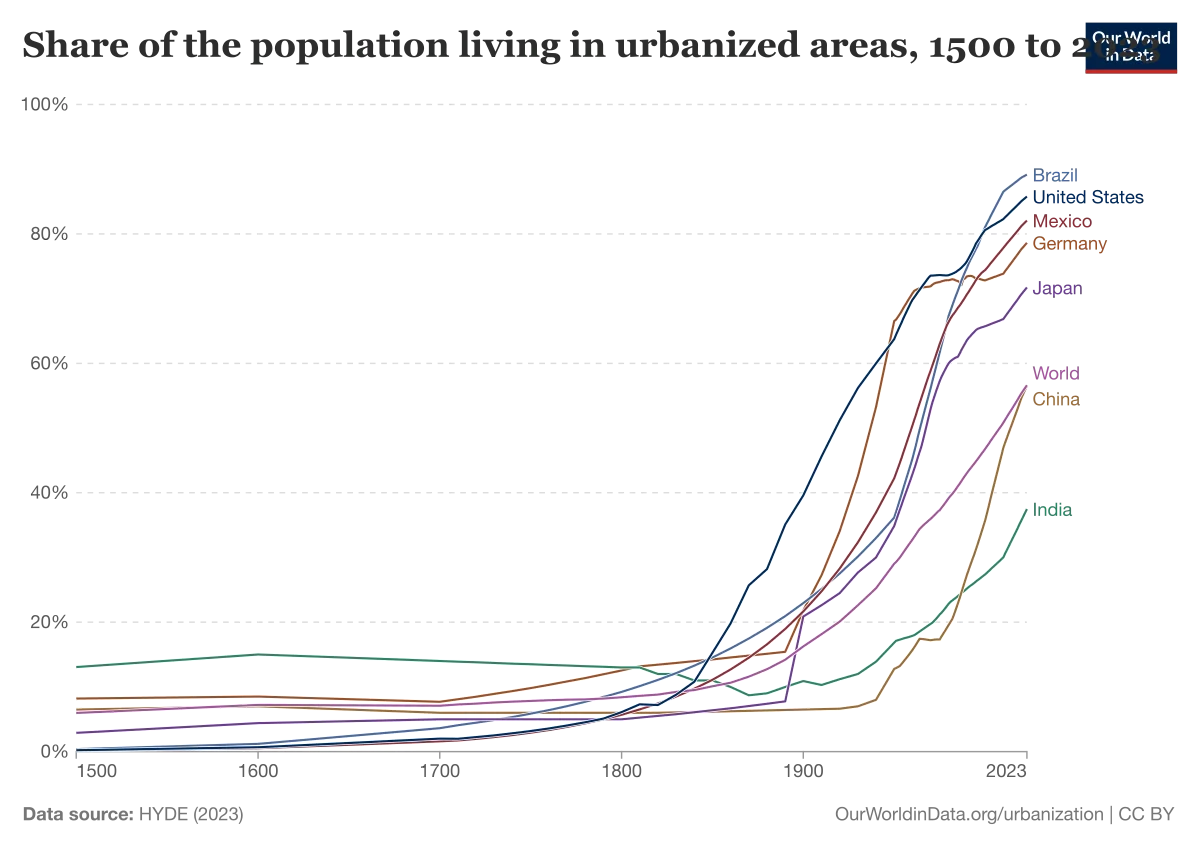
Urbanization is the process by which populations shift from rural areas to cities. Globally, the majority of humanity has lived in cities since around 2007. Urbanization accelerates with industrialization.
Urbanization across five centuries. Urban shares were tiny everywhere until industrialization triggered an exponential climb. Western countries crossed 50% urban around 1900–1950; China followed in the early 2000s; India is still climbing. The whole world crossed 50% urban around 2007. Credit: Hannah Ritchie and Max Roser, Our World in Data, via Wikimedia Commons (CC BY 4.0).
Drivers
Push. Mechanization of agriculture (fewer farm jobs), rural poverty, lack of opportunity.
Pull. Urban jobs, services, entertainment, and social connections.
Urban Sprawl
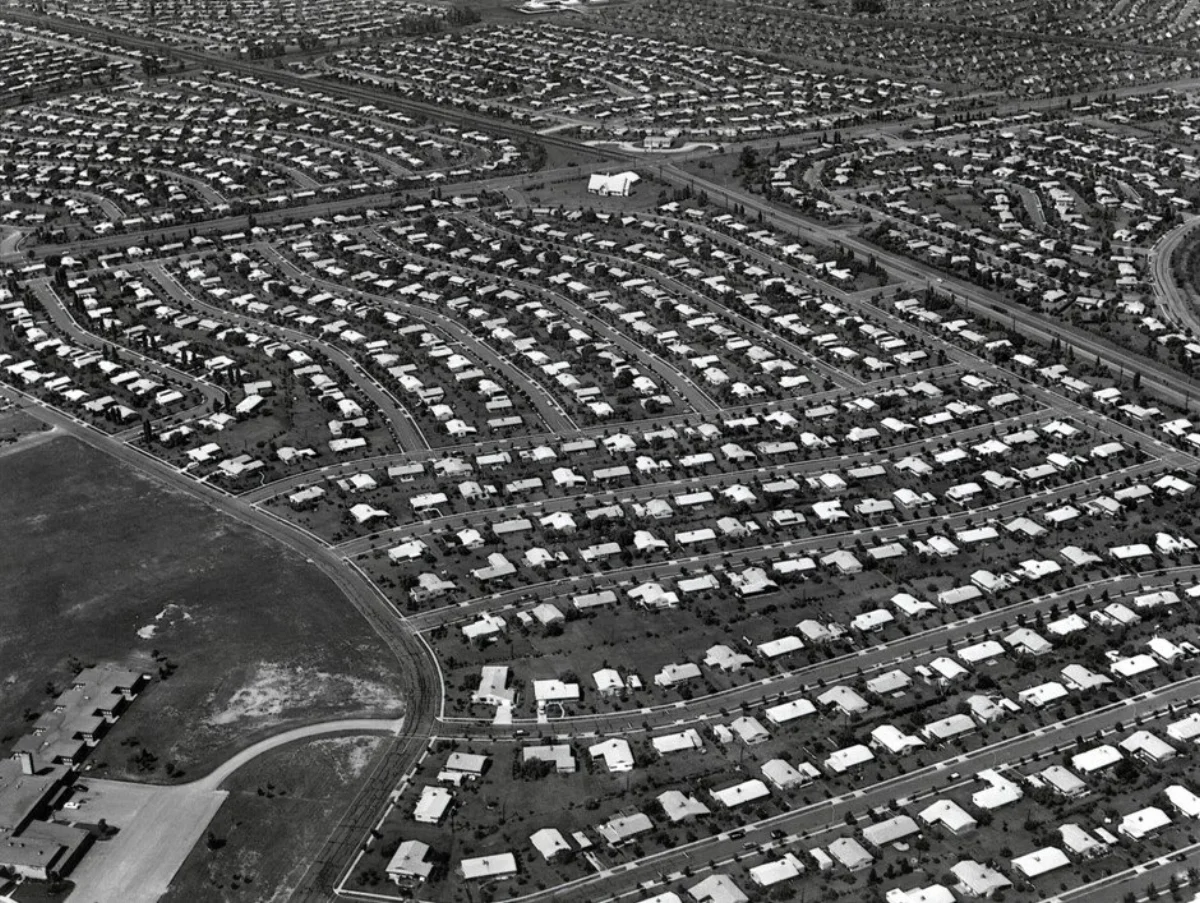
The outward spread of cities into surrounding areas, often with low-density development (suburban subdivisions, strip malls). Dependent on automobiles. Creates long commutes and environmental costs.
Phoenix, Arizona, 1972: an iconic example of urban sprawl. Low-density, car-dependent suburbs radiate outward from a small downtown core. Sprawl is associated with long commutes, high per-capita energy use, social fragmentation, and habitat loss. Credit: Cornelius M. Keyes, U.S. National Archives via Wikimedia Commons (Public Domain).Levittown, Pennsylvania - the postwar prototype for mass-produced American suburbs. Cheap mortgages and federal highway investment moved millions of (predominantly white) families out of cities, accelerating both urban sprawl and racial residential segregation. Credit: Public Domain via Wikimedia Commons.
Gentrification
The movement of wealthier residents into lower-income urban neighborhoods, often displacing existing residents through rising rents and changing character. Controversial - brings investment but can erase communities and cultures.
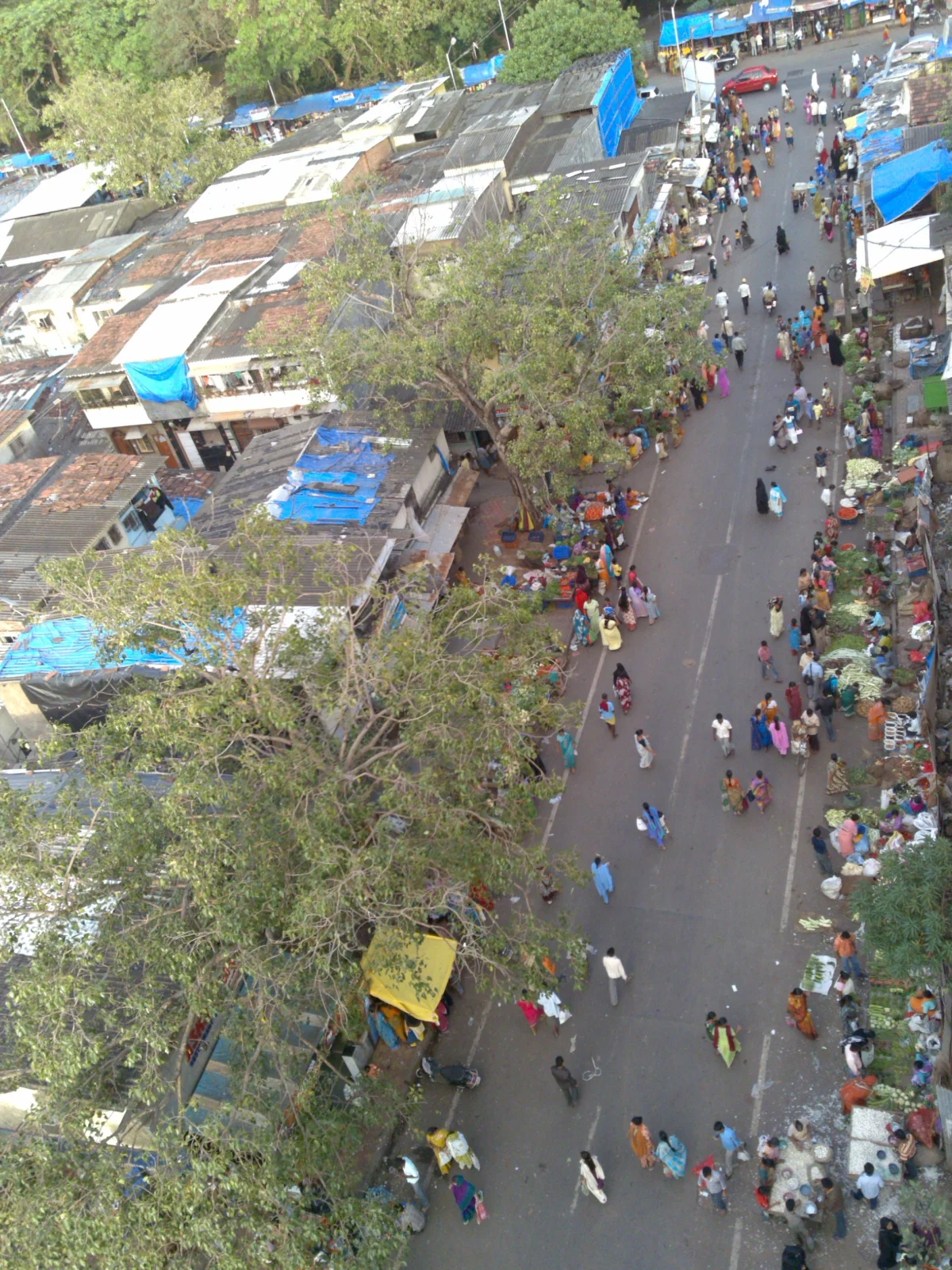
Gentrification in Old East Dallas: a brand-new modern home next door to a modest bungalow. Rising property values and taxes that follow the new construction often force longtime residents to move, reshaping neighborhood demographics and culture. Credit: Matthew T Rader via Wikimedia Commons (CC BY-SA 4.0).Dharavi, Mumbai - one of the largest informal urban settlements in the world. Rapid rural-to-urban migration in industrializing countries can outpace formal housing supply, producing dense informal settlements. Globally, roughly a billion people live in such neighborhoods. Credit: Mark Hillary via Wikimedia Commons (CC BY 2.0).
Population Dynamics
A population changes through four processes:
Births (fertility) - adding people.
Deaths (mortality) - removing people.
Immigration - adding people from elsewhere.
Emigration - removing people to elsewhere.
Rates
Crude birth rate (CBR). Live births per 1,000 population per year.
Crude death rate (CDR). Deaths per 1,000 population per year.
Natural increase. CBR − CDR (doesn’t include migration).
Total fertility rate (TFR). Average children per woman over her lifetime. Replacement-level fertility is ~2.1 (above 2 to replace both parents, plus a small buffer for child mortality).
Demographic Transition
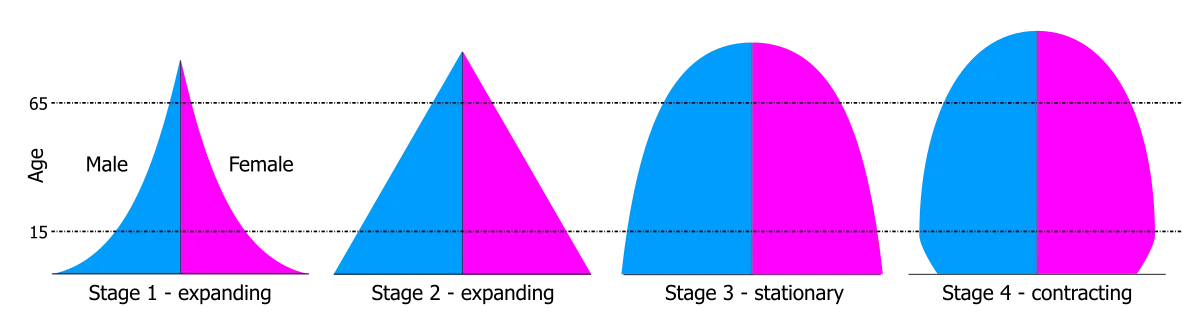
The demographic transition model describes how populations change as a country develops economically. Four classic stages:
Stage 1: Pre-Industrial
Both birth rates and death rates are high. Population grows slowly.
Stage 2: Early Industrial (Transitional)
Death rates fall first due to improvements in sanitation, medicine, nutrition. Birth rates remain high. Population grows rapidly.
Stage 3: Mature Industrial
Birth rates begin to fall as women’s education improves, urbanization increases, child mortality drops, and children become economic costs (rather than rural labor). Population growth slows.
Stage 4: Post-Industrial
Both birth and death rates are low. Population stabilizes or shrinks. Typical of modern wealthy countries.
Some theorists propose a Stage 5 in which birth rates fall below death rates, producing population decline without immigration. Japan, Italy, and South Korea are examples.
The demographic transition shown as evolving age-sex pyramids. As societies industrialize, the broad-base triangle (high birth, high death) progresses through expanding stages, then flattens into a column (Stage 3), and finally narrows at the bottom (Stage 4 - and Stage 5 if births fall below deaths). Credit: User:SuzanneKn / NikNaks93 via Wikimedia Commons (Public Domain).
Globalization
Globalization is the increasing interconnection of economies, cultures, and populations across national borders - through trade, communication, migration, and technology.
Globalization Theories
World-systems theory (Wallerstein). Divides the world into core (wealthy, industrial), periphery (poor, exporter of raw materials and labor), and semi-periphery (intermediate) countries. Core exploits periphery; semi-periphery occupies a middle position.
Modernization theory. Developing countries evolve toward the Western industrial model. Economic development drives political and cultural change.
Dependency theory. Rich countries’ wealth derives from the exploitation of poor countries; underdevelopment is produced, not a natural condition.
Transnational Corporations
Transnational (multinational) corporations operate across national borders, shifting production to lower-cost locations and sales to wealthier markets. Drivers of globalization, but also sources of labor-market stress, environmental damage, and cultural homogenization.
A McDonald's in Hong Kong with bilingual signage. Transnational corporations like McDonald's are flagship examples of globalization, exporting standardized products and visual brands across borders while adapting menus to local tastes - a phenomenon sociologists call "glocalization." Credit: Ian Muttoo via Wikimedia Commons (CC BY-SA 2.0).
Effects of Globalization
Positive. Economic growth, reduction of absolute poverty (though inequality often grows), spread of medicine and technology, cross-cultural exchange.
Negative. Outsourcing of jobs from wealthy countries, exploitation of workers in poor countries, cultural homogenization, environmental degradation, loss of local autonomy.
What is replacement-level fertility, and what is the approximate TFR that represents it?
Click to reveal answer
The total fertility rate at which a population is exactly replacing itself - approximately 2.1 children per woman. Slightly above 2 to account for child mortality. Below this rate, the population will shrink over time without immigration.
At which stage of the demographic transition does population grow FASTEST?
Click to reveal answer
Stage 2 (early industrial/transitional). Death rates have fallen (sanitation, medicine, nutrition) but birth rates remain high. The gap produces rapid population growth. Stage 3 sees slowing growth as birth rates begin to fall.
What is gentrification?
Click to reveal answer
The movement of wealthier residents into lower-income urban neighborhoods, often raising property values and displacing existing residents. Brings investment but can erase communities and cultures.
Culture is the sum of a group’s learned behaviors, beliefs, language, symbols, and material objects. Everything that is passed from one generation to the next through learning rather than genetics is culture.
Material and Symbolic Culture
Material culture. The physical objects a culture produces - tools, buildings, art, clothing, technology.
Symbolic (non-material) culture. The ideas, beliefs, values, norms, and language - the immaterial aspects of culture.
The two are linked. Material culture reflects and reinforces symbolic culture (a cathedral expresses religious beliefs; smartphones reflect values of connectivity and individualism).
Components of Symbolic Culture
Values. Abstract standards about what is good, desirable, or important. Freedom, equality, hard work, family.
Beliefs. Ideas about what is true. Religious doctrines, scientific facts, conspiracy theories.
Norms. Expectations for behavior. Covered in Chapter 9.
Symbols. Anything (word, object, gesture, image) that carries a particular meaning. Flags, religious symbols, hand gestures.
Language. The primary symbolic system of any culture. Shapes and is shaped by culture (see linguistic relativity, Chapter 4).
Religious symbols are a textbook component of symbolic (non-material) culture: arbitrary visual marks that carry deep, shared meaning within a community. The same shape that means everything to one group means nothing to another - a defining feature of symbolic culture. Credit: Sowlos via Wikimedia Commons (CC BY-SA 3.0).
Subculture and Counterculture
Subculture. A group within a society that has its own distinct norms, values, and behaviors while still sharing much of the broader culture. Medical students, bikers, goth culture, gaming communities, religious groups.
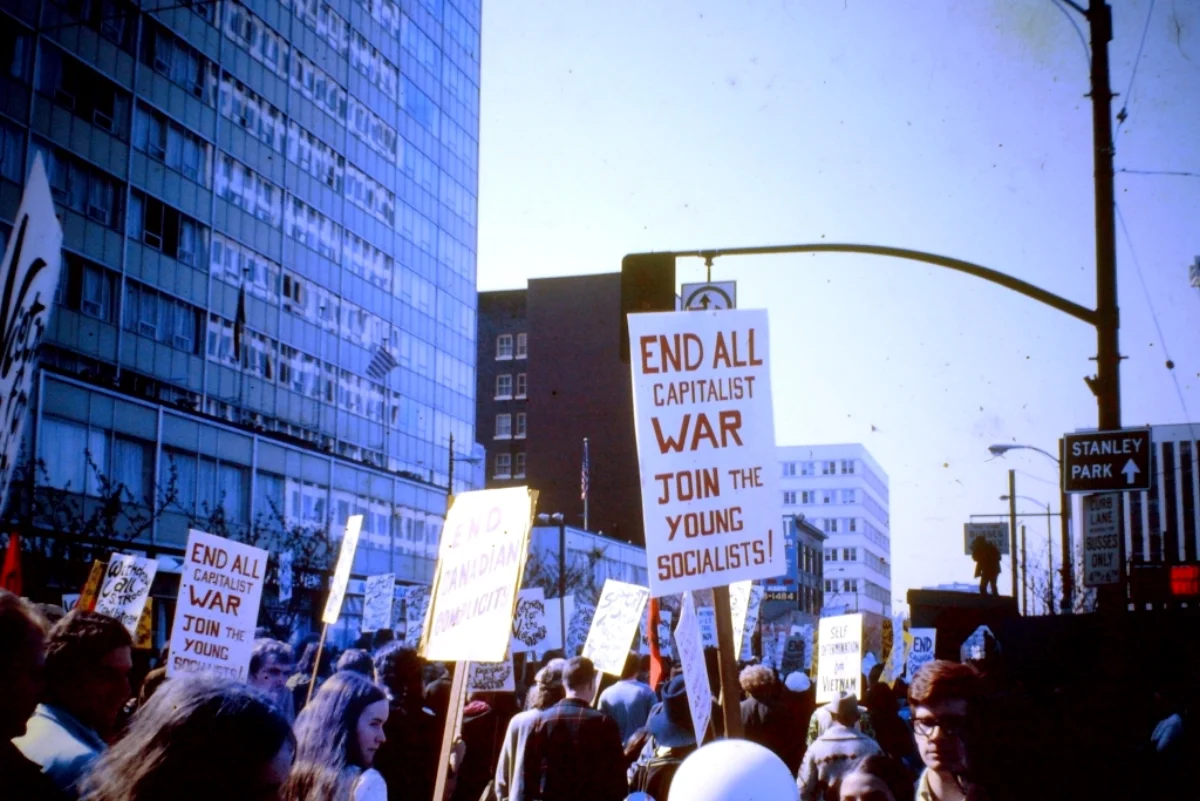
Counterculture. A subculture that actively rejects and opposes the dominant culture’s values. 1960s hippies, militant separatist groups.
Medical training essentially immerses students in a specialized subculture with its own language, rituals, and values.
An anti-Vietnam War demonstration in Vancouver, 1968 - an emblem of the late-1960s counterculture. Countercultures explicitly oppose dominant cultural values (here: war, capitalism, and the political establishment), distinguishing them from subcultures, which differ but do not actively contest. Credit: John Hill via Wikimedia Commons (CC BY-SA 4.0).
Cultural Relativism and Ethnocentrism (Revisited)
Already introduced in Chapter 9. Worth a quick reminder:
Cultural relativism - evaluating practices within their own cultural context rather than by outside standards. Good anthropological stance.
Ethnocentrism - judging others by one’s own standards, typically negatively. Human tendency; can distort cross-cultural interactions.
Cultural Lag
Cultural lag (Ogburn): material culture often changes faster than non-material culture. Technology races ahead; norms, laws, and beliefs struggle to catch up.
Examples:
Internet technology existed for 20+ years before meaningful norms about online privacy, misinformation, and digital platforms emerged.
Medical technology that enables life-extending treatments outpaces ethical and legal frameworks for end-of-life decisions.
Social media platforms create new possibilities (and harms) that laws haven’t yet addressed.
Cultural Shock
Cultural shock is the disorientation people experience when encountering a culture very different from their own. Common phases: honeymoon (excited by novelty), frustration (irritation at differences), adjustment (understanding increases), mastery/acceptance (comfortable functioning in new culture).
Medical students entering clinical rotations often experience a form of cultural shock as they move from classroom to hospital norms.
Cultural Diffusion
Diffusion is the spread of cultural elements (ideas, practices, objects) from one culture to another. Has accelerated dramatically with globalization and mass communication. Examples: spread of K-pop and anime worldwide, adoption of smartphones and social media across cultures, dietary changes following McDonald’s and Starbucks.
Diffusion can preserve or erode local cultures, depending on whether adopted elements replace or coexist with local practices.
Mass Media and Cultural Change
Mass media (TV, film, social media, internet) massively accelerates cultural change. Effects:
Homogenization. Similar content reaches billions, potentially flattening cultural differences.
Fragmentation. Niche audiences develop around specific content, creating diverse subcultures.
Amplification. Certain voices and ideas get outsized reach.
Misinformation. False information can spread faster than corrections.
Sociologists debate whether mass media strengthens or weakens cultural diversity - the evidence points to both simultaneously at different levels.
Smartphones have become the dominant interface for mass media, putting near-instant access to global content (and global misinformation) in nearly every pocket. Sociologists debate whether this homogenizes culture or fragments it into algorithmically curated niche audiences - both seem to be true at once. Credit: Rawpixel Ltd via Wikimedia Commons (CC BY 2.0).
Evolution and Human Culture
Culture is often thought of as distinct from biology, but biologists and anthropologists argue that culture itself is an evolutionary adaptation. Human ability to accumulate knowledge across generations - teaching, learning, language - is arguably the key feature that enables human dominance over other species. We inherit not just genes but a cultural repertoire.
Dual inheritance theory: humans evolve through BOTH genetic and cultural inheritance, which sometimes interact (lactase persistence evolved in populations with dairying cultures; alcohol metabolism differs between populations with and without historical alcohol use).
Distinguish material from symbolic culture.
Click to reveal answer
Material culture: physical objects (tools, buildings, clothing). Symbolic (non-material) culture: ideas, beliefs, values, norms, language. Linked but distinct - material culture reflects and reinforces symbolic culture.
What is cultural lag, and who coined the term?
Click to reveal answer
Cultural lag (William F. Ogburn): material culture (technology) changes faster than non-material culture (norms, laws, beliefs). Social systems struggle to catch up to new technologies. Example: internet outpacing privacy norms and laws.
Distinguish a subculture from a counterculture.
Click to reveal answer
Subculture: distinct within broader culture but not opposed to it (medical students, gamers, biker clubs). Counterculture: actively rejects and opposes the dominant culture's values (1960s hippies, militant separatists). Countercultures are a subset of subcultures.
Social stratification is the hierarchical arrangement of groups in a society based on resources, power, and status. It is nearly universal in human societies. This section covers how stratification is measured, how people move within it, and what counts as poverty.
Dimensions of Stratification (Weber)
Weber identified three dimensions of stratification:
Class. Economic position - income, wealth, property. Determines life chances.
Status. Prestige and social honor. Not always correlated with income (a respected professor may earn less than a mediocre finance professional).
Party (power). Political influence - the ability to shape outcomes and policy.
The three dimensions can be aligned (a wealthy politician has class, status, and power) or diverge (an artist may have status and cultural influence without class). Multi-dimensional stratification is more accurate than a single economic class hierarchy.
Class Categories
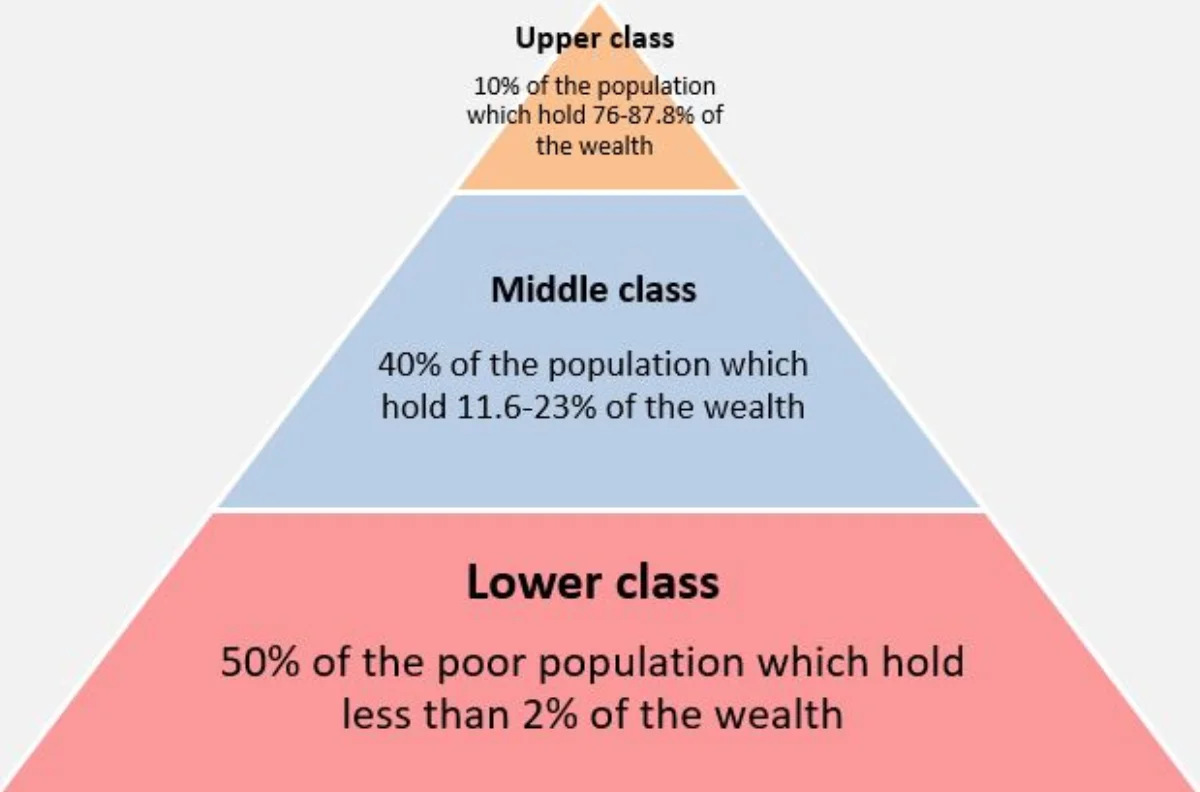
Class stratification visualized: a small upper class controls the majority of wealth, while a much larger lower class controls almost none. Real societies use finer divisions, but the basic geometry - few people, most resources at the top - is nearly universal. Credit: Kaxan Pierrson via Wikimedia Commons (CC BY-SA 4.0).
Modern U.S. class categories (roughly):
Upper class (~1%). Substantial wealth, often inherited. Top executives, heirs, some entrepreneurs.
Lower-middle class. Lower-level professionals, teachers, supervisors. Education and stable jobs but less financial security.
Working class. Manual and service workers with less education. Often paycheck-to-paycheck.
Lower class (poor/underclass). Unemployed, underemployed, or very low wages. Limited access to resources.
Categories are fuzzy and debated. Some sociologists use finer divisions or different frameworks.
Social Mobility
Social mobility is movement between positions in the stratification system.
Types of Mobility
Intergenerational. Comparing position to your parents’ position. A doctor with farm-worker parents has moved up intergenerationally.
Intragenerational. Comparing your position at different points in your own life. Promoted from clerk to manager = intragenerational upward mobility.
Upward vs. downward - moving higher or lower.
Vertical (changes social class) vs. horizontal (changes job or position within the same class).
Structural mobility. Large-scale movement of many people caused by changes in the economy (industrialization creating middle-class jobs). Different from individual merit-based mobility.
Factors Affecting Mobility
Education. Strongest single predictor of upward mobility.
Family of origin. Starting point heavily influences outcomes.
Economic conditions. Boom times enable upward mobility; recessions push many downward.
The United States has less intergenerational mobility than many other developed countries despite the cultural myth of the “American Dream” - children’s economic outcomes correlate strongly with their parents’.
Poverty
Absolute vs. Relative Poverty
Absolute poverty. Lacking the resources needed to meet basic needs - food, shelter, clean water, basic healthcare. The World Bank defines extreme poverty as living on less than $2.15/day (2017 PPP).
Relative poverty. Having significantly less than the median income in one’s society. A family “poor” in the U.S. may have resources exceeding the middle class of some developing countries, but still faces exclusion from mainstream society.
The U.S. Poverty Line
The U.S. poverty line is an absolute measure based on minimum food budget multiplied by three, adjusted for family size. Critics argue it understates modern poverty - it doesn’t adjust for geography, housing costs, or changes in what families need.
Social Exclusion
Social exclusion goes beyond income. People are excluded when they can’t fully participate in economic, political, social, or cultural life due to:
Poverty.
Discrimination.
Disability.
Geographic isolation.
Lack of education or skills.
Exclusion reinforces itself - excluded individuals face reduced access to the opportunities that could reduce exclusion.
Environmental Justice
Environmental justice examines how environmental hazards (pollution, contaminated water, lack of green space) disproportionately affect marginalized communities. A form of structural inequality.
Global Inequality
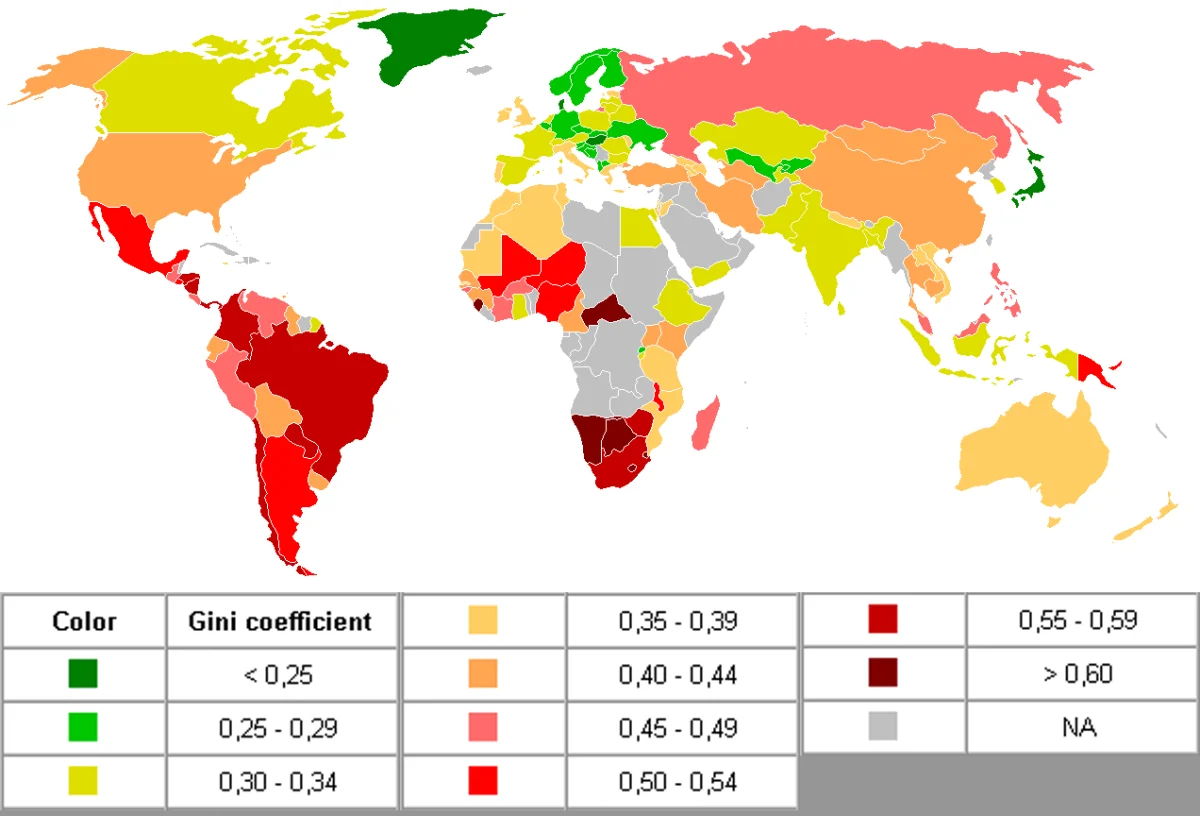
Inequality between countries is enormous - the richest countries’ per-capita incomes can be 100× those of the poorest. Global inequality between countries has been declining (as many developing countries grow), but inequality within countries has increased in many places.
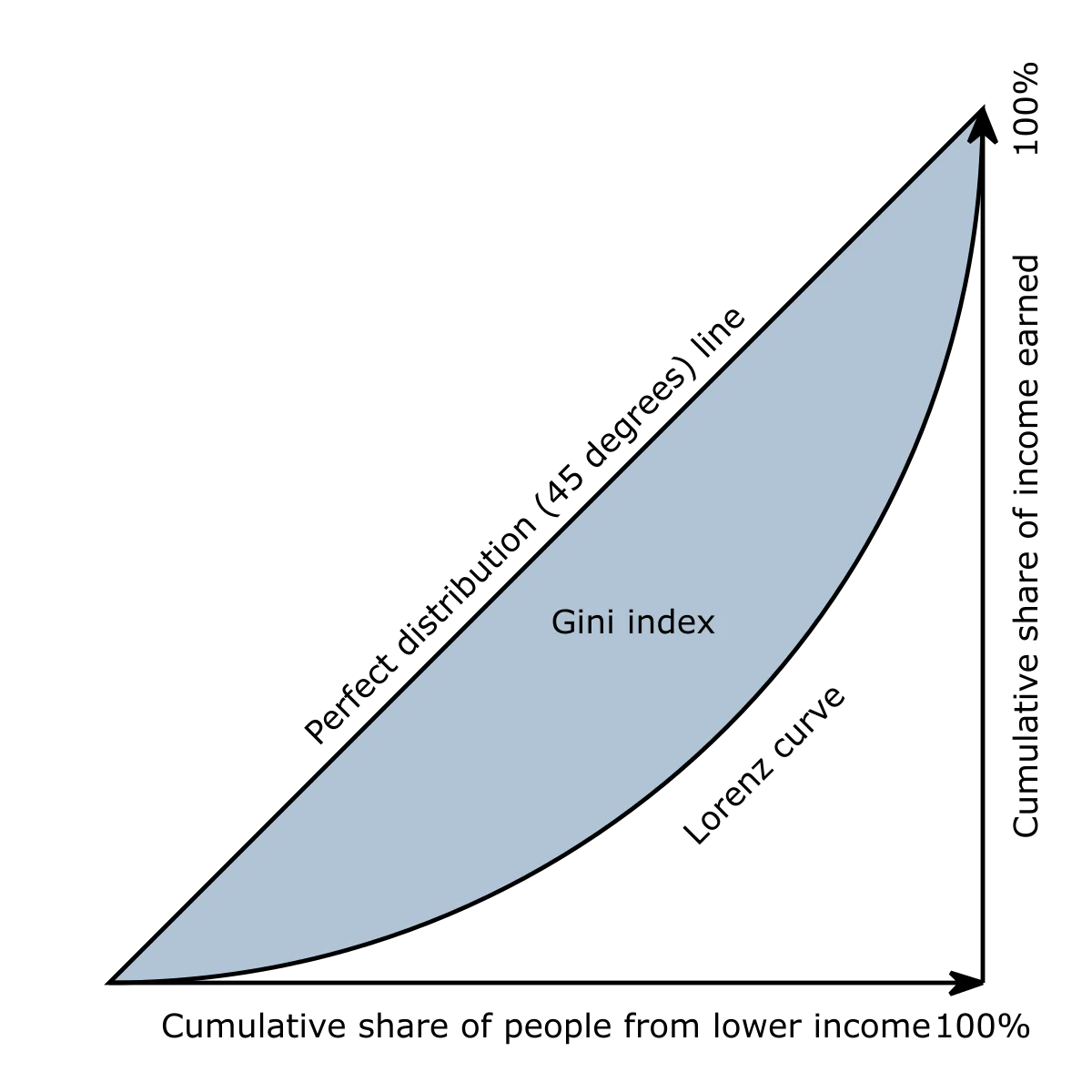
The Lorenz curve plots cumulative income share against cumulative population share. Perfect equality is the 45-degree line; the Lorenz curve sags below it. The Gini coefficient is twice the shaded area: 0 means perfect equality, 1 (or 100) means one person has all the income. Credit: BenFrantzDale via Wikimedia Commons (Public Domain).National income inequality (Gini coefficient) by country. Latin America and southern Africa have the highest within-country inequality; Northern Europe and Japan the lowest. The United States sits at moderately high inequality compared to peer wealthy countries. Credit: HDDTZUZDSQ via Wikimedia Commons (Public Domain).
Healthcare Disparities in the U.S.
Healthcare outcomes vary dramatically by:
Income. Lower-income Americans have worse health and shorter life expectancy.
Race. Black Americans have higher rates of maternal mortality, cardiovascular disease, and COVID-19 mortality. Native Americans face specific health burdens.
Geography. Rural areas have fewer hospitals, longer ambulance times, and worse outcomes for many conditions.
Insurance status. Uninsured Americans delay care and have worse outcomes.
These disparities reflect structural inequality, not individual choices.
Class Consciousness and False Consciousness
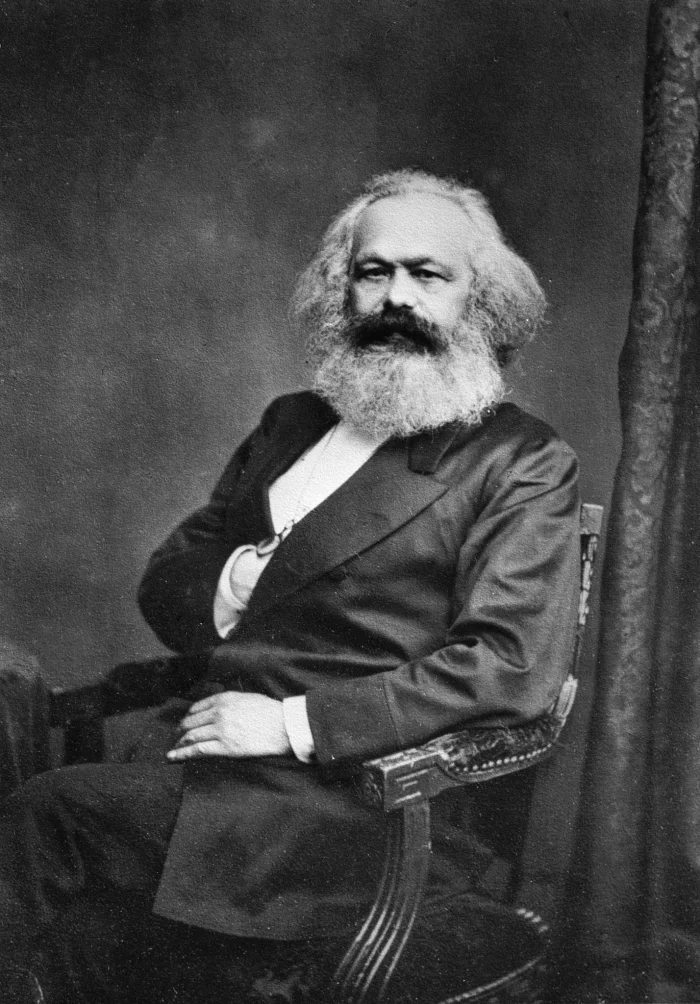
Marxian concepts:
Class consciousness. Awareness of one’s class position and shared interests with other class members. Prerequisite for collective action.
False consciousness. Belief in ideas that actually work against one’s class interests. Workers who identify with the wealthy and oppose redistribution, despite being economically disadvantaged themselves. Preserves existing power structures.
Karl Marx (1818–1883). Marx framed stratification primarily through class and the relations of production, and contributed the concepts of class consciousness and false consciousness. Weber later expanded the picture to include status (prestige) and party (power). Credit: John Jabez Edwin Mayall via Wikimedia Commons (Public Domain).
Name Weber's three dimensions of stratification.
Click to reveal answer
Class (economic position), status (prestige, social honor), and party (political power). Multi-dimensional - a person can have high status without high income, or wealth without political power. Marx emphasized class alone; Weber added nuance.
Distinguish absolute from relative poverty.
Click to reveal answer
Absolute poverty: lacking resources for basic needs (food, shelter, water, healthcare). Relative poverty: having significantly less than the median income of one's society. A relatively poor U.S. family may have more than a middle-class family in some developing nations but still faces exclusion from their society's mainstream.
What is structural mobility?
Click to reveal answer
Large-scale social mobility caused by changes in the economy or society - industrialization creating middle-class jobs, technology shifts eliminating old industries. Distinct from individual merit-based mobility. Affects many people at once.
What is false consciousness in Marxist theory?
Click to reveal answer
Belief in ideas that work against one's own class interests - typically beliefs that preserve existing power structures. Contrasts with class consciousness (awareness of one's class position and shared interests). False consciousness prevents collective action that would benefit the working class.
The final section covers how inequality persists across generations, the specific patterns of healthcare disparities, and a few tools for thinking about sociological research.
Social Reproduction
Social reproduction is how class, culture, and inequality get passed from one generation to the next. It’s why children of professionals usually become professionals and children of the poor often stay poor.
Mechanisms:
Economic inheritance - wealth transfers, home ownership, support for education.
Human capital - parental investment in children’s education and skills.
Social networks - whom you know opens which doors.
Cultural knowledge - tacit understanding of how elite institutions work.
Bourdieu’s Capital
Pierre Bourdieu (1930–2002). Bourdieu argued that inequality is reproduced not only through money but through cultural capital (tastes, knowledge, credentials), social capital (networks), and habitus - the internalized dispositions that make class position feel natural. Credit: Bernard Lambert via Wikimedia Commons (CC BY-SA 4.0).
Pierre Bourdieu expanded the concept of capital beyond money to include:
Economic capital. Money and material assets.
Cultural capital. Knowledge, tastes, credentials that signal belonging to a class. Fluent in “highbrow” art, understanding unspoken norms of academia, comfort with professional manners.
Social capital. The value of your social networks and connections.
Symbolic capital. Prestige, reputation, honor.
Each type of capital can be converted into the others (though conversion is rarely perfect). A doctor’s credential (cultural capital) enables high income (economic capital) and professional networks (social capital).
Habitus
Habitus is Bourdieu’s concept for internalized dispositions - a person’s taken-for-granted ways of acting, thinking, and evaluating. Habitus develops through socialization in one’s class environment. Upper-class habitus includes confidence in elite institutions, taste for “high” culture, comfort in formal settings. Working-class habitus includes different tastes, comfort zones, and styles.
Habitus makes inequality feel natural. The upper-class person’s comfort in a Michelin-starred restaurant feels like personal refinement; the working-class person’s discomfort feels like personal lack. Both are products of different social environments, but they are experienced as individual traits.
Healthcare Disparities in the U.S.
Healthcare outcomes vary along multiple axes:
By Income
Lower income → higher mortality rates, worse outcomes for chronic disease, higher infant mortality.
The gap in U.S. life expectancy between rich and poor widened substantially between 2001 and 2014.
By Race
Black Americans have higher maternal mortality (~3× that of white women), higher rates of cardiovascular disease, stroke, diabetes, and many cancers.
Native Americans experience specific burdens around diabetes, alcohol-related illness, and suicide.
Hispanic Americans often show better health on some measures despite lower income - the “Hispanic paradox” - though with significant variation.
By Geography
Rural Americans face hospital closures, longer transport times, fewer specialists.
“Deaths of despair” (opioids, suicide, alcohol-related deaths) hit rural white Americans especially hard.
By Insurance Status
Uninsured Americans delay care, skip medications, and have worse outcomes across virtually every condition.
Medicaid expansion reduced mortality in states that adopted it.
Intersectionality and Health Disparities
Kimberlé Crenshaw, the legal scholar who coined "intersectionality" in 1989 to describe how overlapping categories (race, gender, class, sexuality) produce qualitatively distinct experiences that single-axis analyses miss. The framework now anchors much of modern health equity research. Credit: Mohamed Badarne / Heinrich-Böll-Stiftung via Wikimedia Commons (CC BY-SA 4.0).
Intersectionality (Crenshaw, Chapter 11) helps explain why single-axis analyses miss critical patterns. Black women’s maternal mortality is not just “race plus gender” - it’s an intersection that produces unique disparities. A white gay man in rural poverty faces intersecting burdens of class and sexuality not captured by either alone.
Modern health equity research leans heavily on intersectional frameworks.
Social Determinants of Health
The conditions in which people are born, grow, live, work, and age that shape health. The WHO framework includes:
Economic stability. Employment, income, expenses.
Education. Access, quality, literacy.
Social and community context. Discrimination, support, civic participation.
Health and healthcare. Access, quality, coverage.
Neighborhood and built environment. Housing, transportation, air quality, food access.
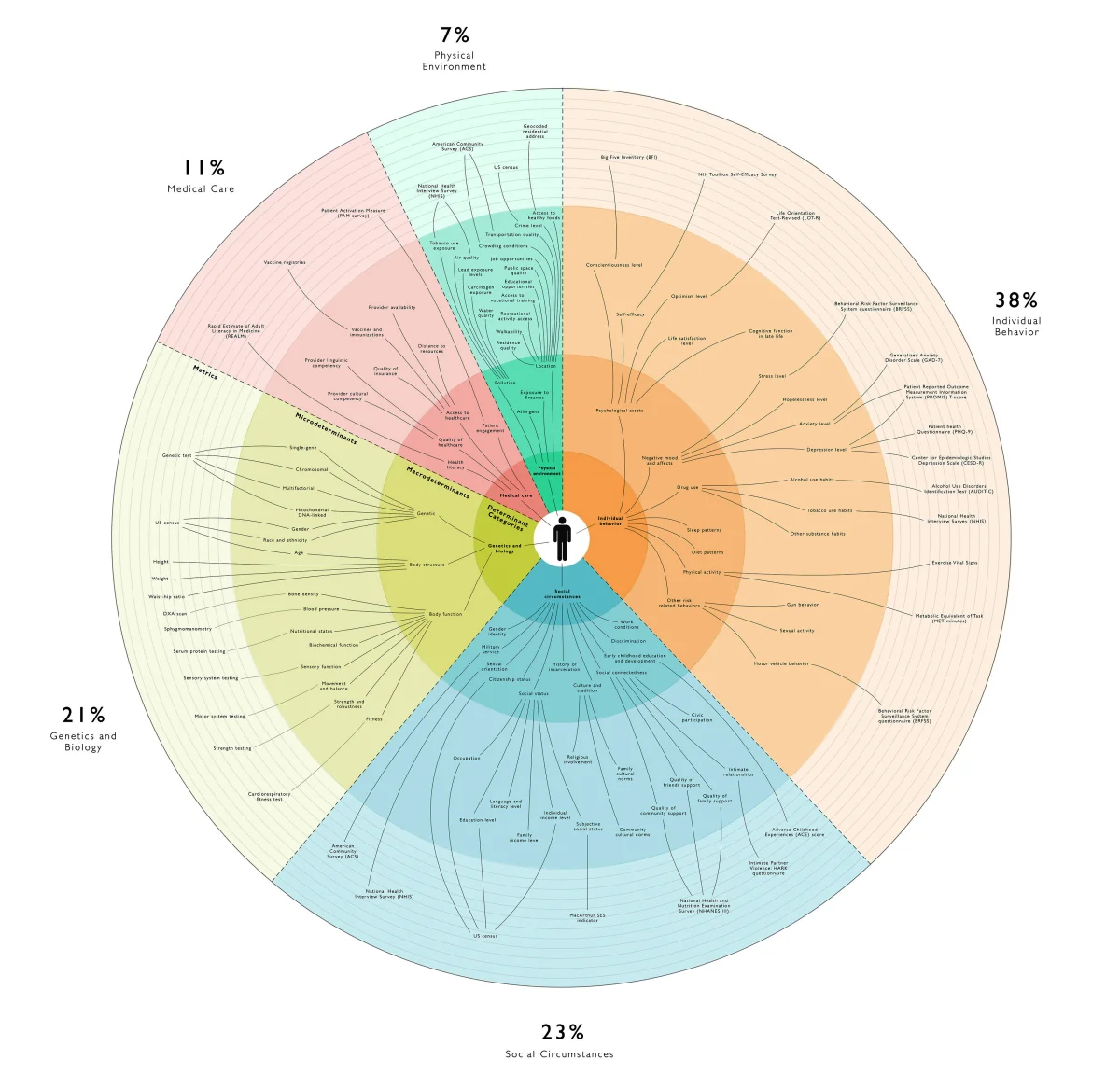
Medical care itself contributes only a modest share (~20%) to population health outcomes. Behaviors, environment, and social factors together contribute the majority.
The social determinants of health, mapped with one common decomposition of contributors to population health: medical care accounts for only ~11–20%, while individual behavior, social circumstances, environment, and biology together drive the rest. This is why public health interventions often outperform clinical ones at the population scale. Credit: Jsonin via Wikimedia Commons (CC BY 4.0).
Residential Segregation
Residential segregation is the physical separation of groups (by race, ethnicity, or income) into different neighborhoods. It is one of the most consequential drivers of inequality in the United States, because where you live governs what schools, jobs, grocery stores, hospitals, and air quality you have access to.
Three Measurable Forms
Evenness (segregation proper). How unevenly two groups are distributed across neighborhoods. Measured by the index of dissimilarity - a number from 0 to 100. An index of 0 means perfectly even distribution; 100 means total segregation. It literally reads as the percentage of one group that would have to move for distribution to be even. U.S. Black/white dissimilarity in many metros sits around 60–70.
Concentration. Clustering of one group into a small land area. A neighborhood with 90% of its population from one group is highly concentrated.
Centralization. Concentration specifically in the urban core. A group is centralized when it is packed into the inner city while others spread out to suburbs.
Why Residential Segregation Drives Health and Life Outcomes
Political isolation. Segregated communities have less overlap with other neighborhoods’ political interests. Their votes get diluted at the municipal level, and their representatives often have little power to demand resources for them. Result: fewer clinics, worse snow removal, underfunded schools.
Linguistic isolation. Communities kept apart can develop or retain distinct languages or dialects. That limits the job market they can access, even within the same city.
Educational underfunding. U.S. public schools are funded largely by local property taxes. Segregation by income produces segregation in school quality automatically - no one has to write a discriminatory law for it to happen.
Spatial mismatch. Jobs for low-income workers exist, but often in suburbs disconnected from the urban neighborhoods where those workers live. Without a car, a two-hour bus commute each way is unworkable. The jobs are there; access is not.
Environmental burden. Highways, factories, waste-processing sites, and polluting industries are disproportionately placed in segregated, low-income, minority neighborhoods - a pattern called environmental injustice. Asthma rates in these neighborhoods can be multiples of those in wealthier areas a few miles away.
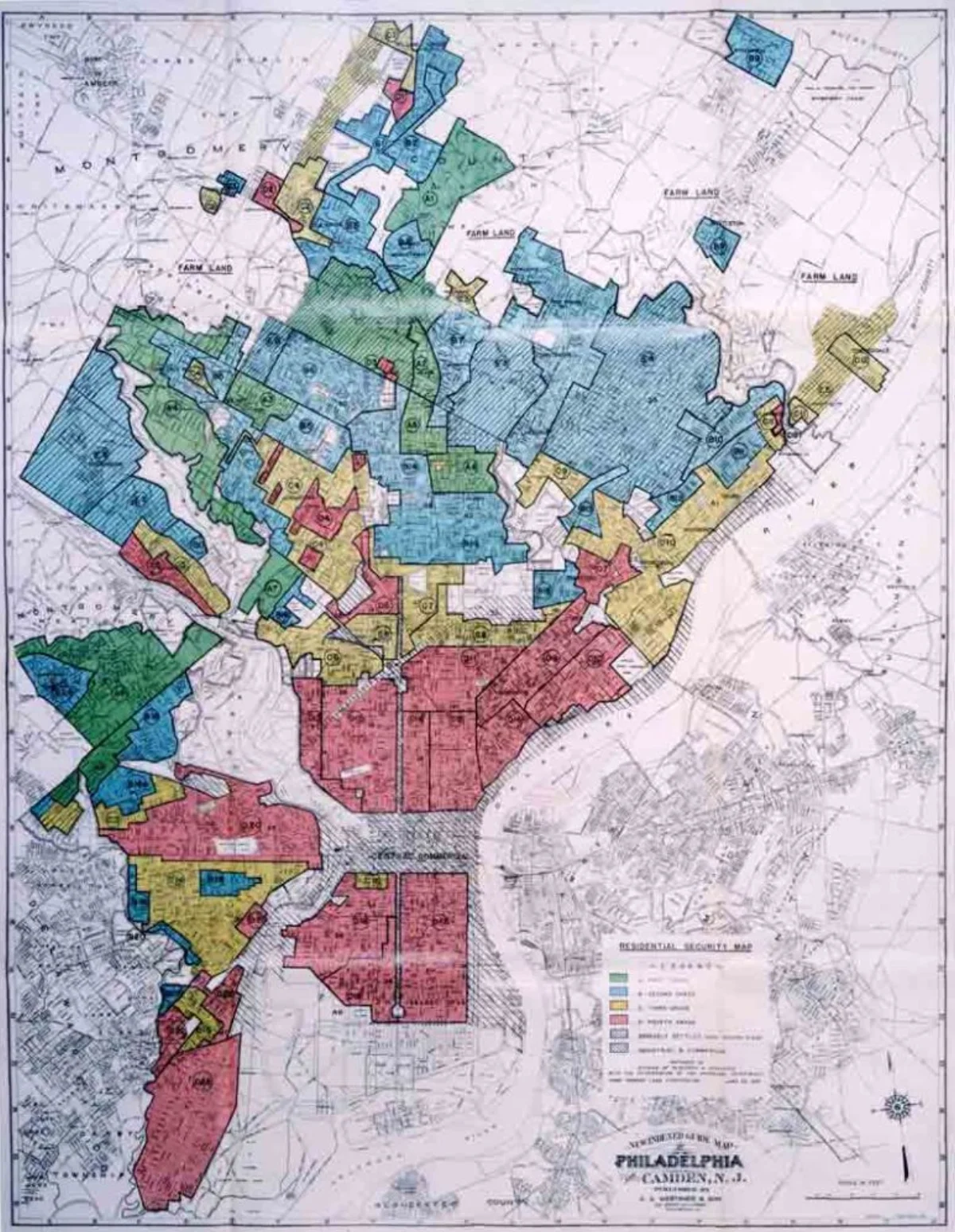
Segregation is usually externally imposed - by redlining, discriminatory lending, restrictive covenants, or exclusionary zoning. Social isolation is when a community voluntarily separates itself from the mainstream based on religion, culture, or lifestyle (e.g., the Amish). Same end result - separate populations - but very different mechanisms and moral valences.
An original 1937 HOLC redlining map of Philadelphia. Federally backed mortgages were systematically denied in red ("hazardous") neighborhoods - which were typically the Black, immigrant, or low-income parts of the city. The maps locked in racial residential segregation for generations and remain visible in present-day patterns of wealth, school funding, and health. Credit: U.S. Federal Government via Wikimedia Commons (Public Domain).An Amish buggy in Lancaster County, Pennsylvania - the textbook example of social isolation rather than segregation. The Amish self-separate from mainstream culture (limiting cars, electricity, and outside schooling) by religious choice, not state coercion. Same end-state of distinct community, very different mechanism. Credit: Lmass44 via Wikimedia Commons (CC BY-SA 4.0).
”Separate but Equal” Is Rarely Equal
When groups are segregated, the segregated group consistently receives worse resources. The 1954 Brown v. Board of Education decision rested on exactly this finding: even when legally “equal,” segregated facilities were materially unequal in practice. The same holds today across housing, schools, and healthcare.
Research Study Types
Cross-Sectional Studies
Collect data from a population at a single point in time. Useful for prevalence estimates. Limited for inferring causation.
Longitudinal Studies
Follow the same group over time. Useful for tracking changes, identifying risk factors, and establishing temporal ordering.
Cohort studies - follow a defined group forward in time, comparing those with and without an exposure.
Case-control studies - compare people with a disease (cases) to people without (controls), looking backward for differential exposures.
Randomized Controlled Trials (RCTs)
Random assignment to intervention vs. control. The gold standard for causal inference but sometimes infeasible or unethical.
Qualitative Research
Interviews, ethnography, textual analysis. Provides depth and meaning at the cost of statistical generalizability.
Generalizability
Generalizability (external validity) is the extent to which findings from a study apply beyond the specific sample studied.
Requirements for generalizability:
Representative sample. The sample should reflect the target population.
Adequate sample size. Large enough to detect effects reliably.
Valid measurements. Tools that accurately capture the concept of interest.
Context similarity. The conditions of study should resemble the real-world settings where findings would apply.
Studies of college sophomores often don’t generalize to adults. Studies of Western populations often don’t generalize to non-Western populations. The term “WEIRD” populations (Western, Educated, Industrialized, Rich, Democratic) captures the overrepresentation of these populations in psychology research - most of what we “know” about human behavior comes from WEIRD samples that may not represent humanity.
What does Bourdieu mean by cultural capital?
Click to reveal answer
Cultural capital is knowledge, tastes, and credentials that signal belonging to a social class - fluency in 'highbrow' culture, comfort with academic norms, educational credentials. Can be converted to economic and social capital. A key mechanism of social reproduction.
Approximately what share of population health outcomes is determined by medical care vs. other factors?
Click to reveal answer
Medical care contributes only about 20% of population health outcomes. The majority (~80%) comes from social determinants of health - economic stability, education, environment, behavior, social factors. Why public health interventions can have larger population-level effects than clinical medicine alone.
Distinguish cohort from case-control studies.
Click to reveal answer
Cohort studies follow a group forward in time, comparing outcomes based on exposure status. Case-control studies start with cases (people with the disease) and controls (those without), looking backward to identify differential exposures. Cohort is prospective; case-control is retrospective.
What are WEIRD populations, and why does it matter for research?
Click to reveal answer
Western, Educated, Industrialized, Rich, Democratic populations - overrepresented in psychology and social science research. Findings from WEIRD samples often don't generalize to non-WEIRD populations, limiting the external validity of much social science.
What does the index of dissimilarity measure, and what do values of 0 and 100 mean?
Click to reveal answer
The index of dissimilarity quantifies residential segregation between two groups. It ranges 0–100 and reads as the percentage of one group that would have to move to produce even distribution across neighborhoods. 0 = perfectly integrated; 100 = total segregation. Many U.S. metros sit at 60–70 for Black/white segregation.
What is spatial mismatch?
Click to reveal answer
Spatial mismatch is the gap between where low-income workers live (often in segregated urban neighborhoods) and where jobs they qualify for are located (often in suburbs). The jobs exist, but transportation barriers make them effectively inaccessible. A consequence of residential segregation.
Distinguish segregation from social isolation.
Click to reveal answer
Segregation is externally imposed separation (redlining, exclusionary zoning, discriminatory lending). Social isolation is voluntary separation by a community based on its own religious, cultural, or lifestyle choices (e.g., the Amish). Same end state - separate populations - but different mechanisms.