Demographic Structure of Society
Demographics is the statistical study of populations - age, sex, race, income, geography, and similar characteristics. This section covers the major demographic dimensions.
Age
Cohorts and Generations
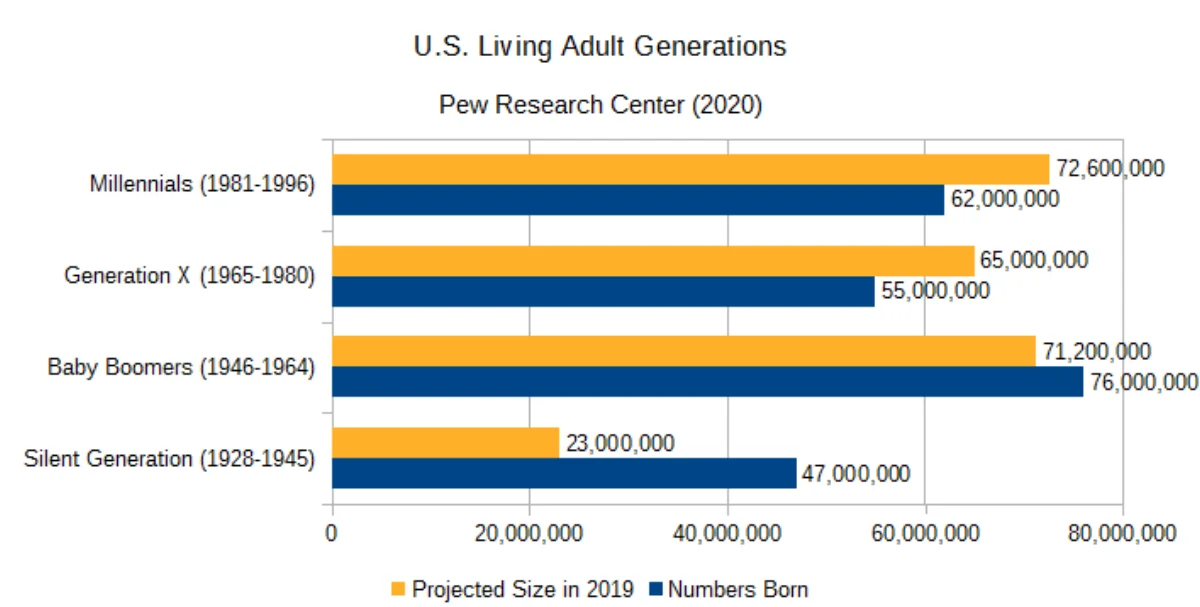
A cohort is a group of people who share a time-based life experience - typically birth within a specific span of years. Generational cohorts (Baby Boomers, Gen X, Millennials, Gen Z) are defined by shared cultural and economic experiences at similar ages.
Age Structure and Pyramid
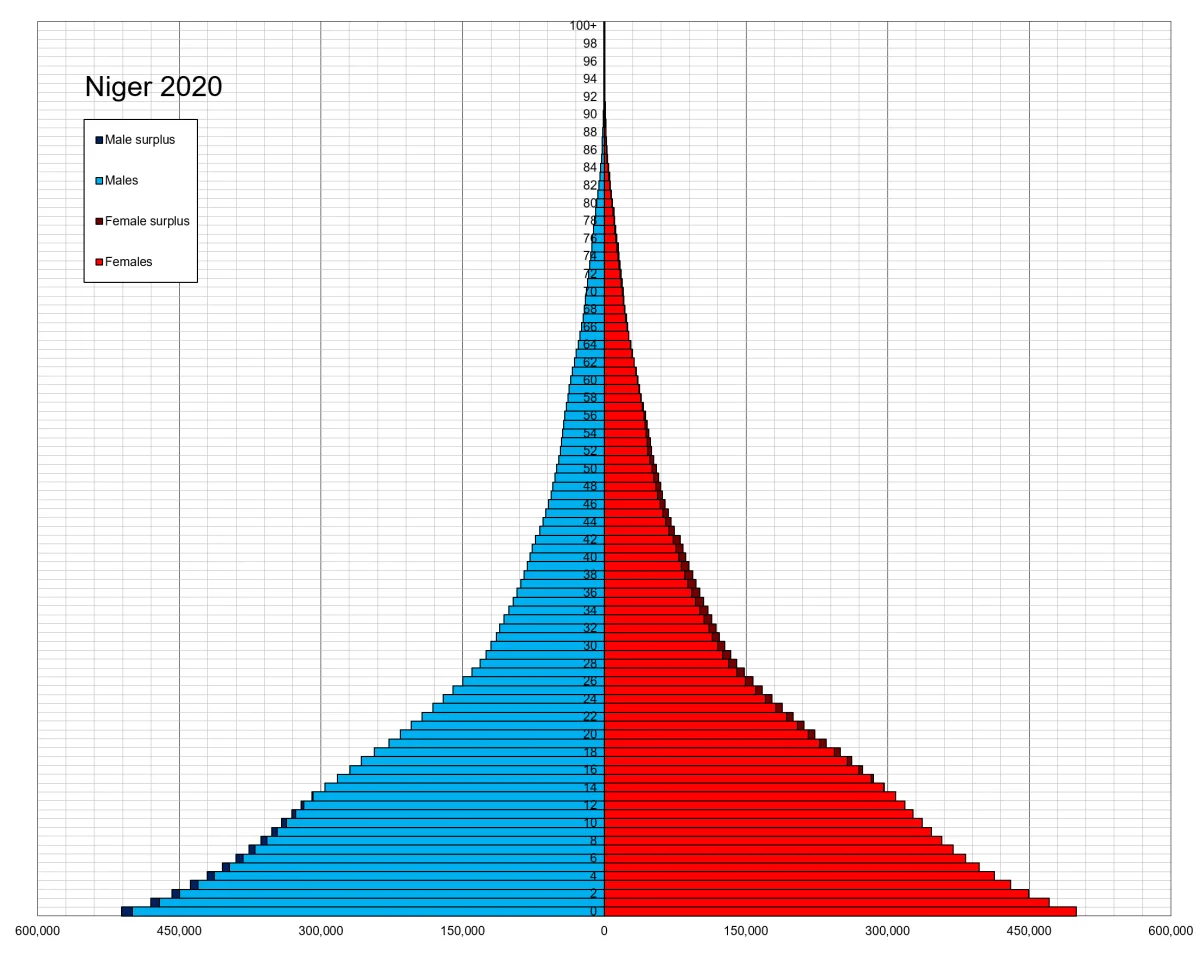
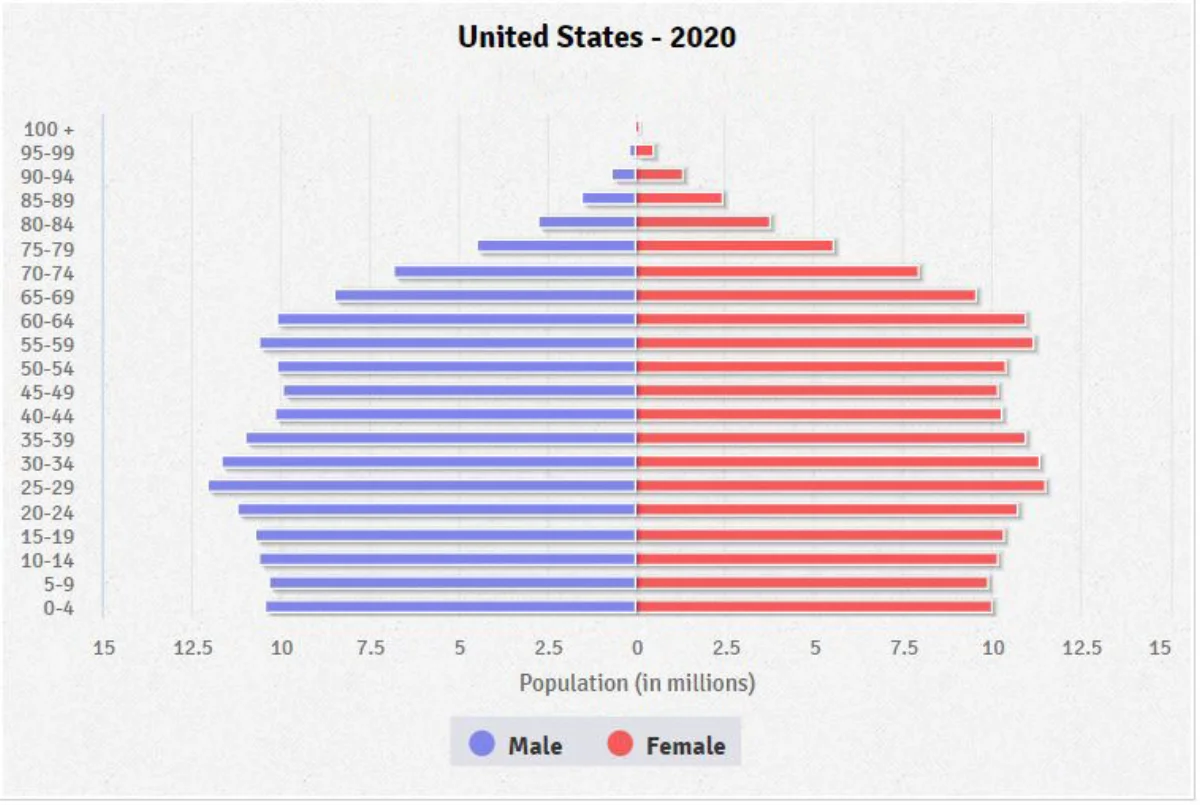
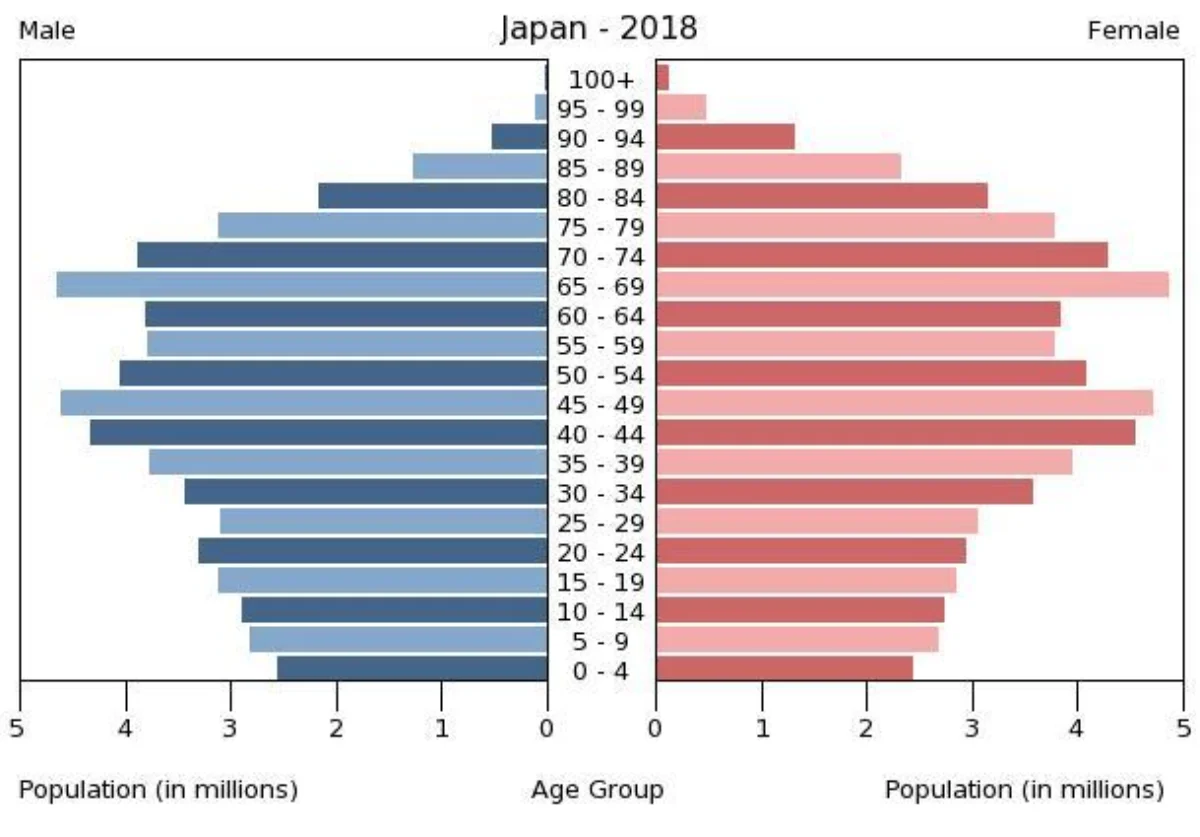
A population pyramid shows the distribution of ages and sexes in a population. Shapes reveal:
- Expanding (pyramid-shaped). Many young people, few elderly. Typical of high-birth-rate developing countries.
- Stationary (column-shaped). Even distribution. Typical of stable industrialized countries.
- Contracting (inverted-pyramid). Few young people, many elderly. Typical of low-birth-rate, aging societies like Japan, Italy.
Dependency Ratio
Dependency ratio = (population < 15 + population > 64) / (population 15-64). The ratio of dependents to working-age people. High dependency ratios strain social services; aging populations are a growing concern in most developed countries.
Aging Populations
Most wealthy countries are aging. Implications:
- Strained pension systems.
- Rising healthcare costs.
- Labor shortages in care industries.
- Political conflict between generations over entitlements.
Race and Ethnicity
- Race. A socially constructed category, typically based on perceived physical differences. Biologically weak concept; socially powerful reality.
- Ethnicity. Shared cultural heritage, including language, religion, ancestry, traditions. More overtly cultural than racial.
Race and ethnicity often overlap but aren’t identical. A person can share ethnic heritage (Italian-American culture) without being assigned the same “race” by societal categorization.
Racial categories change over time. Italian, Irish, and Jewish Americans were not always considered “white” in the United States. Latino/Hispanic categories were formalized in U.S. census only in 1980. These categorical shifts illustrate the social construction of race.
Immigration and Emigration
- Immigration. Moving into a country.
- Emigration. Moving out of a country.
- Migration. The broader term for either.
Push and Pull Factors
- Push factors - reasons to leave the home country: war, persecution, economic collapse, climate change, political instability.
- Pull factors - reasons to move to a destination: economic opportunity, family reunification, political freedom, educational or cultural attractions.
Most real migration decisions involve both push and pull.

Assimilation vs. Multiculturalism
Two models for how societies absorb newcomers:
- Assimilation. Immigrants adopt the dominant culture, shed distinct identity. The classic “melting pot” model in the U.S.
- Multiculturalism. Immigrants retain their cultural heritage while participating in broader society. “Salad bowl” metaphor - distinct flavors coexisting.
Most actual societies mix elements of both. Second- and third-generation immigrants often navigate layered identities.
Sex, Gender, and Sexual Orientation
The MCAT distinguishes these carefully:
- Sex - typically biological categorization based on chromosomes, anatomy, and hormones (male, female, intersex).
- Gender - a social construction relating to behaviors, roles, and identities associated with being a man, woman, or other gender.
- Gender identity - a person’s internal sense of their gender.
- Gender expression - how a person outwardly expresses their gender.
- Sexual orientation - the pattern of attraction to others (heterosexual, homosexual, bisexual, asexual, etc.).
These dimensions are independent. A person’s sex, gender identity, and sexual orientation can align in any combination.
Transgender and Cisgender
- Cisgender. Gender identity matches sex assigned at birth.
- Transgender. Gender identity differs from sex assigned at birth.
Transgender individuals face significant health disparities related to discrimination, access to gender-affirming care, and mental health outcomes.