Why do some people become close and others drift apart? Social psychology has identified a handful of factors that reliably predict attraction, and a classic body of attachment research that shows how early bonds shape later relationships.
Factors That Promote Attraction
Proximity and the Mere Exposure Effect
Proximity - people who are physically near each other are more likely to become friends and romantic partners. Classic finding: residents of a dorm building are most friendly with neighbors within 20 feet of their door.
Why does proximity work? The mere exposure effect (Zajonc) - repeated exposure to a stimulus increases our liking for it. We come to prefer faces, music, and environments simply because we’ve seen them often. Proximity creates repeated exposure, which breeds liking.
The mere exposure effect operates below conscious awareness and applies to strangers’ faces, meaningless symbols, and nonsense words alike.
Physical Attraction
Physical attractiveness predicts liking, especially at first meeting. Features consistently associated with attractiveness across cultures include facial symmetry, averageness (features close to the population mean), and markers of youth and health.
Physical attraction feeds into the halo effect from Chapter 7 - attractive people are rated as kinder, smarter, and more trustworthy.
Similarity
“Opposites attract” is mostly myth. In reality, similarity predicts attraction far more strongly - similarity in values, attitudes, education, background, and even physical appearance. Couples who resemble each other on personality and attitudes tend to be more stable over time.
Reciprocal Liking
We like people who like us. Awareness that someone likes you increases your liking for them, creating a positive feedback loop.
Self-Disclosure
Progressively revealing personal information builds intimacy. Reciprocal self-disclosure at similar levels is a major driver of relationship growth.
Harlow’s Monkey Experiments
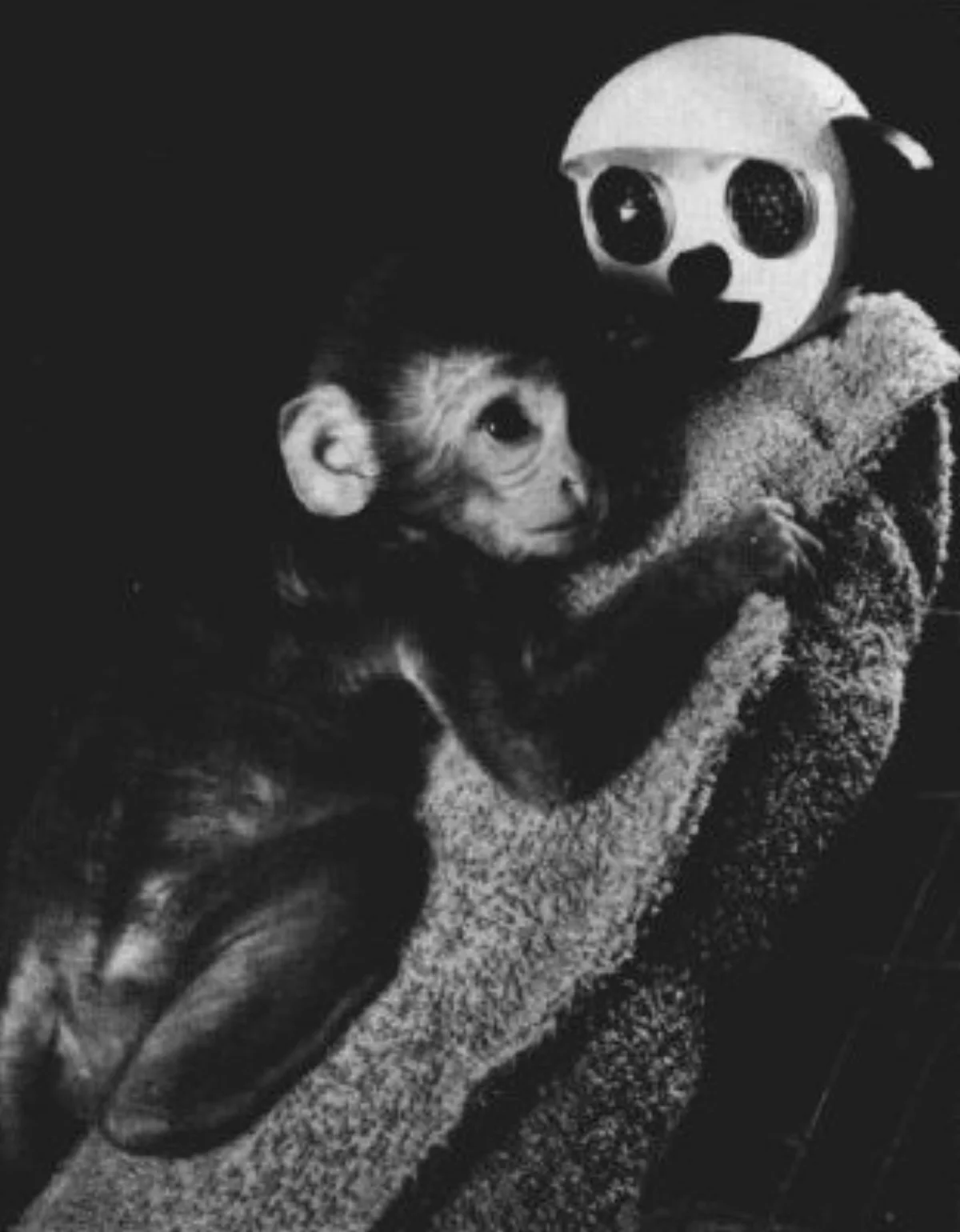
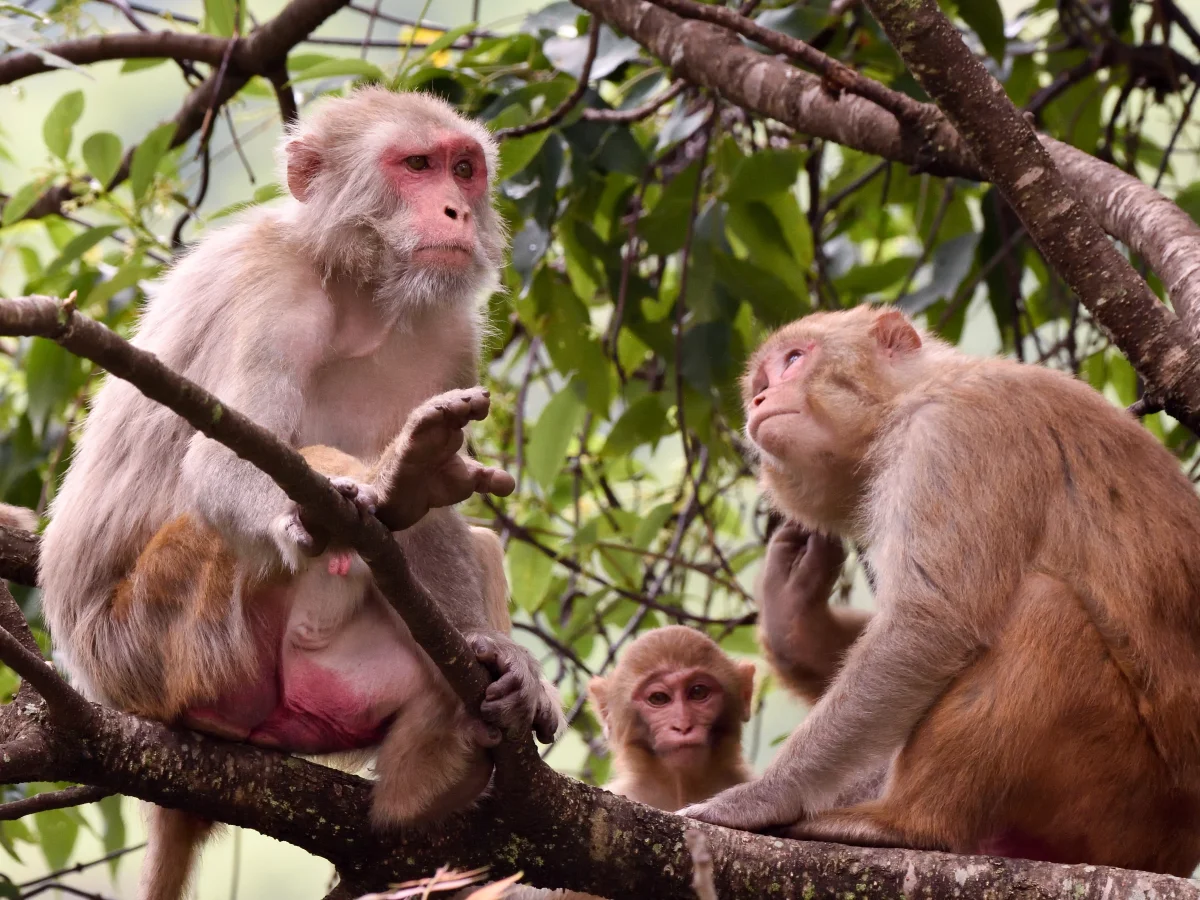
Harry Harlow separated infant rhesus monkeys from their mothers and raised them with two surrogate “mothers”:
A wire mother with a bottle (providing food).
A terrycloth mother without food (providing comfort).
Behaviorists at the time predicted infants would prefer the wire mother who provided nourishment. Instead, infants spent most of their time clinging to the cloth mother, running to her when frightened and venturing out to explore only when she was present.
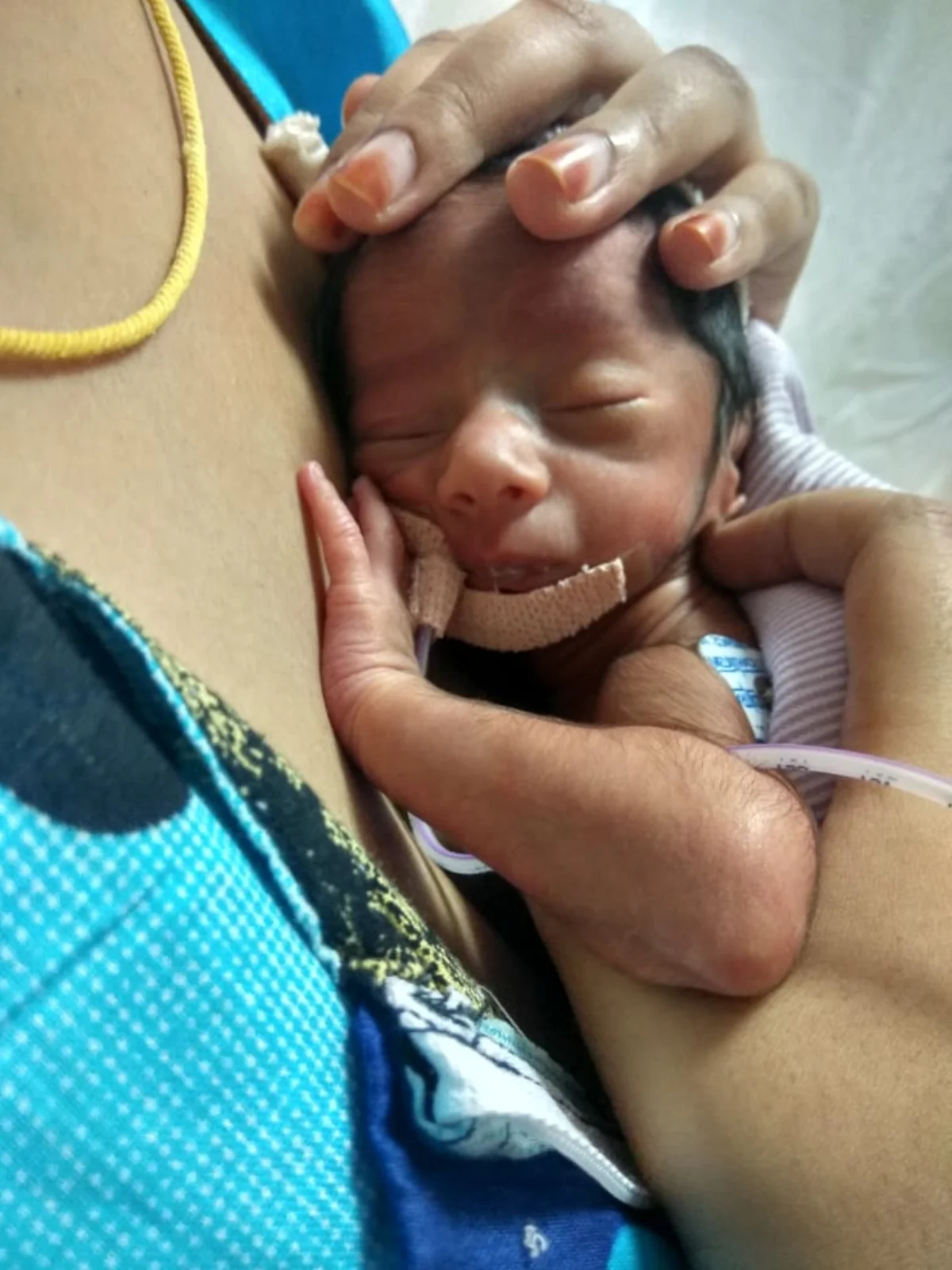
Harlow’s conclusion: attachment is driven by contact comfort, not just by meeting physiological needs. The research reshaped views of child development and influenced pediatric care (encouraging skin-to-skin contact, opposing rigid feeding schedules).
An infant rhesus macaque clings to the cloth surrogate during a Harlow fear test. Even when food came only from a wire mother, infants ran to the cloth mother for comfort - showing that attachment depends on contact, not just feeding. Credit: Harry Harlow via Wikimedia Commons (CC0).Wild rhesus macaques live in close-knit family groups - the species Harlow studied to make the case that primate infants need contact, not just calories. Credit: Timothy Gonsalves via Wikimedia Commons (CC BY-SA 4.0).Modern neonatal care explicitly applies the lesson from Harlow: skin-to-skin "kangaroo care" calms the infant, stabilizes vitals, and supports bonding. Comfort contact is not optional pampering - it is part of normal physiology. Credit: Sathishsugavanam27 via Wikimedia Commons (CC BY-SA 4.0).
Ainsworth’s Strange Situation and Attachment Styles
Mary Ainsworth developed the Strange Situation procedure: a toddler is observed in a playroom with their caregiver. The caregiver leaves briefly and returns. The toddler’s behavior during separation and reunion reveals their attachment style.
Secure Attachment (~60-65%)
Distressed when the caregiver leaves, easily comforted on reunion. Uses the caregiver as a secure base from which to explore. Produced by responsive, sensitive caregiving. Predicts healthier adult relationships and emotional regulation.
Insecure-Avoidant Attachment (~15-20%)
Shows little distress when caregiver leaves, avoids contact on reunion. Appears emotionally independent but may be masking distress. Often follows caregiving that’s dismissive or unavailable in emotional moments.
Very distressed at separation, difficult to comfort on reunion - simultaneously clings and resists. Follows inconsistent caregiving where the parent is sometimes responsive, sometimes unavailable.
Disorganized Attachment (~5-10%)
Inconsistent, confused behavior - approaches the caregiver, then freezes or turns away. Associated with caregiving that is frightening or frightened, and sometimes with childhood trauma or abuse.
Attachment styles formed in infancy tend to persist into adulthood, shaping romantic relationship patterns. Secure adults form stable partnerships; anxious adults may cling and fear abandonment; avoidant adults may keep emotional distance.
Social Support
Social support - the perceived availability of care and assistance from others - buffers stress and improves health outcomes. Types:
Emotional support - sympathy, listening, comfort.
Instrumental support - practical help (rides, money, childcare).
Informational support - advice, guidance.
Appraisal support - help evaluating decisions.
Research links social support to lower mortality, better immune function, faster wound healing, and lower rates of depression. Married couples on average live longer than unmarried peers. Social isolation is a major predictor of mortality - arguably comparable to smoking in risk magnitude.
What is the mere exposure effect, and how does it explain the role of proximity in attraction?
Click to reveal answer
Mere exposure effect: repeated exposure to a stimulus increases our liking for it (operates unconsciously). Proximity creates repeated exposure, which breeds liking. Explains why people end up in relationships with neighbors, classmates, and coworkers.
What did Harlow's monkey experiments demonstrate about attachment?
Click to reveal answer
Infant monkeys preferred a cloth 'comfort mother' over a wire 'feeding mother' - showing that attachment depends on contact comfort, not just physiological need satisfaction. Reshaped understanding of parent-child bonding.
Describe secure attachment in Ainsworth's Strange Situation.
Click to reveal answer
Securely attached toddlers are distressed when the caregiver leaves, easily comforted on reunion, and use the caregiver as a secure base for exploration. Produced by responsive, sensitive caregiving. The most common attachment style (~60-65%).
Name four types of social support.
Click to reveal answer
Emotional (listening, comfort), instrumental (practical help), informational (advice), and appraisal (help evaluating decisions). Social support buffers stress and improves physical and mental health outcomes.
Why do people sometimes harm others, and other times help strangers at great cost to themselves? These two behaviors sit at the moral extremes of social life, and both have evolutionary, biological, and social explanations.
Aggression
Aggression is behavior intended to harm another. Two main types:
Instrumental aggression. Used as a means to an end. A soldier in combat. A mugger taking a wallet. Aggression here is strategic, not primarily emotional.
Hostile aggression. Driven by anger, intended to cause harm for its own sake. A jealous rage. A fight between rival fans.
Biological Contributions
Amygdala. Stimulation produces aggression; bilateral damage can produce placidity (Kluver-Bucy).
Testosterone. Correlates positively with aggressive behavior in many species including humans, though the causal direction is complicated.
Serotonin. Low levels linked to impulsive aggression.
Genetic factors. Heritability estimates for aggression range from 40-60%.
Alcohol. Disinhibits prefrontal control, often amplifying aggression.
Frustration-Aggression Hypothesis
Dollard and colleagues: frustration - blockage of a goal - produces aggression. Later refined by Berkowitz to say that frustration produces anger, which makes aggression more likely when aggressive cues are present (a weapon in the environment, a provocative target).
The weapons effect shows that merely seeing a weapon in the environment can increase aggressive responses.
Social Learning of Aggression
Bandura’s Bobo doll studies (Chapter 3): children learn aggression by observing aggressive models. Violent media, family violence, and peer aggression all increase the risk that children will display aggressive behavior themselves.
Stills from Bandura's classic Bobo doll experiment. After watching an adult attack the doll (top row), children imitated the aggression themselves (middle and bottom rows) - the foundation of the social learning theory of aggression. Credit: Okhanm via Wikimedia Commons (CC BY-SA 4.0).
Cultural Factors
Cultures of honor - places where personal honor must be defended through aggression, often linked to historic economic conditions (herding societies).
Socioeconomic factors. Poverty, inequality, and lack of opportunity correlate with aggression rates.
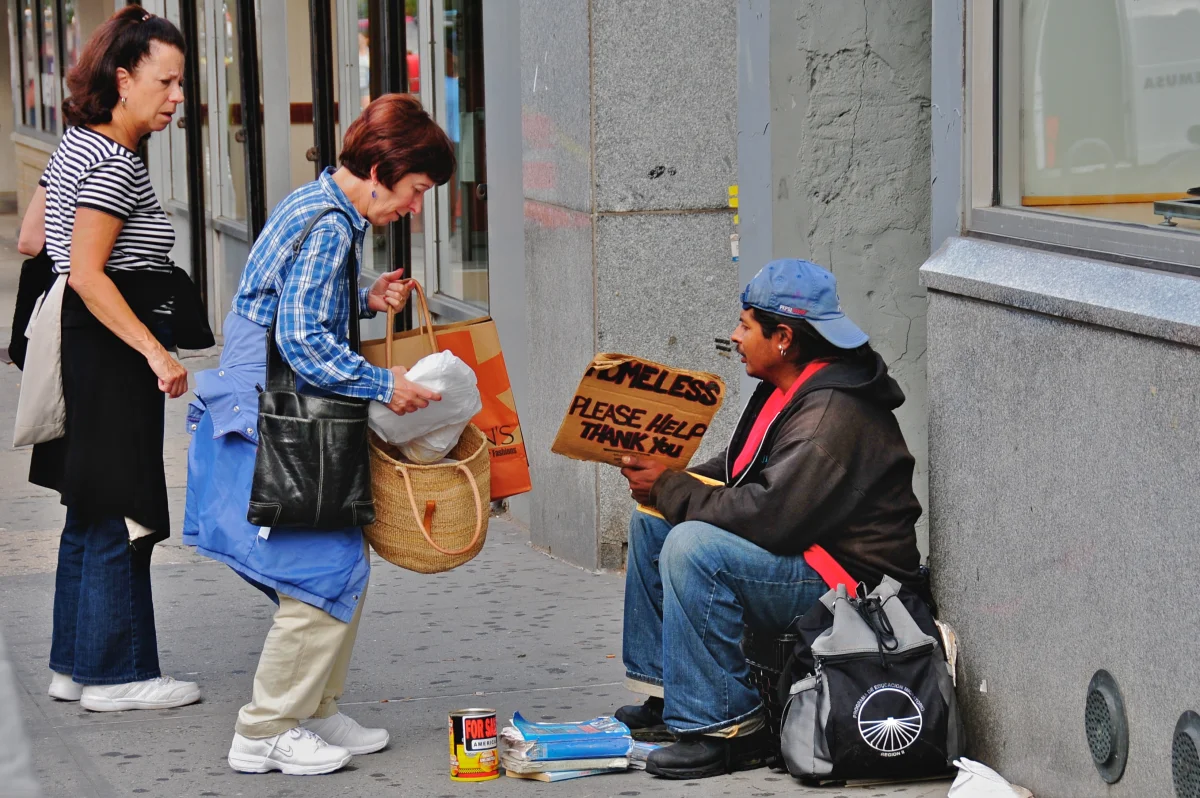
Altruism is behavior intended to help another without obvious self-benefit, sometimes at personal cost. A stranger running into a burning building to rescue a child. Donating anonymously to charity. Sharing food when you’re hungry.
Everyday altruism: helping a stranger at small cost to oneself. The empathy-altruism hypothesis predicts this is most likely when the helpers feel emotional concern for the recipient, not just discomfort. Credit: Ed Yourdon via Wikimedia Commons (CC BY-SA 2.0).
Empathy-Altruism Hypothesis
Daniel Batson: when we feel empathy for someone in need, we help for genuinely altruistic reasons (to relieve their suffering, not ours). In his experiments, high-empathy subjects helped even when easy escape was available; low-empathy subjects helped mainly to avoid personal distress.
Critics argue that even “altruistic” helping has self-rewarding elements (feeling virtuous), but Batson’s work suggests empathy-driven helping is closer to pure altruism than self-interest.
Evolutionary Accounts
Pure altruism is an evolutionary puzzle - why help others at your own expense? Several mechanisms:
Kin Selection and Inclusive Fitness
Kin selection (Hamilton): you can promote your genes by helping relatives who share those genes. The closer the genetic relation, the more you should sacrifice. Inclusive fitness is an organism’s reproductive success plus the reproductive success of its relatives, weighted by genetic relatedness.
Hamilton’s rule: altruism is favored when rB > C, where r is the coefficient of relatedness, B is the benefit to the recipient, and C is the cost to the helper. You should be more willing to sacrifice for a sibling (r = 0.5) than a cousin (r = 0.125).
Reciprocal Altruism
Trivers: “I help you now, you help me later.” Works among non-relatives in stable social groups where reputation is tracked and cheaters can be punished. Drives much of cooperation in human societies.
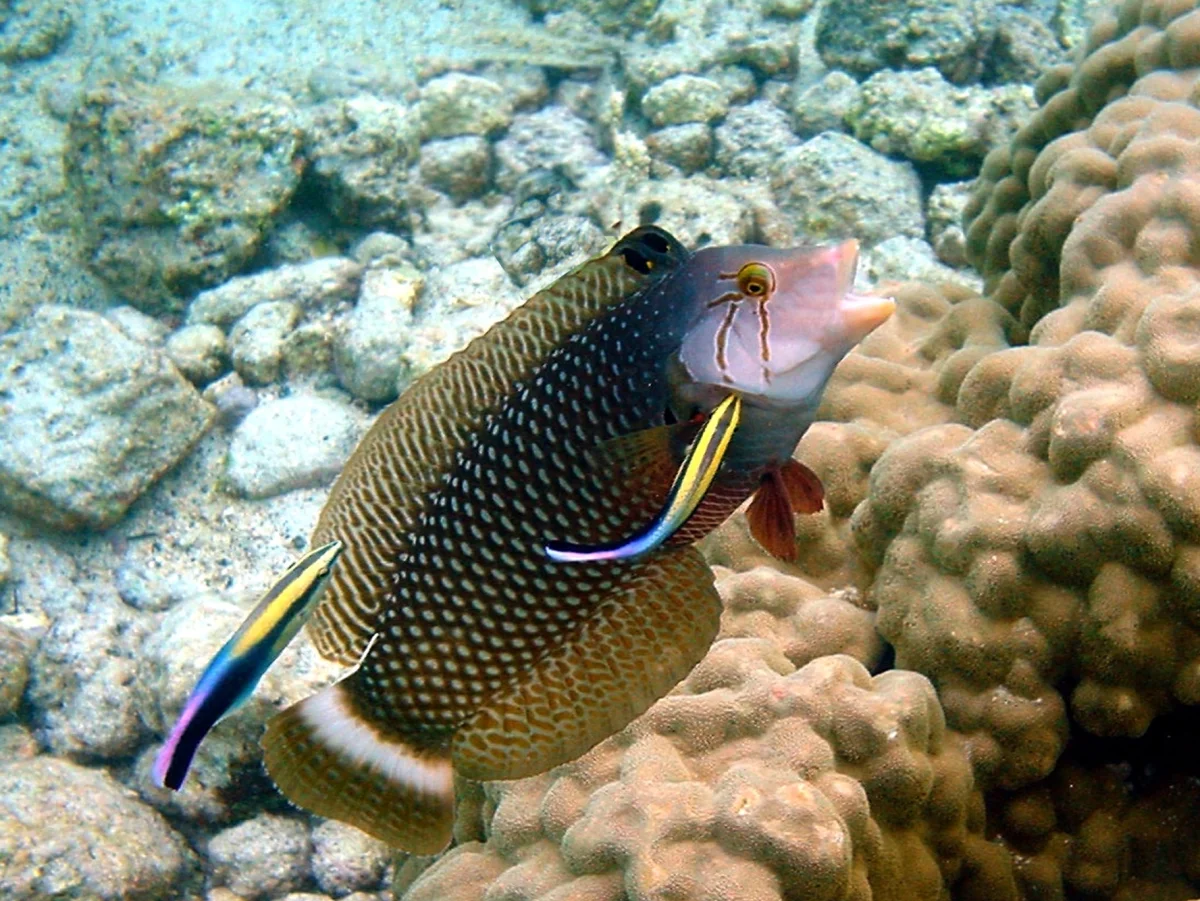
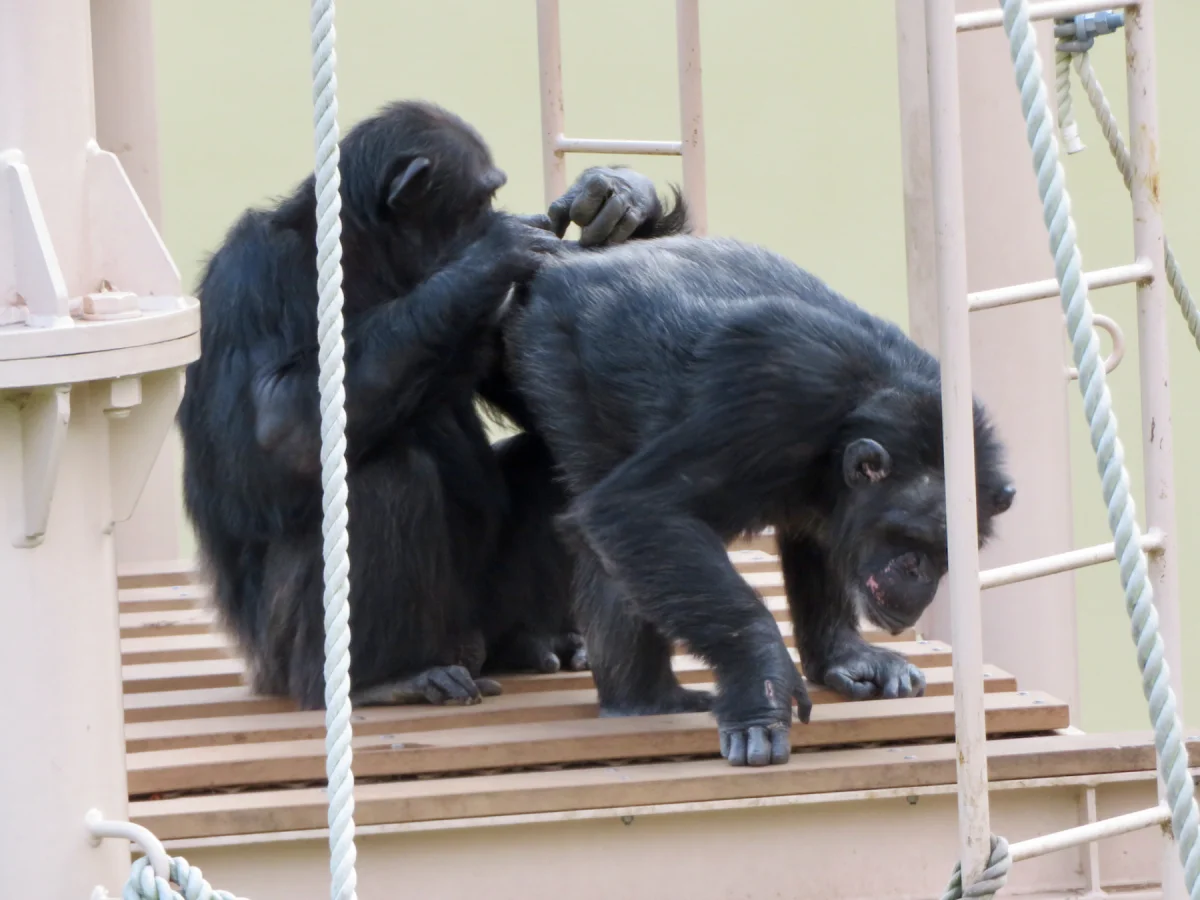
How reciprocal altruism stabilizes cooperation. Returning the favor leads to more help in the future; cheating breaks the loop. The MCAT contrasts this with kin selection, which works without reputation-tracking because the genes themselves benefit. Credit: Tomatose via Wikimedia Commons (CC BY-SA 3.0).A textbook case of cooperation between unrelated animals: cleaner wrasses pick parasites off larger fish that could easily eat them but do not. Reputation, not kinship, sustains the relationship. Credit: Brocken Inaglory via Wikimedia Commons (CC BY-SA 3.0).Allogrooming in chimpanzees - one of the most-studied examples of reciprocal altruism in primates. Individuals who groom are more likely to be groomed in return, supported in fights, and shared food with later. Credit: KKPCW via Wikimedia Commons (CC BY-SA 4.0).
Group Selection
More controversial - altruism might be favored if it benefits the group’s survival, even at cost to the individual. Most biologists think group selection is weak; kin selection and reciprocal altruism do most of the explanatory work.
Foraging Behavior (Game Theory)
Optimal foraging theory predicts that animals will forage in ways that maximize energy gained per unit time, given constraints. Evolutionary game theory extends this to interactions with others - cooperation, competition, and communication all emerge from strategic calculations about fitness.
Distinguish instrumental from hostile aggression.
Click to reveal answer
Instrumental: aggression as a means to an end (mugger taking a wallet). Hostile: aggression driven by anger, aimed at harming for its own sake (fight in a fit of rage). Different motivations, similar outward behavior.
What does the frustration-aggression hypothesis claim?
Click to reveal answer
Dollard et al.: blocked goals (frustration) produce aggression. Berkowitz refined this: frustration produces ANGER, which increases the likelihood of aggression especially when aggressive cues are present (weapons effect).
State Hamilton's rule and explain the intuition.
Click to reveal answer
rB > C. Altruism is favored when the benefit to the recipient (B), weighted by genetic relatedness (r), exceeds the cost to the helper (C). The intuition: help relatives because they share your genes; the closer the relation, the more sacrifice is genetically 'paid.'
How does reciprocal altruism differ from kin selection?
Click to reveal answer
Kin selection favors helping relatives who share your genes. Reciprocal altruism favors helping non-relatives who are likely to return the favor later. Works in stable groups where reputation can be tracked and cheaters punished.
Every person occupies many social positions simultaneously - student, sibling, employee, citizen, friend. Sociology uses a specific vocabulary to describe these positions and the expectations attached to them. The MCAT tests the terminology.
Status
Status is any socially defined position within a group or society. Statuses are attached to people, and people usually hold many at once. Two main types:
Ascribed status. A position assigned to you at birth or imposed without your choice. Gender at birth, race, family of origin, age. Harder to change.
Achieved status. A position earned through your own effort and choices. Occupation, marital status, education level, most accomplishments.
Some statuses are mixes - for instance, being a parent is technically achieved (you chose to have a child) but socially functions more like ascribed once it exists.
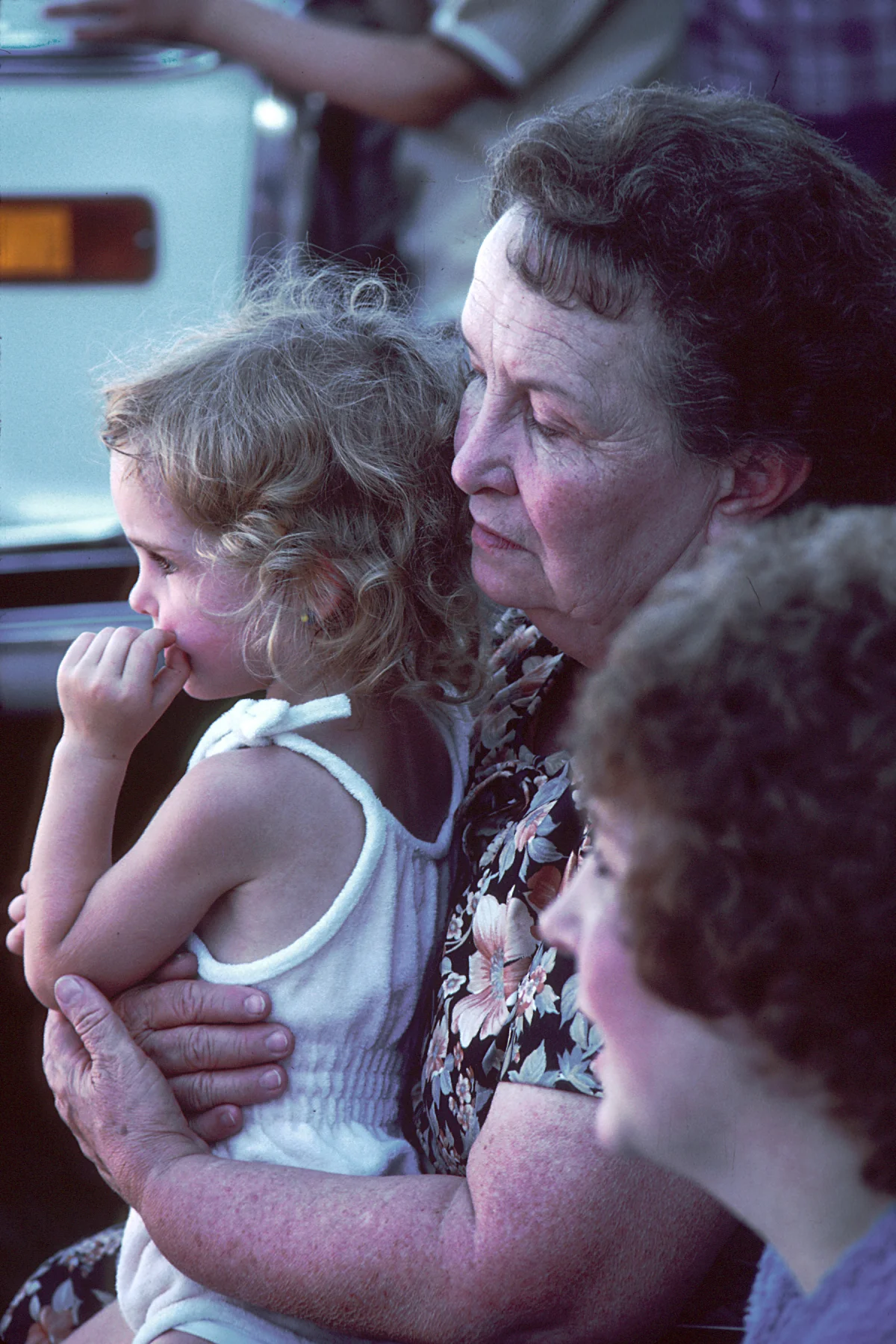
A graduation ceremony - the formal moment a person picks up an achieved status (graduate, degree-holder). Achieved statuses are the result of effort and choice, not birth. Credit: Rica Rentutar via Wikimedia Commons (CC BY 4.0).Three generations together. Family-of-origin status (child, grandchild, sibling) is ascribed - assigned at birth - while statuses such as parent or spouse are achieved through choice. Credit: Linda Bartlett, National Cancer Institute via Wikimedia Commons (Public Domain).
Master Status
A master status is the status that most strongly shapes how others perceive you and that you use to define your identity. For some people, their profession is a master status (“I’m a doctor”). For others, it’s family role (“I’m a mother”) or a defining condition (“I’m a cancer survivor”). A stigmatizing condition often becomes a master status even when the person doesn’t want it to (“I’m an ex-con”).
Sometimes master status is conferred by society, not chosen - race or disability can become a master status even for people who would prefer other identities to be primary.
Roles
A role is the set of expectations and behaviors associated with a particular status. Status is the position; role is the behavior expected of someone in that position.
Being a student = status. Attending class, doing homework, respecting professors = the role of a student.
Being a doctor = status. Diagnosing, treating, and communicating with patients = role.
Role Set
Each status comes with a role set - the collection of roles attached to that single status. A teacher’s role set includes: instructor (toward students), colleague (toward other teachers), employee (toward administration), mentor (toward junior staff).
Role Performance
Role performance is the actual enactment of a role - how a specific person plays the part. Two nurses can occupy the same status with the same role expectations but deliver very different role performances.
A surgical team illustrates several concepts at once: each person holds an achieved status (surgeon, anesthesiologist, scrub nurse), enacts a clearly defined role, and contributes to a role set built around the status of "operating-room clinician." Credit: Almondbite3 via Wikimedia Commons (CC BY-SA 4.0).
Role Strain and Role Conflict
Role strain. Tension within a single role when its multiple components clash. A college professor’s research duties conflict with teaching duties, though both are part of the professor role.
Role conflict. Tension between different roles held by the same person. A working parent feels pulled between work duties (employee role) and family duties (parent role). Both are legitimate roles, but at a given moment they compete.
The distinction is testable: strain is within one role, conflict is between two roles.
Role Exit
Role exit (Helen Ebaugh) is the process of disengaging from a role that had been central to identity and moving into a new one. Examples: leaving the priesthood, retiring, divorcing. Typically involves:
Doubting the current role.
Seeking alternatives.
Making the departure.
Adjusting to the new role and integrating the “ex” into the new identity.
“Ex-nun,” “ex-CEO,” “retired professor” are all role-exit identities that continue to shape the person even after they leave the original role.
Social Structure vs. Agency
Sociology debates how much behavior is shaped by structure (social positions, norms, institutions) versus agency (individual choices and initiative). Most modern sociologists accept that both matter. Structure constrains and enables agency; agency in turn reshapes structure over time.
MCAT passages often invite you to notice whether a description emphasizes structure (statuses, roles, institutions) or agency (personal choices and traits).
Distinguish ascribed from achieved status.
Click to reveal answer
Ascribed: assigned at birth or imposed without choice (sex assigned at birth, race, family of origin). Achieved: earned through effort and choice (occupation, marital status, education). Ascribed is harder to change.
What is the difference between role strain and role conflict?
Click to reveal answer
Role strain: tension WITHIN a single role (a professor's research duties conflicting with teaching duties - both part of the professor role). Role conflict: tension BETWEEN different roles held by the same person (work employee vs. parent).
What is a master status?
Click to reveal answer
The status that most strongly defines how a person is perceived, often dominating other identities. Can be chosen (profession) or imposed (race, stigmatizing condition like 'ex-con' or chronic illness). Not always the person's preferred identity.
What is role exit?
Click to reveal answer
The process of disengaging from a role central to identity and moving into a new one (leaving priesthood, retiring). Typically involves doubt, seeking alternatives, departure, and adjusting to the 'ex' identity. Coined by Helen Ebaugh.
Groups organize social life at every scale, from the family to the nation-state. Sociology classifies groups and organizations using a few key distinctions. The MCAT tests the terminology heavily.
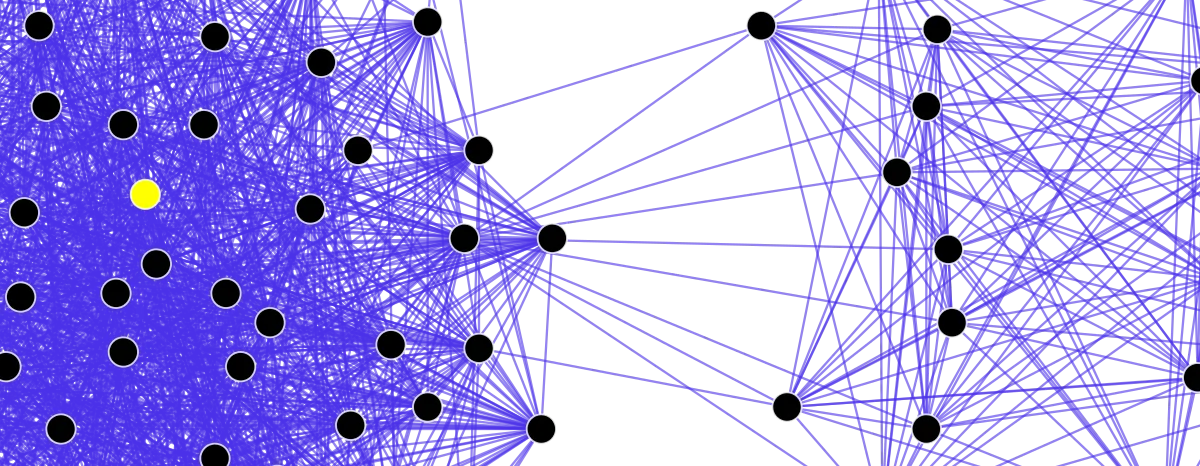
A schematic of a social network. Sociologists use these maps to study primary versus secondary ties, in-groups and out-groups, and how "weak ties" (the green bridges) connect otherwise separate clusters - Granovetter's classic insight. Credit: Віктор Анякін via Wikimedia Commons (CC BY-SA 3.0).
Types of Groups
Primary Groups
Small, intimate, long-lasting groups with strong emotional bonds and face-to-face interaction. Family, close friends, romantic partners. Provide emotional support, identity, and a sense of belonging.
Members of primary groups are valued as whole people, not just for what they do. Primary groups shape self-concept most deeply.
Secondary Groups
Larger, more impersonal, and goal-oriented. Members relate to each other in terms of their roles rather than as whole people. Coworkers, classmates, committee members, church congregations.
Secondary groups typically last as long as the group’s purpose lasts. When the purpose ends (the class finishes, the committee disbands), the group dissolves.
A secondary group can evolve into a primary group - coworkers who become close friends outside work.
Reference Groups
A reference group is a group you use as a standard for evaluating yourself - the group whose opinions you care about and whose norms you adopt. You don’t have to belong to a reference group; aspiring professionals often use their future peers as reference groups before actually joining them.
In-Groups and Out-Groups
Already covered in Chapter 9. In-groups produce favoritism; out-groups get perceived as more homogeneous. Even arbitrary assignment creates these dynamics.
Aggregates and Categories
Aggregate. A collection of people who happen to be in the same place at the same time but don’t interact meaningfully (people waiting at a bus stop).
Category. A collection of people who share a characteristic but don’t interact (all left-handers, all women age 30-34).
Neither counts as a group in the sociological sense, though either can become a group if interaction or shared identity develops.
Formal Organizations
A formal organization is a large, purpose-built group with explicit goals, rules, and hierarchy. Corporations, schools, hospitals, governments. Most modern complex activity happens within formal organizations.
Types of Organizations (Etzioni)
Normative organizations. People join voluntarily because they share the organization’s goals. Political parties, volunteer groups, religious organizations.
Coercive organizations. People join (or are placed) involuntarily. Prisons, mental hospitals under involuntary commitment.
Utilitarian organizations. People join for tangible rewards (typically money). Companies, universities (for credentials).
Weber’s Ideal Bureaucracy
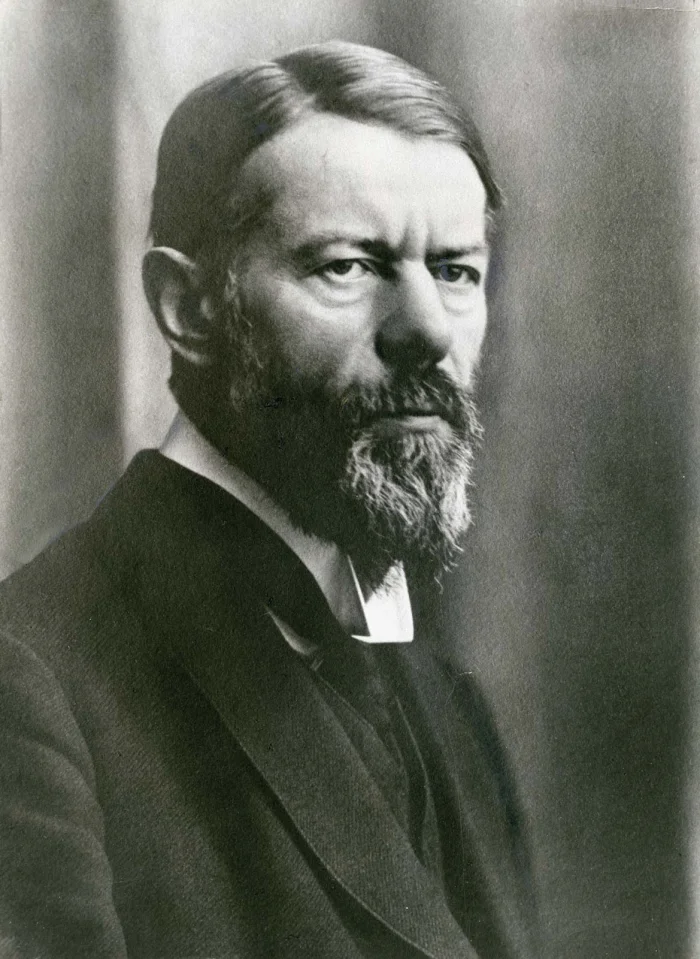
Max Weber (1864-1920), the German sociologist who built the ideal-type model of bureaucracy and warned about the "iron cage" of modern rationality. Credit: Ernst Gottmann via Wikimedia Commons (Public Domain).
Max Weber proposed that the modern organizational form, the bureaucracy, was a rational response to the complexity of industrial society. His “ideal type” (meaning a pure analytical model, not a value judgment) had five features:
Division of labor. Tasks divided into specialized roles, each performed by trained experts.
Hierarchy of authority. Clear chain of command, each position supervised by the one above.
Written rules and regulations. Standard procedures that apply regardless of who is in a role. Ensures consistency.
Impersonality. Decisions based on rules and qualifications, not personal relationships or feelings.
Merit-based hiring and promotion. Positions filled by qualified candidates, advancement based on performance.
Bureaucracies are efficient at producing standardized outputs at scale but can become rigid, alienating, and resistant to change.
The visible face of bureaucracy. Written rules, documentation, and impersonal procedures - core Weber features - are what generate paper mountains like this. The strength is consistency at scale; the cost is the iron cage. Credit: Pizarros via Wikimedia Commons (CC BY-SA 3.0).
The Iron Cage
Weber was ambivalent about bureaucracy. While it maximizes rational efficiency, he worried it traps individuals in an “iron cage” of rule-bound rationality, suppressing spontaneity, creativity, and human meaning. Modern workers who feel ground down by paperwork, procedures, and middle managers are feeling the iron cage.
McDonaldization
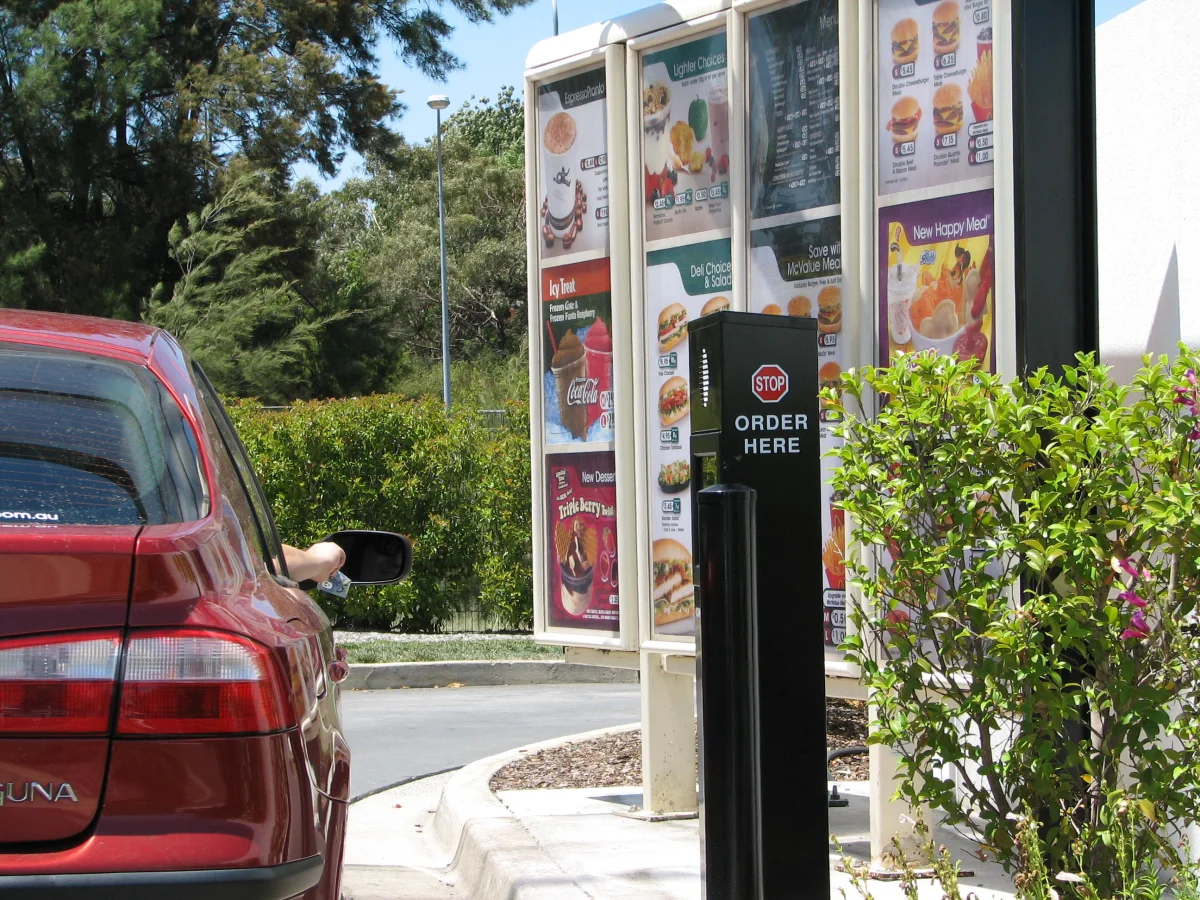
George Ritzer extended Weber’s argument in The McDonaldization of Society. He argued that the fast-food model - standardized, predictable, efficient, with quantified outputs and tight managerial control - has spread far beyond fast food to education, medicine, and leisure.
The drive-thru is McDonaldization in concrete: efficiency (fast service), calculability (numbered combos, fixed portion sizes), predictability (the same Big Mac everywhere on Earth), and control (workflow scripted by management and increasingly by software). Credit: Tim Malone via Wikimedia Commons (CC BY-SA 2.5).
Ritzer’s four dimensions:
Efficiency - fastest path to goal.
Calculability - quantifiable outputs (portion sizes, test scores).
Predictability - same product everywhere.
Control - tight managerial and technological oversight, often replacing human workers with systems.
McDonaldization produces “irrationality of rationality” - the system’s focus on efficiency can undermine the human qualities it was supposed to serve (fast food fuels obesity; standardized education suppresses genuine learning).
Distinguish primary groups from secondary groups.
Click to reveal answer
Primary groups are small, intimate, long-lasting, and valued for emotional bonds (family, close friends). Secondary groups are larger, more impersonal, goal-oriented, and role-based (coworkers, classmates). Primary groups shape self-concept most deeply.
What is a reference group?
Click to reveal answer
A group whose opinions and standards you use to evaluate yourself. You don't need to belong to it - aspiring professionals often use their future peers as reference groups before joining them.
List the five features of Weber's ideal bureaucracy.
Click to reveal answer
(1) Division of labor, (2) hierarchy of authority, (3) written rules and regulations, (4) impersonality in decision-making, (5) merit-based hiring and promotion. An 'ideal type' in Weber's sense means an analytical model, not a value judgment.
What does Ritzer mean by McDonaldization, and what are its four dimensions?
Click to reveal answer
The spread of the fast-food organizational model throughout society. Four dimensions: efficiency, calculability (quantifiable outputs), predictability (standardized products), and control (managerial and technological). Produces 'irrationality of rationality.'
Two last topics for this chapter: the dramaturgical approach to everyday interaction, and the basics of animal behavior that frame the human examples in sociology.
The Dramaturgical Approach (Goffman)
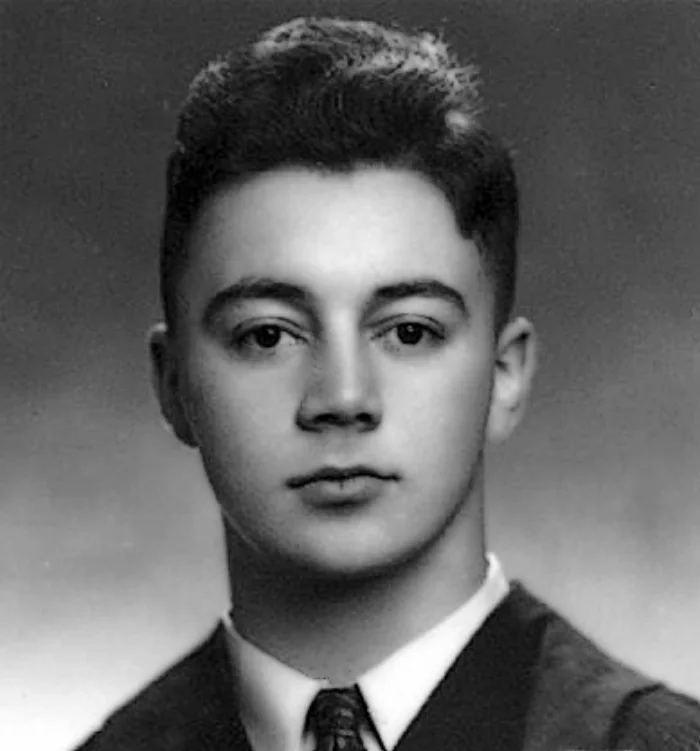
Erving Goffman (1922-1982), Canadian-American sociologist whose The Presentation of Self in Everyday Life (1959) introduced the dramaturgical vocabulary - front stage, back stage, impression management - the MCAT still tests verbatim. Credit: Unknown author via Wikimedia Commons (Public Domain).
Erving Goffman’s The Presentation of Self in Everyday Life (1959) proposed that social life is like theater. People are actors performing roles for various audiences, using impression management to control how others perceive them.
Front Stage and Back Stage
Front stage. Where performance happens - the setting where you maintain a particular identity for an audience. The classroom for a teacher, the exam room for a doctor, the dining area for a restaurant server.
Back stage. Where the performer steps out of character and relaxes. The teacher’s lounge, the doctor’s workroom, the restaurant kitchen. Behaviors here would be inappropriate or embarrassing if seen by the audience.
The boundary matters. An audience member straying “back stage” (a customer wandering into the kitchen) disrupts the performance. Social embarrassment often reflects a slip between stages - being caught in a role you weren’t performing.
Impression Management
Impression management is active effort to control how others perceive you. Dressing for an interview, rehearsing a speech, adjusting your tone on the phone to sound friendly - all impression management.
Most impression management is automatic and unconscious. You don’t deliberately think about how to stand during casual conversation, but you’re still doing it.
Face and Face-Work
Goffman introduced face - the positive social image a person wants to claim in an interaction. Face-work is the effort to maintain one’s own face and protect others’ face. Avoiding topics that would embarrass someone, helping a friend save face after a mistake, offering polite phrases to smooth over awkwardness - all face-work.
Face-work keeps interactions running smoothly. Without it, conversations would constantly collapse into conflict and shame.
Symbolic Interactionism
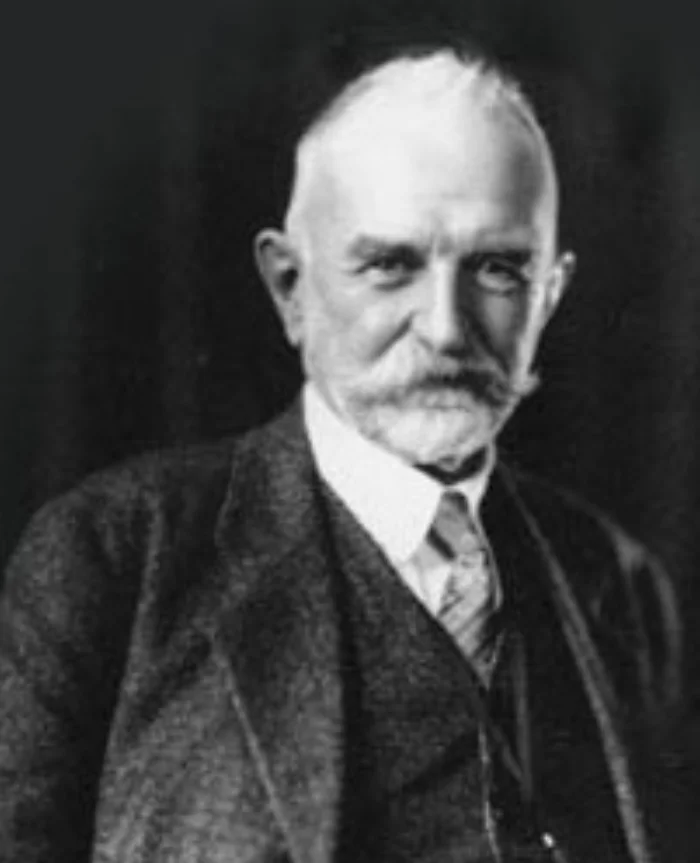
George Herbert Mead (1863-1931), American philosopher and social theorist whose work on the social self - "the I and the me" - laid the groundwork for symbolic interactionism. Credit: Unknown author via Wikimedia Commons (Public Domain).
The theoretical framework that underlies Goffman, Mead, and Cooley. Core claims:
Humans act based on the meanings things have for them. A classroom means different things to a student, a teacher, and a janitor.
Meanings arise through social interaction. We learn what things mean from others, not from the objects themselves.
Meanings are interpreted and modified through ongoing interaction. Meanings are not fixed - they’re renegotiated constantly.
Symbolic interactionism is a micro-level sociology - focused on face-to-face interaction - in contrast with macro-level theories (functionalism, conflict theory) that emphasize large-scale structures.
Animal Behavior
Human behavior didn’t arise in a vacuum. Evolutionary and ethological research on animal behavior frames many MCAT questions.
Foraging
Optimal foraging theory predicts animals will forage in ways that maximize caloric intake per unit of time and risk. An animal must decide:
Where to forage.
What to eat (marginal value).
When to move to a new patch.
Observable choices often match the theoretical predictions, with deviations suggesting additional factors (predation risk, social competition).
A meerkat sentinel scans for predators while the rest of the group forages. Sentinel behavior is a textbook example of trading off individual time spent feeding against group safety - readable through both kin selection and reciprocal altruism lenses. Credit: Bernard DUPONT via Wikimedia Commons (CC BY-SA 4.0).
Mating and Inclusive Fitness
Strategies for maximizing inclusive fitness (own reproduction + that of relatives):
Monogamy. Pair bonding; associated with species where males contribute significantly to raising offspring.
Polygyny. One male, multiple female mates. Common in species where females can raise offspring alone.
Polyandry. One female, multiple male mates. Rarer; sometimes involves paternal care of young.
Promiscuity. No stable bonds; each mating is opportunistic.
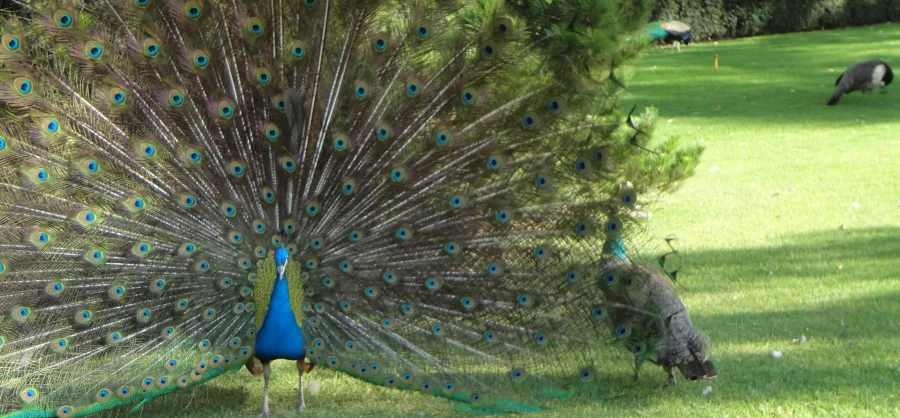
Sexual selection (Darwin): traits that increase mating success evolve even if they cost survival. Peacock tails, songbird displays, deer antlers. Female preference shapes male traits over generations.
The peacock's tail is the textbook case of sexual selection: extravagantly costly to grow and to drag around, but persistently selected by female preference. Survival cost, mating benefit. Credit: Narmadhashree via Wikimedia Commons (CC BY-SA 4.0).A lion pride - one resident male, several breeding females and their cubs - is a classic example of polygyny. Female lions can rear cubs cooperatively, which lowers the value of male parental care and tilts the species away from monogamy. Credit: I've Got It On Film! via Wikimedia Commons (CC BY 2.0).Mourning doves form long-term pair bonds and share parental care - a monogamous mating system. The MCAT often pairs lions and doves to contrast polygyny with monogamy and the parental-investment logic behind each. Credit: Andrew Weitzel via Wikimedia Commons (CC BY-SA 2.0).
Communication and Pheromones
Animals communicate via:
Visual signals (postures, colors).
Auditory signals (calls, songs).
Chemical signals (pheromones - species-specific chemicals that trigger innate responses in other members of the species).
Tactile signals (touch, grooming).
In humans, pheromone use is vestigial - we have a partially functional vomeronasal organ - but visual, auditory, and tactile communication dominate. Nonverbal communication (facial expressions, body language, tone of voice) often carries more weight in interpersonal interactions than the verbal content.
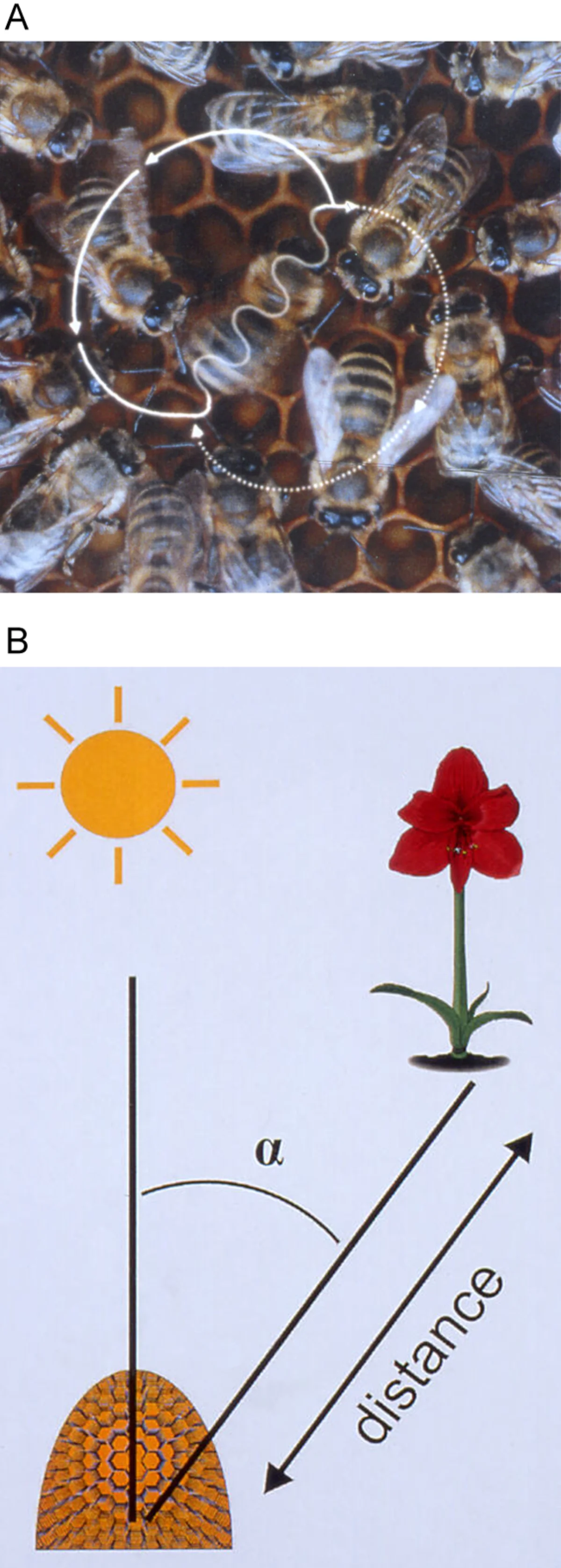
Karl von Frisch's discovery: the honeybee waggle dance is a true communication system. The angle of the straight portion encodes direction relative to the sun and the duration encodes distance to a food source. A high-yield example of non-vocal animal communication. Credit: J. Tautz and M. Kleinhenz via Wikimedia Commons (CC BY 2.5).
Evolutionary Game Theory
Extends classical game theory (prisoner’s dilemma, hawk-dove) to evolution. Strategies succeed if they produce more offspring than alternatives. Cooperation can evolve in repeated interactions when reciprocal strategies (tit-for-tat) outperform constant defection.
What is the difference between Goffman's front stage and back stage?
Click to reveal answer
Front stage: where the social performance happens (classroom for a teacher). Back stage: where the performer steps out of character (teachers' lounge). Behaviors appropriate back stage would be embarrassing if seen front stage.
Define impression management.
Click to reveal answer
Active effort to control how others perceive you. Includes dressing for context, adjusting tone, choosing words carefully, and maintaining a particular demeanor. Much of it is automatic and unconscious.
What are the three core claims of symbolic interactionism?
Click to reveal answer
(1) Humans act based on meanings things have for them. (2) Meanings arise through social interaction, not from objects themselves. (3) Meanings are interpreted and modified through ongoing interaction. A micro-level sociology.
What are pheromones, and how do they differ from regular chemical signals?
Click to reveal answer
Pheromones are species-specific chemical signals that trigger innate (not learned) responses in other members of the same species. Common in insects and mammals for mating, alarm, and territorial marking. Vestigial in humans - visual and auditory communication dominate.