
Groups and Organizations
Groups organize social life at every scale, from the family to the nation-state. Sociology classifies groups and organizations using a few key distinctions. The MCAT tests the terminology heavily.

Types of Groups
Primary Groups
Small, intimate, long-lasting groups with strong emotional bonds and face-to-face interaction. Family, close friends, romantic partners. Provide emotional support, identity, and a sense of belonging.
Members of primary groups are valued as whole people, not just for what they do. Primary groups shape self-concept most deeply.
Secondary Groups
Larger, more impersonal, and goal-oriented. Members relate to each other in terms of their roles rather than as whole people. Coworkers, classmates, committee members, church congregations.
Secondary groups typically last as long as the group’s purpose lasts. When the purpose ends (the class finishes, the committee disbands), the group dissolves.
A secondary group can evolve into a primary group - coworkers who become close friends outside work.
Reference Groups
A reference group is a group you use as a standard for evaluating yourself - the group whose opinions you care about and whose norms you adopt. You don’t have to belong to a reference group; aspiring professionals often use their future peers as reference groups before actually joining them.
In-Groups and Out-Groups
Already covered in Chapter 9. In-groups produce favoritism; out-groups get perceived as more homogeneous. Even arbitrary assignment creates these dynamics.
Aggregates and Categories
- Aggregate. A collection of people who happen to be in the same place at the same time but don’t interact meaningfully (people waiting at a bus stop).
- Category. A collection of people who share a characteristic but don’t interact (all left-handers, all women age 30-34).
Neither counts as a group in the sociological sense, though either can become a group if interaction or shared identity develops.
Formal Organizations
A formal organization is a large, purpose-built group with explicit goals, rules, and hierarchy. Corporations, schools, hospitals, governments. Most modern complex activity happens within formal organizations.
Types of Organizations (Etzioni)
- Normative organizations. People join voluntarily because they share the organization’s goals. Political parties, volunteer groups, religious organizations.
- Coercive organizations. People join (or are placed) involuntarily. Prisons, mental hospitals under involuntary commitment.
- Utilitarian organizations. People join for tangible rewards (typically money). Companies, universities (for credentials).
Weber’s Ideal Bureaucracy
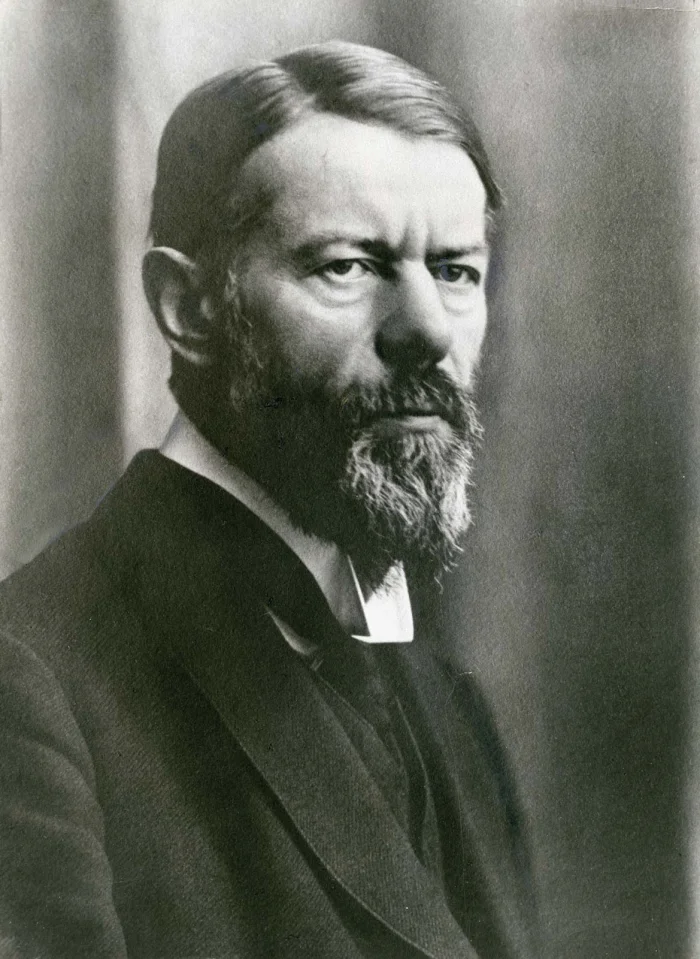
Max Weber proposed that the modern organizational form, the bureaucracy, was a rational response to the complexity of industrial society. His “ideal type” (meaning a pure analytical model, not a value judgment) had five features:
- Division of labor. Tasks divided into specialized roles, each performed by trained experts.
- Hierarchy of authority. Clear chain of command, each position supervised by the one above.
- Written rules and regulations. Standard procedures that apply regardless of who is in a role. Ensures consistency.
- Impersonality. Decisions based on rules and qualifications, not personal relationships or feelings.
- Merit-based hiring and promotion. Positions filled by qualified candidates, advancement based on performance.
Bureaucracies are efficient at producing standardized outputs at scale but can become rigid, alienating, and resistant to change.

The Iron Cage
Weber was ambivalent about bureaucracy. While it maximizes rational efficiency, he worried it traps individuals in an “iron cage” of rule-bound rationality, suppressing spontaneity, creativity, and human meaning. Modern workers who feel ground down by paperwork, procedures, and middle managers are feeling the iron cage.
McDonaldization
George Ritzer extended Weber’s argument in The McDonaldization of Society. He argued that the fast-food model - standardized, predictable, efficient, with quantified outputs and tight managerial control - has spread far beyond fast food to education, medicine, and leisure.
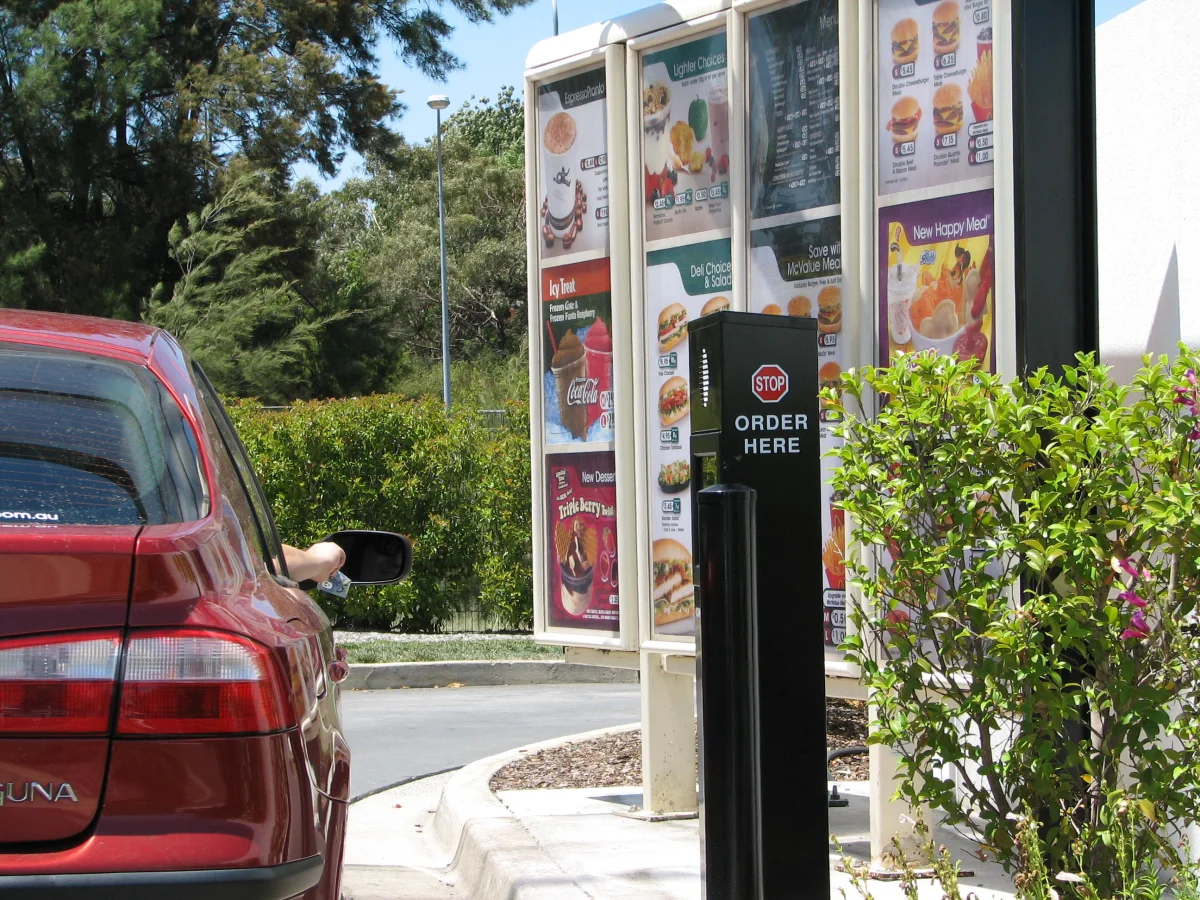
Ritzer’s four dimensions:
- Efficiency - fastest path to goal.
- Calculability - quantifiable outputs (portion sizes, test scores).
- Predictability - same product everywhere.
- Control - tight managerial and technological oversight, often replacing human workers with systems.
McDonaldization produces “irrationality of rationality” - the system’s focus on efficiency can undermine the human qualities it was supposed to serve (fast food fuels obesity; standardized education suppresses genuine learning).