Sociology’s four classic theoretical lenses each highlight different aspects of social life. None is “right”; each illuminates different questions. The MCAT expects you to recognize the signature of each.
Macro vs. Microsociology
Macrosociology studies large-scale social structures and institutions - how societies, governments, economies, and social classes work. Uses aggregate data and historical analysis. Functionalism and conflict theory are macro.
Microsociology studies face-to-face interaction - how people construct meaning and identity in everyday encounters. Uses observation and interviews. Symbolic interactionism is micro.
Some theories (like social constructionism) operate at both levels.
Structural Functionalism
Functionalism views society as a complex system of interrelated parts, each contributing to the stability and functioning of the whole. The body metaphor: just as organs serve functions in the body, social institutions (family, education, religion, government) serve functions for society.
Key figures:
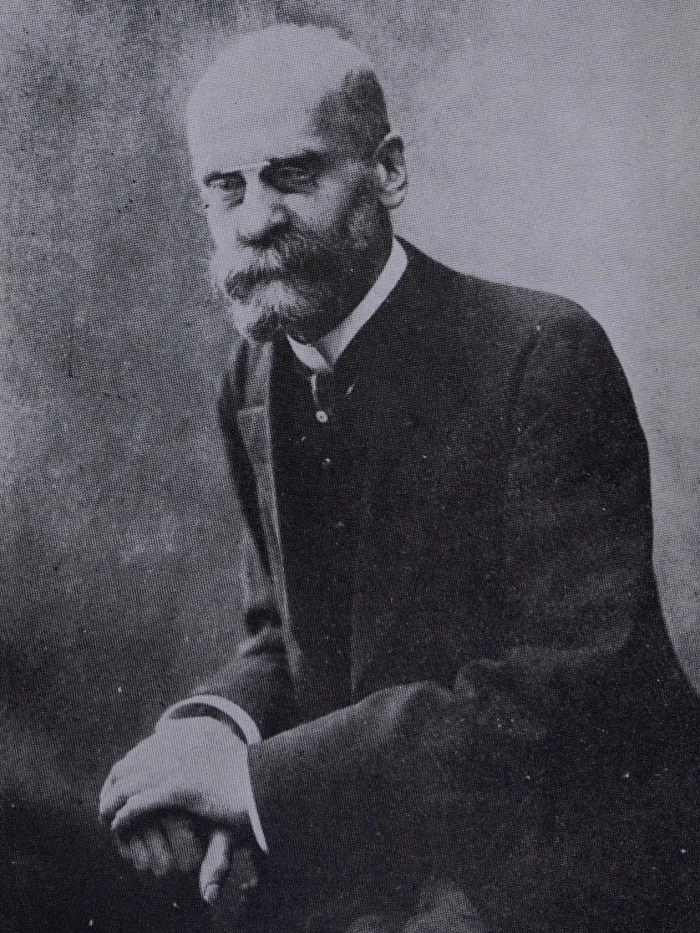
Emile Durkheim. Argued that social facts (norms, values, institutions) exist above the individual and exert pressure on behavior. Studied suicide rates as a sociological phenomenon shaped by social integration, not just individual psychology.
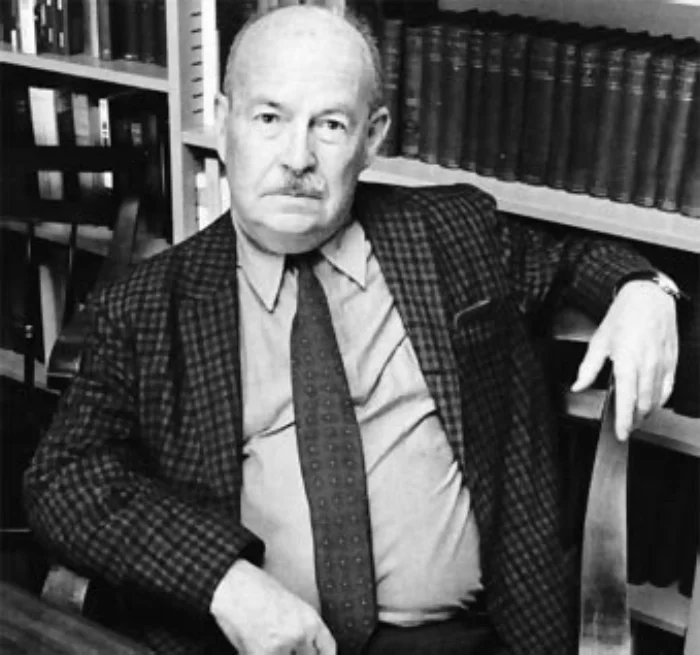
Talcott Parsons. Elaborated functionalism in the 20th century. Argued all societies must solve four functional problems (AGIL: Adaptation, Goal attainment, Integration, Latency).
Emile Durkheim (1858–1917), founder of modern sociology and a foundational functionalist. His Suicide (1897) showed that even an act seemingly as private as suicide is shaped by social forces - integration, regulation, and shared norms. Credit: Unknown author via Wikimedia Commons (Public Domain).Title page of Durkheim's Le Suicide (1897). By treating suicide rates as a social fact - varying systematically across religions, marital statuses, and historical moments - Durkheim helped establish sociology as a science distinct from psychology. Credit: Internet Archive / Zyephyrus via Wikimedia Commons (Public Domain).Talcott Parsons (1902–1979), the leading 20th-century functionalist. He systematized functionalism with the AGIL scheme and described the patient role with the "sick role" model still tested on the MCAT. Credit: Anonymous via Wikimedia Commons (Public Domain).
Manifest and Latent Functions
Robert Merton distinguished:
Manifest functions - the intended, recognized consequences of a social institution or practice. Schools manifestly function to educate children.
Latent functions - unintended, unrecognized consequences. Schools also latently function as marriage markets, babysitting services, and sorting mechanisms for social class.
Dysfunctions - consequences that reduce stability. Crime is usually a dysfunction; so is burnout in healthcare workers.
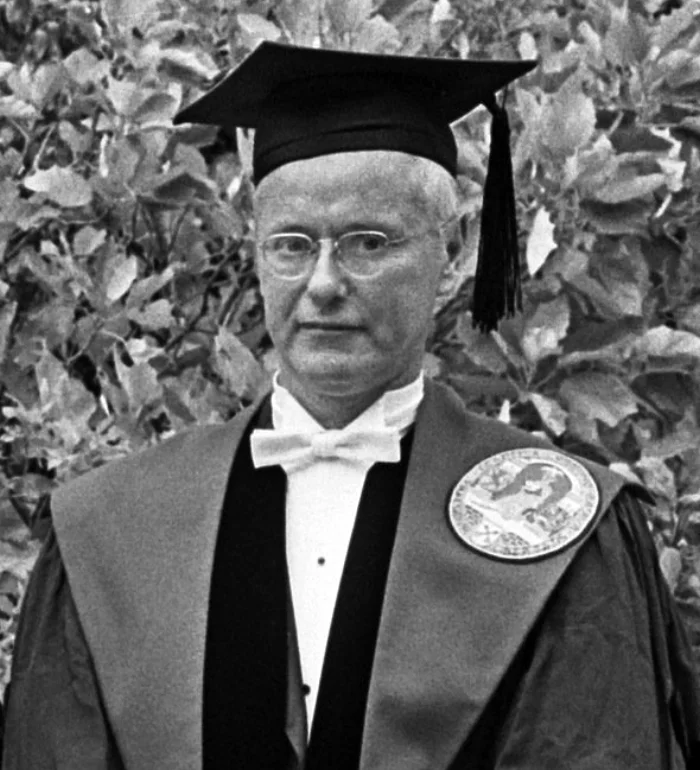
Robert K. Merton (1910–2003) extended functionalism by distinguishing manifest, latent, and dysfunctional consequences of social practices. The MCAT routinely uses these terms in passages about institutions. Credit: Eric Koch for Anefo via Wikimedia Commons (CC0).
Functionalism is good at explaining stability and why institutions persist. It struggles with change, conflict, and systemic inequality - critics argue it justifies the status quo by assuming everything has a function.
Conflict Theory
Conflict theory views society as an arena of struggle among groups competing for scarce resources (wealth, power, status). Rather than stability, it emphasizes conflict, inequality, and change.
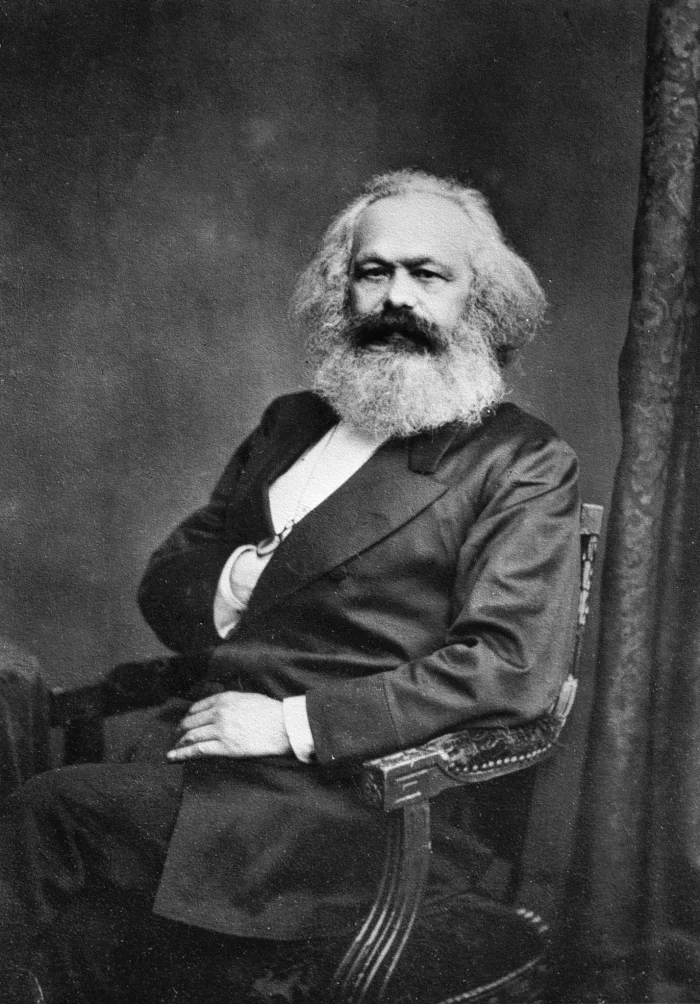
Key figure: Karl Marx. He analyzed capitalist society as a struggle between:
Bourgeoisie - the capitalist class that owns the means of production.
Proletariat - the working class that sells labor to the bourgeoisie.
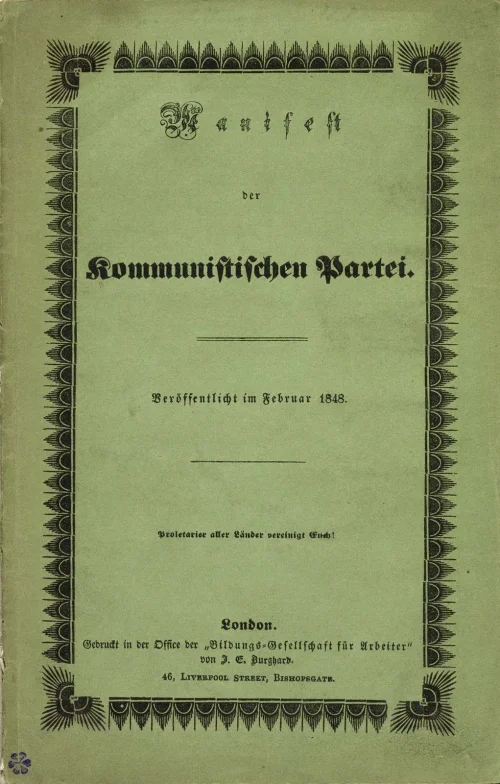
Karl Marx (1818–1883), the founder of conflict theory. His class-based analysis of capitalism (bourgeoisie vs. proletariat) is the prototype every modern conflict theory builds on. Credit: John Jabez Edwin Mayall via Wikimedia Commons (Public Domain).The original 1848 German edition of Marx and Engels' Manifesto of the Communist Party. Its analysis of class conflict ("the history of all hitherto existing society is the history of class struggles") seeded the entire conflict-theory tradition. Credit: Marx & Engels via Wikimedia Commons (Public Domain).
Marx predicted that class conflict would eventually produce revolution and a classless society. While revolutions in his predicted form largely didn’t materialize, his framework for analyzing power and inequality influences sociology to this day.
Modern conflict theory has expanded beyond economic class to include conflicts around race, gender, sexuality, religion, and global inequality.
Max Weber added other dimensions of stratification: class (economic), status (prestige), and party (political power). Inequality exists along multiple axes.
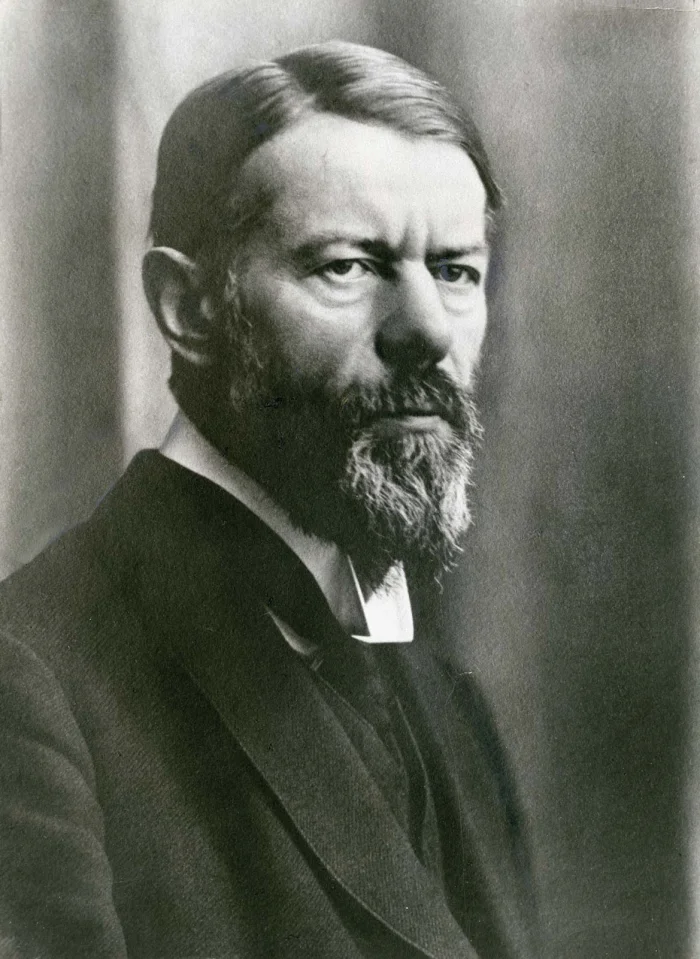
Max Weber (1864–1920), one of the founders of sociology alongside Marx and Durkheim. He expanded conflict theory beyond economic class to include status and party, theorized the three types of authority, and traced the rise of bureaucratic rationality (the "iron cage"). Credit: Ernst Gottmann via Wikimedia Commons (Public Domain).
Conflict theory explains inequality, oppression, and social change well. Critics argue it emphasizes conflict at the expense of cooperation and stability.
Symbolic Interactionism
Symbolic interactionism (already introduced in Chapter 10) focuses on how people create meaning through face-to-face interaction, using language and other symbols. Micro-level.
Key figures:
George Herbert Mead. The self emerges from social interaction. Three stages (preparatory, play, game) culminate in the ability to take the “generalized other’s” perspective.
Herbert Blumer. Coined the term “symbolic interactionism.” Three core principles: meanings guide action, meanings arise from social interaction, meanings are interpreted.
Erving Goffman. Dramaturgical approach - everyday life as theatrical performance, with front stage, back stage, and impression management.
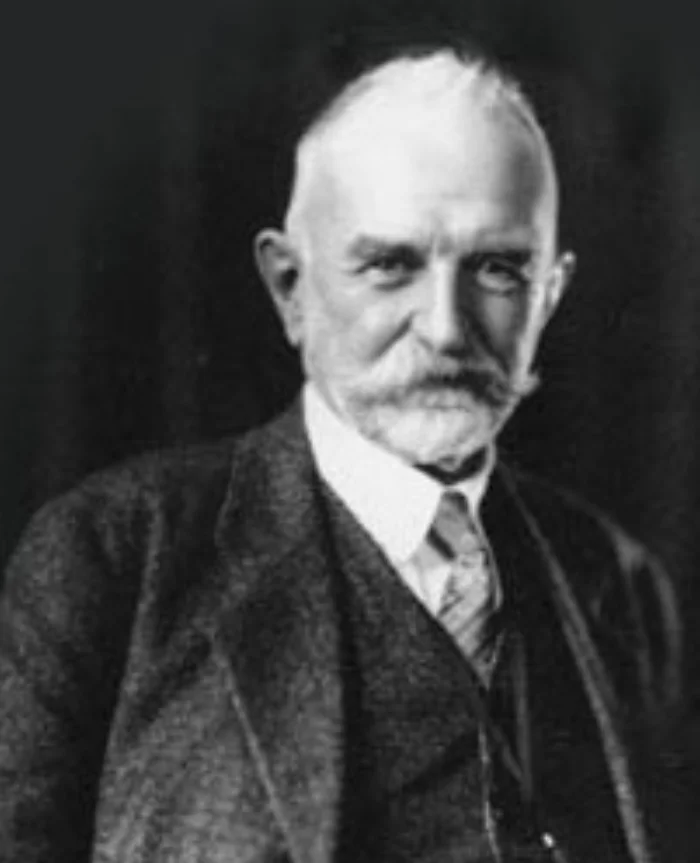
George Herbert Mead (1863–1931), founder of symbolic interactionism. His account of the developing self (preparatory, play, game stages culminating in the "generalized other") is high-yield MCAT material. Credit: Unknown via Wikimedia Commons (Public Domain).Erving Goffman (1922–1982), whose dramaturgical analysis treats everyday life as theatrical performance with front stage, back stage, and impression management. The doctor-patient encounter is a textbook front-stage performance. Credit: Unknown via Wikimedia Commons (Public Domain).
Symbolic interactionism explains how identities are constructed, how stigma is reproduced in interactions, and how meanings shift over time. Critics argue it neglects large-scale structures.
Comparing the Four Perspectives
Theory
Level
Central Concept
Key Figure
Functionalism
Macro
Society as system of parts with functions
Durkheim
Conflict theory
Macro
Competition over scarce resources
Marx
Symbolic interactionism
Micro
Meaning-making in interaction
Mead, Goffman
Distinguish manifest from latent functions, with an example.
Click to reveal answer
Manifest: intended, recognized consequences (schools educate children). Latent: unintended, unrecognized consequences (schools also function as marriage markets, babysitting services, social-class sorters). Both shape society; only manifest functions are usually recognized.
What did Marx identify as the key struggle in capitalist society?
Click to reveal answer
Between the bourgeoisie (owners of the means of production) and the proletariat (working class who sell labor). Marx predicted class conflict would eventually produce revolution and a classless society.
Which of the four theoretical perspectives is primarily a micro-level theory?
Click to reveal answer
Symbolic interactionism. Focuses on face-to-face interaction, meaning-making, and identity construction. Functionalism and conflict theory are macro-level (focused on structures and institutions).
Beyond the four classic theories, three more perspectives show up on the MCAT. Each emerged to address gaps in functionalism, conflict theory, and symbolic interactionism.
Feminist Theory
Feminist theory is a type of conflict theory focused on gender inequality. It examines how patriarchal structures - the historical and continuing dominance of men in positions of power - shape social institutions, including family, workplace, politics, and medicine.
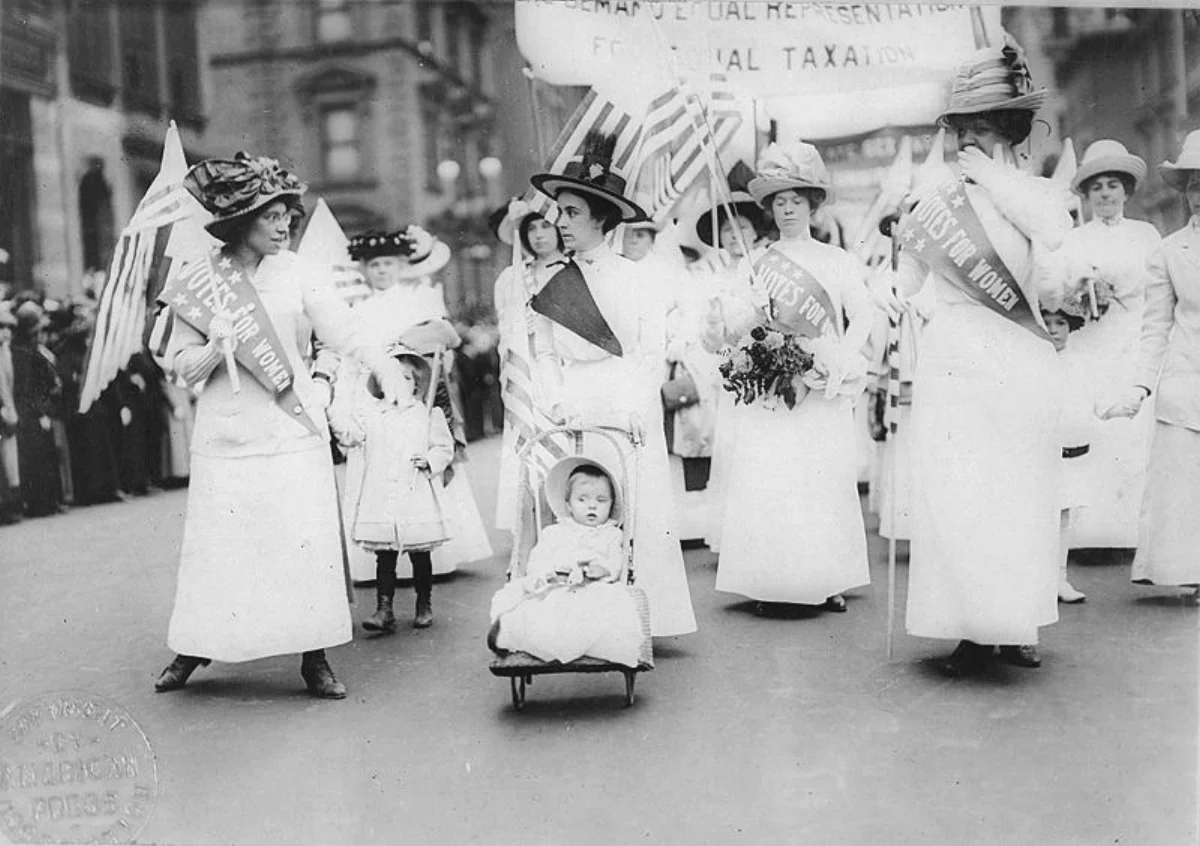
Suffragists march in New York City in 1912 demanding the vote, decades before women could legally cast a ballot in U.S. federal elections. Feminist theory frames such struggles as part of a broader analysis of structural gender inequality, not just individual prejudice. Credit: Library of Congress via Wikimedia Commons (Public Domain).
Key claims:
Gender is a social construction, not just biological.
Inequality between men and women is structural, not individual.
Power relations shape knowledge production - traditionally “neutral” science often reflects male perspectives.
Intersectionality
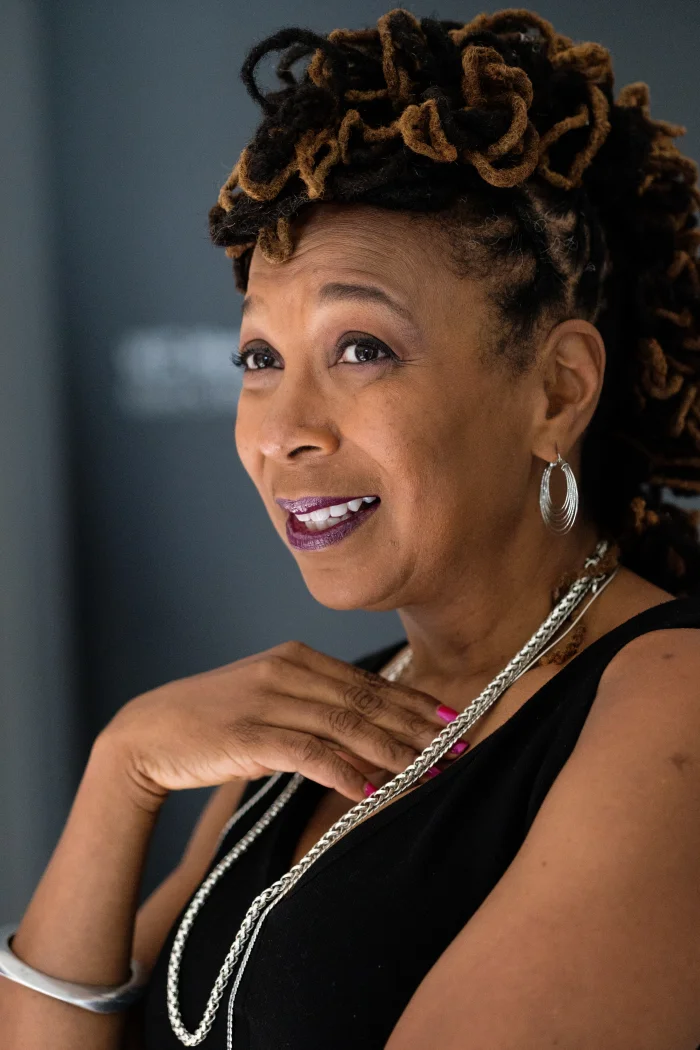
Intersectionality (Kimberlé Crenshaw) is the idea that different axes of oppression (race, gender, class, sexuality, disability) intersect and produce unique experiences. A Black woman’s experience of discrimination isn’t simply the sum of racism and sexism - it’s a unique intersection of the two that can’t be captured by either alone.
Kimberlé Crenshaw, the legal scholar who coined intersectionality in 1989 to capture how overlapping axes of oppression - race, gender, class, sexuality - produce experiences that can't be reduced to any one category. The framework is now central to health-disparities research. Credit: Mohamed Badarne via Wikimedia Commons (CC BY-SA 4.0).
Intersectionality has been hugely influential in contemporary sociology and has spread into medicine, where it informs research on health disparities.
Rational Choice and Exchange Theory
Rational choice theory assumes that individuals make decisions by weighing costs and benefits to maximize their utility. An economic logic applied to social behavior.
Exchange Theory
A variant: exchange theory (George Homans) frames social interactions as exchanges of valued resources - attention, support, approval, sex, money. Relationships persist when both parties perceive the exchange as balanced or beneficial.
Applications:
Why people stay in unfair relationships despite costs (perceived investment, perceived alternatives).
Why patients “shop” for doctors based on perceived fit and benefit.
Why people cooperate in repeated interactions (reputation is a resource).
Limits: assumes people always know their preferences, act on them rationally, and have good information. Real people often fail all three (covered extensively in behavioral economics - Kahneman, Tversky, etc. from Chapter 4).
Social Constructionism
Social constructionism argues that many things we treat as objective reality are actually constructed through social agreements and practices. Examples:
Race. Biologically a weak concept (more genetic variation within “races” than between them), but socially a powerful reality. Its categories and meanings are constructed - and change over time (Italian Americans were not always considered “white” in the U.S.).
Gender. Biologically, sex categories have some basis, but gender roles, identities, and expectations are culturally constructed and vary across time and place.
Mental illness. Diagnostic categories change (homosexuality was a mental illness in the DSM until 1973). What counts as “disorder” depends on social context.
Crime. What counts as criminal varies across cultures and history. Marijuana use was criminal and is now legal in many places.
Note that “socially constructed” doesn’t mean “not real.” Race, gender, and mental illness have very real effects on people’s lives. It means their categories and meanings are products of human agreement, not simple facts of nature.
Social constructionism is compatible with symbolic interactionism (both focus on meaning-making) and with conflict theory (both often examine how categories serve power interests).
What is intersectionality, and who popularized the term?
Click to reveal answer
Intersectionality (Kimberlé Crenshaw): different axes of oppression (race, gender, class, sexuality, disability) intersect to produce unique experiences not captured by any single dimension alone. Hugely influential in contemporary sociology and health disparities research.
What does exchange theory propose about social relationships?
Click to reveal answer
Social interactions are exchanges of valued resources (attention, support, sex, money). Relationships persist when both parties perceive the exchange as beneficial or balanced. A rational-choice-based framework for interactions.
If something is 'socially constructed,' does that mean it is not real?
Click to reveal answer
No. 'Socially constructed' means the CATEGORIES and MEANINGS are products of human agreement and interaction, not simple facts of nature. The effects are very real - race, gender, and mental illness have real consequences even though their definitions are social.
A social institution is a stable arrangement of norms, roles, and activities that meets a basic social need. Every society has some form of family, education, religion, government, economy, and healthcare system - though the specifics vary dramatically. This section covers the first three.
The Family
The family is typically considered the most basic social institution.
Functions
Reproduction and child-rearing - producing and raising the next generation.
Socialization - primary agent of early socialization.
Economic support - sharing resources among members.
Emotional support - intimate bonds and caregiving.
Regulation of sexuality - cultural rules about sexual partnerships.
Social placement - assigning children a family-based status in the broader society.
Family Types
Nuclear family - parents and their children. Common in industrial societies.
Extended family - nuclear family plus additional relatives (grandparents, aunts, uncles). Common worldwide; historically dominant.
Single-parent family - one parent with children. Increasingly common.
Blended family - parents with children from previous relationships.
Same-sex families - legally recognized in many jurisdictions.
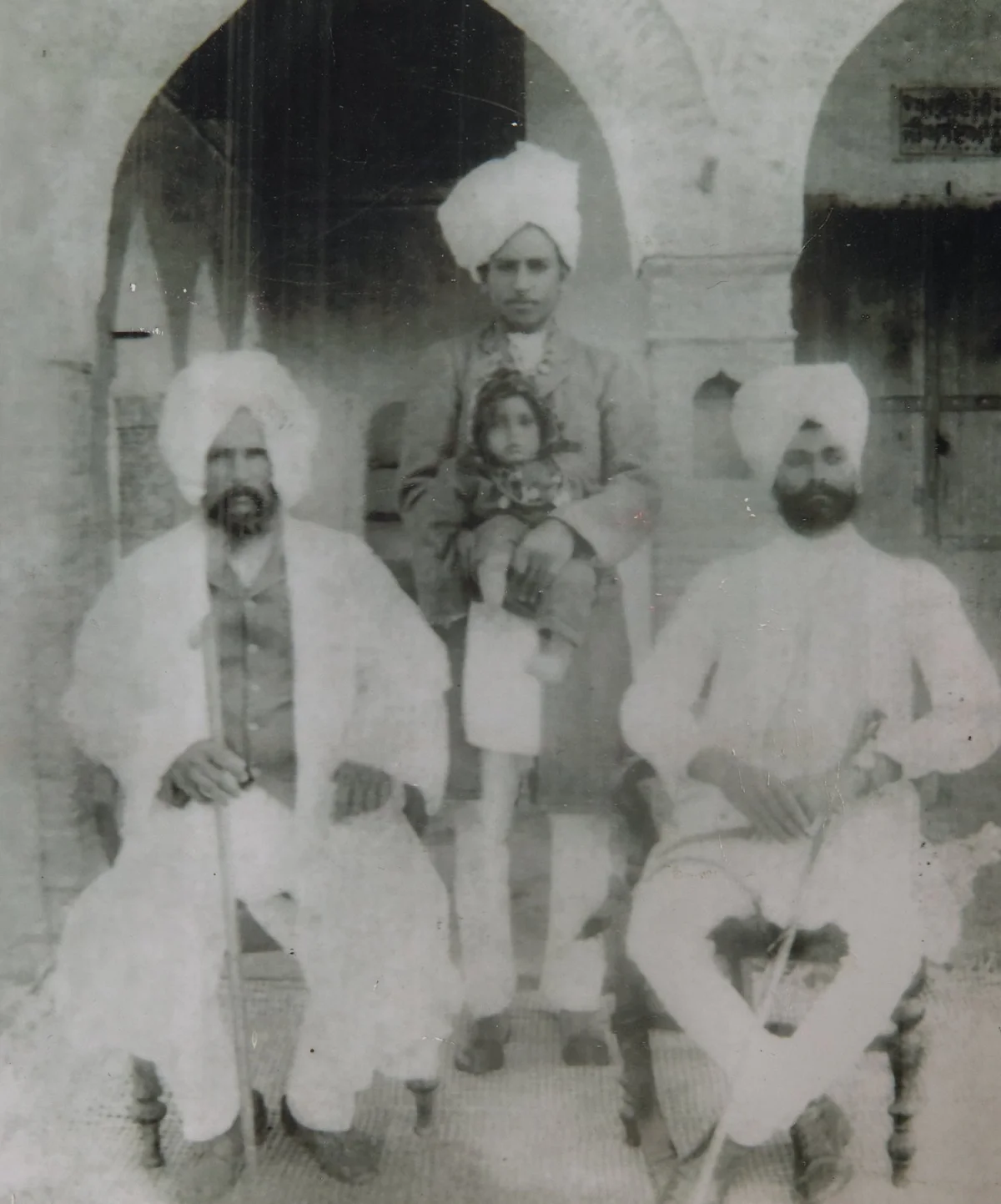
Three generations of one family seated together (1909). The extended family - multiple generations sharing space and resources - is historically the dominant form worldwide; the isolated nuclear family is a relatively recent industrial-era pattern. Credit: Unknown photographer via Wikimedia Commons (Public Domain).
Marriage Patterns
Monogamy - one spouse at a time (serial monogamy allows multiple marriages sequentially).
Polygamy - multiple spouses.
Polygyny - one husband, multiple wives. Most common form of polygamy globally.
Polyandry - one wife, multiple husbands. Rare.
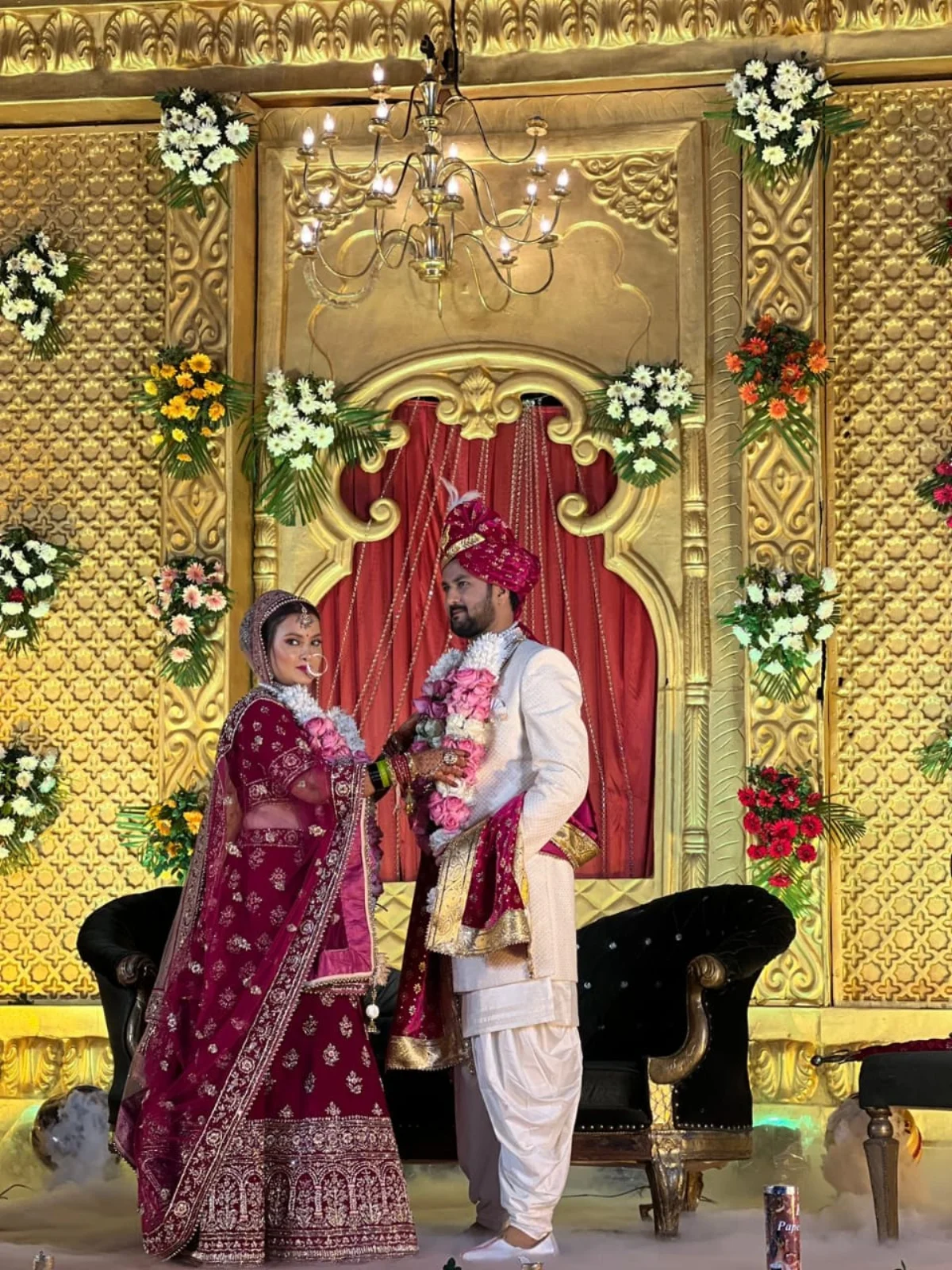
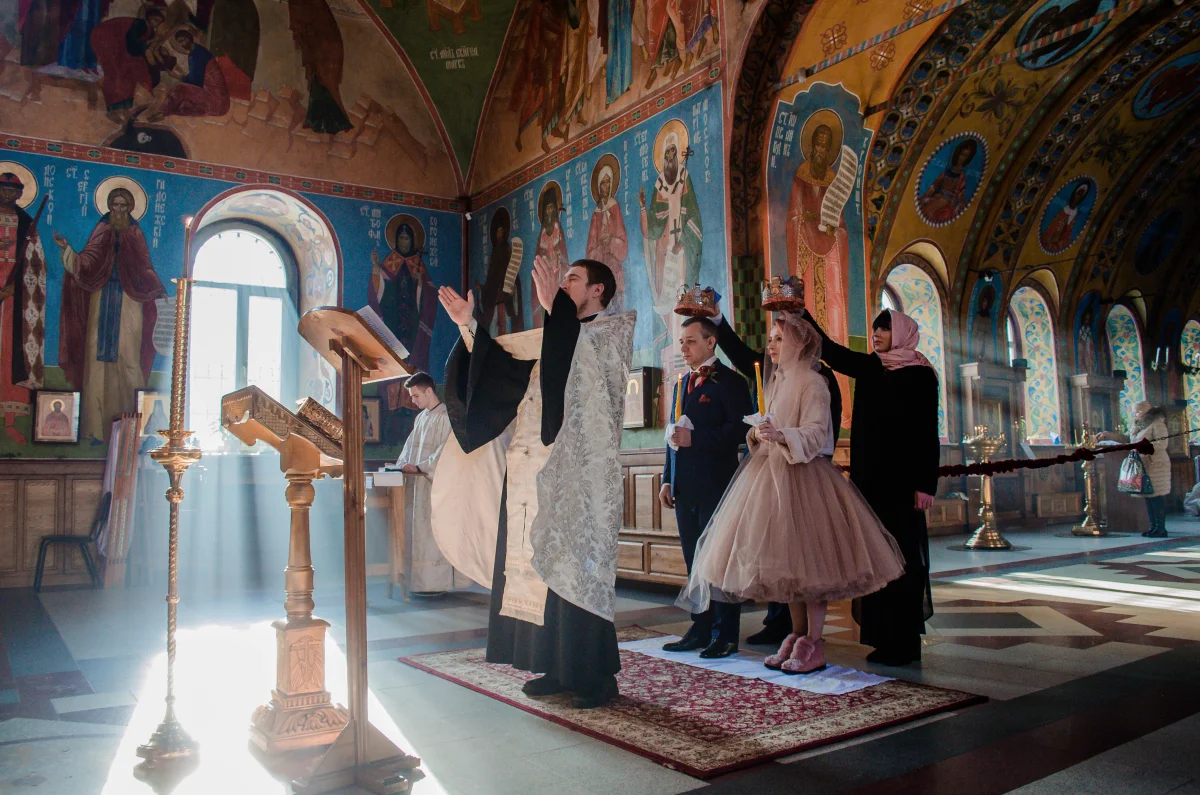
An Indian Hindu wedding. The specific rituals (garland exchange, sacred fire, wedding mandap) vary widely across cultures, but every society regulates partnership through some marriage institution - and the MCAT expects you to recognize monogamy, polygyny, and polyandry as the three basic patterns. Credit: Imakanksha via Wikimedia Commons (CC BY-SA 4.0).A Russian Orthodox Christian wedding inside a frescoed church. Wedding rites vary, but the function - publicly legitimating a partnership and embedding it in kinship and religious networks - is near-universal across societies. Credit: Виктория Злых via Wikimedia Commons (CC BY-SA 4.0).
Kinship Systems
Patrilineal - descent traced through the father.
Matrilineal - descent traced through the mother.
Bilateral - descent traced through both (common in industrial societies).
Residence Patterns
Patrilocal - newlyweds live near husband’s family.
Matrilocal - near wife’s family.
Neolocal - new home, away from both families (modern Western norm).
Functionalist vs. Conflict Views
Functionalist. Family provides essential functions (reproduction, socialization, economic support).
Conflict. Family reproduces class, gender, and racial inequalities. Historically, marriage law subordinated women; inheritance concentrates wealth within classes.
Education
Functions
Manifest. Teaching knowledge and skills; certifying competence.
Latent. Socialization into norms and values; sorting/tracking individuals into occupational slots; delaying labor-market entry; providing childcare during workdays.
The Hidden Curriculum
A modern elementary school classroom. The arrangement itself - rows of identical desks, a single front, scheduled lessons, bells - teaches the hidden curriculum of punctuality, hierarchy, and obedience long before any official subject is taught. Credit: Leo-setä via Wikimedia Commons (CC BY 2.0).
Jean Anyon, Samuel Bowles, and others documented the hidden curriculum: schools teach more than the official subjects. Implicit lessons include obedience to authority, punctuality, respect for hierarchy, competition, and conformity. Critics argue the hidden curriculum reproduces class inequality by preparing working-class students for working-class jobs and middle-class students for middle-class jobs.
Tracking
Tracking assigns students to different academic paths based on perceived ability. Advocates argue it matches instruction to student needs. Critics argue it reinforces inequality - track placement often correlates with parental SES more than with innate ability, and low-track students receive fewer resources and lower expectations.
Functionalist vs. Conflict
Functionalist. Education transmits culture, develops talent, and prepares workers.
Conflict. Education legitimizes inequality by making class-based outcomes look meritocratic. The “sorting” function reproduces class structure across generations.
Religion
Religion is a unified system of beliefs and practices concerning sacred things - things set apart as extraordinary, inspiring awe or reverence.
Functions
Meaning. Answers to ultimate questions about existence, death, and purpose.
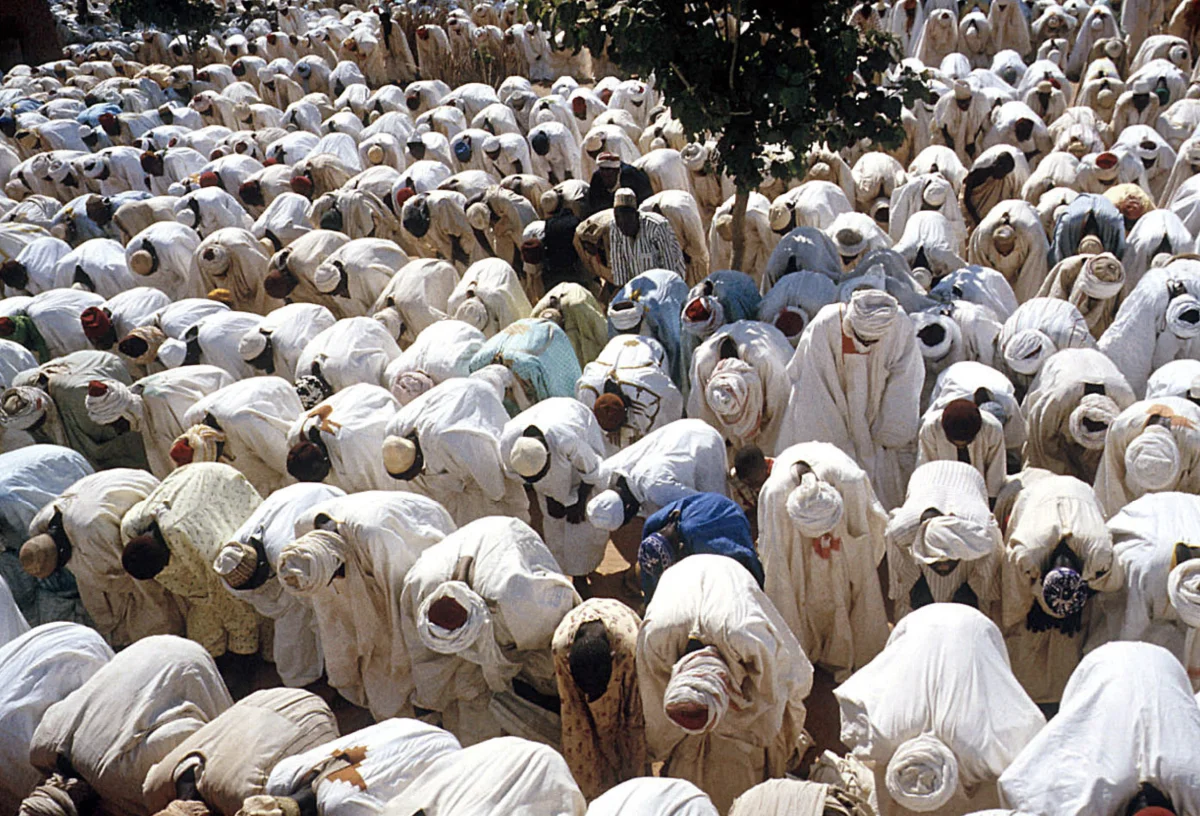
Social solidarity. Shared rituals bond members. Durkheim: the “sacred” is society worshipping itself.
Moral guidance. Shared ethical frameworks.
Social control. Internalized rules backed by divine authority.
Friday prayers at the Masallacin Bello mosque in Sokoto, Nigeria. Synchronized ritual is a textbook example of Durkheim's claim that religion's deepest function is collective effervescence - bonding members through shared sacred practice. Credit: Eliot Elisofon, National Museum of African Art (Smithsonian) via Wikimedia Commons (Public Domain).
Types of Religious Organizations
Ecclesia. A state religion - nearly universal membership in a society, integrated with political power (historical Catholic Church in medieval Europe, state Shinto in Imperial Japan).
Church. Established, hierarchical, well-integrated with society. Members often born into it.
Denomination. A church that coexists with other religious groups in a religiously pluralistic society.
Sect. A smaller, typically newer religious group, often in tension with mainstream society. Members usually join voluntarily.
Cult (new religious movement). A small, new religious group, often centered on a charismatic leader, with beliefs and practices outside mainstream religion.
Religiosity
Religiosity is the extent of religious belief and practice. Measured by:
Frequency of attendance.
Intensity of belief.
Engagement in private prayer or meditation.
Adherence to religious rules in daily life.
Secularization
Secularization is the declining influence of religion in social life. Measured by falling attendance, weakening religious authority, and the separation of religion from politics. Observable in most Western industrialized nations.
But secularization is uneven. Religion remains vibrant in much of the world, and some industrialized countries (notably the United States) show higher religiosity than secularization theory predicted. Religion also persists in modernized forms (meditation apps, wellness spirituality) that aren’t captured by church attendance data.
What is the hidden curriculum in education?
Click to reveal answer
The implicit lessons schools teach beyond the official subjects - obedience to authority, punctuality, respect for hierarchy, competition, conformity. Conflict theorists argue it reproduces class inequality by preparing students for their predicted future positions.
Name the four levels of religious organization from most to least integrated with society.
Click to reveal answer
Ecclesia (state religion, near-universal membership) → Church (established, hierarchical) → Denomination (one of several coexisting in a pluralistic society) → Sect (smaller, typically newer, often in tension with society) → Cult/new religious movement (small, new, often around a charismatic leader).
Distinguish polygyny from polyandry.
Click to reveal answer
Polygyny: one husband, multiple wives (the more common form of polygamy globally). Polyandry: one wife, multiple husbands (rare, usually in societies with land scarcity or male labor migration).
Three more institutions round out the chapter: government (how power is legitimately exercised), economy (how goods are produced and distributed), and healthcare (how society responds to illness).
Government
A government is the formal system of authority that makes binding rules for a society.
Weber’s Three Types of Authority
Max Weber identified three bases on which authority is legitimized:
Traditional authority. Based on long-established customs. Monarchs, tribal chiefs, religious leaders of established religions. “This is how it has always been.”
Rational-legal (bureaucratic) authority. Based on laws and procedures. Democratic governments, corporate hierarchies. Power attaches to the office, not the person. The modern default in industrial societies.
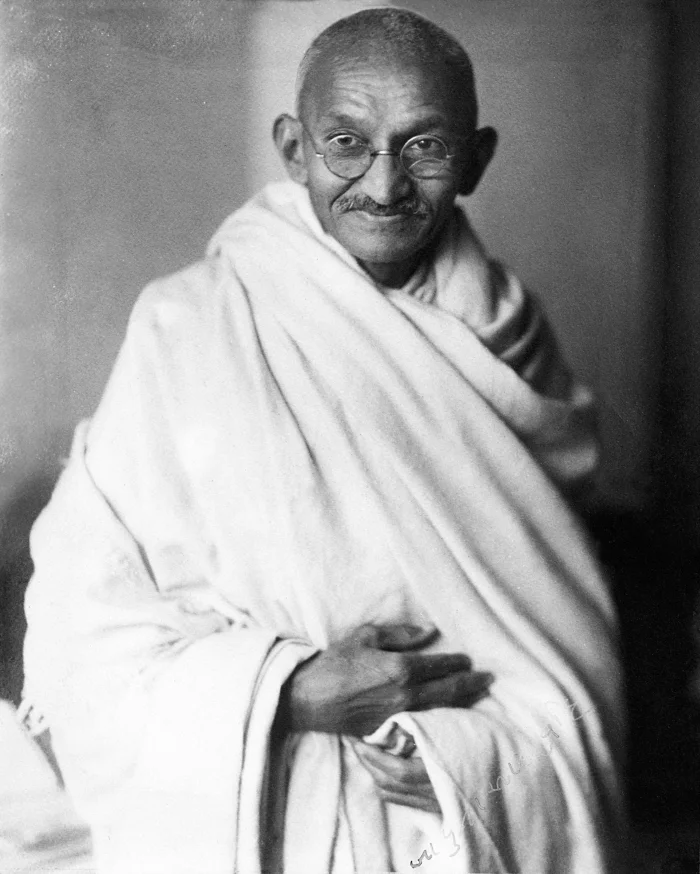
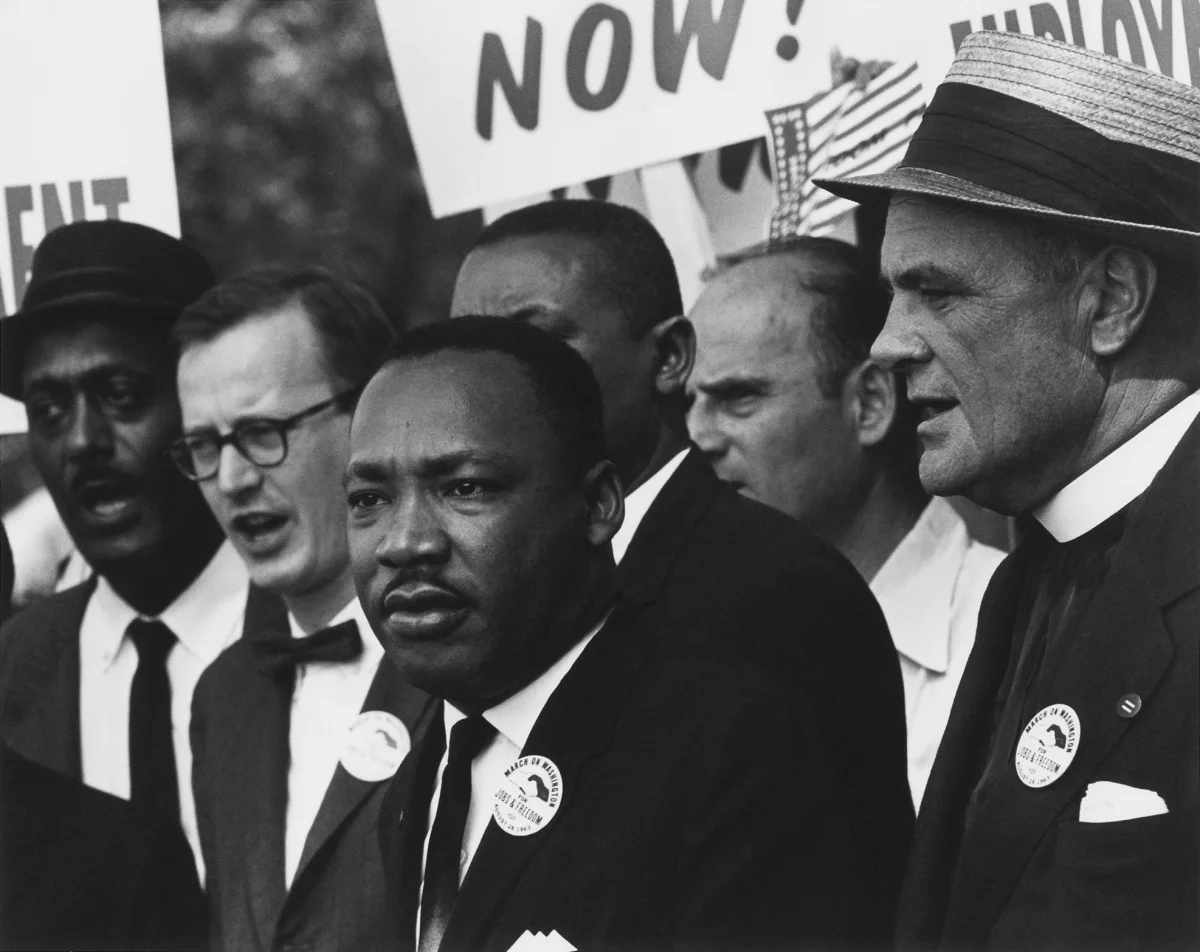
Charismatic authority. Based on the leader’s personal magnetism. Rare and unstable. Gandhi, MLK, revolutionary leaders. Charismatic movements must either institutionalize (transition to rational-legal or traditional authority) or collapse when the leader dies.
Traditional authority: Queen Elizabeth II on the Buckingham Palace balcony at her 1953 coronation. Monarchies derive legitimacy from inherited custom - "this is how it has always been done" - rather than from elections or personal charisma. Credit: UK government via Wikimedia Commons (Public Domain).Rational-legal authority: the U.S. Capitol. Power in democratic government attaches to the office (senator, representative, president) defined by law and procedure, not to the individual personally. Credit: Martin Falbisoner via Wikimedia Commons (CC BY-SA 3.0).Charismatic authority: Mahatma Gandhi in 1931. Authority based on the leader's personal magnetism is powerful but unstable - charismatic movements either institutionalize into traditional/rational-legal forms or collapse when the leader dies. Credit: Elliott & Fry via Wikimedia Commons (Public Domain).Dr. Martin Luther King Jr. at the 1963 March on Washington. Like Gandhi, MLK exemplifies charismatic authority - a leader who mobilized millions through personal moral force rather than holding any official office. Credit: Rowland Scherman / National Archives via Wikimedia Commons (Public Domain).
Most regimes combine types. A U.S. president has rational-legal authority from the office, often traditional authority from long-established customs, and sometimes charismatic authority from personal appeal.
Types of Government
Democracy. Citizens hold ultimate authority, typically through elections. Direct or representative.
Monarchy. Power held by a royal family. Can be absolute (limited today) or constitutional (ceremonial with parliament governing).
Authoritarian. Power concentrated in a ruler or party without meaningful citizen input.
Totalitarian. Extreme authoritarianism; government controls not just politics but private life, economy, culture (Nazi Germany, Stalinist USSR).
Oligarchy. Power held by a small elite group.
Theocracy. Government based on religious authority.
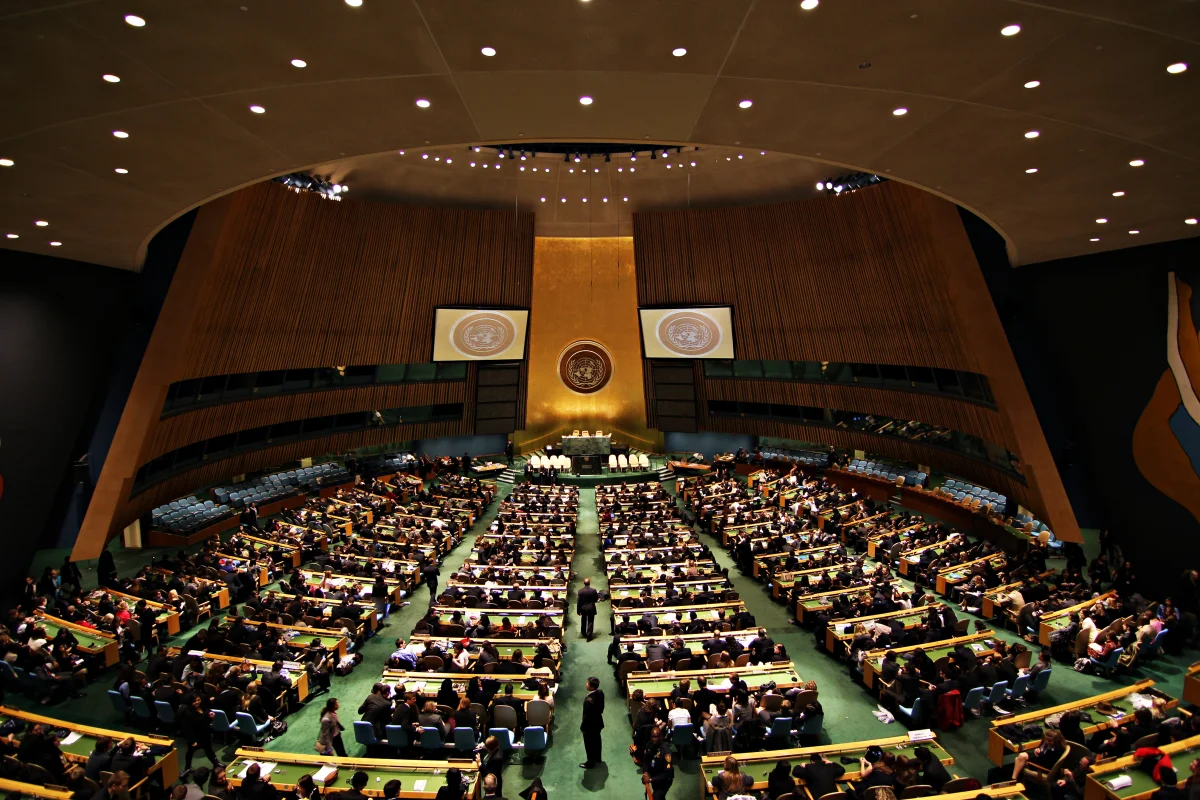
A "Vote Here" sign at a U.S. polling place. Democracy grounds authority in elections rather than inheritance, divine appointment, or charisma; in Weber's framework it is the prototypical rational-legal system. Credit: Tony Webster via Wikimedia Commons (CC BY 2.0).The United Nations General Assembly Hall. The UN is one of the most visible products of the post-WWII shift toward formal, rule-based rational-legal coordination among governments. Credit: Basil D Soufi via Wikimedia Commons (CC BY-SA 3.0).
The Economy
An economic system is the way a society organizes the production and distribution of goods and services.
Types of Economic Systems
Capitalism. Private ownership of the means of production, market-based distribution. Emphasizes competition, profit motive, and private property.
Socialism. Collective or state ownership of the means of production, distribution based on collective need. Emphasizes equality and planned economy.
Mixed economies. Combine elements of both (most modern economies - including the U.S., which has private ownership but substantial regulation, welfare programs, and publicly provided services).
Communism. The theoretical endpoint Marx predicted - a classless, stateless society with no private property. No society has fully implemented Marxist communism.
The New York Stock Exchange trading floor. The stock market is the iconic image of capitalism - private ownership of the means of production combined with market-based distribution and price discovery. Credit: Scott Beale via Wikimedia Commons (CC BY-SA 4.0).
Division of Labor
As societies grow more complex, work becomes more specialized. Durkheim distinguished:
Mechanical solidarity. Simple societies where people do similar work; social bonds come from shared experience and values.
Organic solidarity. Complex societies where people do specialized work; social bonds come from mutual interdependence (I depend on the farmer, the farmer depends on me).
The shift from mechanical to organic solidarity is one of the big features of industrial modernization.
Primary, Secondary, Tertiary Sectors
Primary sector. Extracting raw materials (agriculture, mining, forestry).
Developed countries have shrinking primary sectors and growing tertiary sectors.
Healthcare
Medicalization
Medicalization is the process by which non-medical problems come to be defined and treated as medical problems. Examples: alcoholism (once a moral failing, now a medical condition), ADHD (once described simply as “troublesome kid,” now a medical diagnosis), childbirth (once a normal life event, now intensively medicalized).
Medicalization has benefits (reduced stigma, access to treatment) and costs (loss of autonomy, expansion of pharmaceutical consumption, pathologizing normal variation).
The Sick Role (Parsons)
Talcott Parsons described the sick role as a social role with rights and obligations.
Rights:
Exemption from normal social obligations (work, school) while sick.
Not held responsible for the illness.
Obligations:
Must want to recover.
Must seek competent help (a physician) and cooperate with treatment.
A physician examines a child with a stethoscope. In Parsons's framework the doctor is the gatekeeper who legitimizes the patient's sick role - issuing the diagnosis, writing the note, granting exemption from normal obligations on condition of cooperating with treatment. Credit: Shixart1985 via Wikimedia Commons (CC BY 2.0).
The sick role is temporary and works for acute conditions. Chronic illness and mental illness don’t fit the sick role cleanly - patients may not be able to “want to recover” or cooperate in treatment in the way Parsons imagined.
Physician as Gatekeeper
The physician, in Parsons’s framework, serves as the gatekeeper who legitimizes the sick role (writing the sick note, issuing the diagnosis). This gives physicians substantial social power - and sets up the physician-patient relationship as inherently asymmetric in knowledge and authority.
Healthcare Access and Disparities
Healthcare in the U.S. is largely provided through a mix of private insurance, employer-based insurance, Medicare (elderly), Medicaid (low-income), and uninsured out-of-pocket payment. This system produces wide disparities in access and outcomes by income, race, and geography - themes that recur in Chapter 12.
An exhausted healthcare worker pauses on the floor of a hospital corridor during the COVID-19 pandemic. The image makes vivid both burnout as a structural dysfunction (functionalist lens) and the front-line/back-stage strain of medical work (symbolic interactionist lens). Credit: Alberto Giuliani via Wikimedia Commons (CC BY-SA 4.0).
Name Weber's three types of authority and give an example of each.
Click to reveal answer
Traditional (monarchy, religious leaders of established religions), rational-legal (democratic government, corporate hierarchy - power attached to office), and charismatic (Gandhi, MLK - based on personal magnetism, unstable). Most regimes combine types.
What is medicalization?
Click to reveal answer
The process by which non-medical problems come to be defined and treated as medical problems. Examples: alcoholism (moral failing → medical condition), childbirth (life event → medical event), ADHD (school behavior → diagnosis). Has benefits and costs.
What are the rights and obligations of the sick role (Parsons)?
Click to reveal answer
Rights: exemption from normal obligations, not blamed for illness. Obligations: must want to recover, must seek competent help and cooperate with treatment. The model fits acute illness but breaks down for chronic and mental illness.
Distinguish mechanical from organic solidarity (Durkheim).
Click to reveal answer
Mechanical solidarity: simple societies where people do similar work; bonds from shared experience and values. Organic solidarity: complex industrial societies where work is specialized; bonds from interdependence. Modernization shifts societies from mechanical to organic.
The MCAT specifically tests how sociological theories map onto healthcare. Here’s how each lens analyzes the same set of health phenomena.
Functionalism in Medicine
Functionalism asks: what purpose does the medical institution serve for society?
Treating illness and restoring productive citizens to the economy.
Controlling who can take the sick role (physicians as gatekeepers - Parsons).
Certifying competence (medical licensing).
Managing death and dying (hospitals as repositories for the ill and dying).
Public health functions (vaccination, sanitation, health education).
Dysfunctions: over-reliance on medicalized solutions when non-medical interventions might work; iatrogenic harm (illness caused by medical treatment); healthcare costs that strain other institutions.
From a functionalist perspective, the clinical encounter exists to restore productive citizens to society. The physician evaluates, diagnoses, and (per Parsons) legitimizes the patient's temporary exemption from normal obligations. Credit: Shixart1985 via Wikimedia Commons (CC BY 2.0).
Conflict Theory in Medicine
Conflict theory asks: who holds power in healthcare, and at whose expense?
Physicians historically held substantial power and prestige; the structure of medical training produces a class hierarchy with attendings > residents > interns > students.
Pharmaceutical companies shape research priorities, drug pricing, and access.
Insurance companies control access to care.
Low-income and marginalized patients have worse access and outcomes - a structural, not individual, failure.
Global health inequality - some countries have near-universal healthcare, others minimal; patent systems concentrate new treatments in wealthy markets.
Conflict theorists also examine how medical authority can be used to enforce social norms (diagnosing deviance, controlling reproduction, treating political dissidents as mentally ill).
A nurse pauses on the floor of an Italian COVID ward in 2020. The conflict-theory reading: front-line workers absorb the physical and emotional cost of a system whose financial rewards flow disproportionately to insurers, hospital administrators, and pharmaceutical owners. Credit: Alberto Giuliani via Wikimedia Commons (CC BY-SA 4.0).
Symbolic Interactionism in Medicine
Symbolic interactionism asks: how is illness experienced and constructed in interaction?
Identity as “patient” vs. “person.” Hospitals tend to strip patients of their normal identities (wearing gowns, being called by bed number) and reconstruct them as diagnoses.
Labeling. Receiving a diagnosis becomes part of identity - “I am a diabetic” vs. “I have diabetes.” Labels carry weight.
Stigma - mental illness, HIV, obesity all carry stigma that reshapes social interactions and self-concept.
Doctor-patient communication. How language (jargon, euphemism, empathy, coldness) shapes the clinical encounter.
Front-stage/back-stage in medical settings. Doctors perform confidence in front of patients while expressing uncertainty in back-stage conversations with colleagues.
Erving Goffman's dramaturgical framework is the symbolic interactionist toolkit for medicine: the physician performs front-stage confidence and authority in the exam room while admitting back-stage uncertainty in the call room. Credit: Unknown via Wikimedia Commons (Public Domain).
Feminist Theory in Medicine
Feminist theory examines how gender shapes medical institutions, research, and care.
Historical male dominance in medicine (and continuing disparities in specialization, pay, and leadership).
Medical research bias. Until the 1990s, clinical trials often excluded women. Drug dosing and symptom profiles developed on male subjects can be wrong for women (heart attacks often present differently in women; dosages of many drugs are calibrated to male physiology).
Medicalization of women’s bodies. Childbirth, menopause, menstruation, and fertility have been heavily medicalized - sometimes reducing patient autonomy.
Pain dismissal. Evidence that women’s pain is systematically undertreated compared to men’s.
Intersectional analysis. Women of color experience worse healthcare outcomes than white women, reflecting intersecting oppressions.
Kimberlé Crenshaw's intersectionality framework is now standard in health-disparities research: a Black woman's experience of medical care cannot be reduced to "racism + sexism" but is a unique product of overlapping systems of inequality. Credit: Mohamed Badarne via Wikimedia Commons (CC BY-SA 4.0).
Social Constructionism in Medicine
Social constructionism asks: what counts as a disease, and how does that change?
Diagnostic categories evolve. Hysteria disappeared from the DSM. Homosexuality was a mental illness until 1973. Attention deficit and autism have expanded their diagnostic boundaries.
Culture-bound syndromes - some illnesses appear only in specific cultures (susto in Latin America, hikikomori in Japan).
Contested diagnoses - fibromyalgia, chronic fatigue syndrome, long COVID have been debated as real/constructed.
Aging. Is aging a disease? Growing debate; longevity medicine increasingly frames it so.
Constructionism doesn’t deny that patients suffer. It asks how suffering gets categorized, named, and treated - and how those categories shape what gets researched, funded, and legitimated.
Rational Choice in Medicine
Rational choice (and exchange theory) examine how patients and providers make decisions.
Healthcare decisions as cost-benefit calculations (insurance choice, treatment options, seeking a second opinion).
Doctor shopping - patients “shop” for physicians who match their preferences.
Shared decision-making - contemporary medicine increasingly treats the physician-patient relationship as a negotiated exchange.
Real patients often deviate from rational choice predictions (Chapter 4’s heuristics and biases apply just as much in medicine - framing effects, availability heuristic, anchoring all shape medical decisions).
A sociologist examines how Black patients receive less aggressive pain management than white patients. Which theoretical lens is MOST applicable?
Click to reveal answer
Conflict theory (and specifically intersectional feminist theory) - the analysis focuses on how power dynamics and systemic inequalities produce unequal healthcare outcomes. Could also be framed through social constructionism if the analysis focuses on how pain itself is racially coded.
Homosexuality was listed as a mental disorder in the DSM until 1973, when it was removed. What sociological theory best explains this change?
Click to reveal answer
Social constructionism. Diagnostic categories reflect social agreements and change over time based on cultural context, political pressure, and evolving understanding - not just objective discovery. The removal shows that 'illness' is defined, not simply observed.
How does conflict theory analyze the US healthcare system?
Click to reveal answer
Examines power disparities: physicians' status and authority, pharmaceutical companies' influence, insurance companies' gatekeeping, and unequal access for low-income and marginalized patients. Frames healthcare disparities as structural, not individual - reflecting broader societal inequalities.