You are not unconscious during sleep - you are cycling through wildly different brain states, each with a distinct EEG signature and a distinct biological job. Knowing the stages cold is worth easy points on the MCAT.
The Four Stages of Sleep
Sleep is traditionally divided into non-REM (NREM) and REM. NREM splits further into three stages.
N1 (Stage 1): Light Sleep
Theta waves (4–7 Hz).
Transition from wake to sleep. Can be awakened easily.
Hypnagogic hallucinations - vivid sensory flashes as you drift off (“I just saw a doorbell!”).
Hypnic jerks - sudden muscle twitches, often with a sensation of falling.
Tetris effect - after hours on a repetitive activity (video games, boat ride) you see afterimages during drowsy falling-asleep.
N2 (Stage 2): Deeper Light Sleep
More theta waves, plus two distinctive EEG features:
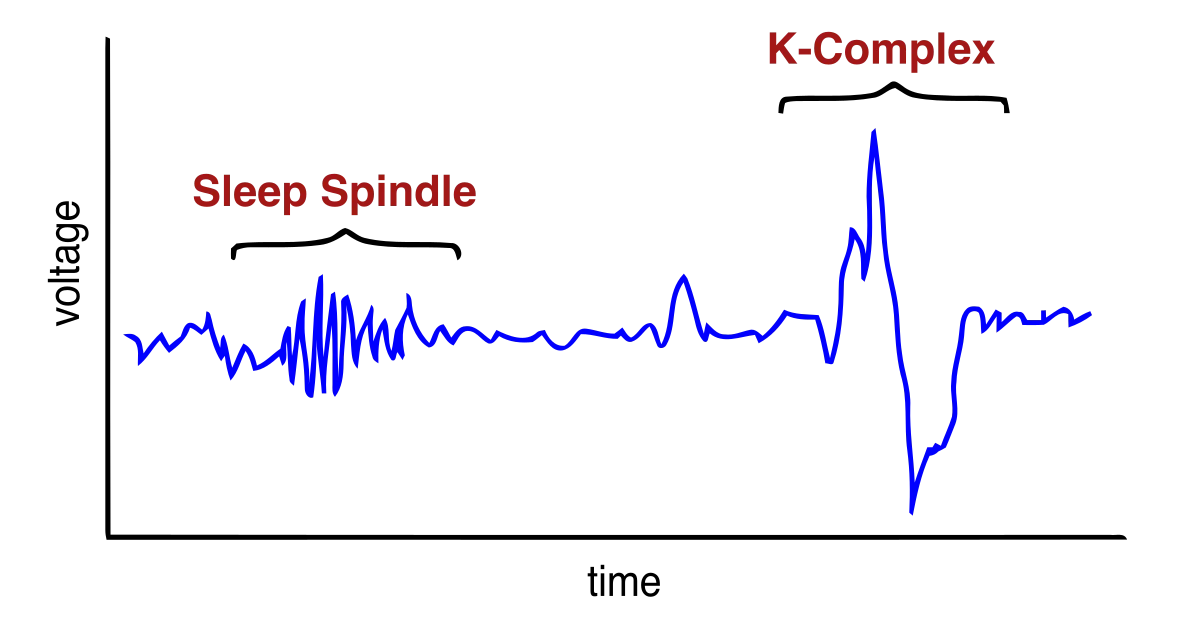
Sleep spindles - short bursts of fast brain activity. Thought to help filter external noise so you stay asleep, and to aid memory consolidation.
K-complexes - large, slow waves that suppress cortical arousal and assist declarative memory consolidation. Can also be triggered by a light external stimulus like a gentle touch.
Harder to wake than N1.
The two EEG signatures of N2: a sleep spindle (short burst of fast oscillation) and a K-complex (large biphasic wave). Both help maintain sleep and consolidate declarative memory. Credit: Neocadre via Wikimedia Commons (Public Domain).
N3 (Stage 3): Slow-Wave Sleep
Delta waves (0.5–2 Hz).
Very hard to wake; groggy if awakened.
Declarative memory consolidation happens here.
Sleepwalking, sleeptalking, and night terrors happen during N3 (parasomnias). Children have more N3 than adults.
Body releases growth hormone.
REM (Rapid Eye Movement)
Eyes move rapidly beneath closed eyelids. Most other muscles are paralyzed.
EEG: mix of alpha, beta, and desynchronous waves, so similar to awake that REM is called paradoxical sleep - your brain is firing like you are awake while your body is locked down.
Most vivid, memorable dreaming happens in REM.
Procedural memory consolidation and emotional processing happen here.
Babies spend way more time in REM than adults - thought to support rapid neural development.
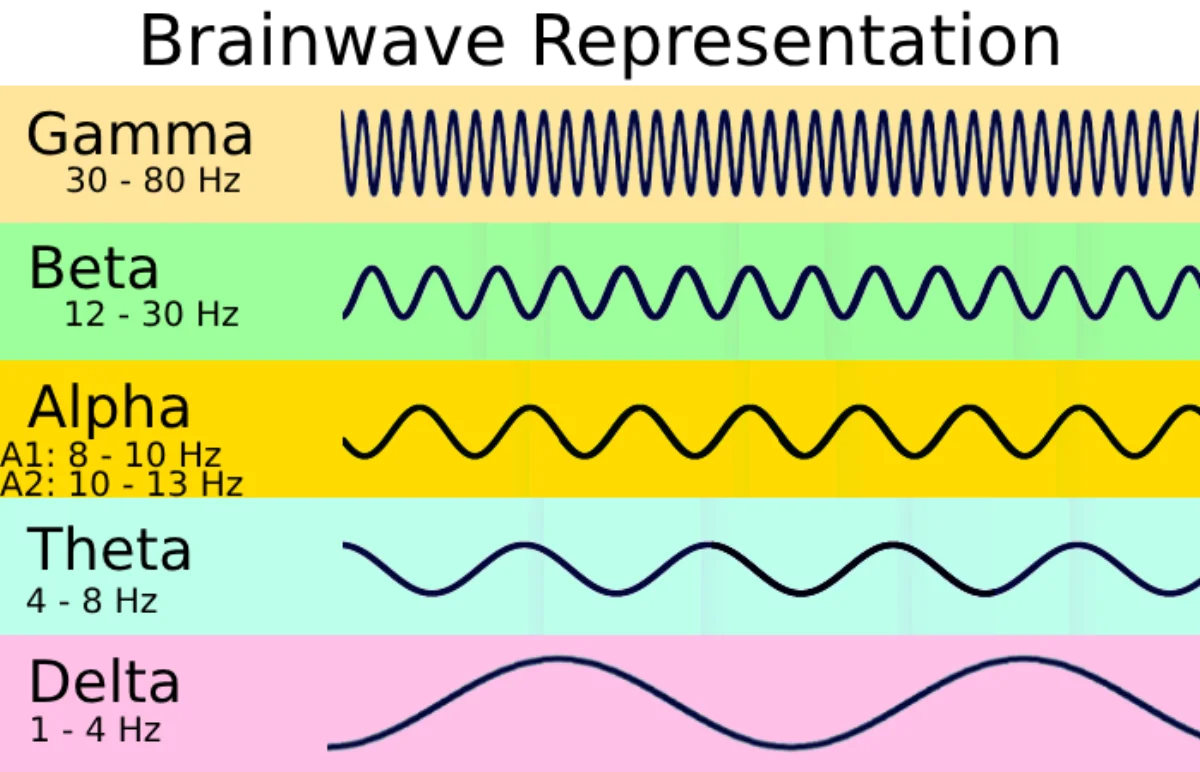
The major EEG frequency bands. Going from awake-and-alert toward deep sleep, waves get slower and larger: beta → alpha → theta → delta. REM jumps back to fast, beta-like activity ("paradoxical sleep"). Band edges vary by source: the figure prints a general EEG convention, while this chapter uses the clinical sleep-scoring ranges throughout (alpha 8–13 Hz, theta 4–7 Hz, delta 0.5–2 Hz). Credit: Bondigoldwiki via Wikimedia Commons (CC0).
The 90-Minute Cycle
You do not simply march N1 → N2 → N3 → REM and stop. You cycle. A full cycle lasts roughly 90 minutes and plays out as:
N1 → N2 → N3 → N2 → REM → back to N1
You complete about 4–5 cycles per night. But the cycles are not identical:
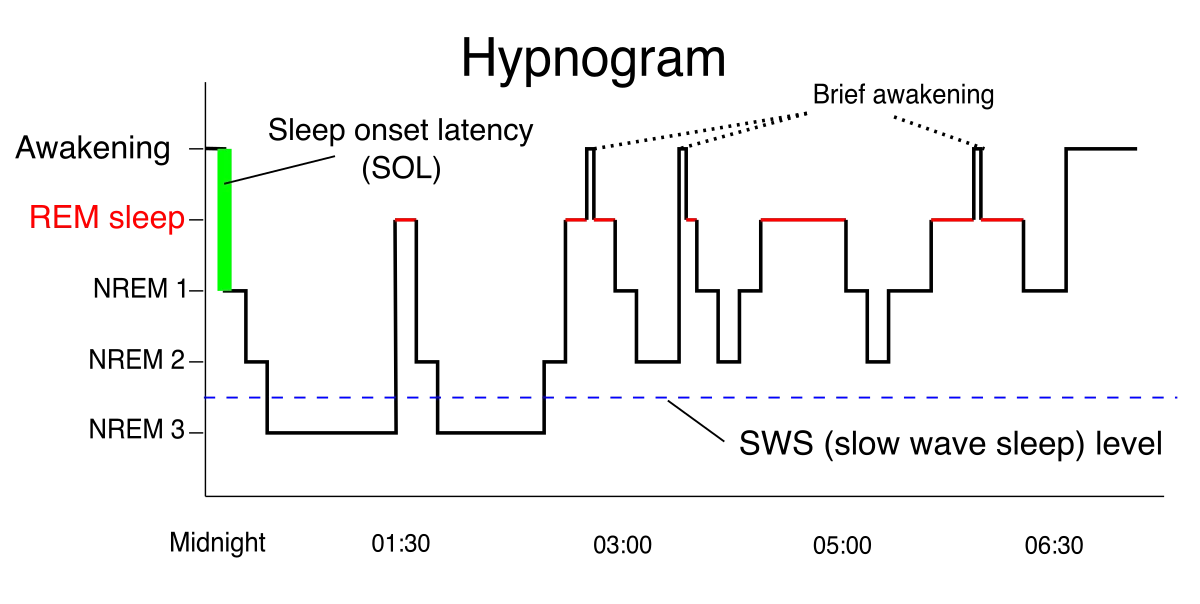
Early in the night, cycles are dominated by N3 (deep slow-wave sleep). Your body prioritizes physical recovery and declarative memory consolidation.
Later in the night, cycles shift toward longer REM periods. The last REM episode of the night can last nearly an hour, which is why you often wake up mid-dream.
This is why waking up early (and cutting off the last cycles) disproportionately costs you REM sleep, not N3.
A typical hypnogram across one night. Early cycles plunge into N3 (slow-wave sleep) for physical recovery; later cycles shift toward longer REM periods. Cutting sleep short disproportionately costs you REM. Credit: RazerM via Wikimedia Commons (CC BY-SA 3.0).
Circadian Rhythms
Your body operates on a roughly 24-hour cycle called a circadian rhythm that governs sleep, body temperature, hormone release, and alertness. The master clock is the suprachiasmatic nucleus (SCN) of the hypothalamus, which receives input from the retina and tracks the light/dark cycle.
The SCN signals the pineal gland, which releases melatonin at night. Melatonin makes you feel sleepy. Daylight (including artificial light from screens) suppresses melatonin; darkness releases it.
Jet lag happens when your circadian rhythm is out of sync with local time. Melatonin supplements can help reset it.
Shift workers who work nights have chronically misaligned circadian rhythms and are at higher risk for metabolic disease.
Blue light from phones and laptops is particularly good at suppressing melatonin - which is why blue-light filters at night are more than a gimmick.
Circadian rhythm shifts across the lifespan. Adolescents trend later (why teens stay up and sleep in). Older adults trend earlier.
Which brain wave dominates deep (stage N3) sleep?
Click to reveal answer
Delta waves (0.5–2 Hz). Slow, high-amplitude. N3 is also called slow-wave sleep.
What is paradoxical sleep, and why the name?
Click to reveal answer
REM sleep. The brain's EEG looks like alert wakefulness (fast, low-amplitude beta-like waves) while the body is paralyzed. The paradox: high cortical activity with zero movement.
What structure produces melatonin, and what triggers its release?
Click to reveal answer
The pineal gland produces melatonin in response to signals from the suprachiasmatic nucleus (SCN). Darkness triggers release; light (especially blue wavelengths) suppresses it.
What are sleep spindles and K-complexes, and in which stage do they appear?
Click to reveal answer
Both appear in Stage N2. Sleep spindles are short bursts of fast activity (help filter noise and consolidate memory). K-complexes are large, slow waves (suppress arousal, help declarative memory consolidation).
A dream is bizarre in a way that makes sense while you are in it. You are late for an exam, the exam is being proctored by your third-grade teacher, and the test paper is a bowl of soup - and none of that feels wrong until you wake up. Why do dreams do this, and why are they almost impossible to remember?
The Biology: Where Dreams Come From
Most vivid, memorable dreaming happens during REM sleep. During REM:
The brainstem fires waves of spontaneous activity that travel up to higher cortical regions.
The prefrontal cortex - the home of logic, planning, and reality-testing - is relatively quiet. This is why dreams can casually break the rules of physics and causality without you noticing.
The amygdala (emotion) and visual association cortex are highly active, explaining the intense emotion and imagery.
Most muscles below the head are paralyzed (atonia). This keeps you from acting out your dreams. In REM sleep behavior disorder, that paralysis fails and people physically act out dreams, sometimes violently.
You dream in NREM too, but those dreams are duller and less memorable - often just fragments or thoughts.
Freud’s Dream Theory: Manifest vs. Latent Content
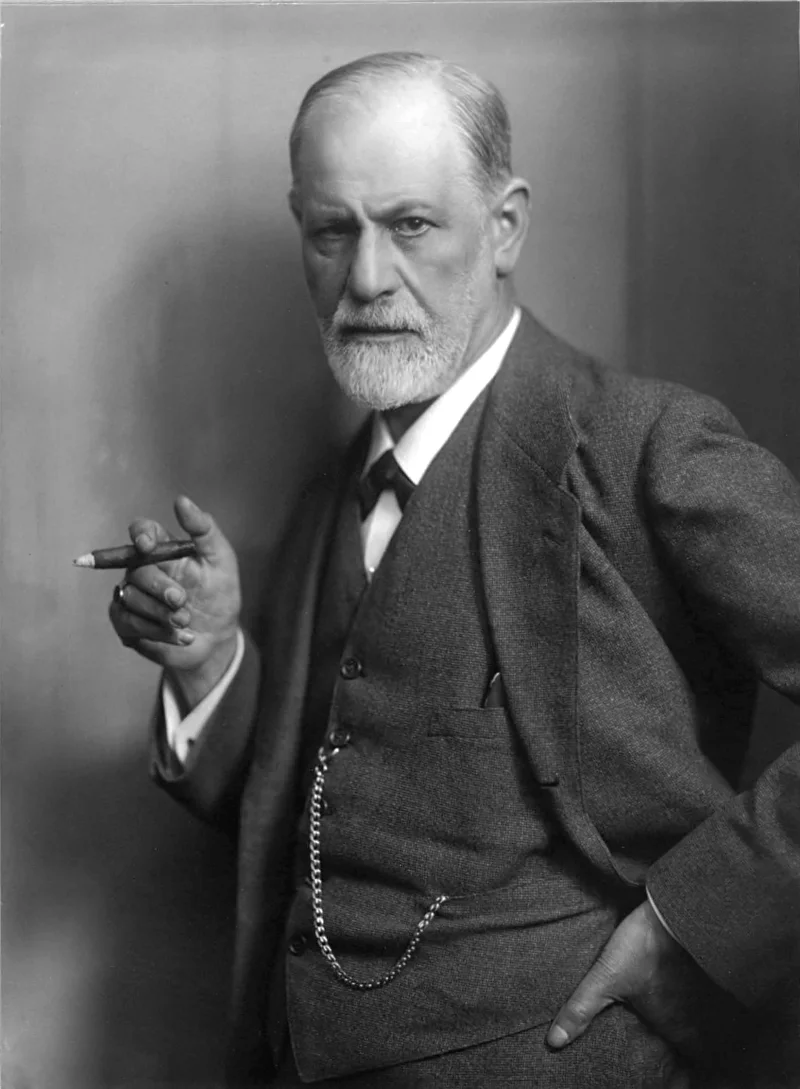
Sigmund Freud (1856–1939), founder of psychoanalysis. His The Interpretation of Dreams (1900) introduced the manifest/latent vocabulary the MCAT still tests. Credit: Max Halberstadt, c. 1921 (Public Domain) via Wikimedia Commons.
Sigmund Freud, in The Interpretation of Dreams (1900), argued that dreams express unconscious desires and conflicts the waking mind would censor. He divided dream material into two layers:
Manifest content - the literal storyline you can describe. “A monster was chasing me through my office.”
Latent content - the hidden, symbolic meaning. “I am afraid my boss will fire me.”
Freud’s theory is mostly unsupported by modern neuroscience, but the MCAT wants you to recognize the terminology, because passages routinely quote psychoanalytic interpretations as foils for more modern theories.
Activation-Synthesis Hypothesis (Hobson and McCarley, 1977)
The most widely taught scientific alternative: the activation-synthesis hypothesis.
Activation. The brainstem spits out random neural signals during REM sleep.
Synthesis. The cortex (particularly the association cortex) takes this random noise and tries to weave it into a coherent narrative.
Under this view, dreams have no deep inherent meaning - they are the brain’s attempt to make sense of its own background chatter while disconnected from sensory input. Dreams feel vivid and narrative because the cortex is built to create stories out of any pattern, even noise.
This theory explains why dreams are weird (the input is random), why they feel visual (visual cortex is active), and why you can shift settings in a blink (the storytelling engine is improvising).
Other Theories
Memory consolidation. REM sleep helps integrate procedural and emotional memories; dreams are the experiential side of that process. Support: sleep improves learning on motor tasks, people who learn a skill and then sleep outperform people who stay awake.
Threat simulation / evolutionary. Dreams are a low-cost rehearsal arena for dangerous situations, letting the brain practice responses to threats (why so many dreams feature being chased or falling). Plausible but hard to test.
Problem solving. You have heard the cliche “sleep on it.” There are real cases (Mendeleev dreaming the periodic table, Kekulé’s benzene ring snake dream) where a dream led to a scientific insight. Modern view: sleep allows off-line recombination of memory traces, occasionally producing novel connections.
Why do dreams often defy logic without you noticing?
Click to reveal answer
Activity in the prefrontal cortex (which handles logic, planning, and reality-testing) is markedly decreased during REM sleep. The emotion and imagery circuits (amygdala, visual association cortex) stay active.
Define Freud's manifest and latent dream content.
Click to reveal answer
Manifest content is the literal storyline of the dream. Latent content is the hidden, symbolic meaning the dream allegedly expresses about unconscious desires or conflicts.
What is the activation-synthesis hypothesis of dreams?
Click to reveal answer
The brainstem generates random neural activity during REM (activation); the cortex stitches that random input into a narrative (synthesis). Dreams may have no deep meaning - they are the brain's storytelling response to its own noise.
About a third of adults report frequent sleep problems, and the MCAT expects you to recognize the big four sleep disorders, plus induced altered states like hypnosis and meditation.
Sleep Deprivation
Before the disorders, a baseline on sleep loss. Chronic sleep deprivation is associated with:
Reduced attention and memory.
Increased cortisol (stress hormone).
Increased ghrelin and decreased leptin (hungrier, overeat).
Higher risk of depression, cardiovascular disease, obesity.
Impaired immune function.
Adults need roughly 7–9 hours per night. Children need more (12+ for infants, 10+ for preschoolers, 9+ for school-age kids). The concept of sleep debt - missed sleep that accumulates and must be repaid - is real. One or two nights of recovery sleep partially (not fully) restore function.
Insomnia
Insomnia is persistent trouble falling or staying asleep, at least three nights a week for at least three months. Causes include stress, anxiety, poor sleep hygiene, caffeine, and primary neurological issues.
First-line treatment is cognitive behavioral therapy for insomnia (CBT-I), which retrains sleep associations and schedules.
Sleep aids (benzodiazepines, “Z-drugs” like zolpidem) work short-term but risk dependence and tolerance, so they are not a long-term answer.
Narcolepsy
Narcolepsy is sudden, uncontrollable sleep attacks during the day. Affected people drop directly into REM sleep, often within minutes of onset.
Associated with cataplexy - sudden loss of muscle tone, often triggered by strong emotion (laughter, surprise). The person collapses awake. Cataplexy is REM muscle atonia intruding into wakefulness.
Linked to low levels of the neuropeptide orexin (hypocretin), which promotes wakefulness.
Roughly 1 in 2000 people.
Strongly genetic.
Sleep Apnea
Sleep apnea is the repeated, brief cessation of breathing during sleep. The most common form, obstructive sleep apnea, happens when throat muscles relax and block the airway.
Classic features: loud snoring, gasping awakenings, daytime fatigue despite a full night in bed.
Affected individuals rarely get enough N3 (deep sleep) because they keep semi-waking to breathe.
Roughly 1 in 20 adults; much higher in overweight individuals.
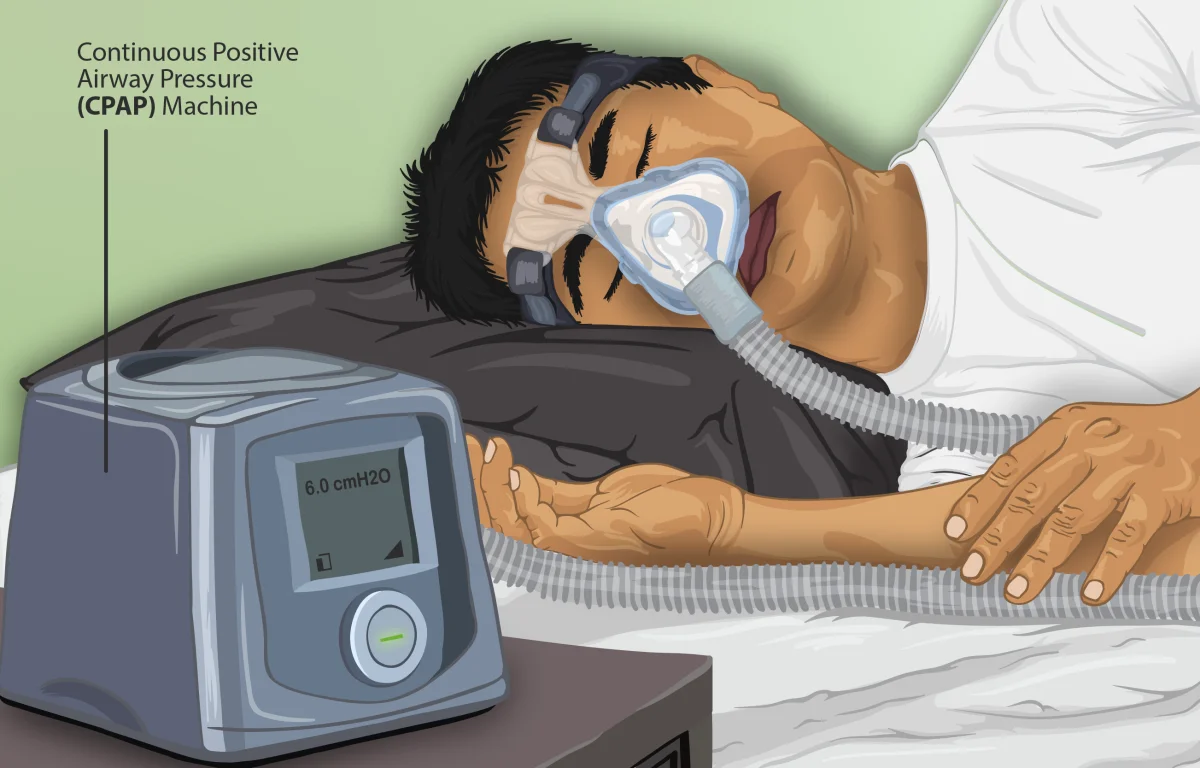
Treated with CPAP (continuous positive airway pressure) masks, weight loss, or surgery.
A continuous positive airway pressure (CPAP) machine pneumatically splints the airway open during sleep, preventing the apneic collapses of obstructive sleep apnea. Credit: myUpchar via Wikimedia Commons (CC BY-SA 4.0).
Parasomnias
Parasomnias are abnormal behaviors during sleep.
Sleepwalking (somnambulism) and sleep talking occur in N3 (deep slow-wave sleep). They are harmless, largely genetic, and more common in children (who have more N3). Waking a sleepwalker is fine, just disorienting.
Night terrors also occur in N3. A child screams and appears terrified but is not really awake and won’t remember the episode. Distinct from nightmares, which happen in REM and are remembered.
REM sleep behavior disorder (RBD) is the failure of REM muscle atonia. The person acts out vivid dreams (punching, kicking). RBD is often an early sign of Parkinson’s disease and related neurodegenerative conditions.
Hypnosis
Hypnosis is an induced state in which a subject is deeply relaxed, focused, and more susceptible to suggestion. The EEG shows more alpha waves - characteristic of a relaxed but awake state, not sleep.
False memory risk. Hypnotic suggestion can implant confabulated “memories,” which is why forensic hypnosis is generally inadmissible in court.
Only works if the subject wants it to work and is highly suggestible. You cannot be hypnotized into doing something against your will.
Two competing theories:
Dissociation theory (Hilgard). Hypnosis is a state of divided consciousness, where one part of the mind obeys the hypnotist while another “hidden observer” remains aware.
Social influence theory. Hypnotized subjects are playing a role shaped by social expectations - like actors following a script. They actually experience what they are told to experience because the context makes it real to them.
Meditation
Meditation is a practice of self-regulating attention and awareness. It is not a single altered state; styles range from focused attention (on breath or a mantra) to open awareness (letting thoughts pass without engagement).
Light meditation shows more alpha waves than baseline rest.
Deep meditation in experienced practitioners shows increased theta waves and gamma activity.
Long-term practitioners show increased activity in the prefrontal cortex and the right anterior insula (attention control) and changes in hippocampal volume.
Clinical uses: anxiety reduction, mood disorders, chronic pain, and as an adjunct to treatment for ADHD.
Which sleep stage do sleepwalking and night terrors occur in?
Click to reveal answer
N3 (slow-wave sleep). Not REM. REM has muscle atonia, so walking is impossible. Nightmares happen in REM; night terrors happen in N3.
What neuropeptide deficiency is associated with narcolepsy?
Click to reveal answer
Orexin (also called hypocretin). Orexin promotes wakefulness; its deficiency is linked to narcolepsy with cataplexy.
Name the two major theories of hypnosis and their key claims.
Click to reveal answer
Dissociation theory (Hilgard): consciousness splits, with one stream responding to the hypnotist and a "hidden observer" remaining aware. Social influence theory: hypnotized subjects enact a role shaped by expectations, and sincerely experience what they are told to experience.
What brain waves dominate light meditation vs. deep meditation?
Click to reveal answer
Light meditation: more alpha waves (relaxed wakefulness). Deep meditation in experienced practitioners: increased theta waves and gamma activity.
Psychoactive drugs alter perception, mood, or cognition by hijacking neurotransmitter systems. The MCAT sorts them into four big classes, and each class has a signature neurotransmitter target. Learn the table below and you have the backbone.
Class
Examples
Mechanism
Effect
Depressants
Alcohol, benzos, barbiturates
Enhance GABA (inhibition)
Sedation, lowered arousal
Stimulants
Cocaine, amphetamines, caffeine, nicotine
Increase dopamine/NE
Alertness, euphoria
Hallucinogens
LSD, psilocybin, mescaline, MDMA
Act on serotonin (5-HT)
Perceptual distortion
Opiates/opioids
Heroin, morphine, oxycodone
Activate endorphin receptors
Analgesia, euphoria
Depressants
Depressants slow central nervous system activity. They act primarily on GABA, the brain’s main inhibitory neurotransmitter. By enhancing GABA, they make neurons less likely to fire.
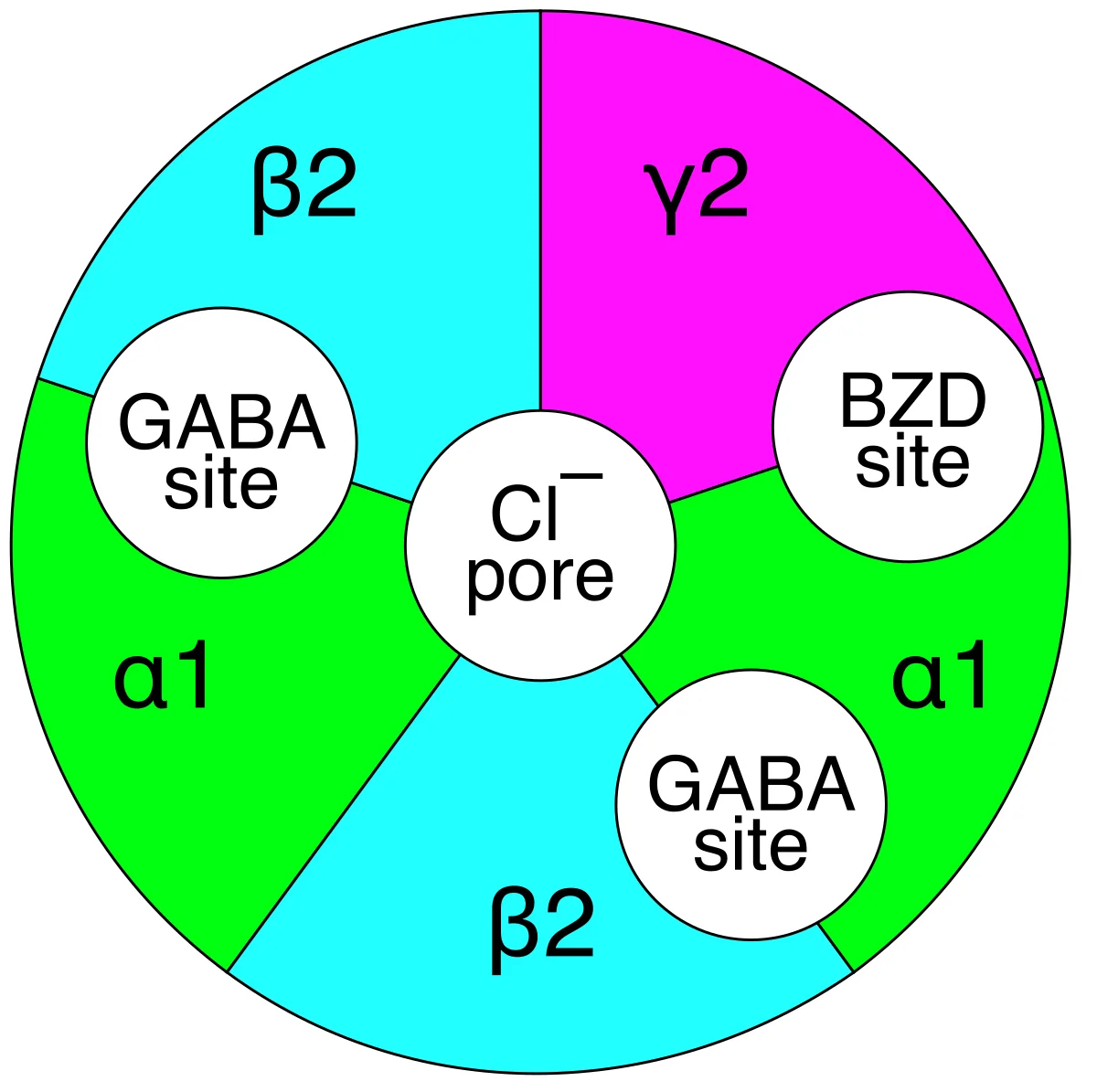
Alcohol. Most common depressant. Absorbed through the stomach and small intestine; crosses the blood-brain barrier easily. Effects progress with dose: lowered inhibition → slurred speech and impaired coordination → unconsciousness → respiratory depression. Alcohol binds to a modulatory site on the GABA-A receptor, increasing Cl⁻ flow into neurons and hyperpolarizing them. It also suppresses REM sleep, which is why drinking leaves you tired even after a full night in bed.
The GABA-A receptor is a chloride-permeable ion channel built from five subunits. GABA itself binds at the α/β interfaces; benzodiazepines bind a separate modulatory site at the α/γ interface, while alcohol and barbiturates act at yet other sites — all converging to open the same Cl⁻ pore. Credit: Д. Ильин via Wikimedia Commons (CC0).
Benzodiazepines (“benzos,” e.g., diazepam, alprazolam - drug names ending in -zepam or -zolam). Most commonly prescribed depressant class. Bind the same GABA-A receptor complex as alcohol, increasing Cl⁻ influx. Used for anxiety, insomnia, and seizures. Short-acting benzos treat insomnia; long-acting ones treat anxiety.
Barbiturates (e.g., phenobarbital - drug names ending in -barbital). Older sedative class. Also GABA-A enhancers, but with a much narrower therapeutic window than benzos, so overdose risk is higher. Rarely prescribed today except for seizures and anesthesia.
Stimulants
Stimulants speed up CNS activity, increasing heart rate, blood pressure, alertness, and mood. Most work by boosting dopamine and/or norepinephrine at synapses.
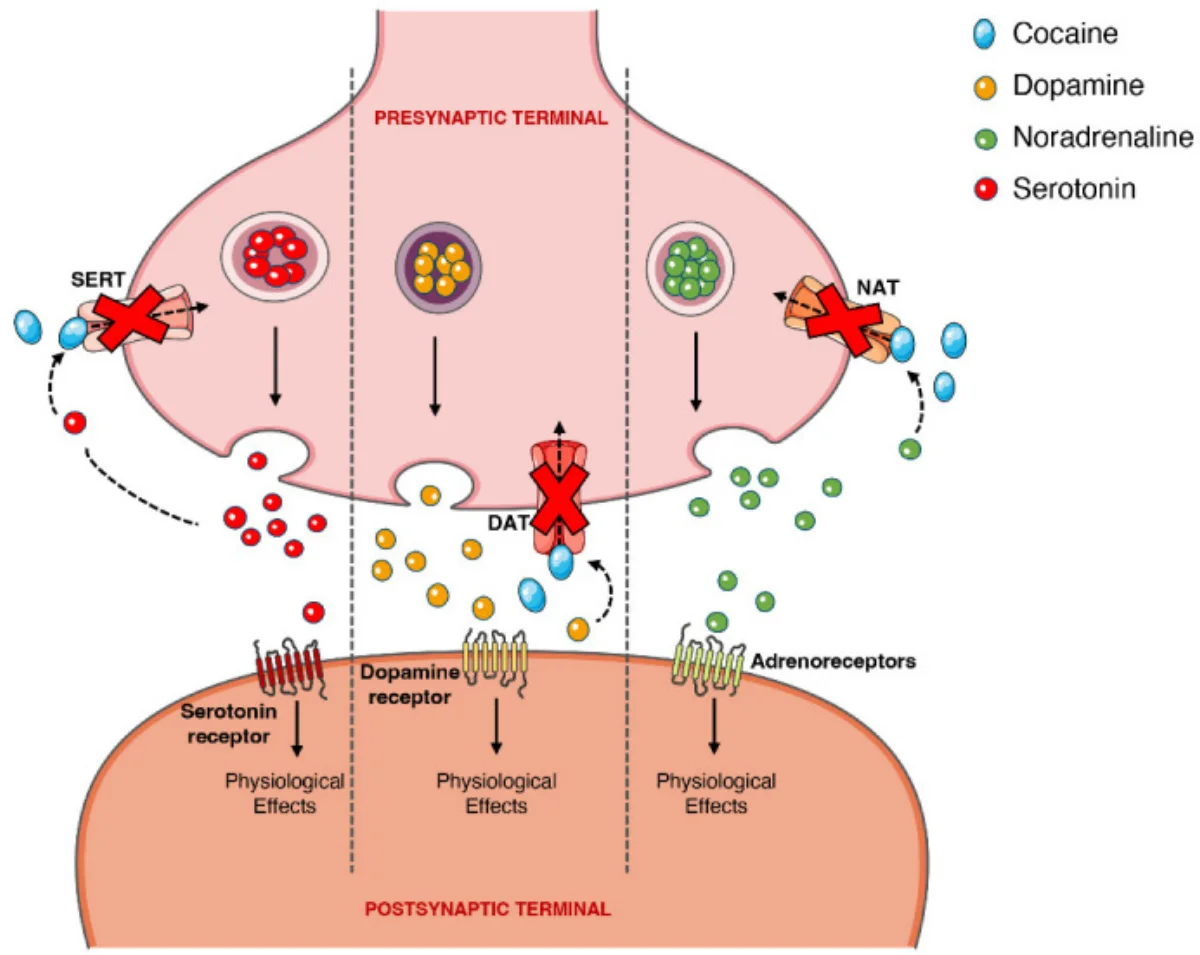
Cocaine. Blocks reuptake of dopamine, norepinephrine, and serotonin. More neurotransmitter stays in the synapse. Intense, short euphoria → rapid crash. Also a local anesthetic and a vasoconstrictor.
How cocaine works: it blocks the reuptake transporters for serotonin (SERT), dopamine (DAT), and noradrenaline (NAT), trapping all three monoamines in the synapse and amplifying their effect on the postsynaptic neuron. Credit: Roque Bravo et al., Toxins 14(4):278, 2022 (CC BY 4.0) via Wikimedia Commons.
- **Amphetamines / methamphetamine.** Block dopamine reuptake AND stimulate dopamine release. Longer-lasting than cocaine. Methamphetamine is more addictive because of even greater dopamine release. Amphetamines (Adderall) are prescribed for ADHD.
- **Caffeine.** Blocks **adenosine receptors**. Adenosine normally builds up during the day and makes you feel sleepy; caffeine prevents that signal. Also inhibits phosphodiesterase, raising cAMP.
- **Nicotine.** Agonist at **nicotinic acetylcholine receptors**; indirectly boosts dopamine and other neurotransmitters. Highly addictive. Suppresses appetite (why quitters often gain weight).
MDMA (ecstasy/Molly) is a stimulant with hallucinogenic properties. It triggers massive serotonin release and can damage serotonergic neurons.
Hallucinogens
Hallucinogens (psychedelics) produce distorted perceptions, heightened sensations, altered thoughts, and sometimes true hallucinations. They mostly act on the serotonin (5-HT) system, especially 5-HT2A receptors.
LSD (lysergic acid diethylamide). Prototype hallucinogen. Potent 5-HT2A agonist. Causes primarily visual hallucinations. Trips can last 8–12 hours.
Psilocybin (active ingredient in “magic mushrooms”). Also a 5-HT2A agonist. Shorter duration than LSD. Being studied for depression and PTSD.
Mescaline, peyote. Similar mechanism.
PCP. An NMDA receptor antagonist (glutamate). Dissociative hallucinogen; can produce violent behavior. Exception to the “serotonin” rule.
Cannabis (THC). Acts on CB1 cannabinoid receptors (which normally respond to endogenous anandamide). Enhances dopamine and GABA activity. Often classified as a mild hallucinogen, though it has depressant and occasionally stimulant effects. Lipophilic, so metabolites can stay in fat cells for weeks or months.
Opiates and Opioids
Opiates are naturally derived from the opium poppy (morphine, codeine). Opioids is the broader category including synthetic versions (oxycodone, hydrocodone, fentanyl, heroin). All bind endorphin receptors - G-protein-coupled receptors that normally respond to the body’s own painkillers. This is why opioids are such effective analgesics.
Naloxone (Narcan) is an opioid receptor antagonist that reverses overdose. It kicks the opioid off the receptor, instantly restoring breathing.
Methadone is a long-acting opioid agonist used to treat opioid addiction. It binds the same receptors but with a slower onset and longer duration, blocking withdrawal and blunting the ability to get high from additional opioids.
Routes of Drug Entry
How fast a drug acts - and how addictive it is - depends heavily on the route of administration. Faster delivery to the brain means a stronger, more rewarding high and a higher risk of dependence.
Oral (pill, drink). Slowest. Goes through GI tract, first-pass liver metabolism. Onset in 30+ minutes.
Transdermal (patch). Slow, steady, hours.
Intramuscular injection. Minutes. Used for vaccines and epinephrine (EpiPen).
Inhalation (smoking, vaping, snorting). Fast. ~10 seconds to brain.
Intravenous injection. Fastest. Seconds.
This explains why smoked crack cocaine is more addictive than snorted powder cocaine, and why IV heroin is more addictive than oral opioids at the same effective dose.
What neurotransmitter do depressants like alcohol and benzodiazepines enhance?
Click to reveal answer
GABA, via the GABA-A receptor complex. Both drugs increase Cl⁻ flow into neurons, hyperpolarizing them. Combining the two is dangerous because the effects stack.
What is the primary mechanism of cocaine?
Click to reveal answer
Blocks reuptake of dopamine (and norepinephrine and serotonin), leaving more neurotransmitter in the synapse. Amphetamines both block reuptake AND stimulate dopamine release.
Which receptor does caffeine block?
Click to reveal answer
Adenosine receptors. Adenosine normally builds up during wakefulness and signals sleepiness. Blocking its receptors keeps you alert.
Why are opioids NOT classified as depressants despite similar sedative effects?
Click to reveal answer
Opioids act on endorphin receptors, not on GABA. Depressants (alcohol, benzos, barbs) act on GABA-A. Opioids produce sedation through a different molecular pathway, so they are a separate drug class.
Why is quitting nicotine harder than quitting broccoli? Why do cocaine users crave the drug for months after stopping? The answer lives in a single circuit: the mesolimbic dopamine pathway, the brain’s built-in reward system. Addictive drugs hijack it.
The Reward Pathway
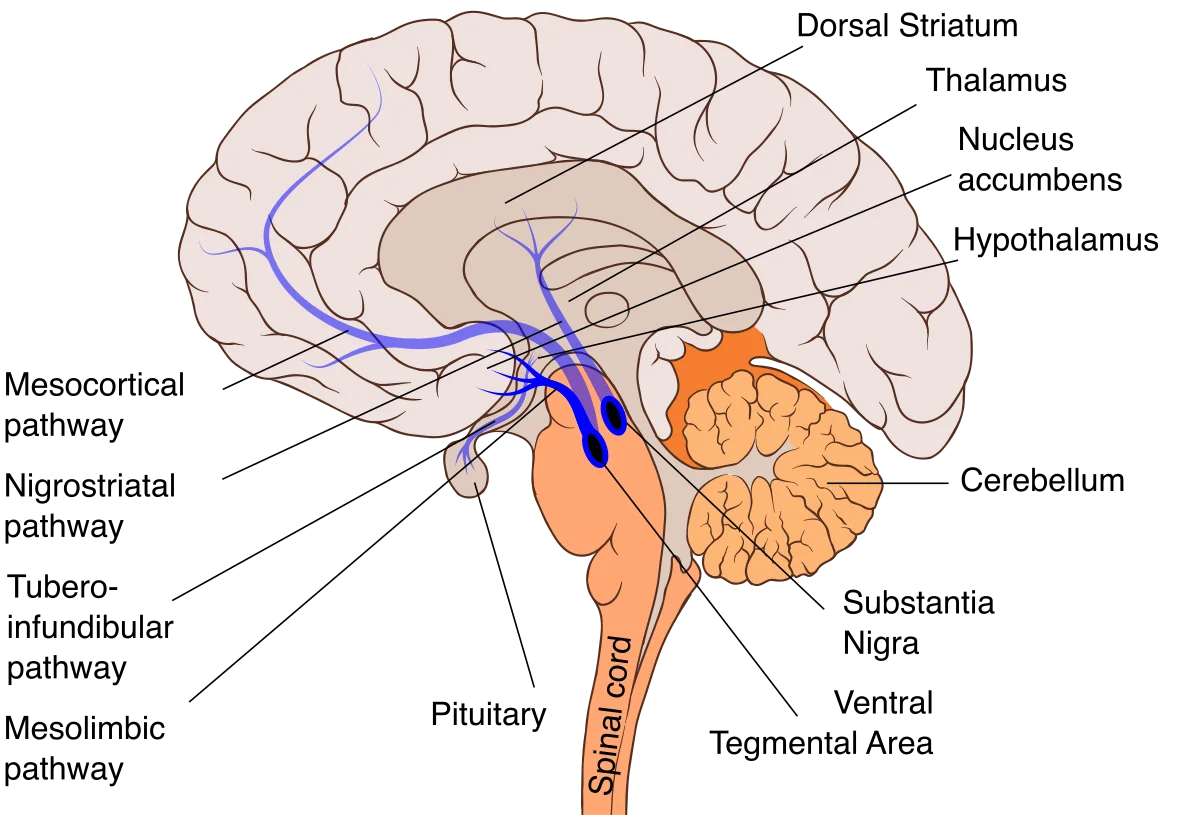
The pathway begins in the ventral tegmental area (VTA), a small cluster of dopamine-producing neurons in the midbrain. VTA dopamine neurons project forward to:
Nucleus accumbens (NAc) - the central “pleasure” node. Dopamine release here is the direct neural correlate of “this was good.”
Amygdala - ties the reward to emotion (“this felt great”).
Hippocampus - encodes context (“I want to remember where and when this happened”).
Prefrontal cortex - focuses attention and lays down goal-directed plans to seek the reward again.
Together these structures form the mesolimbic pathway. Natural rewards (food, sex, social connection, accomplishment) all activate it modestly. Addictive drugs activate it massively - cocaine spikes dopamine 3–10× higher than a piece of cake. That supernormal signal is what “drives learning” of drug-seeking behavior.
The four dopamine pathways. The mesolimbic projection from the ventral tegmental area (VTA) to the nucleus accumbens is the brain's reward circuit — the one hijacked by all drugs of abuse. The mesocortical, nigrostriatal (Parkinson's), and tuberoinfundibular (prolactin control) pathways are shown for contrast. Credit: Slashme, Patrick J. Lynch & Fvasconcellos via Wikimedia Commons (CC BY-SA 4.0).
Tolerance
Tolerance is the shift in the dose-response curve such that the same dose produces less effect over time.
Mechanism: repeated drug exposure downregulates receptors or neurotransmitter release. The post-synaptic cell, bombarded with dopamine, removes some of its receptors to protect itself. Now the normal amount of dopamine from food or sex feels underwhelming, and even the old drug dose does not produce the old high.
Cross-tolerance is when tolerance to one drug reduces the effect of a different drug sharing the same mechanism. Alcohol and benzodiazepines show cross-tolerance (both act on GABA-A). A heavy drinker needs more sedative medication than an abstainer would.
Homeostasis and the Setting
The body responds to a drug by pushing against it. If cocaine raises heart rate, the body enacts compensatory reductions in heart rate. This learning is context-dependent.
A regular user who always injects in the same room trains their body to start compensating as soon as they enter that room. Take the same dose in a new, unfamiliar setting and the compensatory response does not kick in - the user overdoses. This “conditioned compensatory response” explains why many fatal overdoses happen in unusual locations.
Dependence vs. Addiction
Physical dependence - the body has adapted to the drug’s presence. Stopping produces physical withdrawal symptoms. A patient on daily opioids for chronic pain is physically dependent, whether or not they are addicted.
Psychological dependence - emotional attachment; cravings; the drug has become central to coping and enjoyment.
Substance use disorder (addiction) - DSM-5 diagnostic category. Key features include: using more than intended, unsuccessful attempts to cut down, excessive time spent on the drug, cravings, failure to meet obligations, continued use despite harm, tolerance, withdrawal, and neglect of activities. Severity graded mild / moderate / severe by number of criteria met.
Caffeine can produce dependence and withdrawal, but cannot meet the full criteria for a substance use disorder in the DSM-5.
Withdrawal
When a physically dependent user stops the drug, withdrawal symptoms emerge - the body’s compensatory machinery is now unopposed. Symptoms are usually opposite to the drug’s effects.
Alcohol withdrawal: tremors, hallucinations, seizures, autonomic hyperactivity. Can be fatal. Severe forms (“delirium tremens”) are medical emergencies treated with benzodiazepines.
Stimulant withdrawal: profound fatigue, depression, cravings. Psychological more than physical.
Withdrawal splits into acute (days to weeks, mostly physical) and post-acute (weeks to years; mood swings, low energy, sleep disturbance, vulnerability to relapse).
Treatments
Effective addiction treatment is almost always a combination of:
Detoxification. Medically supervised withdrawal. For alcohol, benzodiazepines substitute and then taper. For opioids, methadone or buprenorphine substitute.
Pharmacotherapy. Methadone (long-acting opioid agonist) or buprenorphine (partial agonist) reduce opioid cravings. Naltrexone blocks opioid and alcohol reward. Nicotine replacement (patches, gum, lozenges) tapers nicotine without the reinforcement of smoking.
Cognitive behavioral therapy (CBT). Helps patients identify triggering situations and develop coping strategies. Evidence base for alcohol, cocaine, methamphetamine, nicotine addiction.
Motivational interviewing. Short, focused counseling that elicits the patient’s own reasons for change.
Group support. AA, NA, and 12-step programs. Based on acceptance, surrender, active involvement.
Relapse prevention. Avoid environmental cues (old haunts, old companions) that trigger craving.
What brain structure is the main source of dopamine in the reward pathway?
Click to reveal answer
The ventral tegmental area (VTA). Its dopamine neurons project to the nucleus accumbens, amygdala, hippocampus, and prefrontal cortex - collectively the mesolimbic pathway.
Define cross-tolerance.
Click to reveal answer
Tolerance to one drug reduces the effect of a different drug that shares the same mechanism. Example: chronic alcohol use causes tolerance to benzodiazepines, because both act on the GABA-A receptor complex.
Why can fatal overdoses happen when a chronic user takes their usual dose in a new location?
Click to reveal answer
The user's body normally pre-emptively compensates for the drug in familiar settings (conditioned compensatory response). In a novel environment, that compensation doesn't activate, so the usual dose overshoots and can overdose the person.
What is methadone and how does it treat opioid addiction?
Click to reveal answer
Methadone is a long-acting full opioid agonist. Given as a substitute, it binds the same receptors as heroin/morphine/oxycodone but with a slower onset and longer duration, preventing withdrawal and blocking the high from other opioids. Allows stabilization without the crash-and-craving cycle.