
Psychoactive Drugs
Psychoactive drugs alter perception, mood, or cognition by hijacking neurotransmitter systems. The MCAT sorts them into four big classes, and each class has a signature neurotransmitter target. Learn the table below and you have the backbone.
| Class | Examples | Mechanism | Effect |
|---|---|---|---|
| Depressants | Alcohol, benzos, barbiturates | Enhance GABA (inhibition) | Sedation, lowered arousal |
| Stimulants | Cocaine, amphetamines, caffeine, nicotine | Increase dopamine/NE | Alertness, euphoria |
| Hallucinogens | LSD, psilocybin, mescaline, MDMA | Act on serotonin (5-HT) | Perceptual distortion |
| Opiates/opioids | Heroin, morphine, oxycodone | Activate endorphin receptors | Analgesia, euphoria |
Depressants
Depressants slow central nervous system activity. They act primarily on GABA, the brain’s main inhibitory neurotransmitter. By enhancing GABA, they make neurons less likely to fire.
Alcohol. Most common depressant. Absorbed through the stomach and small intestine; crosses the blood-brain barrier easily. Effects progress with dose: lowered inhibition → slurred speech and impaired coordination → unconsciousness → respiratory depression. Alcohol binds to a modulatory site on the GABA-A receptor, increasing Cl⁻ flow into neurons and hyperpolarizing them. It also suppresses REM sleep, which is why drinking leaves you tired even after a full night in bed.
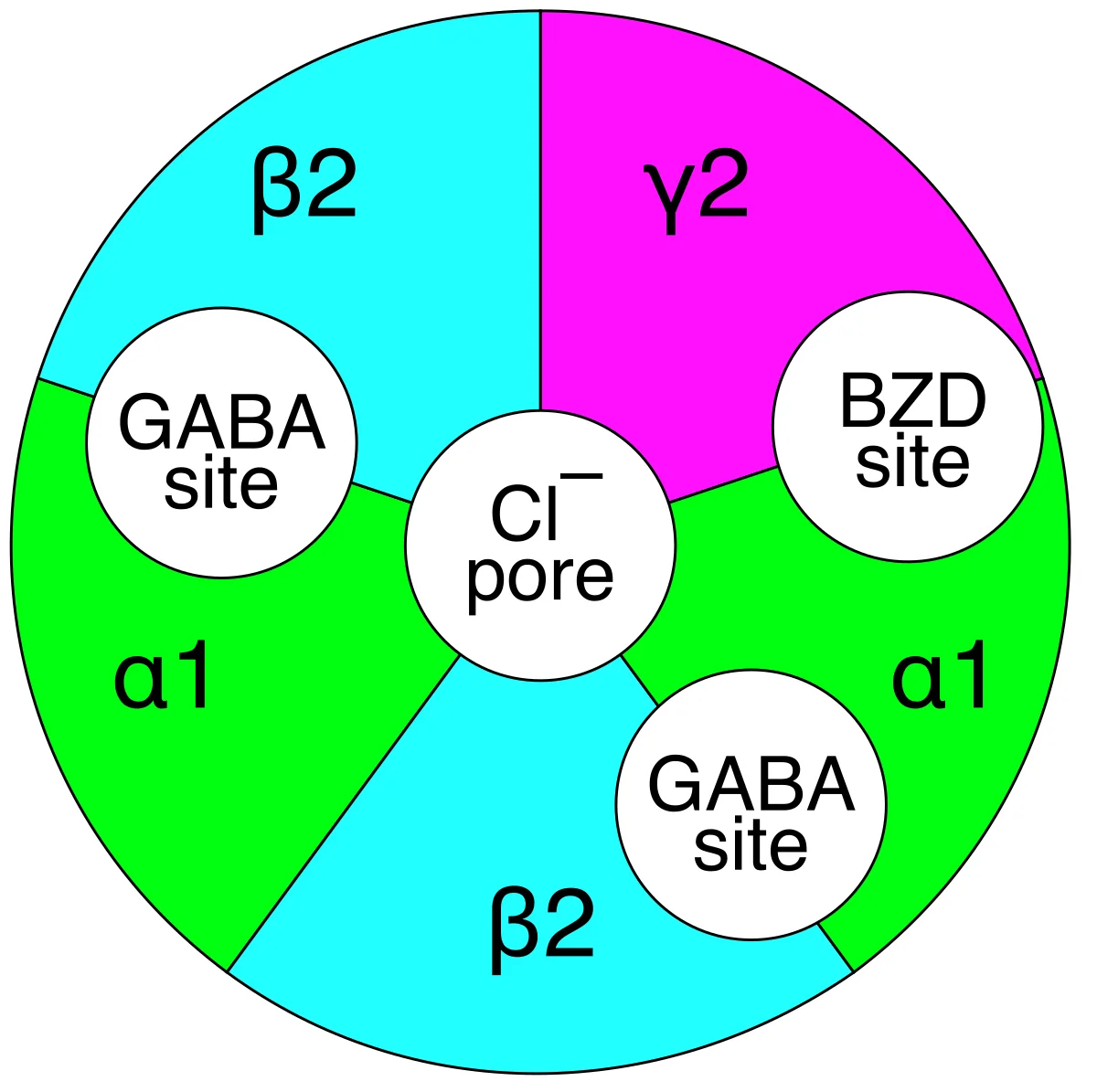
Benzodiazepines (“benzos,” e.g., diazepam, alprazolam - drug names ending in -zepam or -zolam). Most commonly prescribed depressant class. Bind the same GABA-A receptor complex as alcohol, increasing Cl⁻ influx. Used for anxiety, insomnia, and seizures. Short-acting benzos treat insomnia; long-acting ones treat anxiety.
Barbiturates (e.g., phenobarbital - drug names ending in -barbital). Older sedative class. Also GABA-A enhancers, but with a much narrower therapeutic window than benzos, so overdose risk is higher. Rarely prescribed today except for seizures and anesthesia.
Stimulants
Stimulants speed up CNS activity, increasing heart rate, blood pressure, alertness, and mood. Most work by boosting dopamine and/or norepinephrine at synapses.
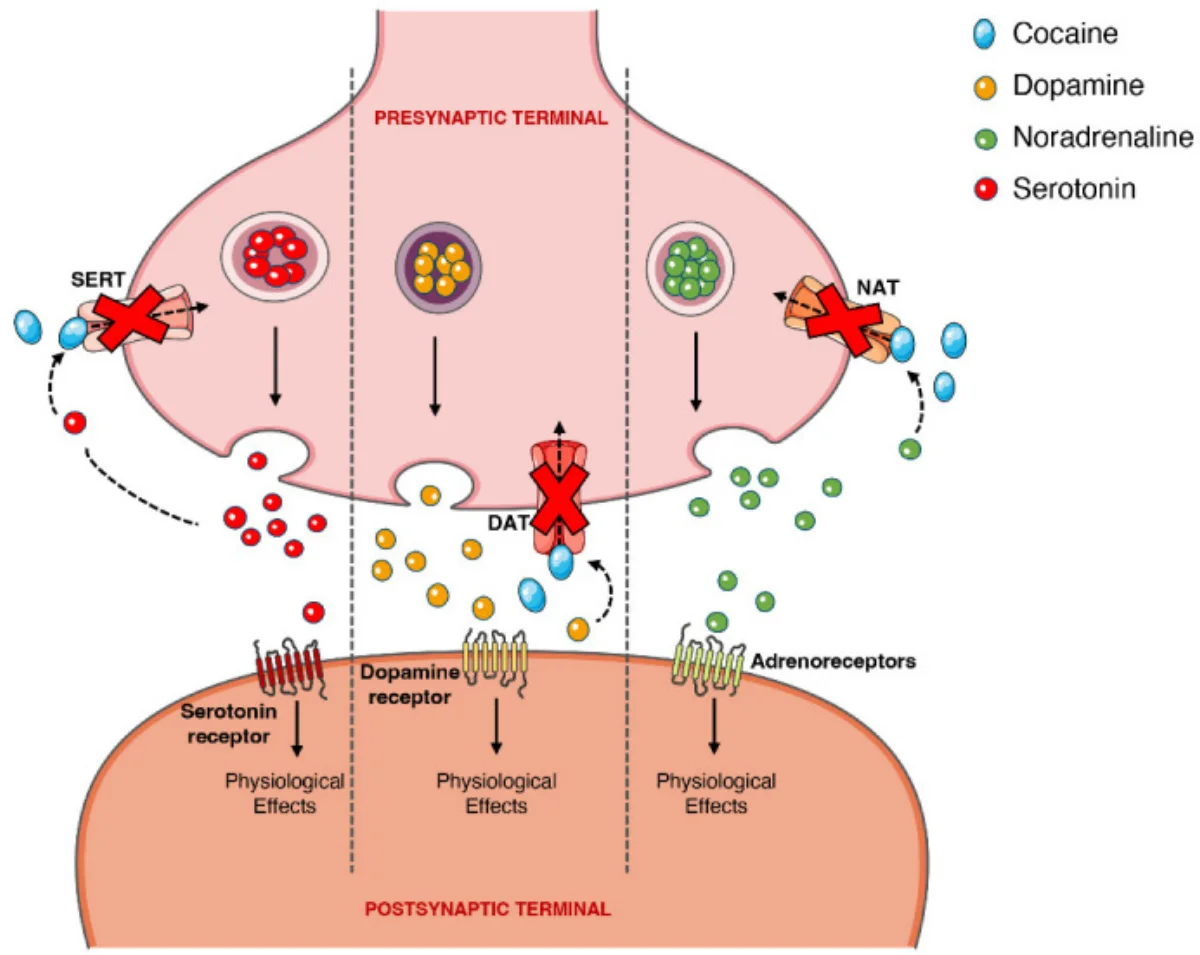
- Cocaine. Blocks reuptake of dopamine, norepinephrine, and serotonin. More neurotransmitter stays in the synapse. Intense, short euphoria → rapid crash. Also a local anesthetic and a vasoconstrictor.
MDMA (ecstasy/Molly) is a stimulant with hallucinogenic properties. It triggers massive serotonin release and can damage serotonergic neurons.
Hallucinogens
Hallucinogens (psychedelics) produce distorted perceptions, heightened sensations, altered thoughts, and sometimes true hallucinations. They mostly act on the serotonin (5-HT) system, especially 5-HT2A receptors.
- LSD (lysergic acid diethylamide). Prototype hallucinogen. Potent 5-HT2A agonist. Causes primarily visual hallucinations. Trips can last 8–12 hours.
- Psilocybin (active ingredient in “magic mushrooms”). Also a 5-HT2A agonist. Shorter duration than LSD. Being studied for depression and PTSD.
- Mescaline, peyote. Similar mechanism.
- PCP. An NMDA receptor antagonist (glutamate). Dissociative hallucinogen; can produce violent behavior. Exception to the “serotonin” rule.
- Cannabis (THC). Acts on CB1 cannabinoid receptors (which normally respond to endogenous anandamide). Enhances dopamine and GABA activity. Often classified as a mild hallucinogen, though it has depressant and occasionally stimulant effects. Lipophilic, so metabolites can stay in fat cells for weeks or months.
Opiates and Opioids
Opiates are naturally derived from the opium poppy (morphine, codeine). Opioids is the broader category including synthetic versions (oxycodone, hydrocodone, fentanyl, heroin). All bind endorphin receptors - G-protein-coupled receptors that normally respond to the body’s own painkillers. This is why opioids are such effective analgesics.
Effects: profound pain relief, euphoria, drowsiness, pupillary constriction (miosis), respiratory depression. Overdose kills by respiratory failure.
Naloxone (Narcan) is an opioid receptor antagonist that reverses overdose. It kicks the opioid off the receptor, instantly restoring breathing.
Methadone is a long-acting opioid agonist used to treat opioid addiction. It binds the same receptors but with a slower onset and longer duration, blocking withdrawal and blunting the ability to get high from additional opioids.
Routes of Drug Entry
How fast a drug acts - and how addictive it is - depends heavily on the route of administration. Faster delivery to the brain means a stronger, more rewarding high and a higher risk of dependence.
- Oral (pill, drink). Slowest. Goes through GI tract, first-pass liver metabolism. Onset in 30+ minutes.
- Transdermal (patch). Slow, steady, hours.
- Intramuscular injection. Minutes. Used for vaccines and epinephrine (EpiPen).
- Inhalation (smoking, vaping, snorting). Fast. ~10 seconds to brain.
- Intravenous injection. Fastest. Seconds.
This explains why smoked crack cocaine is more addictive than snorted powder cocaine, and why IV heroin is more addictive than oral opioids at the same effective dose.