
Dreams and Dream Theories
A dream is bizarre in a way that makes sense while you are in it. You are late for an exam, the exam is being proctored by your third-grade teacher, and the test paper is a bowl of soup - and none of that feels wrong until you wake up. Why do dreams do this, and why are they almost impossible to remember?
The Biology: Where Dreams Come From
Most vivid, memorable dreaming happens during REM sleep. During REM:
- The brainstem fires waves of spontaneous activity that travel up to higher cortical regions.
- The prefrontal cortex - the home of logic, planning, and reality-testing - is relatively quiet. This is why dreams can casually break the rules of physics and causality without you noticing.
- The amygdala (emotion) and visual association cortex are highly active, explaining the intense emotion and imagery.
- Most muscles below the head are paralyzed (atonia). This keeps you from acting out your dreams. In REM sleep behavior disorder, that paralysis fails and people physically act out dreams, sometimes violently.
You dream in NREM too, but those dreams are duller and less memorable - often just fragments or thoughts.
Freud’s Dream Theory: Manifest vs. Latent Content
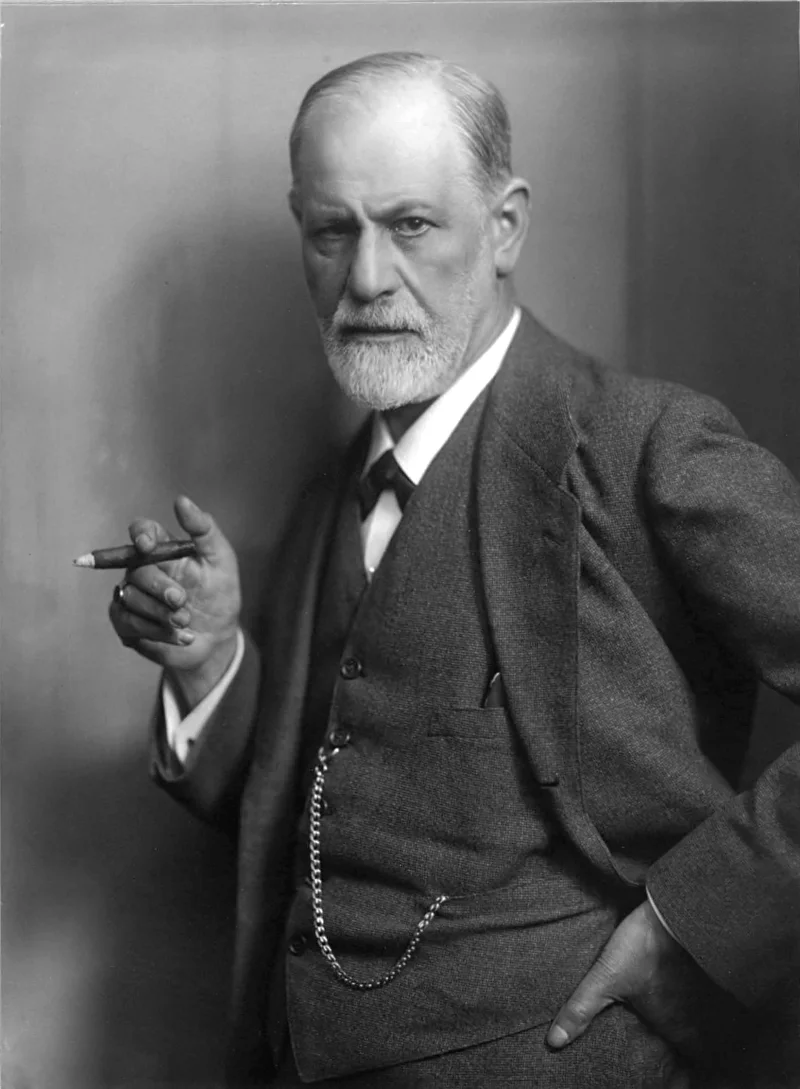
Sigmund Freud, in The Interpretation of Dreams (1900), argued that dreams express unconscious desires and conflicts the waking mind would censor. He divided dream material into two layers:
- Manifest content - the literal storyline you can describe. “A monster was chasing me through my office.”
- Latent content - the hidden, symbolic meaning. “I am afraid my boss will fire me.”
Freud’s theory is mostly unsupported by modern neuroscience, but the MCAT wants you to recognize the terminology, because passages routinely quote psychoanalytic interpretations as foils for more modern theories.
Activation-Synthesis Hypothesis (Hobson and McCarley, 1977)
The most widely taught scientific alternative: the activation-synthesis hypothesis.
- Activation. The brainstem spits out random neural signals during REM sleep.
- Synthesis. The cortex (particularly the association cortex) takes this random noise and tries to weave it into a coherent narrative.
Under this view, dreams have no deep inherent meaning - they are the brain’s attempt to make sense of its own background chatter while disconnected from sensory input. Dreams feel vivid and narrative because the cortex is built to create stories out of any pattern, even noise.
This theory explains why dreams are weird (the input is random), why they feel visual (visual cortex is active), and why you can shift settings in a blink (the storytelling engine is improvising).
Other Theories
Memory consolidation. REM sleep helps integrate procedural and emotional memories; dreams are the experiential side of that process. Support: sleep improves learning on motor tasks, people who learn a skill and then sleep outperform people who stay awake.
Threat simulation / evolutionary. Dreams are a low-cost rehearsal arena for dangerous situations, letting the brain practice responses to threats (why so many dreams feature being chased or falling). Plausible but hard to test.
Problem solving. You have heard the cliche “sleep on it.” There are real cases (Mendeleev dreaming the periodic table, Kekulé’s benzene ring snake dream) where a dream led to a scientific insight. Modern view: sleep allows off-line recombination of memory traces, occasionally producing novel connections.