
Sleep Stages, Brain Waves, and Circadian Rhythms
You are not unconscious during sleep - you are cycling through wildly different brain states, each with a distinct EEG signature and a distinct biological job. Knowing the stages cold is worth easy points on the MCAT.
The Four Stages of Sleep
Sleep is traditionally divided into non-REM (NREM) and REM. NREM splits further into three stages.
N1 (Stage 1): Light Sleep
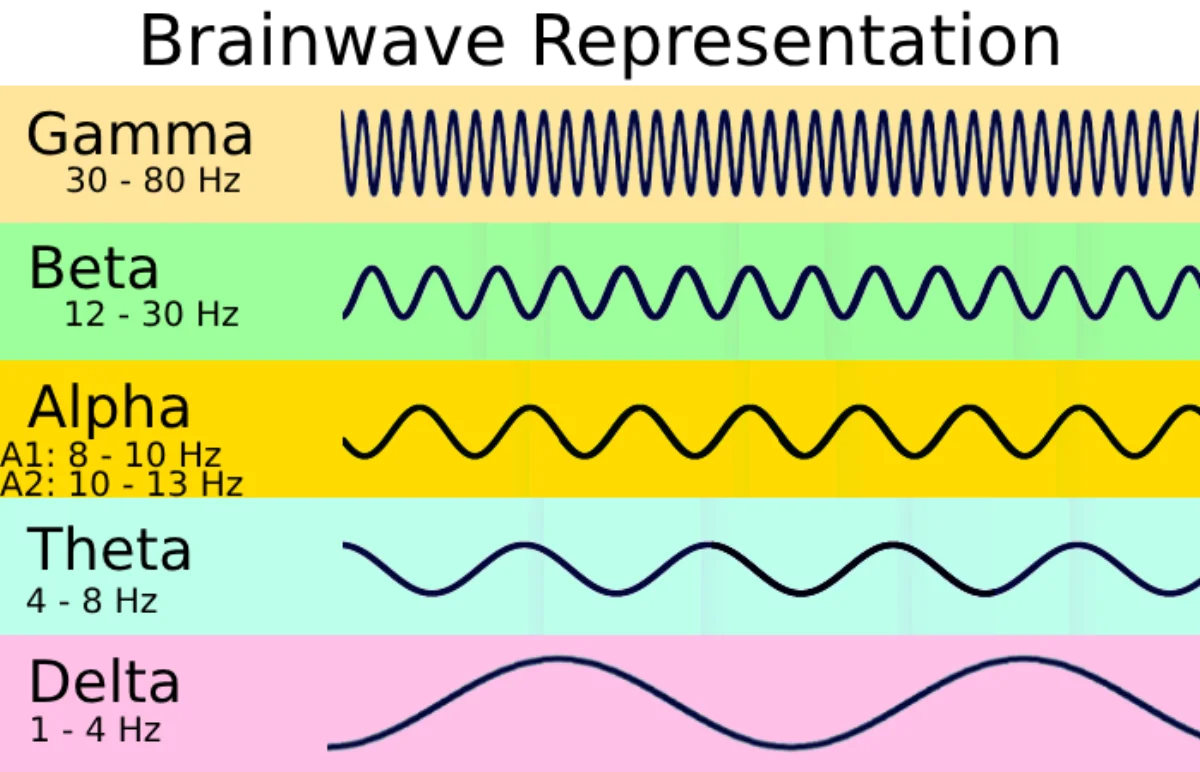
- Theta waves (4–7 Hz).
- Transition from wake to sleep. Can be awakened easily.
- Hypnagogic hallucinations - vivid sensory flashes as you drift off (“I just saw a doorbell!”).
- Hypnic jerks - sudden muscle twitches, often with a sensation of falling.
- Tetris effect - after hours on a repetitive activity (video games, boat ride) you see afterimages during drowsy falling-asleep.
N2 (Stage 2): Deeper Light Sleep
- More theta waves, plus two distinctive EEG features:
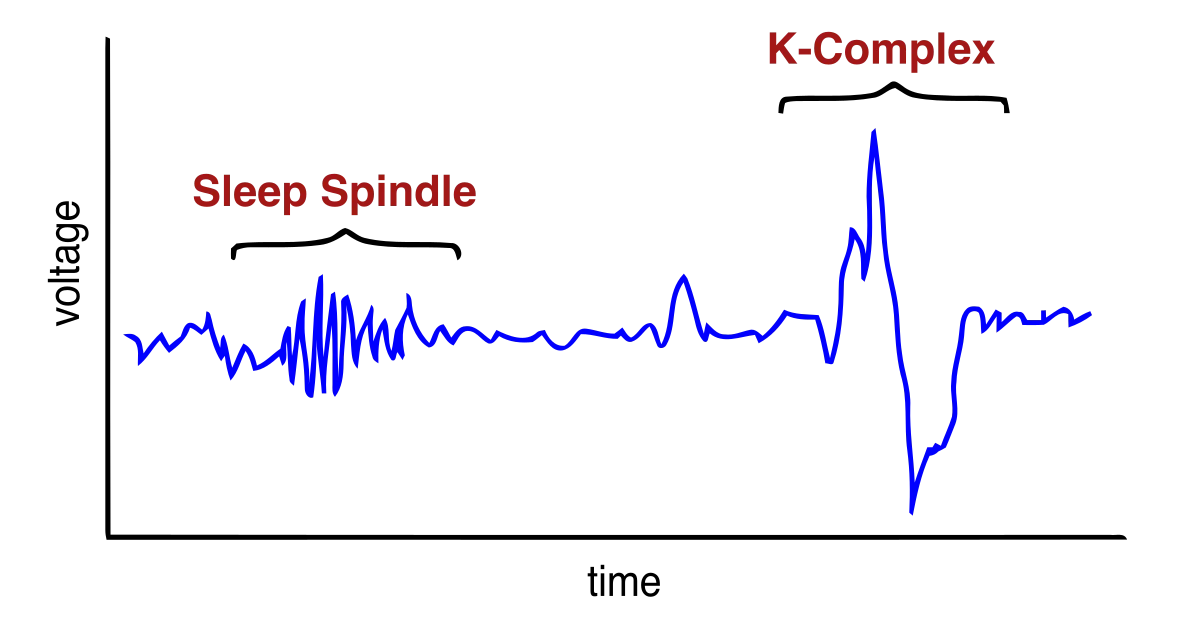
- Sleep spindles - short bursts of fast brain activity. Thought to help filter external noise so you stay asleep, and to aid memory consolidation.
- K-complexes - large, slow waves that suppress cortical arousal and assist declarative memory consolidation. Can also be triggered by a light external stimulus like a gentle touch.
- Harder to wake than N1.
N3 (Stage 3): Slow-Wave Sleep
- Delta waves (0.5–2 Hz).
- Very hard to wake; groggy if awakened.
- Declarative memory consolidation happens here.
- Sleepwalking, sleeptalking, and night terrors happen during N3 (parasomnias). Children have more N3 than adults.
- Body releases growth hormone.
REM (Rapid Eye Movement)
- Eyes move rapidly beneath closed eyelids. Most other muscles are paralyzed.
- EEG: mix of alpha, beta, and desynchronous waves, so similar to awake that REM is called paradoxical sleep - your brain is firing like you are awake while your body is locked down.
- Most vivid, memorable dreaming happens in REM.
- Procedural memory consolidation and emotional processing happen here.
- Babies spend way more time in REM than adults - thought to support rapid neural development.
The 90-Minute Cycle
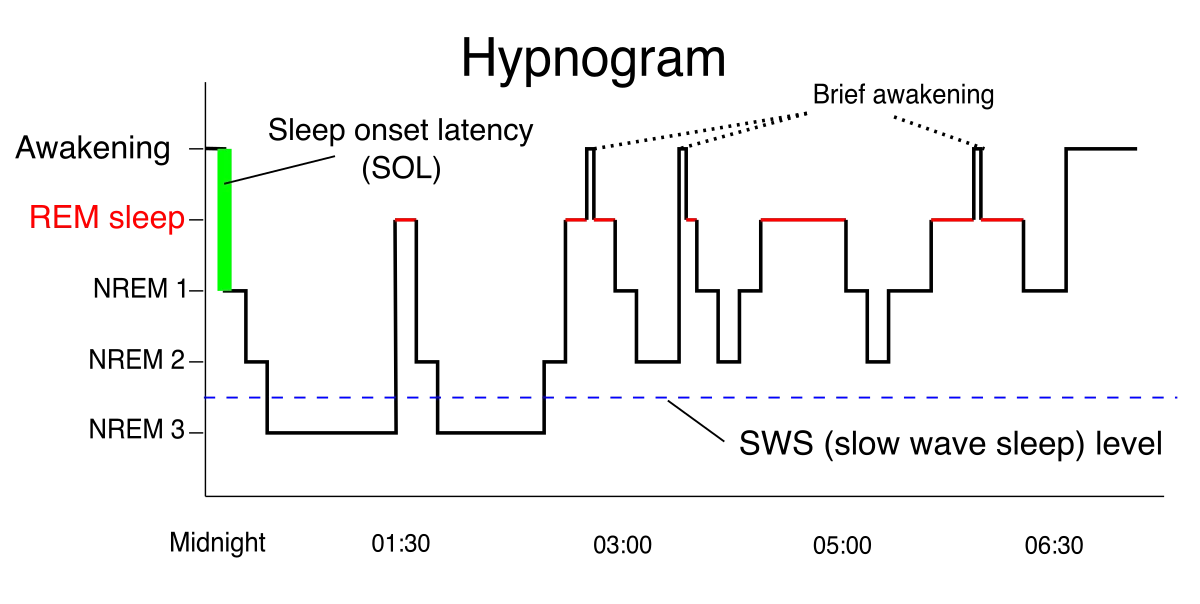
You do not simply march N1 → N2 → N3 → REM and stop. You cycle. A full cycle lasts roughly 90 minutes and plays out as:
N1 → N2 → N3 → N2 → REM → back to N1
You complete about 4–5 cycles per night. But the cycles are not identical:
- Early in the night, cycles are dominated by N3 (deep slow-wave sleep). Your body prioritizes physical recovery and declarative memory consolidation.
- Later in the night, cycles shift toward longer REM periods. The last REM episode of the night can last nearly an hour, which is why you often wake up mid-dream.
This is why waking up early (and cutting off the last cycles) disproportionately costs you REM sleep, not N3.
Circadian Rhythms
Your body operates on a roughly 24-hour cycle called a circadian rhythm that governs sleep, body temperature, hormone release, and alertness. The master clock is the suprachiasmatic nucleus (SCN) of the hypothalamus, which receives input from the retina and tracks the light/dark cycle.
The SCN signals the pineal gland, which releases melatonin at night. Melatonin makes you feel sleepy. Daylight (including artificial light from screens) suppresses melatonin; darkness releases it.
- Jet lag happens when your circadian rhythm is out of sync with local time. Melatonin supplements can help reset it.
- Shift workers who work nights have chronically misaligned circadian rhythms and are at higher risk for metabolic disease.
- Blue light from phones and laptops is particularly good at suppressing melatonin - which is why blue-light filters at night are more than a gimmick.
- Circadian rhythm shifts across the lifespan. Adolescents trend later (why teens stay up and sleep in). Older adults trend earlier.