
Biological Constraints on Learning
Classical and operant conditioning were once thought to be universal rules - any stimulus could be paired with any response in any animal, given enough trials. Then a series of experiments in the 1960s and 70s showed this was wrong. Animals are biologically prepared to learn certain associations far more easily than others. Learning is filtered through evolution.
Conditioned Taste Aversion (The Garcia Effect)
John Garcia showed something remarkable in rats. He paired sweetened water with two kinds of aversive consequence:
- In one condition, the water was paired with an illness-inducing drug.
- In another, the water was paired with electric shocks.
Separately, he paired a light-and-buzzer cue with the same two consequences.
The results contradicted the prediction that any two stimuli can be associated with any consequence:
| Stimulus | Followed by illness | Followed by shock |
|---|---|---|
| Sweet water (taste) | Strong aversion | No aversion |
| Light/buzzer | No aversion | Strong avoidance |
Rats easily learned to associate taste with illness, even after a single trial and even when the illness came hours later. They could not easily associate taste with shock, nor light/buzzer with illness. The evolutionary logic is transparent: in nature, food usually causes illness (bad food), and external threats usually cause physical pain (predator attack). Rats are biologically prepared for the associations that matter for survival.
This one-trial learning for taste aversion is why you still hate that specific sushi roll that made you sick five years ago, even though you know intellectually it was the stomach bug. Your limbic system connects “ate sushi” to “got sick” as a one-shot survival rule.
Phobia Preparedness
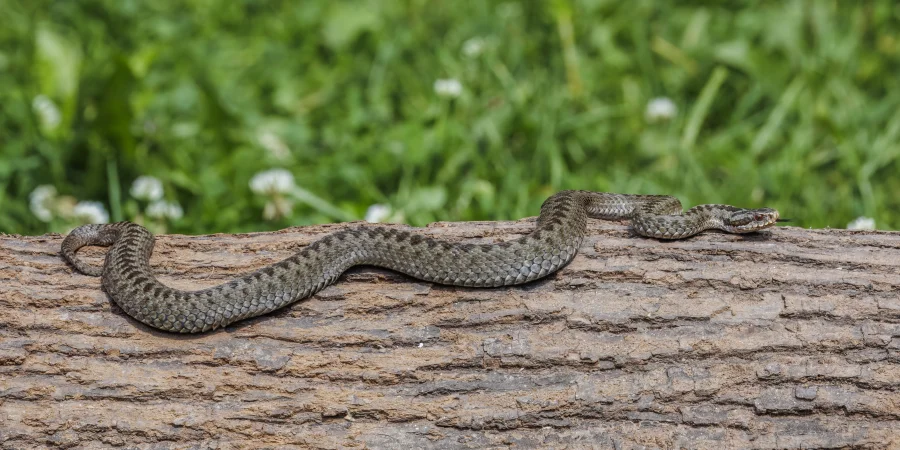
Seligman argued that humans, like rats, are prepared to learn certain fears more readily than others. Most phobias cluster around ancient threats: snakes, spiders, heights, deep water, confined spaces, the dark. You rarely see phobias of electrical outlets or cars, even though modern life makes these far more dangerous than most snakes.
The preparedness theory of phobias says natural selection equipped us to acquire fear of ancestrally dangerous things on minimal evidence. A single bad experience with a spider can create a lifelong phobia; fifty near-misses in traffic leave most people shrugging.
Instinctive Drift (Again)
We saw this briefly in operant conditioning, but it belongs in this chapter too. Keller and Marian Breland set up animal shows at fairs and discovered that even well-trained operant behaviors would drift toward species-specific instincts. A raccoon taught to drop tokens in a slot would begin rubbing and dunking the tokens - food-washing behavior. A chicken trained to stand on a platform would begin scratching at it - ground-scratching foraging behavior. Reinforcement could not override instinct indefinitely.
Instinctive drift shows that operant conditioning works with biology, not independently of it.
Practical Upshot
For the MCAT, remember:
- Not all stimulus-response pairs learn at the same rate.
- Adaptive pairings (food-illness, predator-pain) learn faster than arbitrary pairings (light-illness).
- One-trial learning is possible for biologically prepared associations.
- Instincts can override learned behavior.
- Learning is filtered through evolution, not a blank-slate algorithm.