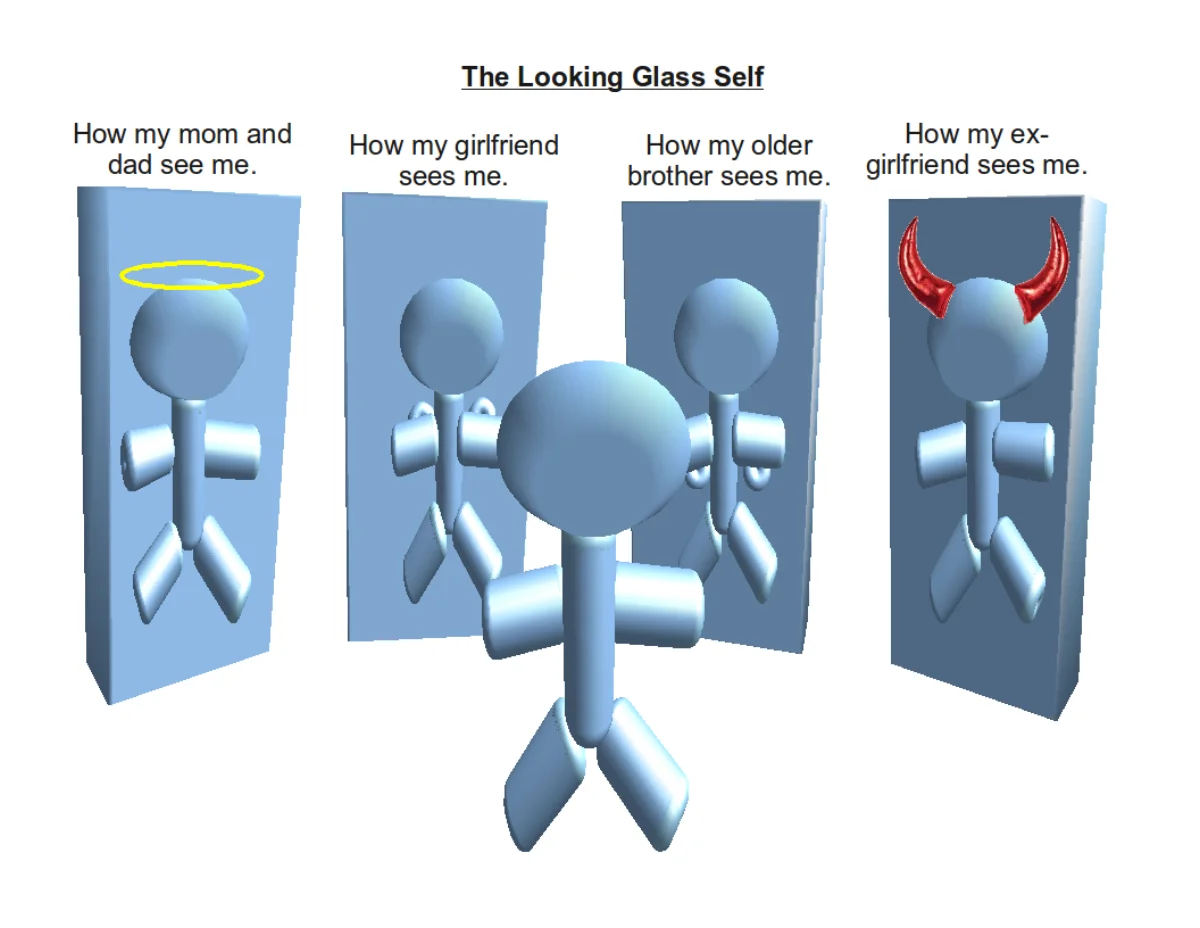
Attribution and the Self
How do we make sense of other people’s behavior - and our own? Attribution theory tells us we’re constantly building explanations for actions, and those explanations are systematically biased. This section also covers two sociological theorists who built foundational models of how the self forms through social interaction: George Herbert Mead and Charles Cooley.
Attribution Theory
Attribution theory (Heider, Kelley) explains how we infer the causes of behavior. Two broad categories of causes:
- Dispositional (internal) attribution. The behavior reflects the person’s stable traits, personality, or choices. “He yelled because he’s an angry person.”
- Situational (external) attribution. The behavior reflects the circumstances. “He yelled because his flight just got cancelled.”
We use cues to decide which applies. Kelley’s covariation model suggests we check three kinds of information:
- Consistency - does the person usually act this way in this situation?
- Distinctiveness - does the person act differently in other situations?
- Consensus - do others act this way in the same situation?
High consistency, low distinctiveness, and low consensus point to dispositional attribution. High consistency, high distinctiveness, and high consensus point to situational attribution.
Systematic Attribution Biases
Fundamental Attribution Error
Overweighting dispositional factors and underweighting situational factors when explaining OTHERS’ behavior. A driver cuts you off; you decide they’re a jerk (dispositional) rather than stressed or late (situational).
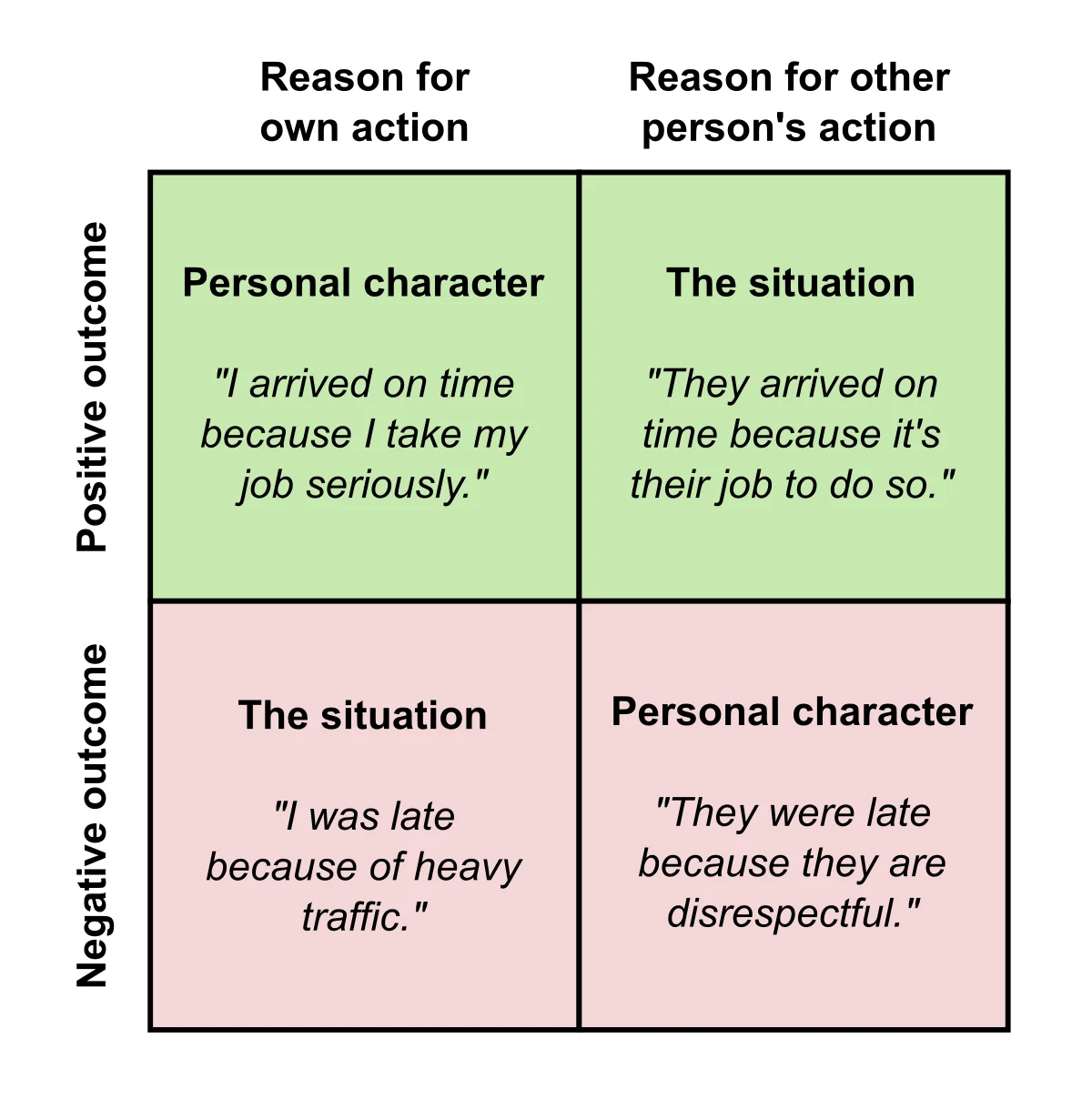
This is an especially Western tendency - cross-cultural research shows it’s weaker in collectivist cultures (which pay more attention to context).
Actor-Observer Bias
You attribute OTHERS’ behavior to disposition but YOUR OWN behavior to situation. Same cut-off in traffic: “I was only speeding because I’m late” (situational) but “that other driver is a reckless idiot” (dispositional).
Self-Serving Bias
Attribute your successes to dispositional causes (“I got the job because I’m talented”) and your failures to situational causes (“I didn’t get the job because the market is tough”). Protects self-esteem.
Just-World Hypothesis
The belief that the world is fundamentally fair - good things happen to good people, bad things to bad people. Leads to blaming victims (“if they got robbed, they must have done something to deserve it”). Explains some social attitudes toward poverty, crime, and illness.
Social Perception Biases
Halo Effect
A positive impression of one trait spreads to unrelated traits. Attractive people are also judged as kinder, smarter, and more trustworthy. Classic job-interview confound - more attractive candidates get rated higher on qualifications they haven’t even displayed.
Primacy and Recency Effects
Early information (primacy) dominates first impressions. Later information (recency) can override primacy when we have time to process.
Stereotypes and Stereotype Threat
A stereotype is a generalized belief about a group. Stereotypes influence perception and memory even when we consciously reject them.
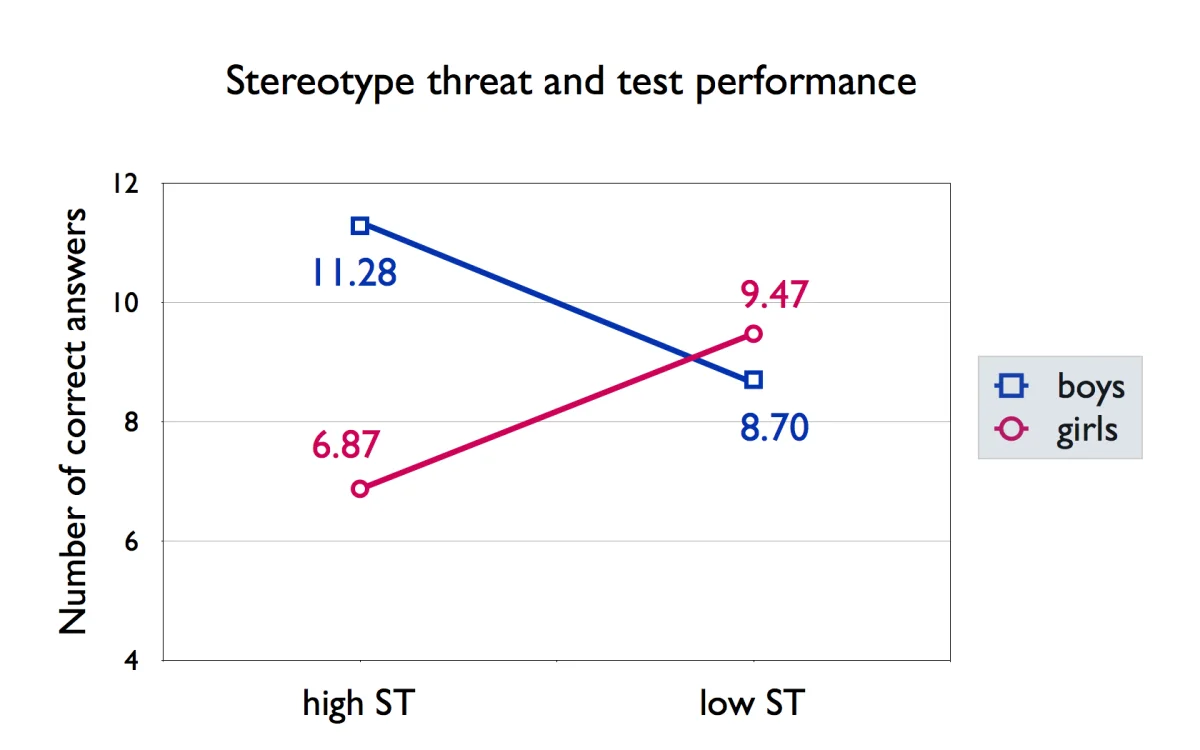
Stereotype threat (Steele and Aronson). When members of a stigmatized group are reminded of a negative stereotype before performing a task, their performance drops. African American students primed to think about race perform worse on standardized tests; women primed to think about gender perform worse on math tests. The stereotype itself generates anxiety that undermines performance.
Self-Fulfilling Prophecy
Expectations about a person or group can cause them to behave in ways that confirm the expectation. Rosenthal’s classic study: teachers told certain (randomly chosen) students were “late bloomers” actually treated them differently, and those students improved more by year-end.
Mead’s “I” and “Me”
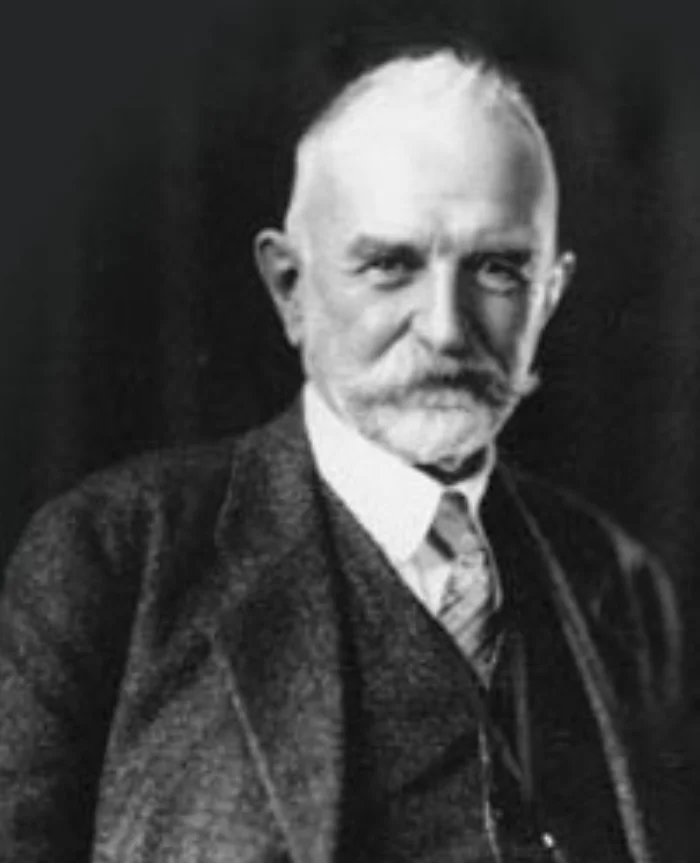
George Herbert Mead (founder of symbolic interactionism) described the self as having two components:
- “I” - the spontaneous, subjective, creative self. The part that initiates action.
- “Me” - the objective self as seen by others. The internalized social self.
The “I” acts; the “me” reflects on how others will perceive that action. Healthy social functioning involves balancing both.
Mead also described three stages of development:
- Preparatory stage - imitation. Children mimic others without understanding meaning.
- Play stage - children play roles (doctor, parent) and take on others’ perspectives one at a time.
- Game stage - children can take on multiple perspectives at once, understanding their role in a larger system (the generalized other - the society’s viewpoint).
Cooley’s Looking-Glass Self
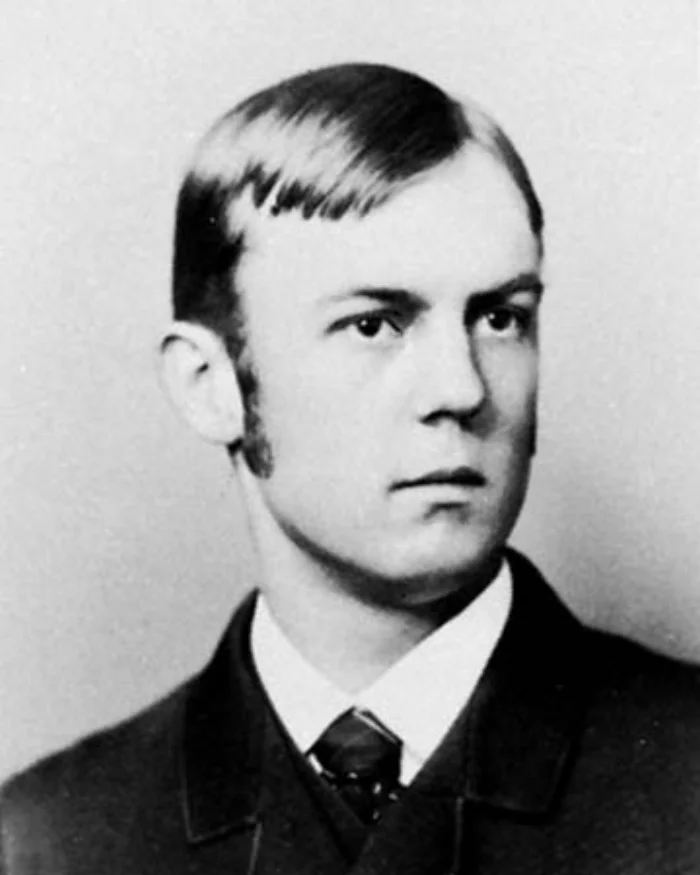
Charles Horton Cooley argued that we develop our self-concept through the perceived judgments of others. Three steps:
- We imagine how we appear to others.
- We imagine how others judge our appearance.
- We develop our self-concept based on those imagined judgments.
The self is literally reflected back to us from the social mirror. This explains why social feedback (parents, peers) shapes self-esteem so powerfully, especially in childhood.