
Self-Concept and Control
Your sense of self is layered. At the foundation is self-concept (how you describe yourself). Above it sits self-esteem (how you feel about that description) and self-efficacy (whether you believe you can do things). Running through all of it is your locus of control - who or what you think is actually steering the ship.
Self-Concept, Self-Identity, Social Identity
- Self-concept. The whole mental image you have of yourself - physical traits, personality, abilities, values. The most inclusive term.
- Self-identity. Your sense of who you are as an individual, distinguishing you from others.
- Social identity. Who you are in relation to groups (your nationality, religion, profession, team fandoms). Social identity changes with context - you might foreground your student identity at school, your family identity at home.
Your self-concept is not fixed; it develops through experience, feedback, and comparison to others. A child who is praised for being a “good reader” integrates that label into their self-concept.
Self-Esteem
Self-esteem is how much you like, value, or accept yourself. High self-esteem is associated with positive mood, resilience, and persistence. Low self-esteem is linked to depression, anxiety, and relationship problems.
But self-esteem has a dark side too: unstable or inflated self-esteem (narcissism) can fuel aggression when threatened. Research now emphasizes self-compassion as healthier than unconditional high self-esteem - accepting flaws without requiring constant superiority.
Self-Efficacy (Bandura)
Self-efficacy is your belief in your ability to perform a specific behavior successfully. Distinct from self-esteem: you can have high self-esteem generally but low self-efficacy for a specific task (confident person, bad at dancing).
- Sources of self-efficacy (Bandura):
- Past successes and failures (biggest source).
- Observation of others (if they can do it, maybe I can).
- Verbal persuasion (“you can do this”).
- Physiological arousal (calm nerves → higher efficacy).
High self-efficacy predicts persistence through setbacks, better academic performance, and better health behavior adherence. Therapy often aims to increase self-efficacy by structuring small successes.
Locus of Control

Locus of control is the degree to which you feel you control your own life.
- Internal locus of control. “My actions determine my outcomes.” “I should have studied harder.” Associated with higher achievement, lower stress, better health behaviors.
- External locus of control. “Outside forces determine my outcomes.” “That test was unfair.” “Luck is against me.” Associated with higher anxiety, depression, and worse health outcomes.
A mix is usually healthiest. Over-internal can mean blaming yourself for things outside your control. Over-external can mean learned helplessness.
Learned Helplessness
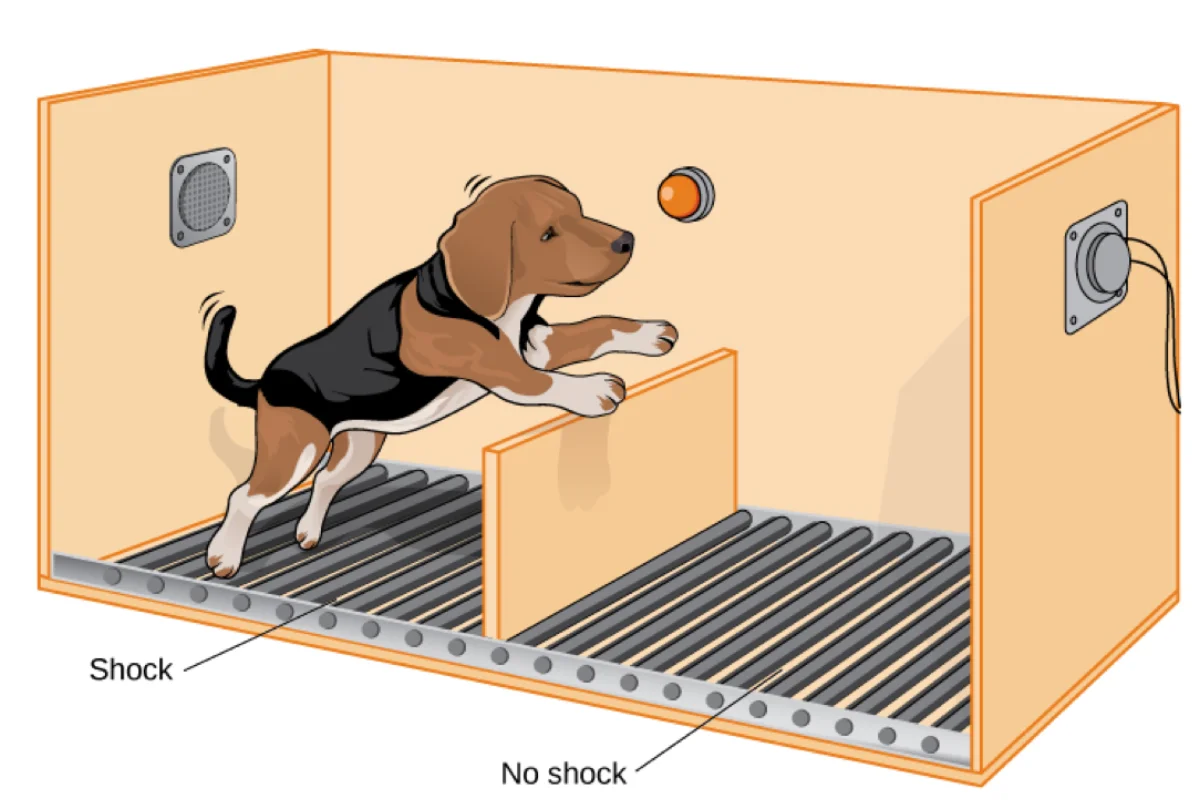
Learned helplessness (Seligman - we saw this in Chapter 5) - after repeated uncontrollable negative events, people stop trying to escape even when escape becomes possible. Generalizes to a perception that “nothing I do matters.” Closely linked to clinical depression. Key contributor to the external locus of control in chronically stressed populations.
Self-Control and the Tyranny of Choice
Self-control (or self-regulation) is the capacity to override immediate impulses to pursue long-term goals. Finite resource - “ego depletion” research (now contested) suggested that exercising self-control in one domain could reduce it in others. Modern evidence suggests the effect is subtler and situation-dependent.
The tyranny of choice (Barry Schwartz): having too many options can paralyze decision-making, reduce satisfaction with the final choice, and increase regret. Paradoxically, abundance can harm well-being. Countered by establishing rules of thumb, accepting “good enough” choices (satisficing), or deliberately narrowing options.