Depression and Bipolar Disorders

Depression and Bipolar Disorders

5 min read Updated Apr 19, 2026

Mood disorders span a continuum from depression at one end to mania at the other. The DSM-5 separates depressive disorders from bipolar disorders, recognizing they have different courses, genetics, and treatments.

Major Depressive Disorder (MDD)
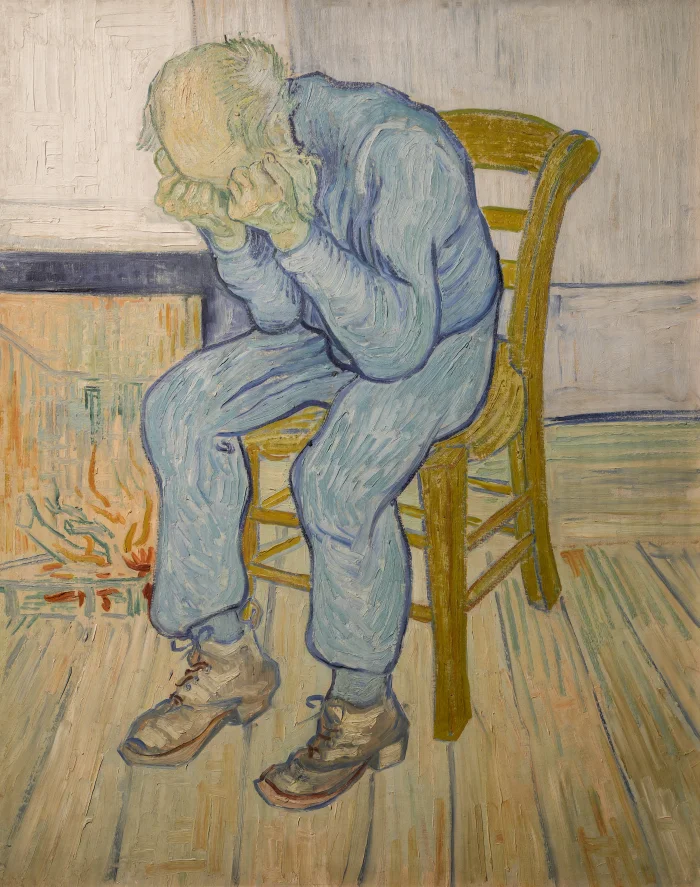
Oil painting by Vincent van Gogh titled 'At Eternity's Gate' showing an elderly bald man in a blue suit slumped in a yellow wooden chair, both hands pressed to his face in despair, in front of a small fireplace on a wooden floor. Heavy, expressive brushstrokes
Vincent van Gogh's At Eternity's Gate (1890) - one of the most enduring portraits of clinical depression. The posture (hands clutching head, slumped collapse) captures the psychomotor retardation, hopelessness, and exhaustion that define a major depressive episode. Van Gogh painted it while himself institutionalized for what we would now classify as a mood disorder. Credit: GoldenArtists via Wikimedia Commons (CC BY-SA 4.0).

Major depressive disorder requires a major depressive episode: at least five symptoms present for at least 2 weeks, including either depressed mood or anhedonia (loss of interest/pleasure). Other symptoms include:

  • Significant weight change or appetite change.
  • Insomnia or hypersomnia.
  • Psychomotor agitation or retardation.
  • Fatigue or low energy.
  • Feelings of worthlessness or excessive guilt.
  • Impaired concentration or indecisiveness.
  • Recurrent thoughts of death or suicide.

Mnemonic: SIG E CAPS (Sleep, Interest, Guilt, Energy, Concentration, Appetite, Psychomotor, Suicide) plus mood.

Women are diagnosed with MDD about twice as often as men. Peak onset is in the 20s-30s. Lifetime prevalence is 15-20%.

Persistent Depressive Disorder (Dysthymia)

Persistent depressive disorder is a chronic, milder form of depression lasting at least 2 years (1 year in children). Symptoms overlap with MDD but are less severe, and there are no symptom-free periods longer than 2 months. Sometimes called “low-grade depression” - the person functions, but poorly and unhappily.

Bipolar Disorders

Bipolar disorders involve alternating episodes of depression and mania.

Manic Episode

At least 1 week of elevated, expansive, or irritable mood and increased energy, plus at least 3 additional symptoms (4 if mood is only irritable):

  • Inflated self-esteem or grandiosity.
  • Decreased need for sleep.
  • More talkative than usual; pressure to keep talking.
  • Flight of ideas (rapid topic changes).
  • Distractibility.
  • Increase in goal-directed activity.
  • Excessive involvement in high-risk pleasurable activities (unprotected sex, spending sprees, reckless driving).

Mnemonic: DIG FAST (Distractibility, Irritability, Grandiosity, Flight of ideas, Agitation/Activity, Sleep decreased, Talkativeness).

Mania can severely impair judgment and often requires hospitalization.

Bipolar I

At least one manic episode. Most people with bipolar I also have depressive episodes, but depression is not required for diagnosis.

Bipolar II

At least one major depressive episode and at least one hypomanic episode (a less severe form of mania that lasts at least 4 days and doesn’t cause marked impairment). Never a full manic episode - the presence of one upgrades the diagnosis to bipolar I.

Cyclothymic Disorder

A chronic but milder form: alternating periods of hypomanic and depressive symptoms for at least 2 years, without meeting criteria for a full episode.
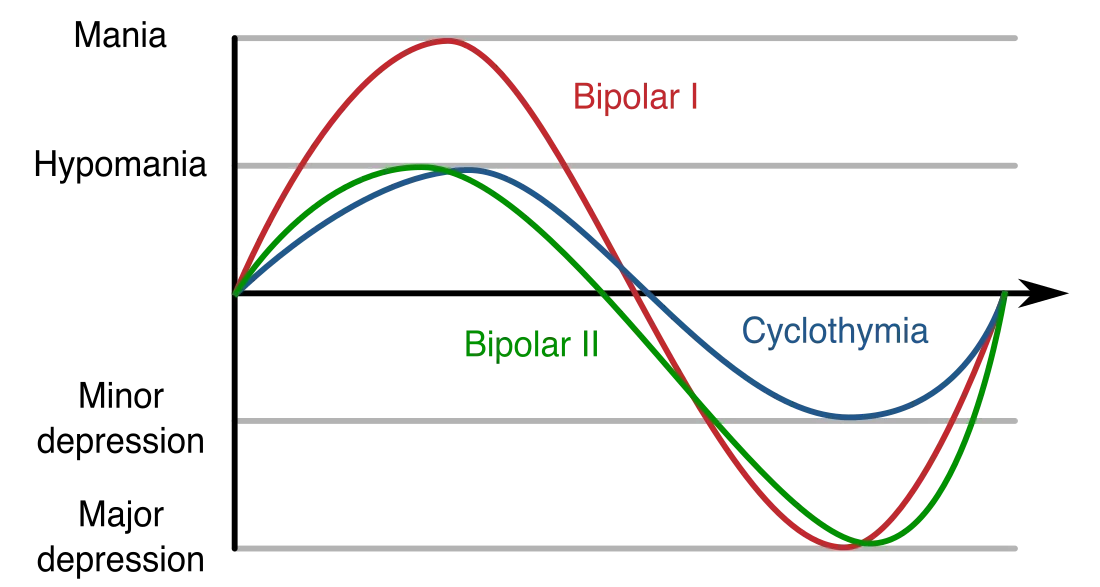
Sine-wave-style mood chart with mood level on the y-axis (Mania, Hypomania, baseline, Minor depression, Major depression) and time on the x-axis. Three colored curves are overlaid: a red Bipolar I curve swings highest into Mania and deepest into Major depression; a green Bipolar II curve peaks only at Hypomania but still reaches Major depression; a blue Cyclothymia curve oscillates within the Hypomania-to-Minor-depression band, never reaching the extremes
The bipolar spectrum visualized as mood swings over time. Bipolar I reaches full mania and full depression. Bipolar II tops out at hypomania but still drops into major depression. Cyclothymia oscillates within a milder band. The MCAT loves to test these distinctions - especially the bipolar I vs. II line: a single full manic episode upgrades a diagnosis to bipolar I. Credit: Blacktc via Wikimedia Commons (CC BY 4.0).

Biological Basis

Monoamine Hypothesis of Depression

Depression involves deficiency in monoamine neurotransmitters, particularly serotonin, norepinephrine, and dopamine. Evidence:

  • SSRIs (selective serotonin reuptake inhibitors) and other antidepressants that boost these monoamines effectively treat depression in many patients.
  • Reserpine (old antihypertensive that depleted monoamines) caused depression.
  • Brain imaging often shows altered activity in prefrontal cortex, amygdala, hippocampus.

The hypothesis is incomplete - antidepressants boost monoamines within hours but take weeks to produce clinical benefit, suggesting downstream neuroplastic changes matter more than the neurotransmitter level itself.

Other Findings

  • Anterior cingulate cortex shows reduced serotonin responsiveness in depression.
  • Chronic stress elevates cortisol and damages the hippocampus; people with depression often have smaller hippocampi.
  • Learned helplessness (Seligman) is an animal model of depression.
  • Genetic. Heritability ~40% for MDD, ~70% for bipolar.

Treatment

Antidepressants

  • SSRIs (fluoxetine, sertraline, escitalopram) - block serotonin reuptake. First-line for depression. Minor side effects, low overdose risk.
  • SNRIs (venlafaxine, duloxetine) - block serotonin and norepinephrine reuptake.
  • Tricyclic antidepressants (amitriptyline, nortriptyline) - older, more side effects, higher overdose risk.
  • MAOIs - block monoamine oxidase, preventing breakdown of monoamines. Effective but require dietary restrictions (tyramine crisis) and have many drug interactions.

All antidepressants take 4-6 weeks for full effect.
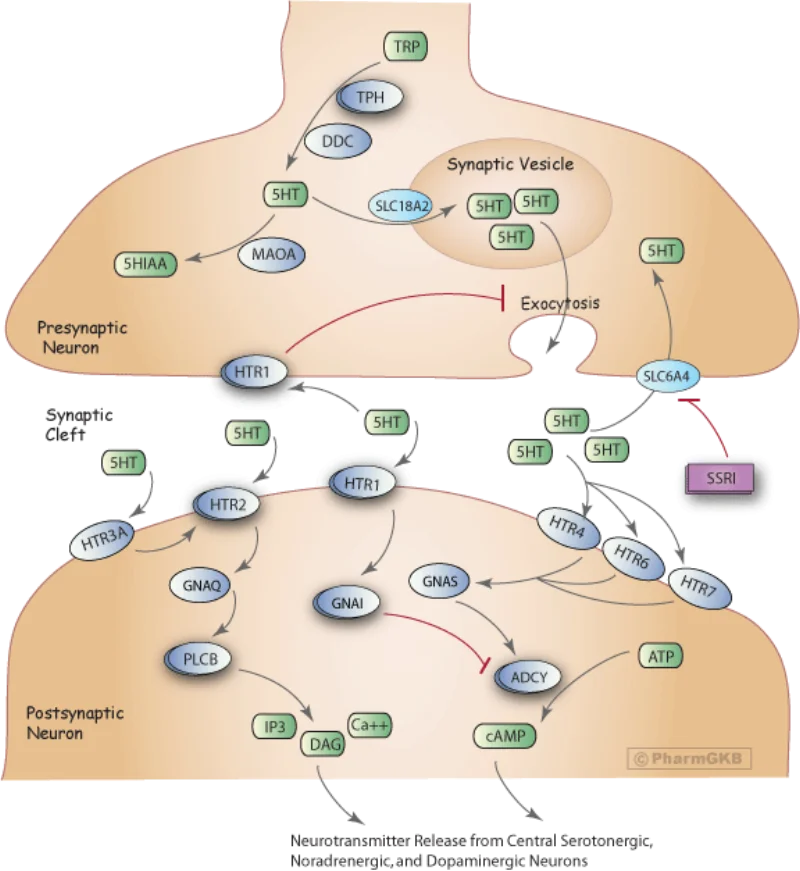
Diagram of a serotonergic synapse. The presynaptic neuron synthesizes 5-HT (serotonin) from tryptophan via TPH and DDC, packages it into synaptic vesicles via SLC18A2, and releases it into the cleft. Released 5-HT activates postsynaptic receptors HTR1, HTR2, HTR3A and HTR4/6/7 that signal through G proteins (GNAQ, GNAI, GNAS) to PLCB and ADCY, producing IP3, DAG, Ca++, and cAMP. A pink box labeled SSRI is shown blocking the SLC6A4 serotonin transporter that normally reuptakes 5-HT back into the presynaptic neuron
How an SSRI works. Selective serotonin reuptake inhibitors block the SLC6A4 serotonin transporter on the presynaptic neuron, preventing reabsorption of released serotonin. More serotonin lingers in the synaptic cleft, prolonging postsynaptic receptor activation. The clinical benefit takes weeks - longer than the receptor-level change - which suggests downstream neuroplastic adaptations matter as much as the immediate transmitter effect. Credit: PharmGKB via Wikimedia Commons (CC BY-SA 4.0).
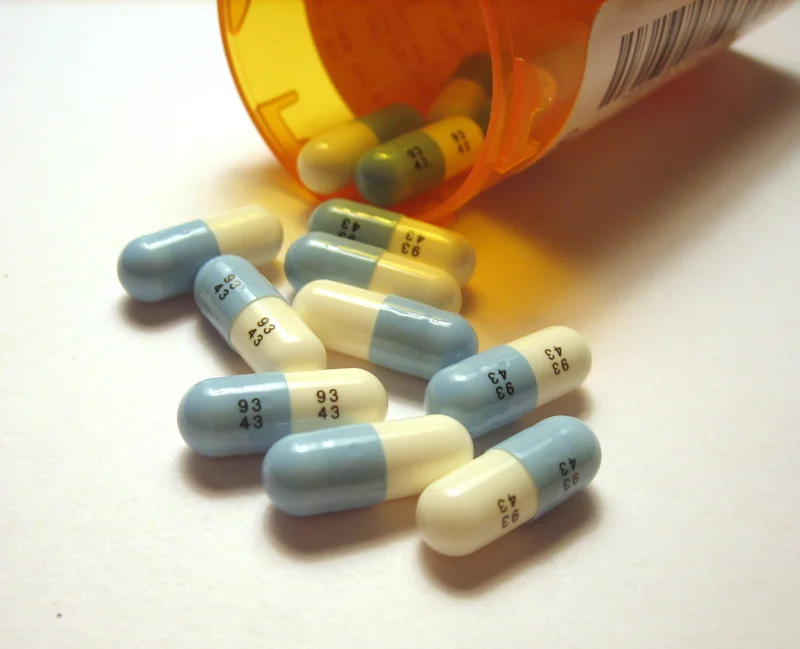
Pile of blue-and-cream Prozac (fluoxetine) capsules spilling out of an orange prescription bottle, each capsule marked with the imprint '93 43'
Fluoxetine (Prozac), one of the first SSRIs and still one of the most widely prescribed antidepressants in the world. SSRIs displaced the older tricyclics and MAOIs as first-line therapy because of their cleaner side-effect profile and much lower overdose lethality. Credit: Tom Varco via Wikimedia Commons (CC BY-SA 3.0).

Mood Stabilizers for Bipolar

  • Lithium - the classic mood stabilizer. Reduces mania and prevents relapse. Narrow therapeutic window - blood levels must be monitored. Mechanism incompletely understood.
  • Anticonvulsants (valproate, lamotrigine, carbamazepine) - also effective as mood stabilizers.

Antidepressants given alone to bipolar patients can trigger a manic episode - so mood stabilizers are often co-prescribed.

Two round, chalky white lithium salt tablets resting on a countertop
Lithium - the prototypical mood stabilizer. Despite being the simplest drug in the psychiatric pharmacopeia (just an alkali metal), it remains one of the most effective treatments for bipolar mania and a strong reducer of suicide risk. Its narrow therapeutic window means patients need regular blood-level monitoring to avoid toxicity. Credit: P3829 via Wikimedia Commons (CC0).

Psychotherapy

  • Cognitive behavioral therapy (CBT) - challenges distorted thought patterns. Evidence-based first-line psychotherapy.
  • Interpersonal therapy - focuses on relationship patterns.
  • Electroconvulsive therapy (ECT) - for severe, treatment-resistant depression. Induces brief seizures under anesthesia. Highly effective but carries memory side effects.
  • Transcranial magnetic stimulation (TMS) - non-invasive alternative to ECT, approved for treatment-resistant depression.
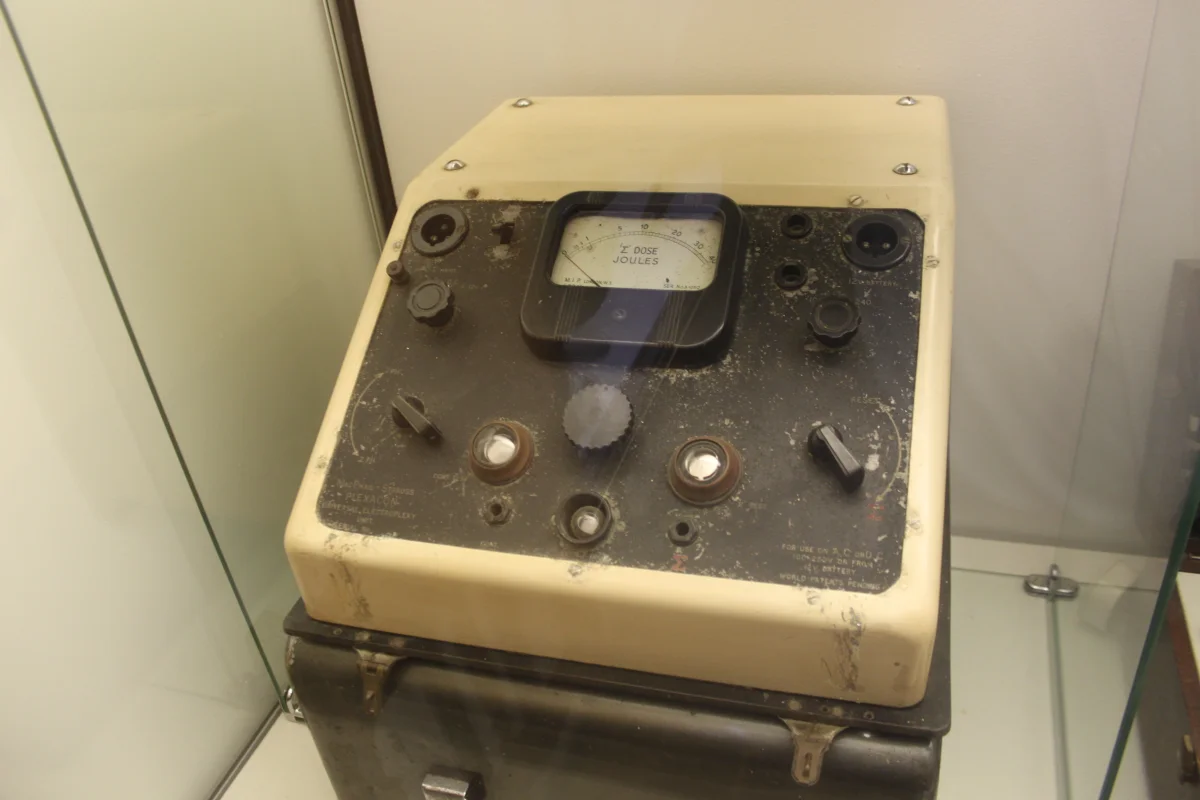
A vintage cream-colored Siemens Konvulsator III electroconvulsive therapy machine sitting on a wooden display surface, with a large central dial showing seconds, several smaller knobs and switches labeled in German, and two black handheld electrode paddles connected by cables in front
An older-generation Siemens Konvulsator III ECT device. Modern ECT, performed under general anesthesia and muscle relaxation, remains the most effective treatment for severe, medication-resistant depression and severe catatonia. Despite its grim reputation in pop culture, it has high response rates - the principal side effect is short-term memory loss around the treatment period. Credit: Nasko via Wikimedia Commons (CC0).
A diagnosis of major depressive disorder requires at least how many symptoms for how long?
Click to reveal answer
At least 5 symptoms present for at least 2 weeks, including either depressed mood or anhedonia as one of them. Mnemonic: SIG E CAPS (Sleep, Interest, Guilt, Energy, Concentration, Appetite, Psychomotor, Suicide) plus mood.
Distinguish bipolar I from bipolar II disorder.
Click to reveal answer
Bipolar I requires at least one full MANIC episode. Bipolar II requires at least one hypomanic episode plus at least one major depressive episode, but NO full manic episode. A full manic episode upgrades bipolar II to bipolar I.
Why might an antidepressant taken ALONE trigger a manic episode in a bipolar patient?
Click to reveal answer
Antidepressants can 'switch' bipolar patients from depression into mania. This is why mood stabilizers (lithium, anticonvulsants) are typically co-prescribed, or why antidepressant monotherapy is avoided in bipolar disorder.