
Schizophrenia
Schizophrenia is a severe psychotic disorder characterized by distorted thinking, perception, and emotion. It affects about 1% of the population worldwide, usually emerging in late adolescence or early adulthood (earlier in men, later in women). Despite stereotypes, schizophrenia is not “split personality” - that’s dissociative identity disorder.
Symptoms
DSM-5 requires at least two of the following for a significant portion of a month, with at least one being hallucinations, delusions, or disorganized speech:
Positive Symptoms (Excess of Normal Function)
Things that are “added” compared to healthy function.
- Hallucinations. Sensory experiences without external stimuli. Auditory (voices) are most common; visual, tactile, olfactory also occur. Auditory hallucinations often comment on the person’s behavior or issue commands.
- Delusions. Fixed false beliefs held despite contrary evidence. Categories:
- Persecutory (being followed, harassed, poisoned).
- Grandeur (being a famous person, having special powers).
- Reference (innocuous events refer specifically to oneself - the TV anchor is sending me messages).
- Control (an external force is controlling one’s thoughts or behavior).
- Disorganized speech. Loose associations, word salad, neologisms (made-up words), derailment (drifting between topics).
- Disorganized or catatonic behavior. Grossly inappropriate behavior, rigid postures, repetitive movements, or lack of movement.
Negative Symptoms (Reduction of Normal Function)
Things that are “taken away” compared to healthy function.
- Flat/blunted affect. Reduced emotional expression in face and voice.
- Alogia. Poverty of speech; few words.
- Avolition. Lack of motivation; difficulty initiating goal-directed activities.
- Anhedonia. Inability to experience pleasure.
- Social withdrawal. Retreat from relationships.
Negative symptoms are often more disabling over time and are harder to treat with medication.
Cognitive Symptoms
Impairments in attention, working memory, and executive function - less dramatic than positive symptoms but major contributors to long-term disability.
Course
The disorder often progresses through:
- Prodromal phase. Social withdrawal, odd beliefs, declining function, lasting months to years before full onset.
- Active phase. Full psychotic symptoms emerge - delusions, hallucinations, disorganization.
- Residual phase. Positive symptoms attenuate; negative and cognitive symptoms persist. Relapses can send the patient back to active phase.
Early treatment during the prodromal or first-episode phase significantly improves long-term outcomes.
Biological Basis
Dopamine Hypothesis
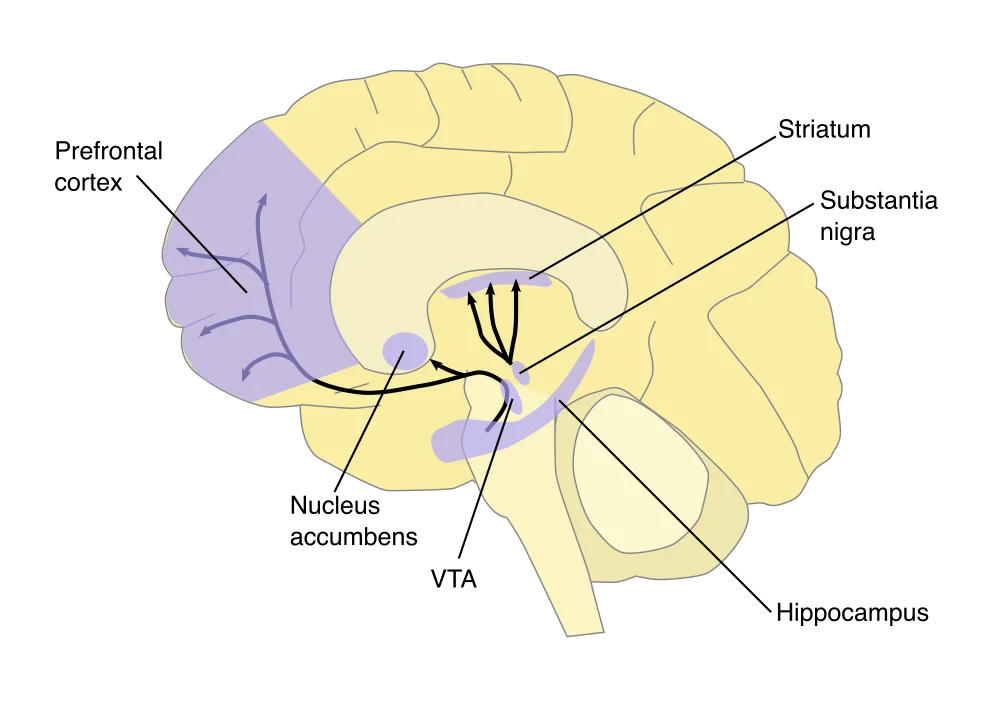
Schizophrenia involves dysregulation of dopamine signaling.
- Mesolimbic pathway (VTA → nucleus accumbens): hyperactive → produces positive symptoms (hallucinations, delusions).
- Mesocortical pathway (VTA → prefrontal cortex): hypoactive → produces negative symptoms (flat affect, avolition).
Evidence:
- Amphetamines (which boost dopamine) can induce psychosis in healthy people.
- First-generation antipsychotics block D2 dopamine receptors and reduce positive symptoms.
- Levodopa (dopamine precursor, used for Parkinson’s) can trigger psychotic symptoms.
Glutamate Hypothesis
Evidence for glutamate dysfunction, especially at NMDA receptors. PCP and ketamine (NMDA antagonists) can produce both positive and negative symptoms.
Other Findings
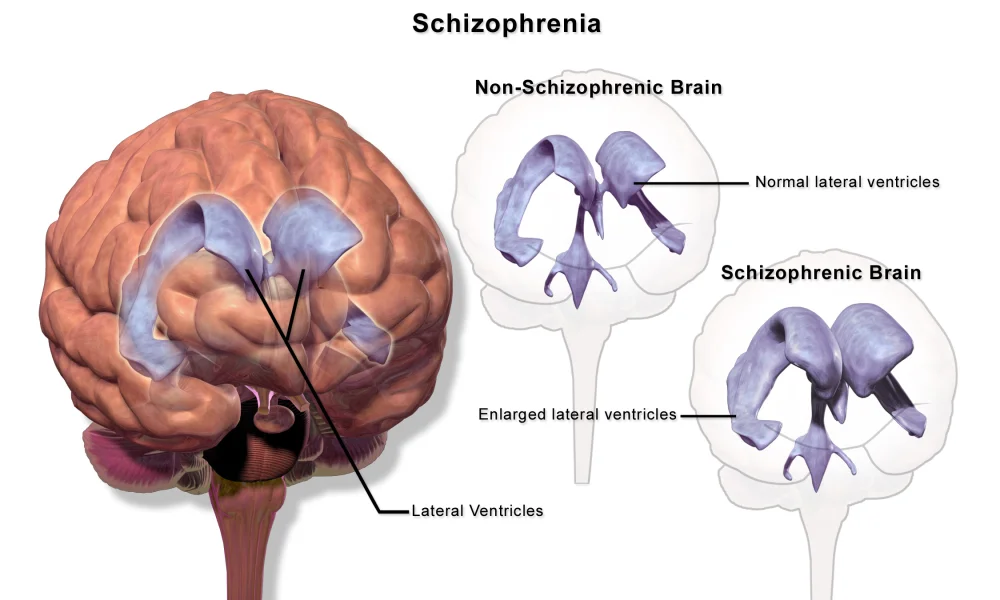
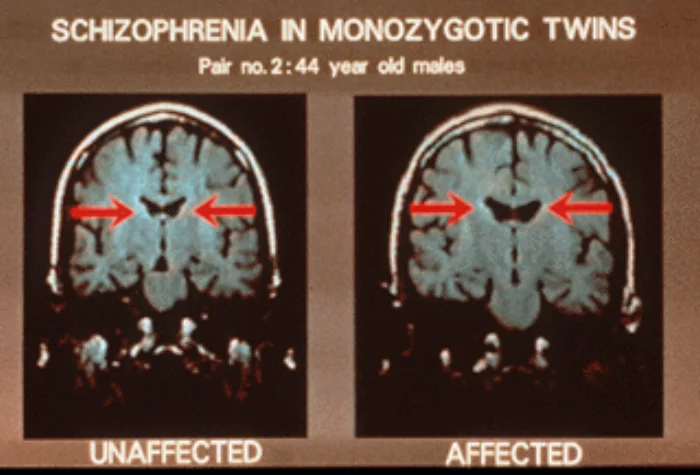
- Enlarged cerebral ventricles - indicating brain tissue loss.
- Reduced hippocampal volume.
- Genetic. Heritability around 80%. Concordance ~50% in monozygotic twins, ~10% in dizygotic twins.
- Environmental triggers. Prenatal viral infections, birth complications, cannabis use (especially heavy adolescent use), and severe stress in genetically vulnerable individuals.
Treatment
Antipsychotic Medications
First-generation (typical) antipsychotics (haloperidol, chlorpromazine) - block D2 receptors. Effective for positive symptoms, less effective for negative symptoms, and cause movement-related side effects (tardive dyskinesia - involuntary repetitive movements).
Second-generation (atypical) antipsychotics (risperidone, olanzapine, clozapine) - also block D2 but act on serotonin receptors. Better for negative symptoms, fewer movement side effects, but carry metabolic risks (weight gain, diabetes). Clozapine is the most effective but requires blood monitoring due to risk of agranulocytosis.
Psychosocial Treatment
- Family therapy - reducing high expressed emotion (harsh criticism, over-involvement) in family reduces relapse.
- Cognitive behavioral therapy - helping patients challenge delusional beliefs and cope with hallucinations.
- Supported employment, social skills training - helping patients maintain function.