
Anxiety, OCD, and Trauma Disorders
Anxiety is a normal response to threat. Anxiety disorders involve anxiety that is excessive, persistent, and disruptive, far out of proportion to actual danger. This group and the closely related OCD and PTSD make up the most common psychiatric conditions - the lifetime prevalence of any anxiety disorder is around 30%.
Generalized Anxiety Disorder (GAD)
Persistent, excessive worry about a range of life situations, lasting at least 6 months, with at least three of:
- Restlessness, feeling “on edge.”
- Easily fatigued.
- Difficulty concentrating.
- Irritability.
- Muscle tension.
- Sleep disturbance.
The worry is hard to control and is about everyday things (money, family, work) rather than specific triggers.
Panic Disorder
Recurrent, unexpected panic attacks plus persistent worry about future attacks or maladaptive behavior changes to avoid them.
A panic attack is a discrete episode of intense fear that peaks within minutes, with at least 4 of:
- Pounding heart, palpitations.
- Sweating, shaking, trembling.
- Shortness of breath.
- Choking sensation.
- Chest pain.
- Nausea.
- Dizziness or faintness.
- Chills or hot flashes.
- Numbness or tingling.
- Derealization (feeling unreal) or depersonalization (detachment from self).
- Fear of losing control or “going crazy.”
- Fear of dying.
The physical symptoms are so intense that first panic attacks are often mistaken for heart attacks. The fear of having another attack - and avoiding situations where one might happen - drives the disorder’s course.

Agoraphobia
Intense fear of being in places or situations from which escape would be difficult or embarrassing if panic or incapacitation struck. Classic examples: crowded markets, open spaces, enclosed spaces, public transportation, being far from home alone.
Often co-occurs with panic disorder - once someone has had a panic attack in a supermarket, they may avoid supermarkets.
Specific Phobias
Marked, persistent fear of a specific object or situation that is disproportionate to actual danger. Exposure almost always provokes anxiety. Common phobias include:
- Animals - spiders (arachnophobia), snakes (ophidiophobia), dogs.
- Natural environment - heights (acrophobia), water, storms.
- Blood-injection-injury - medical procedures.
- Situational - flying, elevators, driving, enclosed spaces (claustrophobia).
Recall from Chapter 3 that preparedness theory explains why ancestrally dangerous stimuli (snakes, heights) produce phobias more readily than modern dangers (electrical outlets, cars).

Social Anxiety Disorder
Intense fear of social situations in which one might be scrutinized or judged. Public speaking is the most common trigger, but broader social anxiety disorder extends to most social interactions. Causes significant avoidance of social, occupational, and academic opportunities.
Obsessive-Compulsive Disorder (OCD)
OCD was reclassified out of the anxiety disorder group in DSM-5 but is still conceptually related.
- Obsessions. Unwanted, intrusive, recurrent thoughts that cause anxiety (fear of contamination, fear of harming someone, unwanted taboo thoughts, need for symmetry).
- Compulsions. Repetitive behaviors or mental acts the person feels driven to perform in response to obsessions (washing, checking, counting, arranging, silent prayers).
The compulsions temporarily relieve the anxiety caused by the obsessions but reinforce the cycle. Compulsions become time-consuming (at least 1 hour/day for diagnosis) and often severely impair functioning.

Biology:
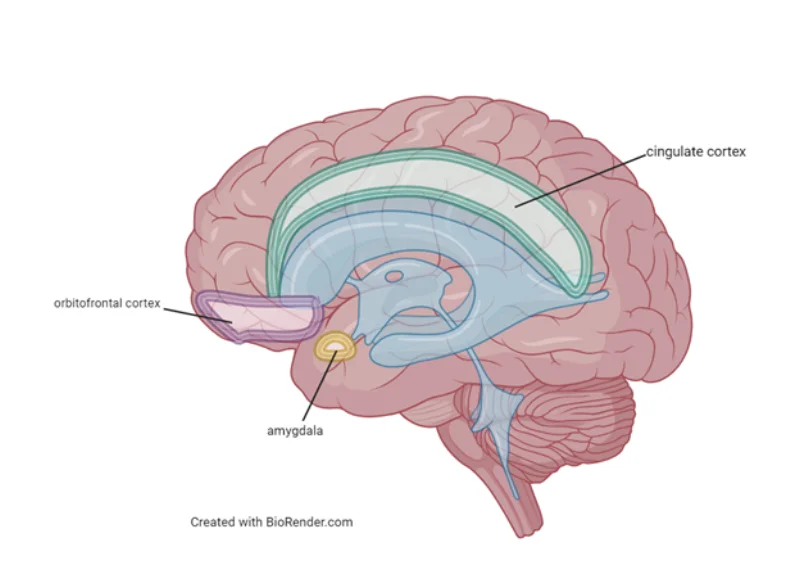
- Abnormalities in the cortico-striatal-thalamic loop.
- Genetic component - about 25% of first-degree relatives have OCD or related conditions.
- Serotonin dysfunction - SSRIs at high doses are first-line medical treatment.
Cognitive-behavioral therapy with exposure and response prevention (ERP) - deliberately exposing the patient to triggers while preventing the compulsive response - is the most effective psychological treatment.
Post-Traumatic Stress Disorder (PTSD)
Also reclassified in DSM-5 into “trauma- and stressor-related disorders.”
Requires:
- Exposure to actual or threatened death, serious injury, or sexual violence (direct, witnessed, or learned about in a close other).
- Intrusion symptoms - distressing memories, nightmares, flashbacks, intense distress at reminders.
- Avoidance - of memories, thoughts, feelings, or external reminders of the trauma.
- Negative alterations in cognition/mood - inability to remember aspects of the trauma, persistent negative beliefs, persistent negative emotions, detachment from others.
- Alterations in arousal/reactivity - irritable outbursts, hypervigilance, exaggerated startle, sleep disturbance, concentration problems.
- Duration at least 1 month.
Partial PTSD is common - not everyone exposed to trauma develops PTSD, and prior trauma plus inadequate social support raise risk.
Treatments include trauma-focused CBT, prolonged exposure therapy, eye movement desensitization and reprocessing (EMDR), and SSRIs.
Treatment of Anxiety Disorders
Medications
- SSRIs - first-line for most anxiety disorders, OCD, and PTSD. Also treat depression (common comorbidity).
- SNRIs - also effective.
- Benzodiazepines - rapid anxiety relief but risk of dependence. Used short-term or acutely (pre-flight, during a panic attack). Not first-line for chronic treatment.
- Beta blockers - reduce physical symptoms of anxiety (racing heart, trembling). Used for performance anxiety.
Psychotherapy
- Cognitive-behavioral therapy (CBT) - gold standard. Challenges catastrophic thoughts and gradually exposes patients to feared situations.
- Exposure therapy - repeated, safe exposure to feared stimuli extinguishes conditioned anxiety.
- Systematic desensitization (Wolpe) - relaxation paired with a graded fear hierarchy.
- Flooding/implosive therapy - full-intensity exposure in a safe context.