
Classifying Disorders
Before diving into specific disorders, we need a framework for classifying them. The MCAT wants you to know the dominant diagnostic manual and the main theoretical lenses used to understand mental illness.
The DSM-5
The Diagnostic and Statistical Manual of Mental Disorders, 5th Edition (DSM-5), published by the American Psychiatric Association, is the standard reference for diagnosing mental disorders in the United States. It lists hundreds of disorders, each with specific diagnostic criteria.
A diagnosis requires:
- Presence of specified symptoms.
- Symptoms cause significant distress or impairment in daily functioning.
- Symptoms are not better explained by another condition (e.g., medical illness, substance use).
- For many disorders, symptoms must persist for a specified duration.
The DSM-5 replaced the multi-axial system of DSM-IV with a single-axis approach, integrating psychiatric and medical conditions together.
The Biopsychosocial Model
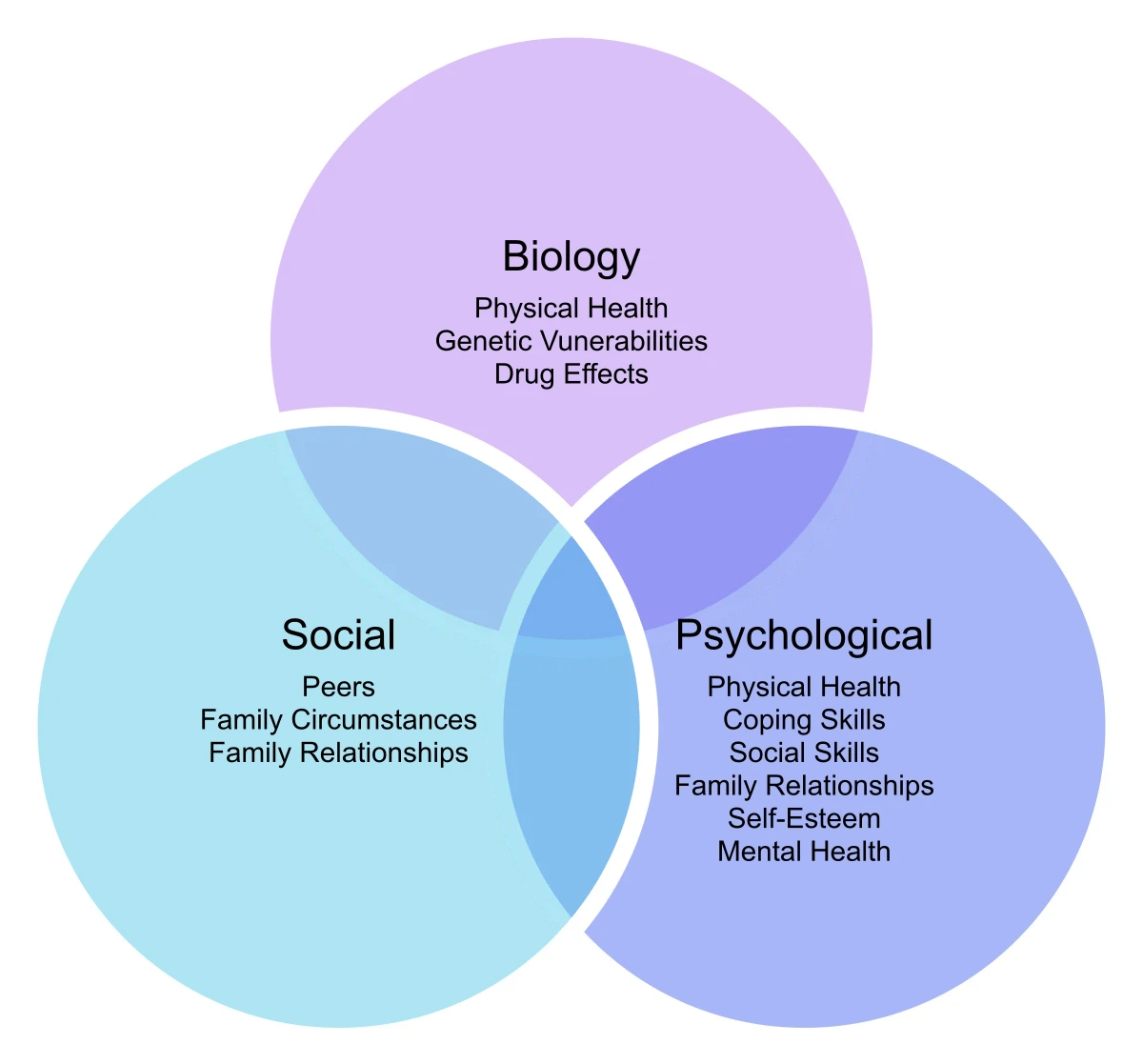
Mental disorders emerge from interacting factors at three levels:
- Biological. Genes, neurotransmitters, brain structure, hormones, prenatal exposures.
- Psychological. Cognitions, coping styles, learning history, personality traits.
- Sociocultural. Family dynamics, social support, stressors, poverty, discrimination, cultural norms.
No single level tells the whole story. Depression can be triggered by a serotonin system vulnerability (bio), by rumination and hopelessness (psych), or by job loss and isolation (social) - usually all three together.
What Counts as “Abnormal”?
The DSM leans on several overlapping criteria:
- Statistical deviance. The behavior is far from the norm (rare).
- Maladaptive behavior. It interferes with daily functioning.
- Personal distress. The person feels significant suffering.
- Violation of social norms. The behavior deviates from what the culture considers acceptable.
None alone is sufficient. Genius is statistically deviant but not disordered. Someone in a dangerous job has normal distress. Cultural norms vary. Modern diagnosis requires a cluster of these with documented impairment.
Stigma and the Biomedical Model
Stigma is a major barrier to treatment. People with mental illness face discrimination, self-stigma (internalized shame), and courtesy stigma (affecting family and caregivers). Disclosure risks employment, relationships, and insurance.
The biomedical model frames mental disorders as brain diseases, like diabetes or cancer. This framing can reduce stigma (“it’s not your fault, your brain is sick”) but can also risk reductionism - ignoring the psychological and social dimensions. Modern psychiatry tries to integrate biomedical and psychological perspectives through the biopsychosocial framework.
Comorbidity
Mental disorders often co-occur. A person with major depression may also have anxiety, substance use disorder, or a personality disorder. This comorbidity complicates diagnosis and treatment - the clinician must sort out what’s primary, what’s secondary, and what pattern the patient actually lives with.