An emotion is not a single thing. It is three things working at once: a physiological response (your heart rate changes), a behavioral response (your face contorts), and a cognitive response (you appraise what’s happening and label it “fear” or “joy”). Different theories of emotion disagree about which comes first, but all three are always involved.
This section introduces the brain machinery that generates emotion and the three-part anatomy of an emotional experience.
The Limbic System: Emotion’s Home
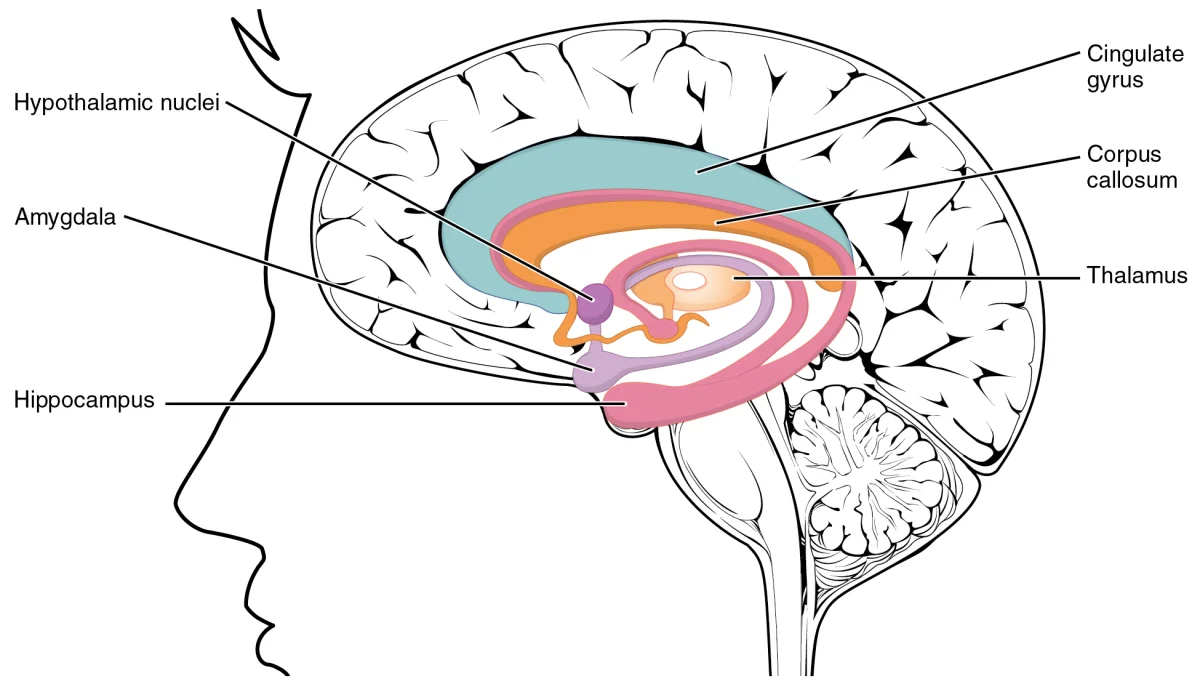
The limbic system is a loosely grouped set of structures that handle emotion, memory, and motivation. Not all neuroscientists agree on exactly which structures belong - but four are universally included.
Mnemonic: “Hippo wearing a HAT” - Hypothalamus, Amygdala, Thalamus, and Hippocampus.
The major limbic system structures shown in a midline view of the brain. The amygdala (purple), hippocampus (pink), thalamus (orange), and hypothalamic nuclei together coordinate emotion, memory, and motivation - the "HAT and Hippo" the MCAT loves to test. Credit: OpenStax College via Wikimedia Commons (CC BY 3.0).
Amygdala
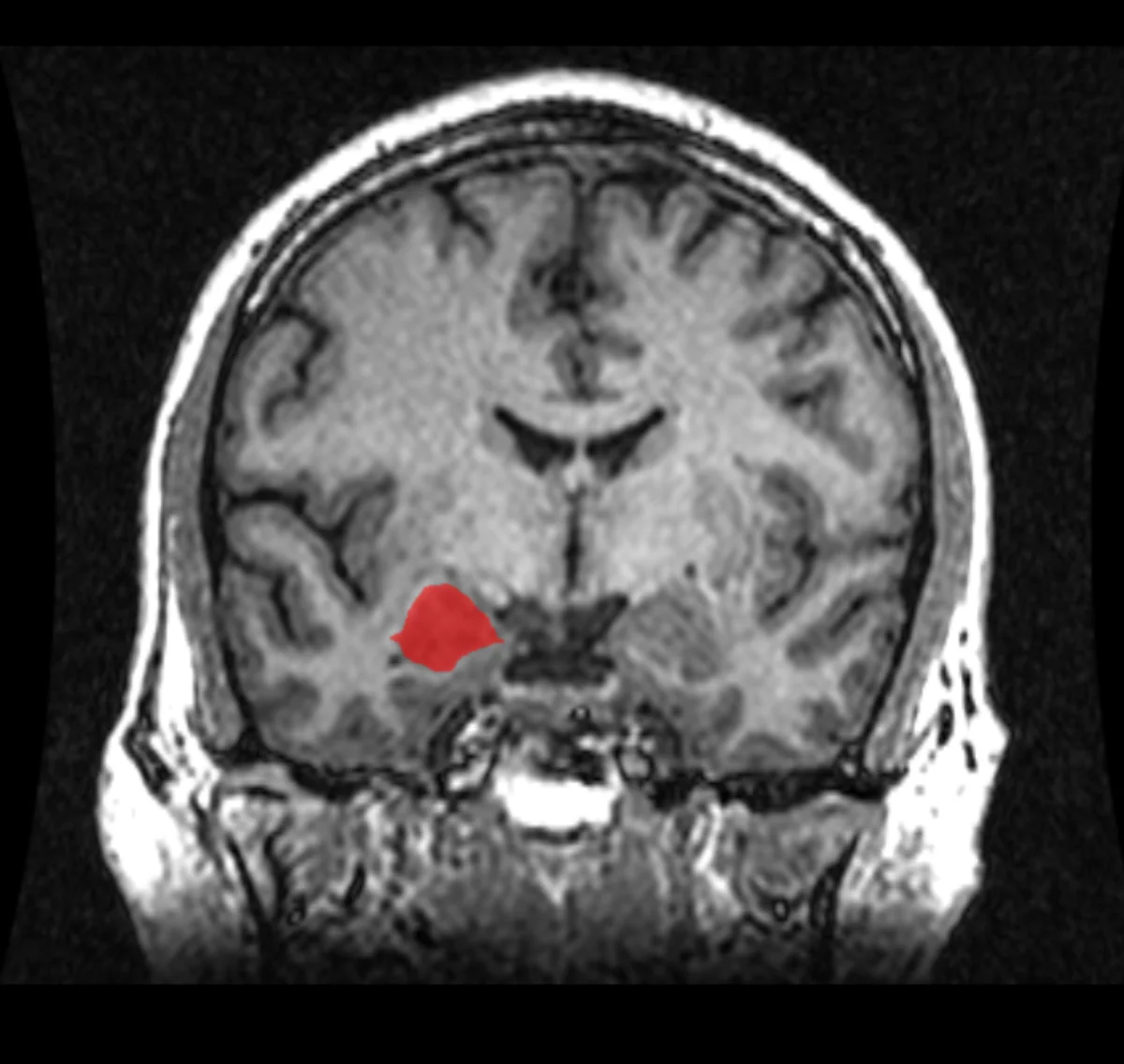
The amygdala is the fear and aggression hub. Stimulate it and you get anger, violence, or fear. Destroy it bilaterally (as in rare monkey experiments or human disease) and you get Kluver-Bucy syndrome: hyperorality (putting things in the mouth), hypersexuality, and disinhibited behavior. Benzodiazepines reduce amygdala activity, which is why they are used to treat anxiety.
The amygdala also attaches emotional salience to memories. A bland fact versus a terrifying event - the amygdala is why the terrifying event is better remembered.
Coronal MRI showing the amygdala (red) in the medial temporal lobe. Bilateral lesions here produce Klüver-Bucy syndrome — the classic demonstration that the amygdala drives fear, aggression, and impulse control. Credit: Amber Rieder, Jenna Traynor & Geoffrey B Hall via Wikimedia Commons (CC0).
Hippocampus
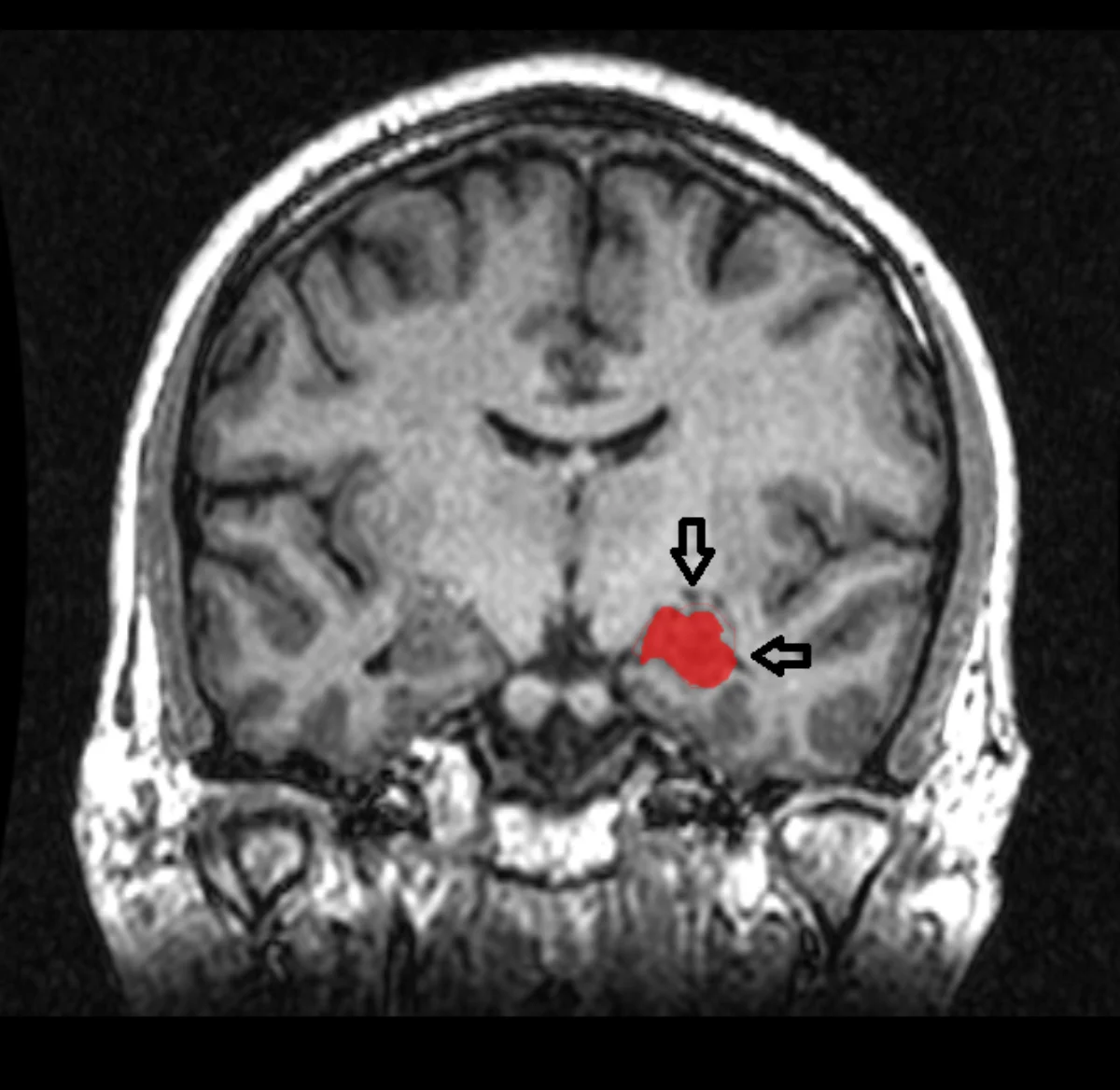
The hippocampus converts short-term memory to long-term memory (you met it in the memory chapter). Damage produces anterograde amnesia - old memories preserved, no new ones formed. Emotionally charged memories are encoded here, tagged by the amygdala next door.
Coronal MRI showing the hippocampus (red, arrows) tucked into the medial temporal lobe — just behind its amygdala neighbor. This anatomical proximity is why emotionally tagged memories (amygdala) get encoded so durably (hippocampus). Credit: Amber Rieder & Jenna Traynor via Wikimedia Commons (CC0).
Thalamus
The thalamus is the brain’s sensory relay. Almost all sensory input routes through the thalamus before reaching the cortex (smell is the famous exception). Emotions depend on sensory input, so damage to the thalamus can flatten emotional responsiveness.
Hypothalamus
The hypothalamus (“below the thalamus”) regulates the autonomic nervous system and coordinates hormone release through the pituitary. It drives hunger, thirst, body temperature, sex, and the fight-or-flight response. When you’re stressed, the hypothalamus orchestrates the physiological cascade.
Cerebral Hemispheres and the Prefrontal Cortex
Above the limbic system, the cerebral cortex modulates and labels emotion.
Left vs. Right Hemisphere
Functional brain imaging shows a rough asymmetry:
Left hemisphere shows greater activity during positive emotions (joy, interest, enthusiasm).
Right hemisphere shows greater activity during negative emotions (fear, sadness).
Socially engaged children often show greater left-hemisphere activation; withdrawn children lean right-hemisphere. This pattern is not absolute - real emotions recruit both sides - but it is a testable MCAT fact.
Prefrontal Cortex
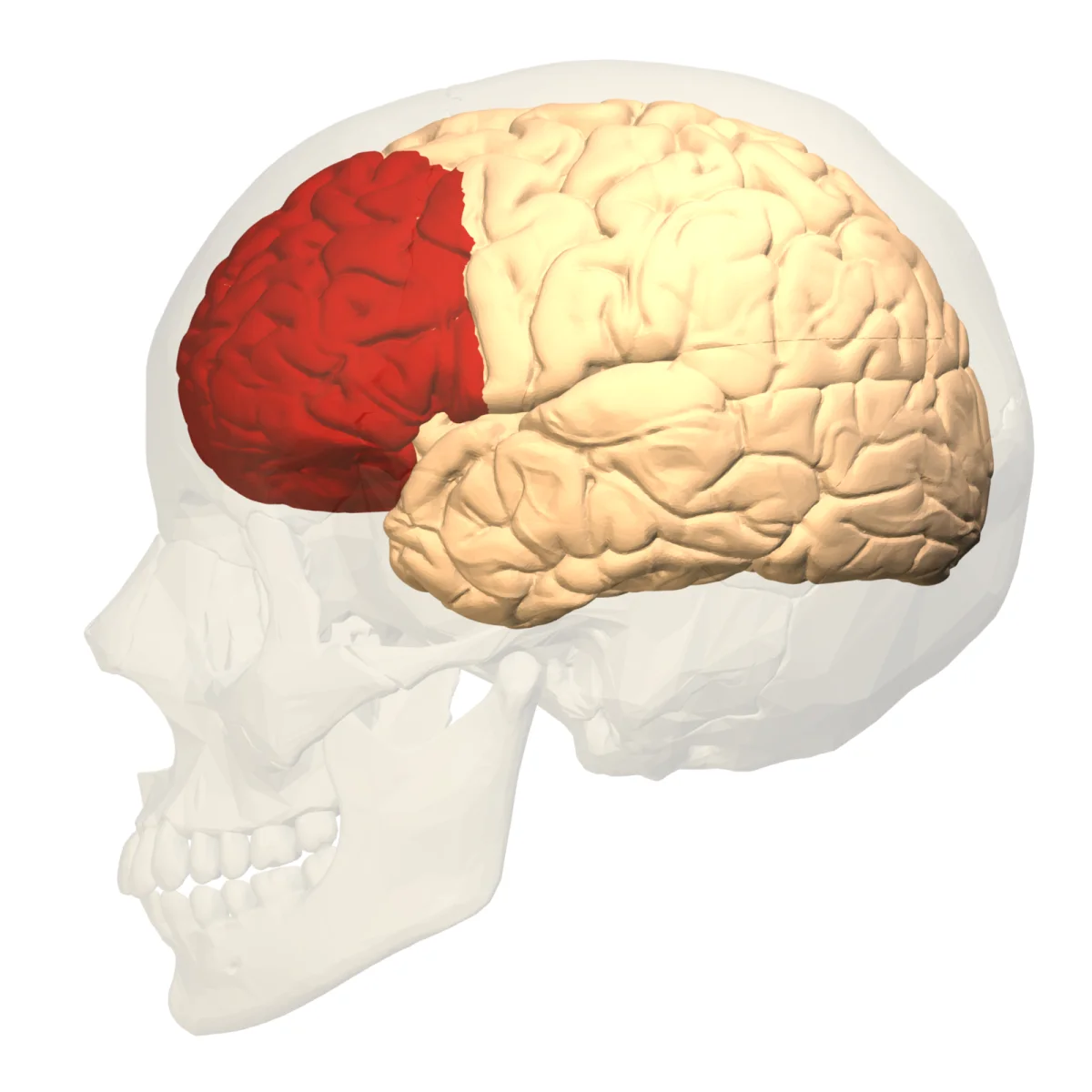
The prefrontal cortex handles higher-order executive function: planning, decision-making, and social behavior. It also inhibits primitive limbic responses (you don’t actually punch the person who cut the lunch line).
The prefrontal cortex (red) sits at the front of the frontal lobe, behind the forehead. It inhibits limbic impulses, plans behavior, and underlies social judgment - the executive layer that the amygdala bypasses during fear. Credit: DataBase Center for Life Science (DBCLS) / BodyParts3D via Wikimedia Commons (CC BY-SA 2.1 JP).
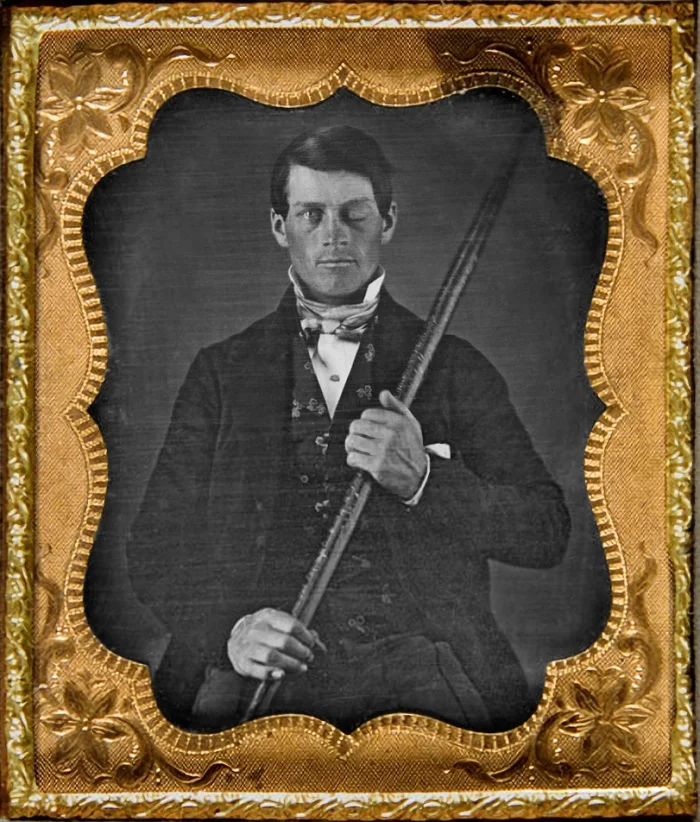
The famous Phineas Gage case: a 19th-century railroad worker had an iron rod blown through his prefrontal cortex. He survived, but his personality flipped - he became impulsive, rude, and unable to hold a job. The case became foundational evidence that the prefrontal cortex governs emotional regulation and social conduct.
Phineas Gage (1823-1860) holding the tamping iron that was blasted through his prefrontal cortex in an 1848 railroad accident. He survived more than a decade with profound personality changes - the foundational case linking the prefrontal cortex to emotional regulation and social conduct. Credit: Photograph by Jack and Beverly Wilgus; original daguerreotype in the Warren Anatomical Museum, Harvard, via Wikimedia Commons (CC BY-SA 3.0).
The Autonomic Nervous System in Emotion
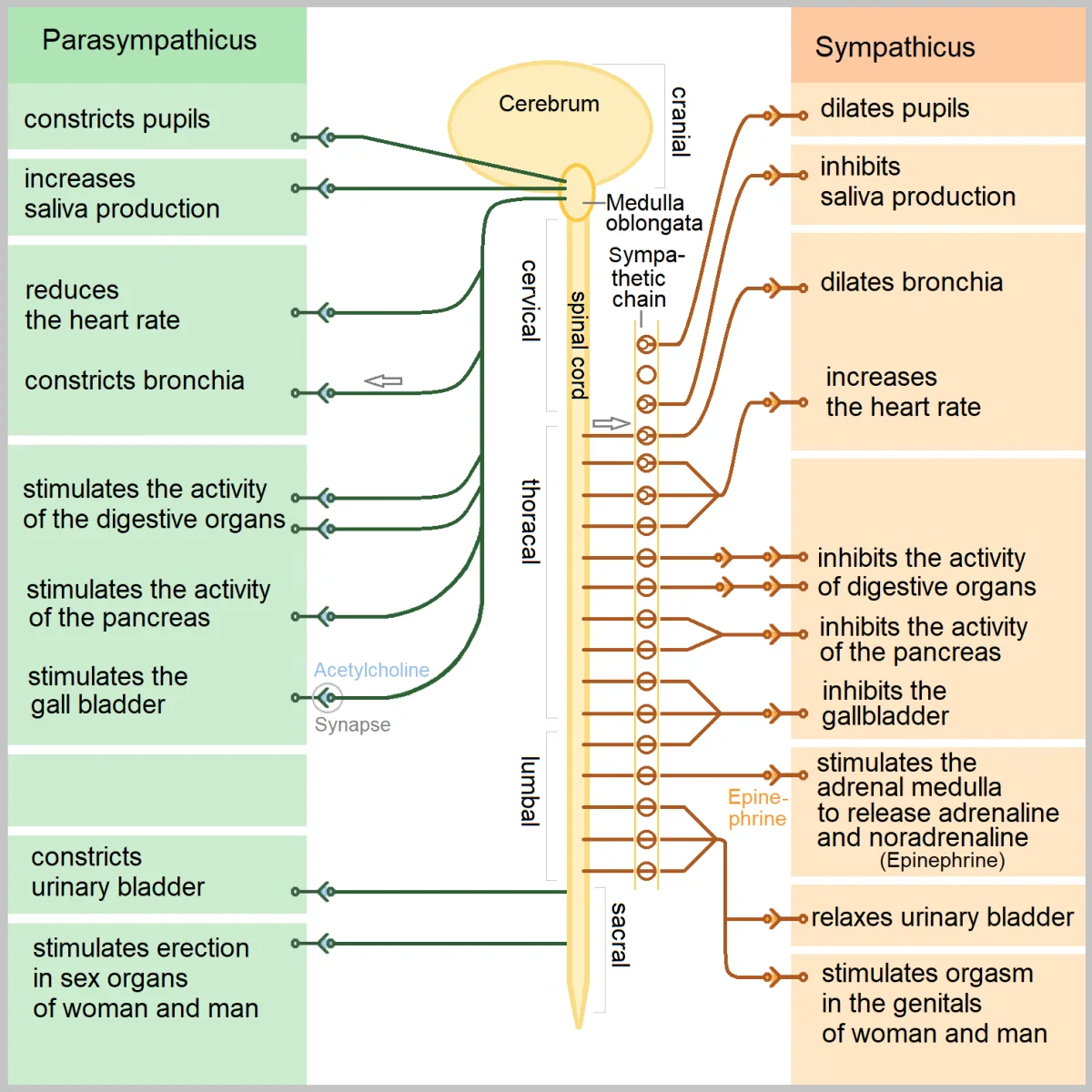
Emotion’s physiological component is driven by the autonomic nervous system (ANS), which has two opposing branches:
Sympathetic - “fight or flight.” Activated by fear, anger, excitement, or exertion.
Pupils dilate
Salivation decreases
Heart rate and respiration increase
Glucose release increases (energy to the muscles)
Adrenaline (epinephrine) and norepinephrine released
Digestion decreases
Parasympathetic - “rest and digest.” Activated during calm states.
Pupils constrict
Salivation increases
Heart rate and respiration decrease
Digestion increases
Blood returns to the viscera
The two branches are antagonistic - when one is dominant, the other is quieter. A stressful MCAT question spikes sympathetic tone; a post-exam nap swings you parasympathetic.
Sympathetic ("fight or flight," right) versus parasympathetic ("rest and digest," left) effects on the major organs. Sympathetic dilates pupils, accelerates the heart, and inhibits digestion; parasympathetic does the opposite. The autonomic nervous system supplies the physiological component of every emotion. Credit: Sciencia58 via Wikimedia Commons (CC0).
The Three Components of Emotion
Any emotion - joy, sadness, fear, anger - involves three simultaneous components:
Behavioral. Facial expression, body posture, voice tone.
Cognitive. The appraisal of the situation (“this is dangerous”), the label (“I feel afraid”), and the conscious experience of emotion.
Remove any component and the “emotion” is incomplete. A patient with facial paralysis still feels happy - but reports reduced emotional intensity, showing that behavior feeds back into the experience.
Universal Emotions: Paul Ekman
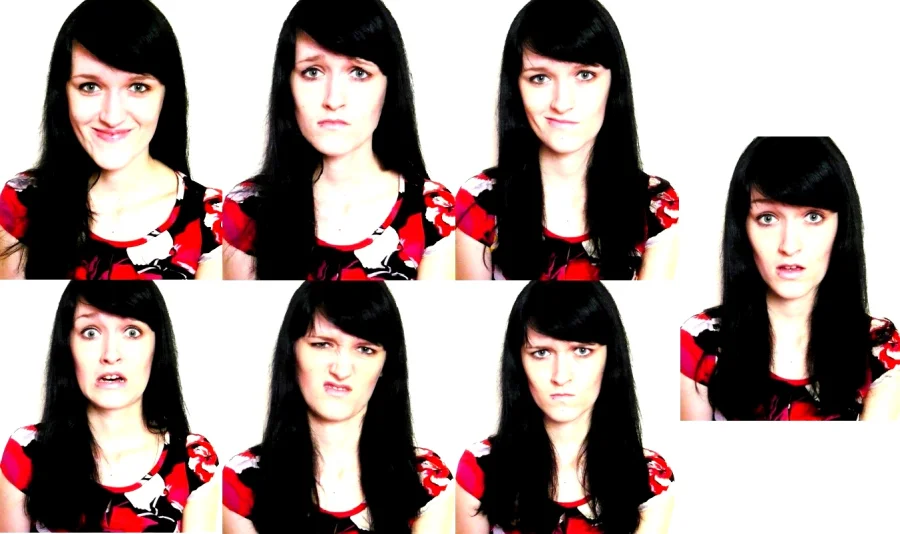
Paul Ekman identified six basic emotions with consistent facial expressions across all human cultures, including isolated tribes with no media exposure:
A historical plate of six faces expressing distinct human passions. Cross-cultural research by Paul Ekman later established that a small set of facial expressions (happiness, sadness, fear, disgust, anger, surprise) is universally recognized, supporting the view that basic emotions are innate. Credit: Wellcome Collection via Wikimedia Commons (CC BY 4.0).
Darwin hypothesized these emotions are innate and adaptive - useful for survival. Evidence: newborns show these facial expressions before any learning; blind individuals make the same facial expressions as sighted ones even though they have never seen them modeled.
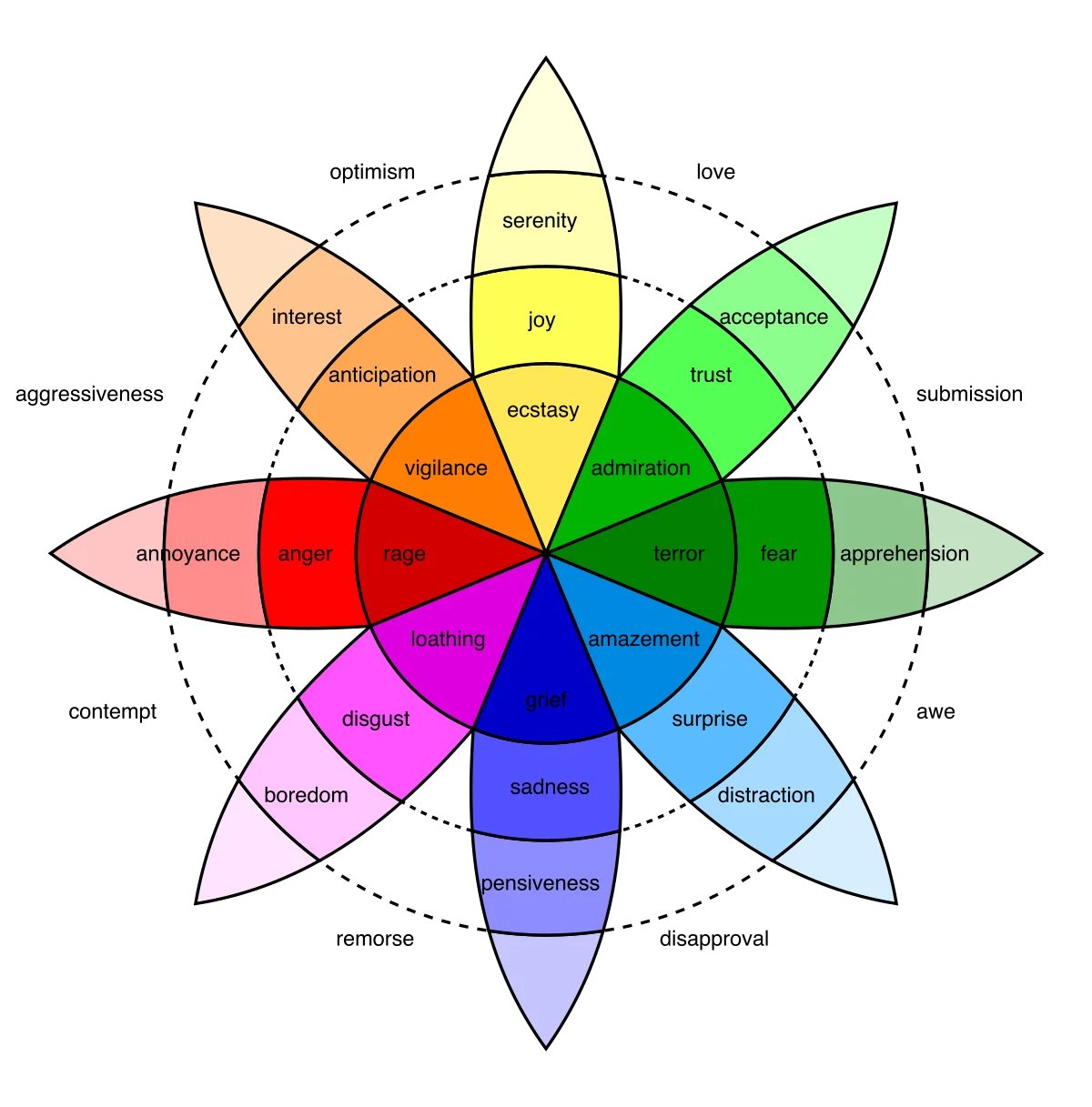
Robert Plutchik's wheel arranges eight basic emotions as opposing pairs at varying intensities. Although Ekman's six are the high-yield list, Plutchik's framework helps you see how compound feelings (love = joy + trust; remorse = sadness + disgust) emerge from primary emotions - useful when MCAT passages describe mixed emotional states. Credit: Machine Elf 1735 via Wikimedia Commons (Public Domain).
Name the four main limbic system structures.
Click to reveal answer
Hypothalamus, Amygdala, Thalamus, Hippocampus. Mnemonic: "Hippo wearing a HAT."
What is Kluver-Bucy syndrome?
Click to reveal answer
The result of bilateral amygdala destruction: hyperorality (putting objects in the mouth), hypersexuality, and disinhibited behavior. Demonstrates the amygdala's role in regulating fear and impulse.
Which ANS branch activates during fear, and what happens to heart rate, digestion, and pupils?
Click to reveal answer
Sympathetic nervous system ("fight or flight"). Heart rate increases, digestion decreases, pupils dilate. Parasympathetic does the opposite.
What are Paul Ekman's six universal emotions?
Click to reveal answer
Happiness, Sadness, Fear, Disgust, Anger, Surprise. Identifiable across cultures from facial expressions. Mnemonic: FAHDSS.
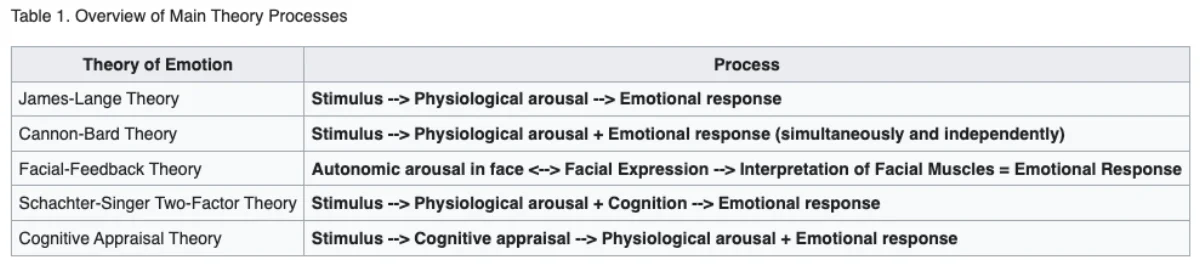
You see a bear on a hiking trail. Your heart races, your muscles tense, and you feel terrified. What happened in what order? The four theories of emotion disagree about the sequence, and the MCAT loves asking you to classify a scenario by theory.
Shared vocabulary: every emotion involves an event, a physiological response (PR), and a cognitive label/emotion. The theories differ on which comes first.
A summary table of the theories of emotion written as arrow sequences. Notice that each disagrees only about which step comes first: the same building blocks (stimulus, physiology, cognition, emotion) are rearranged. The MCAT routinely tests which theory predicts a given sequence. The table lists a fifth entry, facial-feedback, which this chapter does not cover; the four you need are James-Lange, Cannon-Bard, Schachter-Singer, and cognitive appraisal (Lazarus). Credit: D.mandziy via Wikimedia Commons (CC BY-SA 4.0).
James-Lange Theory
Event → Physiological Response → Emotion
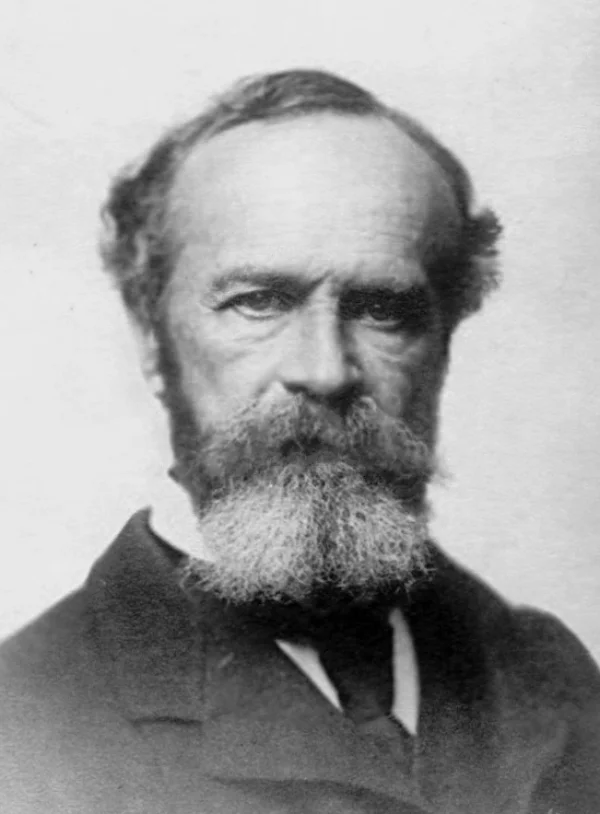
William James (1842-1910), the American philosopher-psychologist who, with Carl Lange, proposed that emotions arise from the conscious perception of bodily changes. Credit: Anonymous, c. 1890s (Public Domain) via Wikimedia Commons.
William James and Carl Lange proposed that your conscious emotion is a consequence of your physiological response. You don’t cry because you’re sad; you’re sad because you cry. The bear triggers a racing heart and tense muscles; you notice those bodily changes; your brain interprets them as fear.
Key prediction: if you could artificially produce a physiological pattern, you should feel the corresponding emotion.
Evidence: Botox that paralyzes frown muscles actually reduces subjective ratings of negative emotion. Smiling produces small increases in reported happiness. Both findings align with James-Lange.
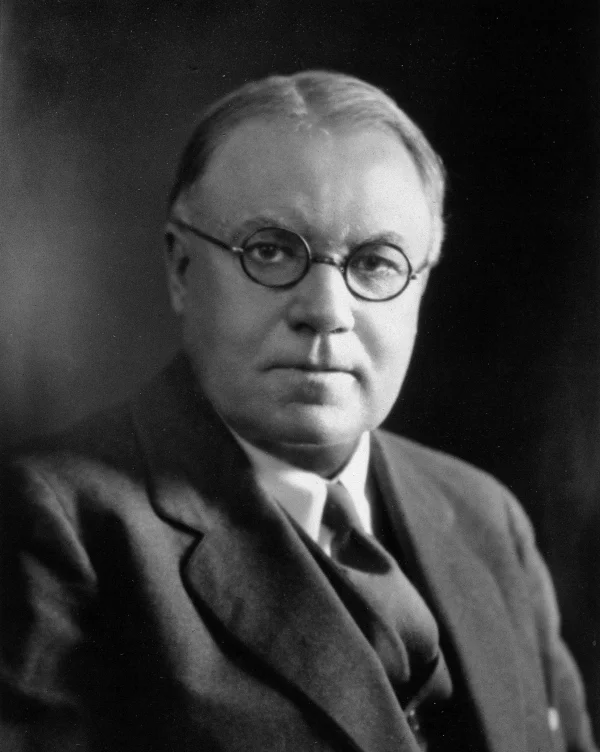
Walter Bradford Cannon (1871-1945), Harvard physiologist who coined "fight or flight" and, with student Philip Bard, formulated the simultaneous-arousal critique of James-Lange. Credit: Bachrach studio, 1934, Wellcome Collection via Wikimedia Commons (CC BY 4.0).
Walter Cannon and Philip Bard pushed back against James-Lange. They argued that the physiological response and the emotion occur simultaneously and independently, both triggered by the event. You see the bear, and at the same time your heart races AND you feel afraid. Neither causes the other.
Their objections to James-Lange:
Different emotions can produce the same physiological pattern. A racing heart accompanies fear, anger, and excitement. If the physiology caused the emotion, how would you know which one you were feeling?
Physiological responses are too slow. Emotions hit almost instantly, but heart rate changes take seconds.
You can have physiological arousal without emotion. Sprinting up stairs produces a racing heart without fear.
Mnemonic: C and B are adjacent in the alphabet - physiological response and emotion happen together.
Stanley Schachter and Jerome Singer’s 1962 compromise: both physiological arousal AND cognitive interpretation are required for an emotion. You feel your heart racing. Then you look around and ask “why?” The answer determines the emotion. Heart racing + bear = fear. Heart racing + attractive date = attraction. Heart racing + just ran up the stairs = exertion.
Their classic experiment: subjects were injected with adrenaline (producing physiological arousal) and placed in either a euphoric or an angry confederate’s company. Those with the euphoric confederate reported feeling happy; those with the angry confederate reported feeling irritated. Same physiology, different emotions - determined by context and labeling.
This is why the “suspension bridge effect” works: people interviewed on a shaky bridge misattribute their fear arousal as attraction to the interviewer.
Richard Lazarus argued that cognitive appraisal comes first. You must first evaluate the situation (is it a threat? a challenge? irrelevant?). The appraisal determines both the emotion you feel AND the physiological response.
This makes emotion very culturally and individually variable. Skydiving is terrifying to one person and exhilarating to another - the event is identical, but the appraisal differs. Same with holding a snake, speaking in public, or meeting a new roommate.
Mnemonic: Lazarus = LAbel first, emotion follows.
Yerkes-Dodson Law
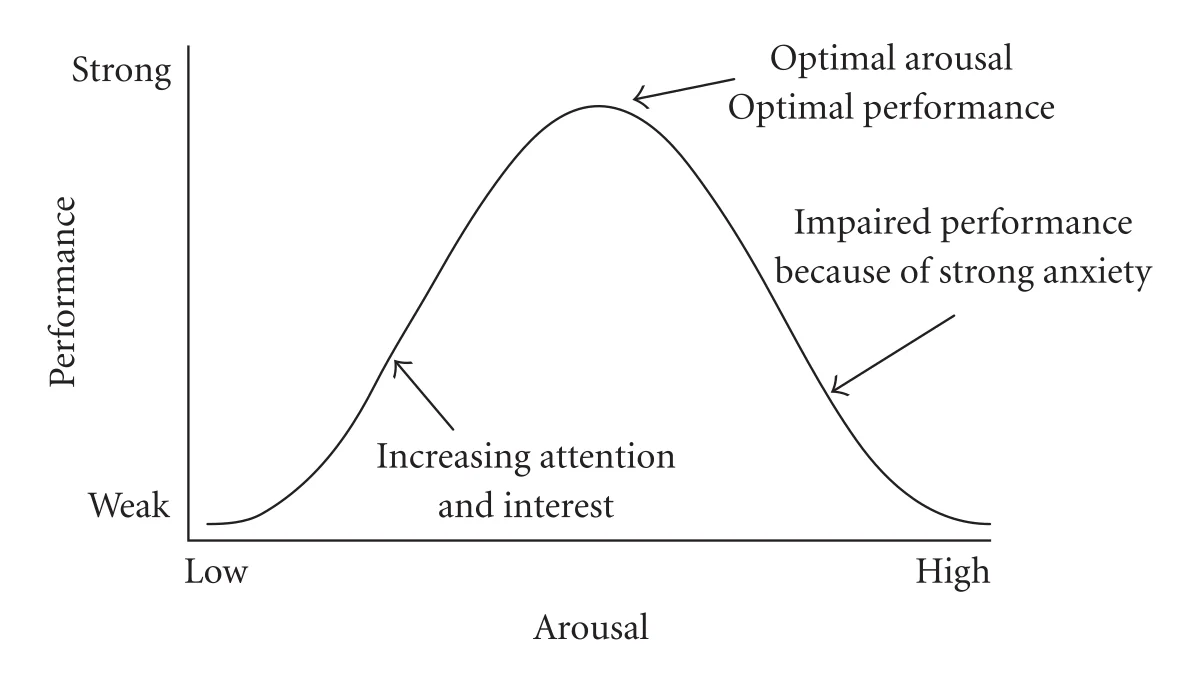
An important related principle: performance on most tasks follows an inverted U relationship to arousal.
Too little arousal → bored, unmotivated, poor performance.
Moderate arousal → peak performance.
Too much arousal → anxiety, panic, poor performance.
The classic single-curve form of Yerkes-Dodson, annotated with the mechanism at each stage: attention and interest build on the way up, performance peaks at optimal arousal, and strong anxiety pulls it back down. The curve drawn here is one task at one difficulty; where its peak sits is what shifts between the simple and difficult curves in the figure below. This is why coaches pump up a sprinter but a surgeon needs calm. Credit: Diamond et al. 2007, after Yerkes and Dodson 1908, via Wikimedia Commons (CC0).
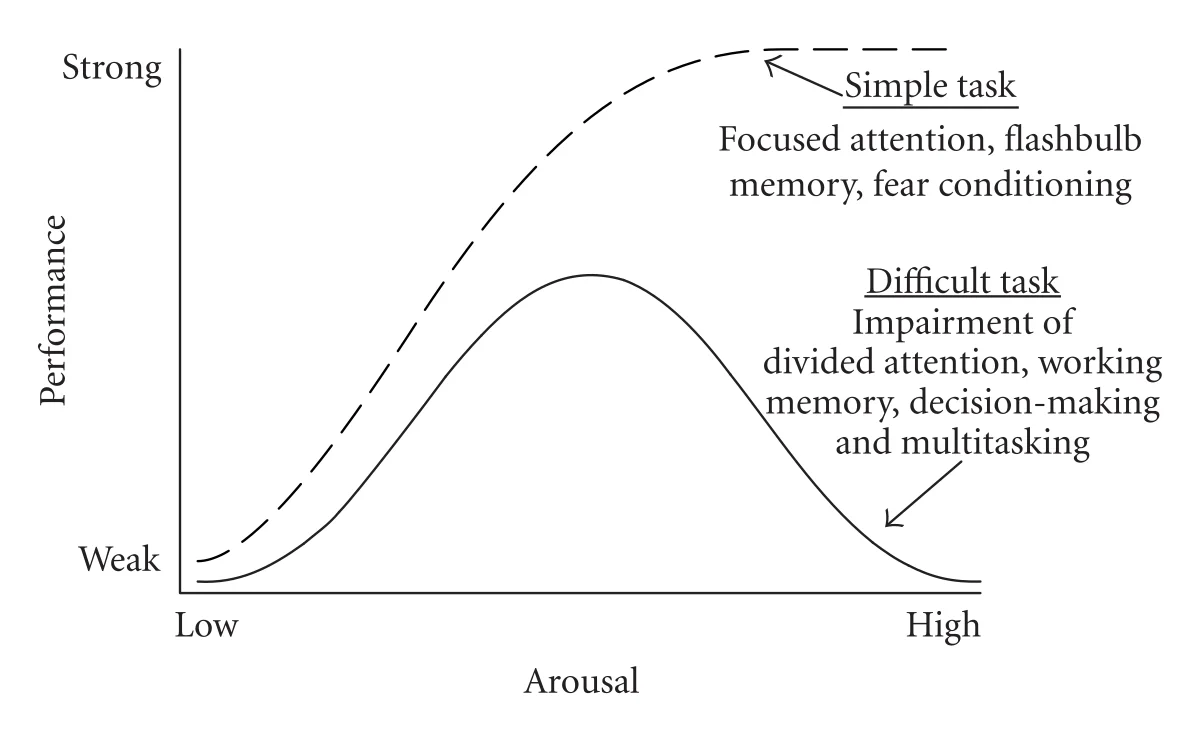
The specific peak shifts with task difficulty:
Simple tasks benefit from higher arousal.
Complex tasks peak at lower arousal.
The Yerkes-Dodson law drawn for two tasks at once. The solid difficult-task curve is the inverted U described above: too little arousal and you are under-engaged, too much and anxiety degrades performance. The dashed simple-task curve keeps climbing and then plateaus, so a well-rehearsed task tolerates arousal that would wreck a demanding one. Credit: Diamond et al. 2007, via Wikimedia Commons (CC0).
This is why test anxiety is worst when you care most about the exam, and why easy tasks are done better when you’re charged up while intricate surgery requires calm.
Match the theory to the sequence: "event → physiology → emotion."
Click to reveal answer
James-Lange theory. Emotion is the interpretation of physiological changes. "We don't run because we're afraid; we're afraid because we run."
What is the Schachter-Singer two-factor theory?
Click to reveal answer
Emotions require two factors: physiological arousal + a cognitive label. The same arousal can be labeled differently depending on context. Classic adrenaline experiment showed subjects reported fear or euphoria based on the social context.
What does the Yerkes-Dodson law describe?
Click to reveal answer
An inverted-U relationship between arousal and performance: moderate arousal maximizes performance. Simple tasks benefit from higher arousal; complex tasks from lower arousal.
Stress is the bodily and psychological response to demands that challenge or threaten the organism. This section covers what counts as stress, how the body responds, and how prolonged stress changes physiology and behavior.
What Is Stress? Lazarus’s Appraisal Model
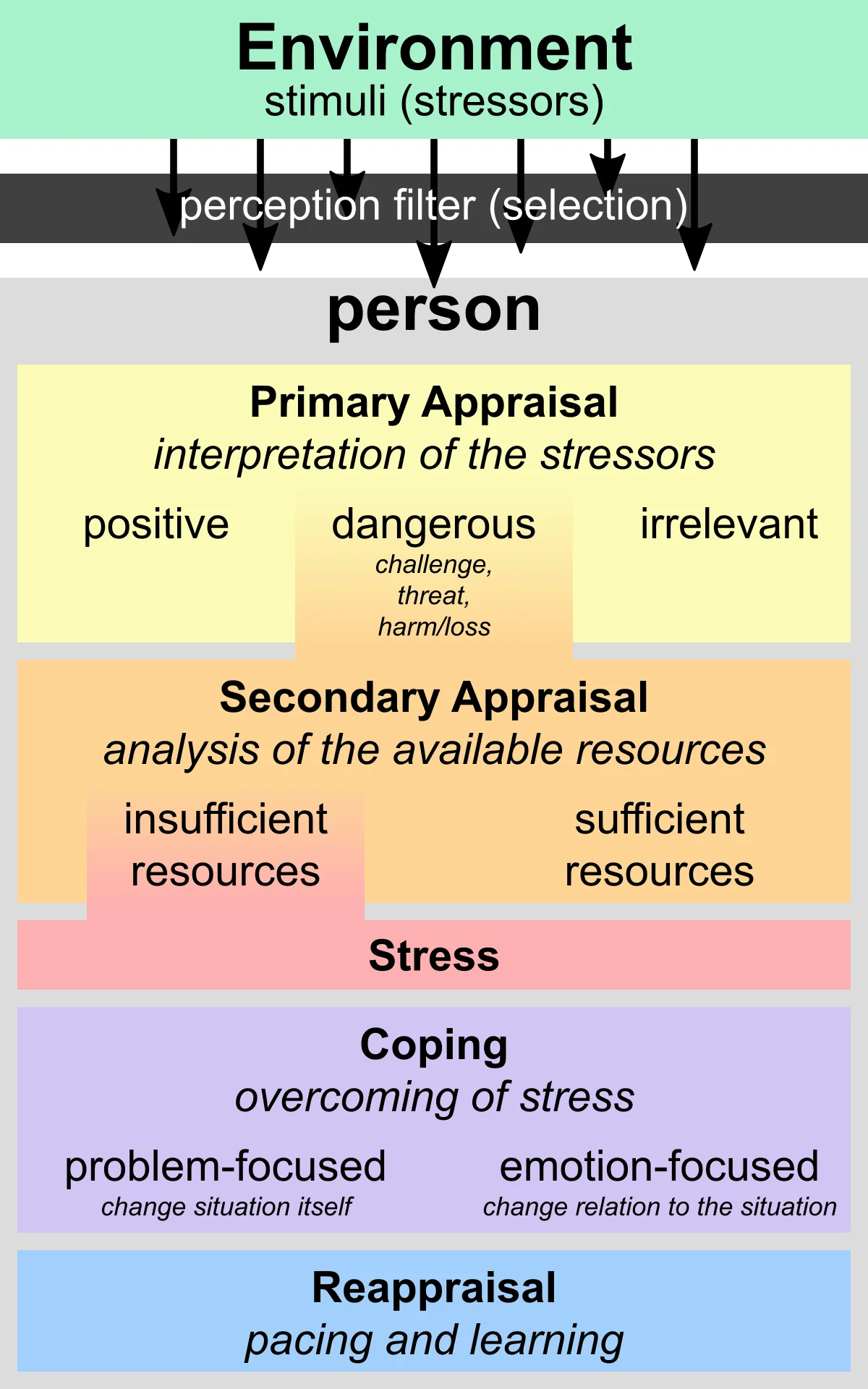
Richard Lazarus - whom you met among the theories of emotion - argued that stress depends less on the objective event and more on your appraisal of it.
Primary appraisal. Is this event irrelevant, benign/positive, or stressful/negative? If benign, no stress response. If stressful, move to secondary appraisal.
Secondary appraisal. Can I cope with it? Evaluate harm (damage already done), threat (damage still to come), and challenge (can I overcome it?). Your coping resources matter as much as the objective threat.
Two people facing the same deadline may appraise it completely differently: one as a fun challenge, one as a terrifying overload. Appraisal creates the stress.
Lazarus's transactional model of stress and coping. A stressor only becomes "stress" after primary appraisal flags it as dangerous and secondary appraisal finds resources insufficient. Coping strategies feed back through reappraisal - the model that anchors most MCAT stress passages. Credit: Philipp Guttmann via Wikimedia Commons (CC BY-SA 4.0).
Four Categories of Stressors
Significant life changes - marriage, death of a loved one, new job, divorce. Even positive changes are stressful.
Catastrophic events - large-scale threats, natural disasters, war, pandemics.
Daily hassles - small repeated irritations: traffic, email, misplaced keys, interpersonal friction. Often linked to low socioeconomic status (unemployment, inadequate income). Research suggests daily hassles may be the most important stressor for overall health because of their chronicity.
Ambient stressors - environmental conditions you don’t control: noise, pollution, crowding. Often below conscious awareness but measurably stressful.
The Acute Stress Response
Walter Cannon described the fight-or-flight response - the sympathetic nervous system’s rapid mobilization for threat. Two integrated arms:
Sympathetic Nervous System
Fast neural signals cause:
Increased heart rate and respiration (more O₂ to muscles)
Peripheral vasoconstriction (blood shunted to vital organs)
Pupil dilation, decreased salivation
Digestion, immune function, and reproduction temporarily suppressed
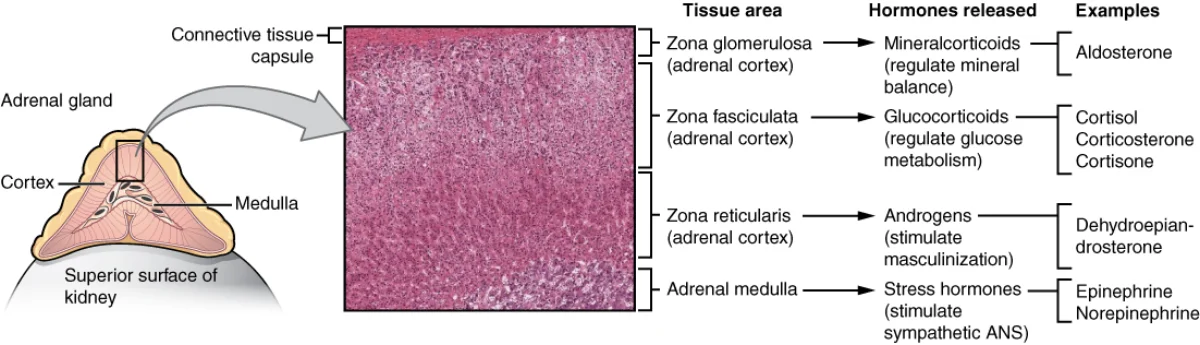
Release of epinephrine and norepinephrine from the adrenal medulla
Endocrine Response (HPA Axis)
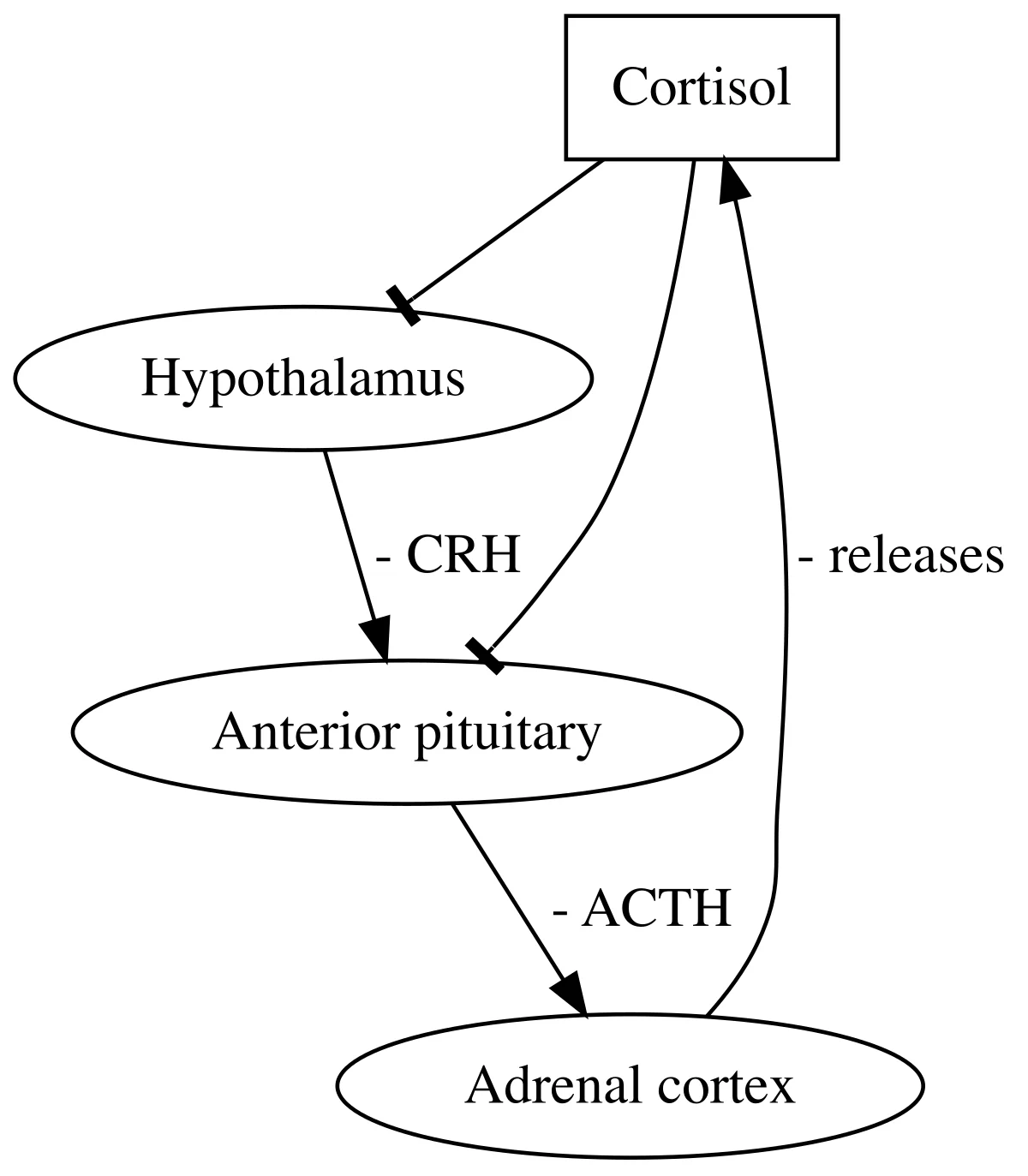
Slower hormonal signals route through the hypothalamus-pituitary-adrenal axis:
Hypothalamus → CRH → anterior pituitary
Pituitary → ACTH → adrenal cortex
Adrenal cortex → cortisol (a glucocorticoid)
Cortisol mobilizes glucose (raises blood sugar), suppresses the immune system, and redirects energy to immediate needs. Mnemonic: COrtisol is released by the CORTex.
The HPA (hypothalamic-pituitary-adrenal) axis. CRH from the hypothalamus drives ACTH release from the anterior pituitary, which triggers cortisol release from the adrenal cortex. Cortisol then loops back to inhibit the upstream signals - a classic negative-feedback endocrine cascade. Credit: Biolinkage Project via Wikimedia Commons (CC BY-SA 4.0).The adrenal gland in cross-section. The cortex (outer) releases cortisol from the zona fasciculata under HPA-axis control; the medulla (inner) releases epinephrine and norepinephrine under sympathetic neural control. Two anatomically and functionally distinct stress arms in one organ. Credit: OpenStax College via Wikimedia Commons (CC BY 3.0).
Tend-and-Befriend Response
Not everyone responds to stress with fight or flight. Tend and befriend is an alternative response, more common in women, characterized by seeking social support and caring for offspring. Driven partly by oxytocin (a bonding hormone linked to estrogen), it moderates the classic sympathetic response and favors affiliative behavior over aggression.
General Adaptation Syndrome (GAS)
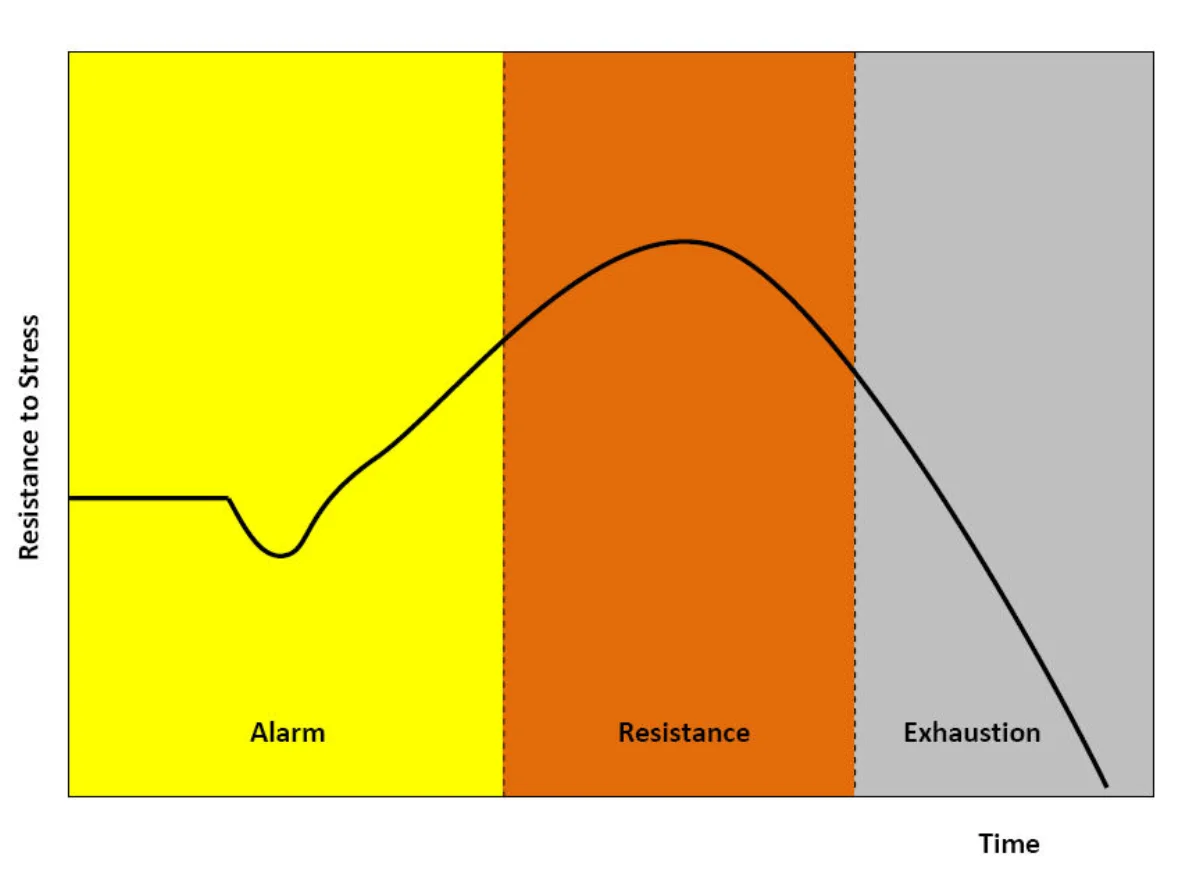
Hans Selye proposed that prolonged stress unfolds in three phases:
Hans Selye's General Adaptation Syndrome. After an initial dip during alarm, resistance climbs and stays elevated as the body fights the stressor; once resources deplete, exhaustion drops resistance below baseline - the zone where chronic stress causes disease. Credit: David G. Myers, Exploring Psychology, via Wikimedia Commons (CC BY 3.0).
Phase 1: Alarm
Immediate stress reaction. Heart races, HPA axis kicks in, resources mobilized. “Ready for fight or flight.”
Phase 2: Resistance
The body adjusts to maintain function under continuing stress. Cortisol stays elevated, blood pressure high, breathing rapid. Short-term the body copes; long-term this is unsustainable.
Phase 3: Exhaustion
If the stressor doesn’t resolve, resources deplete. Tissues are damaged. Immunity drops. This is where chronic stress produces real disease: hypertension, heart disease, immunosuppression, metabolic problems, depression.
What is the difference between primary and secondary appraisal in Lazarus's stress theory?
Click to reveal answer
Primary appraisal: is the event stressful or not? Secondary appraisal: if stressful, can I cope? Evaluates harm, threat, and challenge. Both stages together determine the stress response.
What hormone does the adrenal cortex release during stress, and what are its main effects?
Click to reveal answer
Cortisol (a glucocorticoid). Mobilizes glucose, suppresses immunity, and redirects energy to immediate needs. Chronic elevation is implicated in cardiovascular, metabolic, and mental health problems.
List Selye's three phases of general adaptation syndrome and briefly describe each.
Short-term stress is adaptive. Chronic stress is a slow-acting poison. This section covers what prolonged stress does to the body and mind, and the strategies that research shows actually help people cope.
Physical Effects of Chronic Stress
Sustained elevation of cortisol and sympathetic activity damages virtually every organ system.
Cardiovascular System
Elevated blood pressure (hypertension).
Blood vessel walls stiffen and develop microdamage.
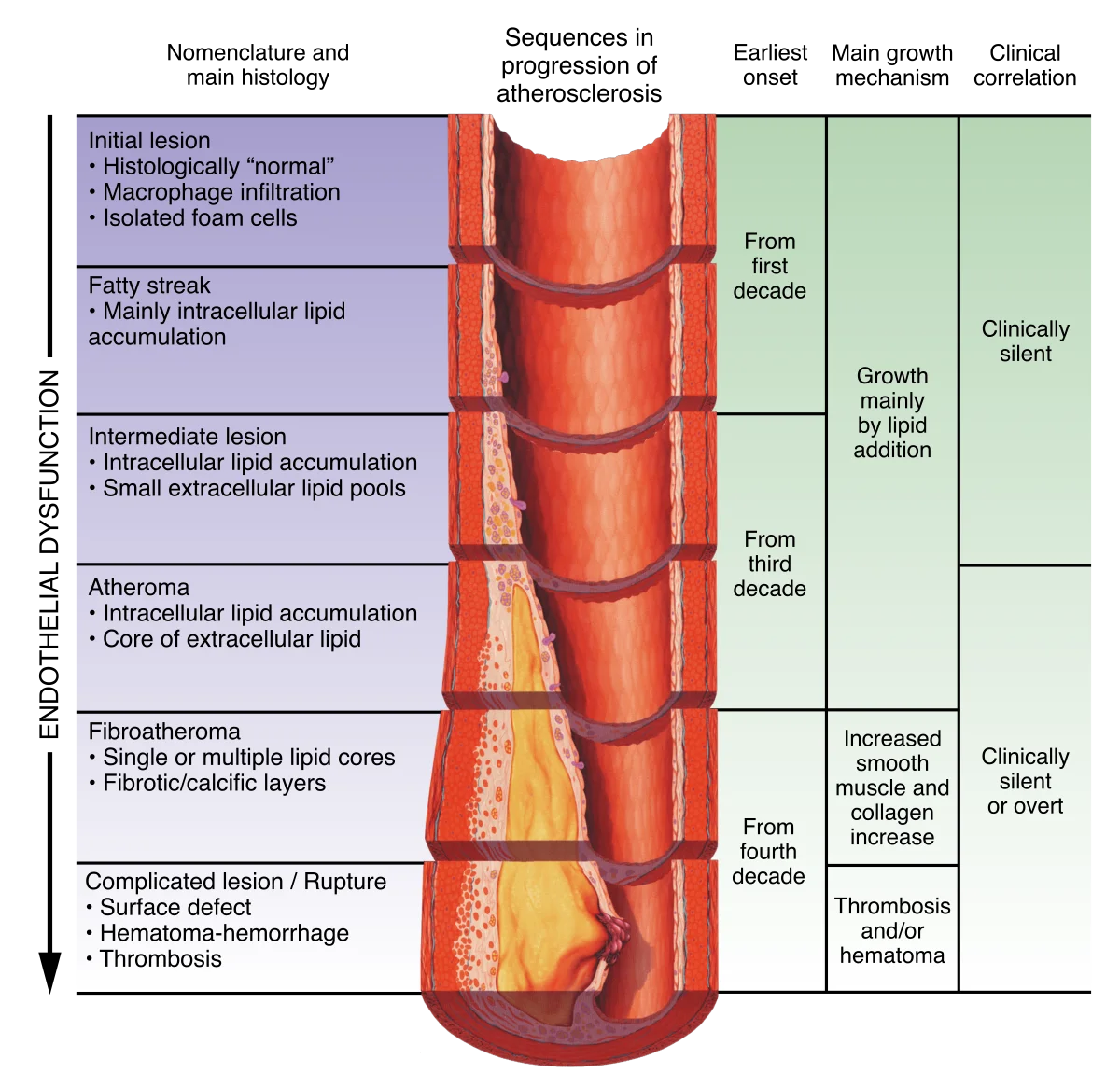
Fat deposits in vessel walls narrow them (atherosclerosis).
Increased risk of coronary artery disease, stroke, and heart attack.
How chronic stress damages the cardiovascular system. Years of elevated blood pressure and lipid load drive endothelial dysfunction, which evolves through fatty streak, atheroma, and finally rupture - the cascade that produces heart attacks and strokes. Credit: YitzhakNat via Wikimedia Commons (CC BY-SA 4.0).
Metabolic System
Cortisol and glucagon raise blood glucose persistently.
Chronically elevated glucose can worsen insulin resistance and type 2 diabetes.
Visceral fat accumulation increases.
Reproductive System
Stress diverts energy from reproduction.
Women: FSH/LH and estrogen/progesterone can be suppressed, disrupting fertility.
Men: testosterone drops (though rarely to infertile levels); erectile dysfunction common due to peripheral vasoconstriction.
Immune System
Acute stress increases immune activity briefly (sometimes producing inflammation, even autoimmune-like damage such as arthritis flares).
Chronic stress suppresses immune function. Increased susceptibility to colds and infections, slower wound healing. Studies show ~40% slower healing in graduate students assessed right before exam week compared to vacation.
Behavioral and Emotional Effects
Two of the big glucocorticoid-receptor-rich regions - the hippocampus and frontal cortex - atrophy under chronic stress, producing:
Depression
A major emotional consequence. Anhedonia (inability to feel pleasure) is the hallmark - everything feels draining. The anterior cingulate cortex stops responding to serotonin, a biomarker of stress-induced depression.
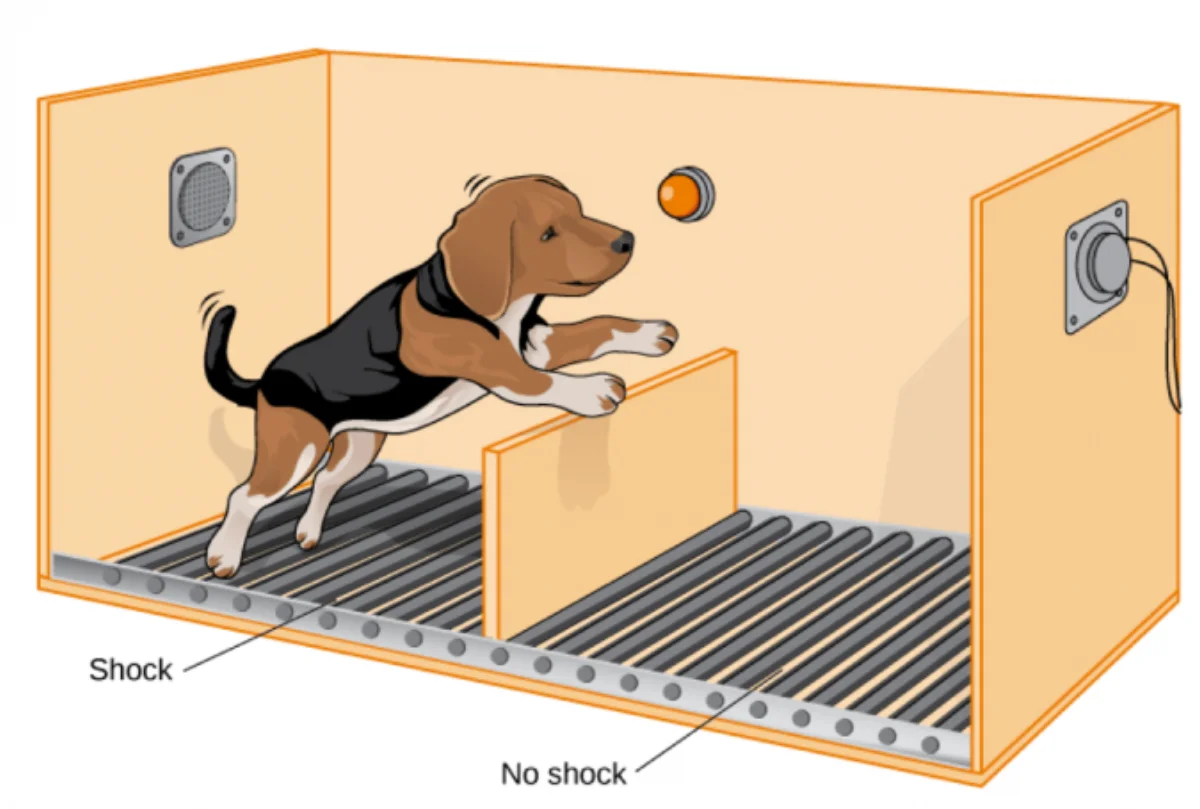
Learned helplessness (Seligman) - when you repeatedly face uncontrollable stress, you stop trying to cope. The behavior generalizes: animals in uncontrollable-shock experiments fail to escape even when escape later becomes available. In humans, learned helplessness contributes to clinical depression.
The shuttle box used in Martin Seligman's learned-helplessness experiments. Dogs first exposed to inescapable shock later failed to jump the partition even when escape became possible - the prototype animal model of stress-induced depression. Credit: Rose M. Spielman via Wikimedia Commons (CC BY-SA 4.0).
Type A Personality and Heart Disease
Friedman and Rosenman’s classic study showed that Type A individuals - competitive, impatient, easily angered - have higher rates of heart attacks than Type B individuals (relaxed, easy-going). The toxic component is hostility/anger, not the ambition itself. Accompanies the “fight” aspect of the sympathetic response.
Anxiety
Amygdala-driven. Things that wouldn’t normally alarm the person now feel threatening. Accompanies the “flight” aspect of sympathetic activation.
Addiction
Reaching for alcohol, tobacco, food, or drugs to cope. Impaired frontal-cortex judgment makes inappropriate coping mechanisms more likely.
Mnemonic for the three emotional A-responses: Anger, Anxiety, Addiction (“Stress has three S’s… and they correspond to three As”).
Coping: What Actually Works
Coping is the conscious effort to master, reduce, or tolerate stress. Broadly:
Problem-focused coping. Directly attack the stressor. Make a list, solve the problem, change the environment. Works best when the stressor is controllable.
Emotion-focused coping. Manage the emotional response rather than the cause. Helpful for uncontrollable stressors (grief, chronic illness). Includes reappraisal, acceptance, and seeking comfort.
Effective coping strategies:
Perceived Control
Lack of control is a major amplifier of stress. Robert Sapolsky’s baboon research (the low-status animals experienced enormous stress) and the Whitehall Study of British civil servants (lower-ranked workers had worse health, controlling for other factors) both show that low perceived control multiplies stress effects. Advice: find the domains of life where you can exert control.
Social Support
One of the most reliable buffers. Having people to talk to reduces cortisol, improves sleep and eating, and accelerates stress recovery. Married couples (on average) live longer than unmarried peers; close friendships associate with lower mortality.
Exercise
20–30 minutes of aerobic exercise daily reduces cardiovascular risk, improves mood, and promotes neurogenesis (new neurons, especially in the hippocampus). Possibly the single most evidence-backed stress intervention.
Meditation and Relaxation Techniques
Reduce heart rate, blood pressure, and cholesterol. Progressive muscle relaxation, breath-focused meditation, and mindfulness-based stress reduction all show research support.
Optimism and Humor
Optimistic appraisals of setbacks reduce stress responses. Humor provides distance from the stressor and engages social support simultaneously.
Proactive Coping
Anticipating stressors and preparing for them before they arrive. Planning a difficult conversation, packing in advance, budgeting for irregular expenses.
Meaning-Focused Coping
Deriving meaning from the stressful experience. Particularly helpful for trauma and chronic illness.
Maladaptive Coping
Defense mechanisms and avoidance can reduce short-term distress while worsening long-term outcomes. Examples of maladaptive coping:
Denial. Refusing to acknowledge the stressor.
Avoidance. Staying away from reminders or triggers; can evolve into anxiety disorders.
Substance use. Alcohol, tobacco, drugs as escape.
Rumination. Repetitively going over the problem without progress; strongly linked to depression.
Displacement. Taking frustration out on someone uninvolved.
Why does acute stress sometimes boost immune function while chronic stress suppresses it?
Click to reveal answer
Acute cortisol release mobilizes immune cells to counter imminent injury. Chronic cortisol downregulates immune activity to prevent ongoing inflammation damage and to conserve resources - but it leaves the body vulnerable to infection and delays wound healing.
What is the toxic component of Type A personality in relation to heart disease?
Click to reveal answer
Hostility and anger, not the ambition or competitiveness. Type A individuals with high hostility show elevated cardiovascular risk; competitive non-hostile individuals show less of an effect.
Distinguish problem-focused from emotion-focused coping, and name when each is most appropriate.
Click to reveal answer
Problem-focused: attack the stressor directly (change the situation). Best for controllable stressors. Emotion-focused: manage the emotional response (reappraisal, acceptance, seeking support). Best for uncontrollable stressors.
What does the Whitehall Study suggest about the relationship between social hierarchy and stress?
Click to reveal answer
Lower workplace rank is associated with worse health outcomes even after controlling for income, habits, and other factors. Interpreted as evidence that perceived control (higher at higher ranks) moderates chronic stress and its health consequences.
Motivation is the “why” of behavior. Why do you eat when hungry? Why do you study when tired? Why do you exercise even when no one’s watching? The MCAT tests five major theories, each offering a different answer.
Five Theories of Motivation
Instinct Theory
Some behaviors are innate, genetically programmed patterns: a baby rooting for a nipple, a spider spinning a web, birds migrating. Instinct theory was popular in the early 1900s, fell out of favor when it started to sound circular (“why do birds migrate? migratory instinct”), but evolutionary psychology has rehabilitated a modern version that looks for adaptive logic behind inherited behaviors.
Drive-Reduction Theory
Need (deprivation - no water) creates a drive (aroused state - thirst) that motivates behavior aimed at reducing the need (drinking water). Body wants to return to homeostasis. Clark Hull’s version dominated mid-20th-century psychology.
Great for explaining hunger, thirst, and temperature regulation. Not so great for things like curiosity or the pull of an amusement park ride, which increase arousal rather than reducing it.
Optimum Arousal Theory
People work to maintain an optimal level of arousal. Too little → seek stimulation (go to a concert, pick up a novel). Too much → seek quiet. Explains thrill-seeking behavior, why some people love roller coasters, and why a boring day drives you to your phone.
Connects cleanly to the Yerkes-Dodson law from the emotion section: mid-level arousal supports best performance.
Incentive Theory
Behavior is motivated by external rewards (incentives) - money, grades, praise, status. Emphasizes the pull of the future goal rather than the push of an internal need. Classic Skinnerian territory.
Intrinsic motivation. Internal satisfaction drives the behavior. Doing something because you enjoy it.
Extrinsic motivation. External rewards drive the behavior. Doing something for money, grades, or approval.
A surprising finding: offering external rewards for a behavior that was previously intrinsically motivated can reduce intrinsic motivation. The child who loved drawing loses interest when every drawing earns a sticker - the overjustification effect.
Cognitive Theory
Thoughts, expectations, and goals motivate behavior. You study because you think you’ll do better on the exam. You invest in a relationship because you expect long-term reward. Cognitive theory integrates with self-efficacy, expectancy-value theory, and goal-setting research.
Maslow’s Hierarchy of Needs
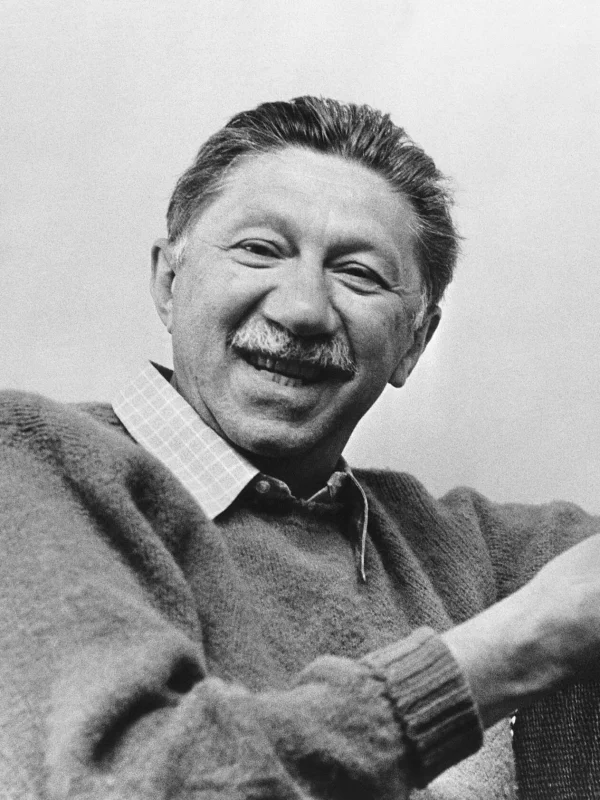
Abraham Maslow (1908-1970), the American humanistic psychologist whose pyramid of needs reframed motivation as a layered ascent from basic survival to self-actualization. Credit: William Carter, dust jacket of The Farther Reaches of Human Nature (1971), via Wikimedia Commons (Public Domain).
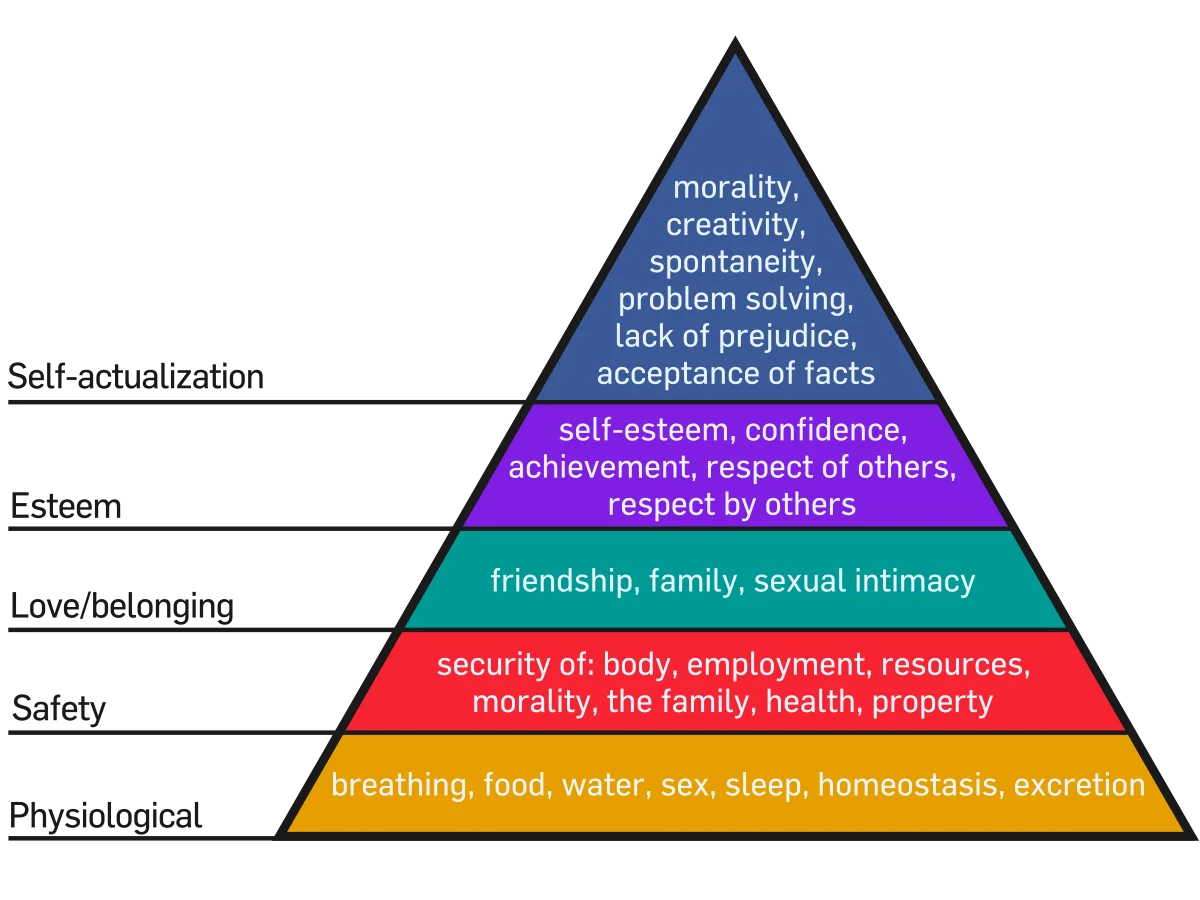
Abraham Maslow arranged human needs in a pyramid that must be fulfilled bottom-to-top. You can’t effectively work on higher needs until lower ones are met.
Maslow's hierarchy of needs. Lower-level needs (physiological and safety) must be reasonably satisfied before higher-level needs (belonging, esteem, self-actualization) become motivating. The pyramid shape reflects relative urgency, not strict sequence. Credit: Factoryjoe via Wikimedia Commons (CC BY-SA 3.0).
Physiological needs. Food, water, air, sleep. Must be met first.
The hierarchy explains why a starving student can’t focus on existential questions, why homelessness destroys educational attainment, and why the most successful professionals sometimes feel empty - they’ve met the bottom four needs and now need to address self-actualization. Maslow later added a sixth level (self-transcendence - serving something beyond yourself), though this is less commonly taught.
Freud’s Model of the Mind
Worth including here as a motivational theory.
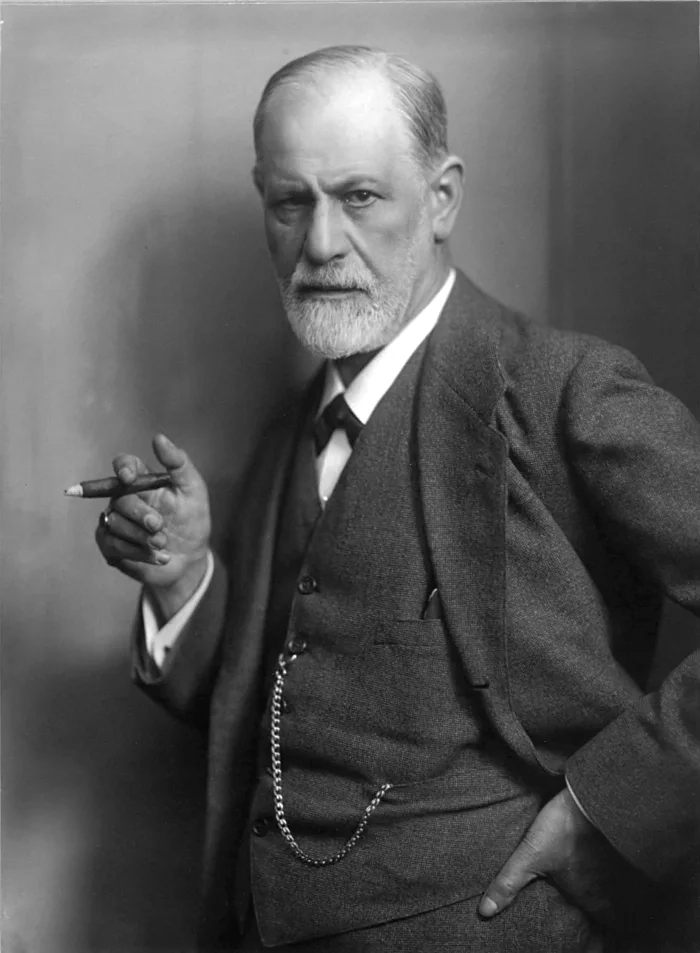
Sigmund Freud (1856-1939), founder of psychoanalysis and the id-ego-superego model of motivation. The MCAT still tests his vocabulary even where modern neuroscience has moved on. Credit: Max Halberstadt, c. 1921 (Public Domain) via Wikimedia Commons.
Id. Innate, unconscious. Source of “psychic energy.” Operates on the pleasure principle - seeks immediate gratification. Present from birth. Drive-reduction theory in Freudian clothing.
Ego. The reality principle. Mediates between the id’s demands and the constraints of reality. Delays gratification, plans, tolerates reality. “The self.”
Superego. Internalized cultural morals and parental standards. Strives for perfection. The “conscience.”
If the ego is strong, it balances id and superego. If it’s weak, one dominates: an uninhibited id produces impulsive, pleasure-seeking behavior; an overactive superego produces guilt and perfectionism. Psychoanalytic therapy aims to make unconscious conflicts conscious so the ego can resolve them.
Biological Regulation: Food and Sex
Not all motivations are abstract. The hypothalamus regulates some of the most basic drives.
Hunger
Lateral hypothalamus (LH) - stimulates eating. Damage → animal starves even in front of food. Mnemonic: LH = Lacks Hunger when damaged.
Ventromedial hypothalamus (VMH) - stops eating (satiety). Damage → animal overeats. VMH = Very Much Hungry when damaged.
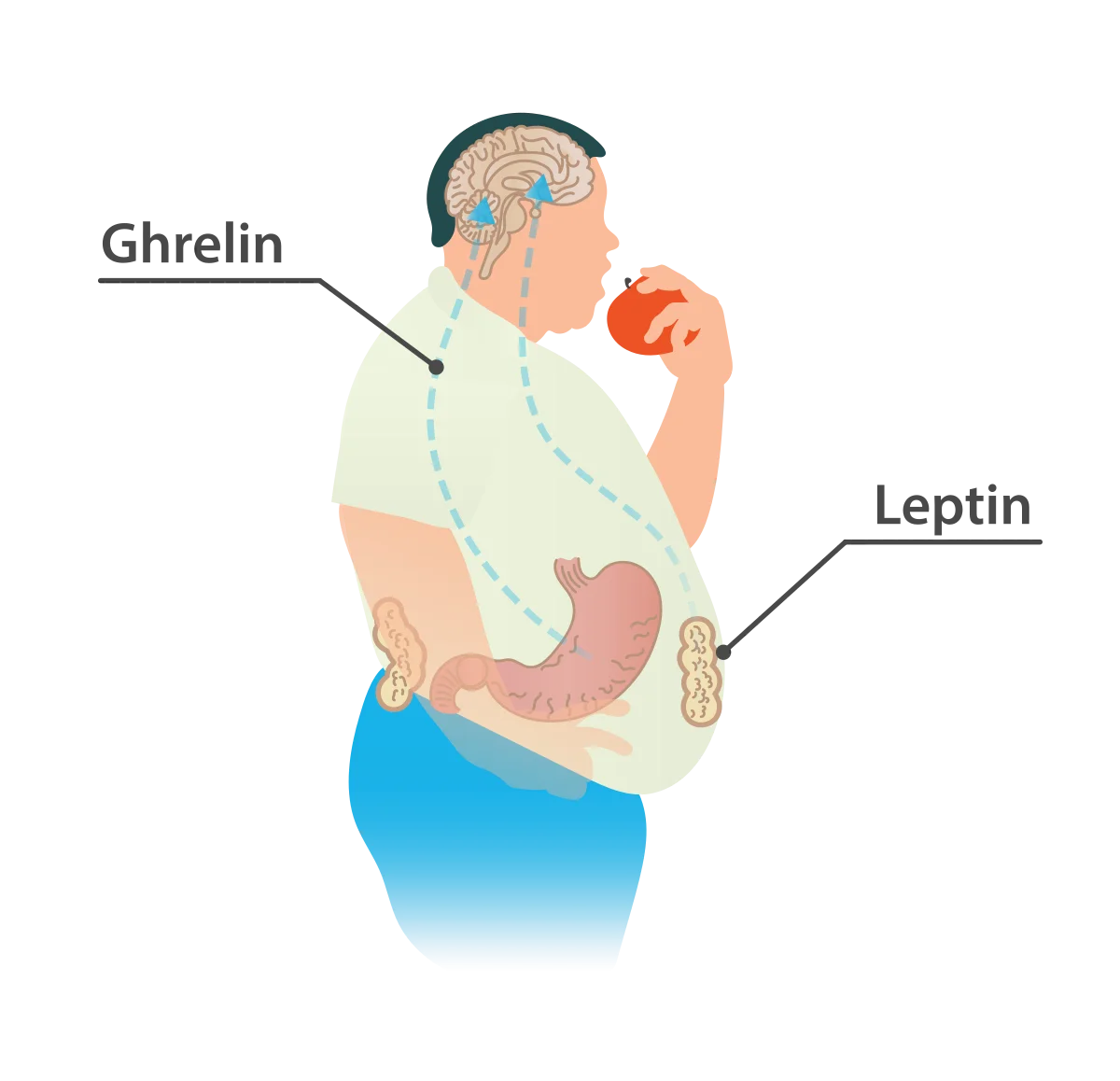
Leptin (from fat cells) and insulin (from pancreas) signal satiety to the brain.
Metabolic rate and a genetic set-point also constrain weight.
The two key feedback hormones in hunger regulation. Ghrelin from the stomach drives hunger; leptin from fat cells signals satiety to the hypothalamus. The MCAT pairs these with the LH/VMH centers as the loop that defends body weight. Credit: InjuryMap via Wikimedia Commons (CC BY-SA 4.0).
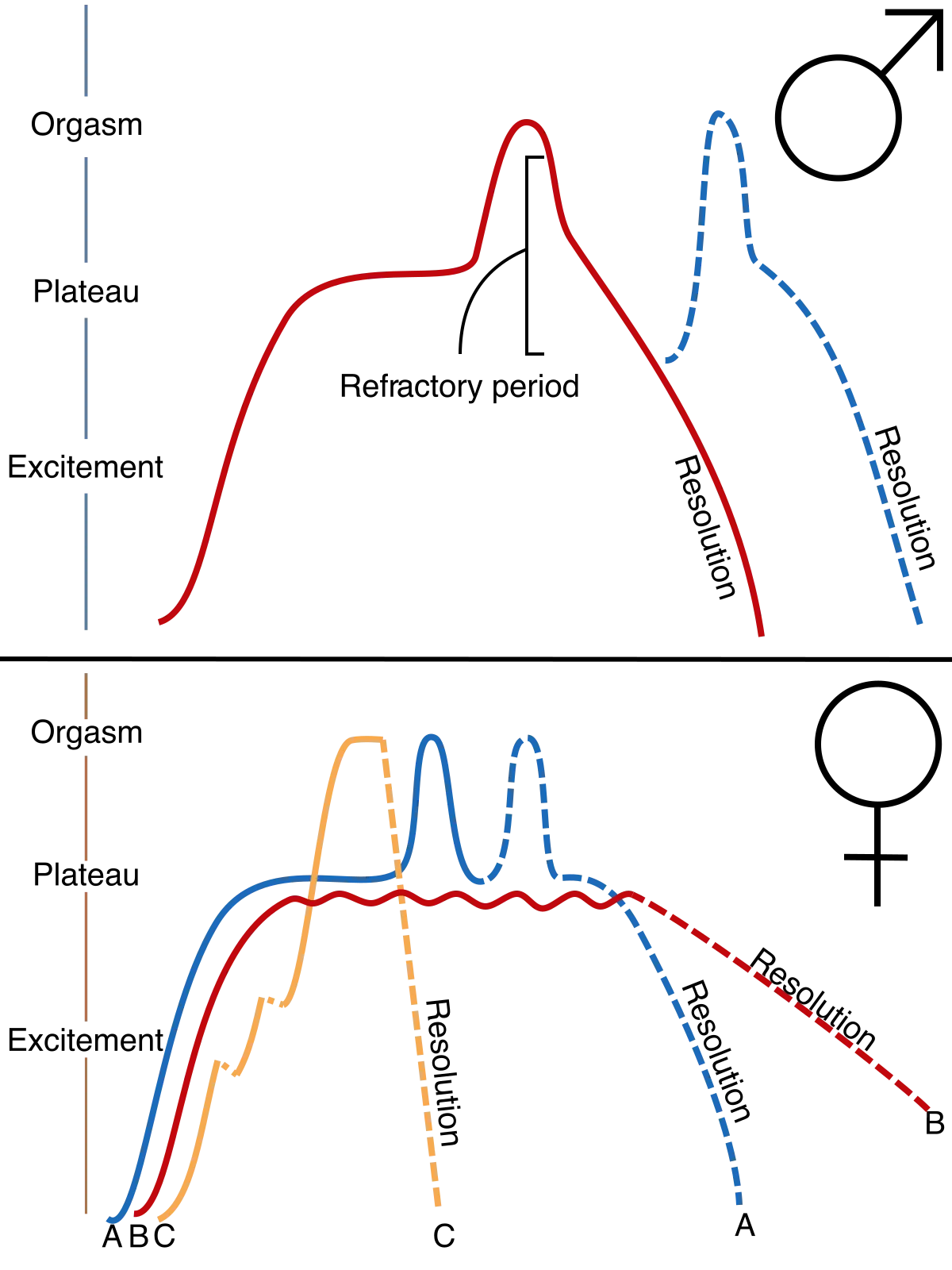
Resolution/refractory period - return to baseline. Refractory period is longer in men.
The Masters and Johnson sexual response cycle. The male pattern (top) shows a single orgasm followed by an obligatory refractory period; the female cycle (bottom) admits multiple variations including multi-orgasmic and non-orgasmic patterns. The four named phases - excitement, plateau, orgasm, resolution - are MCAT vocabulary. Credit: Argenti Aertheri via Wikimedia Commons (CC BY-SA 4.0).
Post-orgasm, prolactin dampens further arousal; endorphins produce euphoria; oxytocin promotes bonding.
Sociocultural factors (age, culture, stimuli, emotions, desires) strongly shape expression, even though the biology is similar across individuals.
What is drive-reduction theory?
Click to reveal answer
A physiological need creates an aroused state (drive), which motivates behavior to reduce the need and return to homeostasis. Best explains food, water, and temperature regulation. Struggles to explain curiosity and thrill-seeking.
List Maslow's five levels of the hierarchy of needs, bottom to top.
Click to reveal answer
Physiological, Safety, Love/Belonging, Esteem, Self-actualization. Mnemonic: "Please Stop Liking Stupid Shit." Needs lower on the pyramid must be satisfied before higher ones become motivating.
What happens when the lateral hypothalamus is damaged?
Click to reveal answer
The animal stops eating, even in the presence of food. LH = "Lacks Hunger" when damaged. VMH (ventromedial) damage produces the opposite - overeating and obesity.
What is the overjustification effect?
Click to reveal answer
Offering external rewards for a task that someone already enjoys intrinsically can reduce their intrinsic motivation. The behavior becomes dependent on the reward and decreases when the reward is withdrawn. Warns against over-rewarding children for activities they already enjoy.
An attitude is a learned tendency to evaluate a person, object, or idea in a certain way. Attitudes drive behavior sometimes. Behavior changes attitudes sometimes. This section untangles the three-way tangle between attitude, belief, and action, and covers the most-tested persuasion models.
The ABC Model of Attitude
Every attitude has three components:
Affective - the feelings or emotions associated with the object. “I’m scared of spiders.”
Behavioral - the tendency to act toward the object. “I run away whenever I see a spider.”
Cognitive - the beliefs about the object. “Spiders are dangerous.”
A coherent attitude has all three aligned. Mismatch between the three creates psychological tension - the setup for cognitive dissonance.
Attitudes → Behavior
Theory of Planned Behavior (Ajzen)
Behavior is predicted by behavioral intention, which depends on three factors:
Attitude toward the behavior. Do you like doing it?
Subjective norms. Do others (family, peers) approve?
Perceived behavioral control. Do you think you can do it?
All three must align for attitude to reliably predict behavior. A student with positive attitude toward studying might still not study if their peers think it’s uncool (subjective norm) or if they have too little time (perceived control).
Attitude-to-Behavior Process Model
An event triggers the attitude, which combines with background knowledge to drive behavior. Works best when the attitude is activated at the moment of decision and relevant to the choice.
Prototype Willingness Model
Behavior is a function of past behavior, attitudes, subjective norms, intentions, willingness, and models/prototypes (mental images of people who perform the behavior). Popular for health-risk behaviors in adolescents.
Behavior → Attitude
Attitudes don’t only drive behavior; behaviors reshape attitudes. Two classic techniques exploit this:
Foot-in-the-Door
Get someone to agree to a small request first. Later they’re much more likely to agree to a large request. The small “yes” subtly shifts their self-image (“I’m the kind of person who helps with surveys”). Commitments escalate.
Door-in-the-Face
Ask for something outrageously large, get refused, then ask for what you really wanted. The contrast makes the second request seem reasonable. Also taps into reciprocity (they seem to be compromising, so you feel social pressure to as well).
Role Playing (Zimbardo Prison Study)
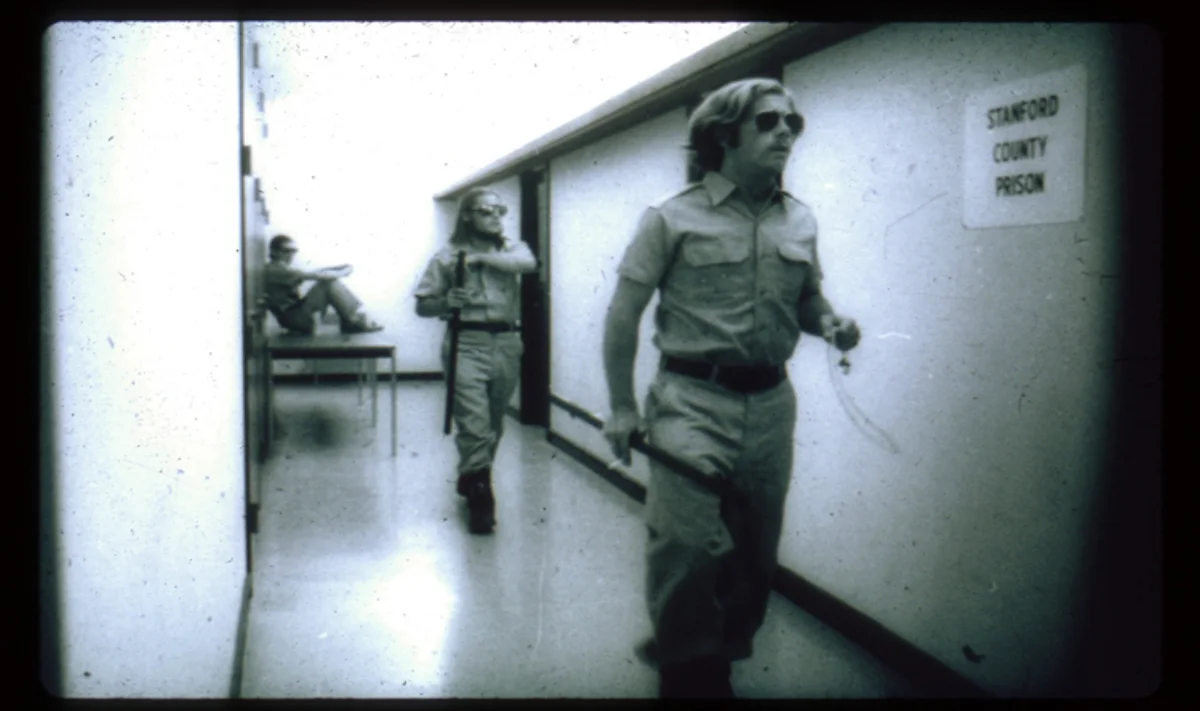
Adopting a new role changes your attitudes over time. Zimbardo’s Stanford Prison Experiment is the extreme case: college students randomly assigned to “guard” roles began behaving cruelly within days. We’ll return to this in Chapter 9.
The 1971 Stanford Prison Experiment, run by Philip Zimbardo. College students randomly assigned to guard roles began acting punitively within days - a vivid (if methodologically debated) demonstration of how adopting a role can reshape attitudes and behavior. Credit: Philip Zimbardo via Wikimedia Commons (CC BY-SA 4.0).
Public Declaration and Justification of Effort
Publicly committing to a behavior (joining AA, announcing a diet) makes you more likely to follow through. Investing effort in a goal (grueling medical-school application) makes you value the outcome more - effort justification, a key consequence of cognitive dissonance.
Cognitive Dissonance Theory (Festinger)
Leon Festinger proposed that when we hold two conflicting cognitions (beliefs, attitudes, behaviors), we experience psychological discomfort and are motivated to reduce it.
Example. Cognition 1: “I smoke.” Cognition 2: “Smoking causes cancer.” The dissonance is uncomfortable. Four ways to reduce it:
Change behavior. Quit smoking.
Change cognition. “I’m not smoking that much.”
Add new cognitions. “My grandmother smoked and lived to 90.”
Reduce importance of the dissonance. “Everyone dies of something.”
Dissonance reduction is usually unconscious. Most smokers don’t quit - they rationalize. The same mechanism explains why you suddenly decide the expensive concert ticket was totally worth it right after buying it (post-purchase rationalization), and why cult members double down on their beliefs when predictions fail (Festinger’s original fieldwork on a doomsday cult).
The Elaboration Likelihood Model of Persuasion (Petty and Cacioppo)
Persuasive messages influence us through two routes depending on how motivated and able we are to think about the message.
Central Route
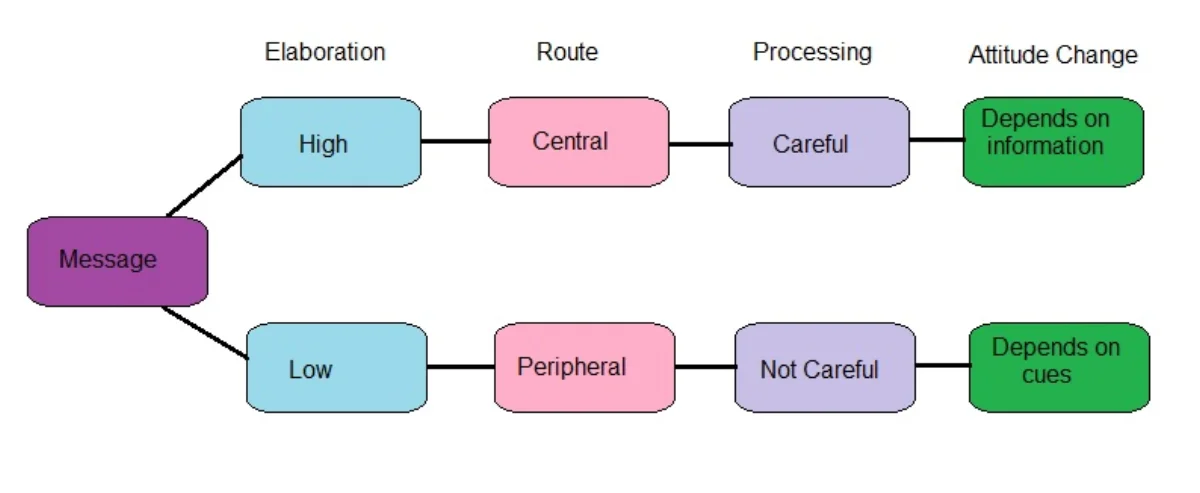
Used when the audience is interested, motivated, and able to carefully evaluate the argument. Deep processing. Persuasion depends on the quality of the argument itself. Lasting attitude change results.
Peripheral Route
Used when the audience is unmotivated or distracted. Shallow processing. Persuasion depends on superficial cues - speaker attractiveness, number of arguments (not quality), confidence, expert badges. Temporary attitude change; audiences drift back when cues fade.
The model has three stages:
Pre-processing filter. Target characteristics (mood, interest, motivation, intelligence) determine whether central or peripheral processing will occur.
Processing. Central → deep. Peripheral → shallow.
Attitude change. Central → lasting. Peripheral → temporary.
The Elaboration Likelihood Model. When motivation and ability are high, listeners take the central route and weigh argument quality - producing durable attitude change. When motivation or ability is low, the peripheral route relies on cues like attractiveness or expertise, producing only temporary shifts. Credit: U3100080 via Wikimedia Commons (CC BY-SA 4.0).
Name the three components of the ABC model of attitude.
Click to reveal answer
Affective (emotions), Behavioral (actions/tendencies), Cognitive (beliefs/thoughts). Aligned attitudes are internally consistent; misalignment sets up cognitive dissonance.
What is cognitive dissonance, and what are the four ways of reducing it?
Click to reveal answer
Psychological discomfort from holding conflicting cognitions. Reduced by: (1) changing behavior, (2) changing cognition, (3) adding new cognitions to justify the inconsistency, (4) minimizing the importance of the conflict.
Compare foot-in-the-door and door-in-the-face persuasion techniques.
Click to reveal answer
Foot-in-the-door: start small, then ask for more. A small yes shifts self-image to 'agreeable.' Door-in-the-face: start with a huge request, get refused, then ask for the target request. The target seems small by comparison and invokes reciprocity.
Under the Elaboration Likelihood Model, when does the central route produce LASTING attitude change?
Click to reveal answer
When the audience is interested, motivated, and able to think carefully about the message, they process it deeply. Attitude change via the central route depends on argument quality and produces durable change. Peripheral processing produces only temporary shifts.