
Stress and General Adaptation Syndrome
Stress is the bodily and psychological response to demands that challenge or threaten the organism. This section covers what counts as stress, how the body responds, and how prolonged stress changes physiology and behavior.
What Is Stress? Lazarus’s Appraisal Model
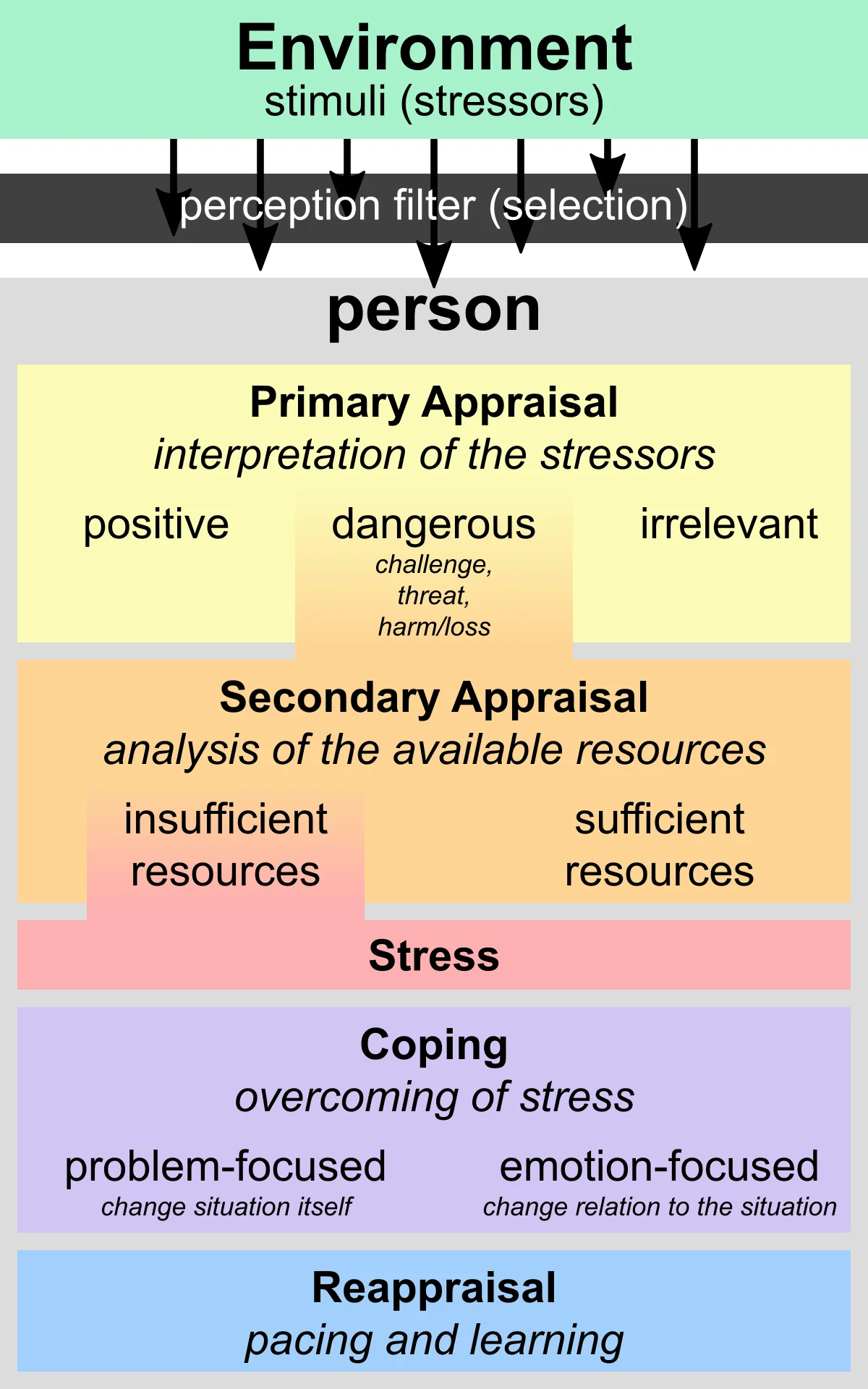
Richard Lazarus - whom you met among the theories of emotion - argued that stress depends less on the objective event and more on your appraisal of it.
- Primary appraisal. Is this event irrelevant, benign/positive, or stressful/negative? If benign, no stress response. If stressful, move to secondary appraisal.
- Secondary appraisal. Can I cope with it? Evaluate harm (damage already done), threat (damage still to come), and challenge (can I overcome it?). Your coping resources matter as much as the objective threat.
Two people facing the same deadline may appraise it completely differently: one as a fun challenge, one as a terrifying overload. Appraisal creates the stress.
Four Categories of Stressors
- Significant life changes - marriage, death of a loved one, new job, divorce. Even positive changes are stressful.
- Catastrophic events - large-scale threats, natural disasters, war, pandemics.
- Daily hassles - small repeated irritations: traffic, email, misplaced keys, interpersonal friction. Often linked to low socioeconomic status (unemployment, inadequate income). Research suggests daily hassles may be the most important stressor for overall health because of their chronicity.
- Ambient stressors - environmental conditions you don’t control: noise, pollution, crowding. Often below conscious awareness but measurably stressful.
The Acute Stress Response
Walter Cannon described the fight-or-flight response - the sympathetic nervous system’s rapid mobilization for threat. Two integrated arms:
Sympathetic Nervous System
Fast neural signals cause:
- Increased heart rate and respiration (more O₂ to muscles)
- Peripheral vasoconstriction (blood shunted to vital organs)
- Pupil dilation, decreased salivation
- Digestion, immune function, and reproduction temporarily suppressed
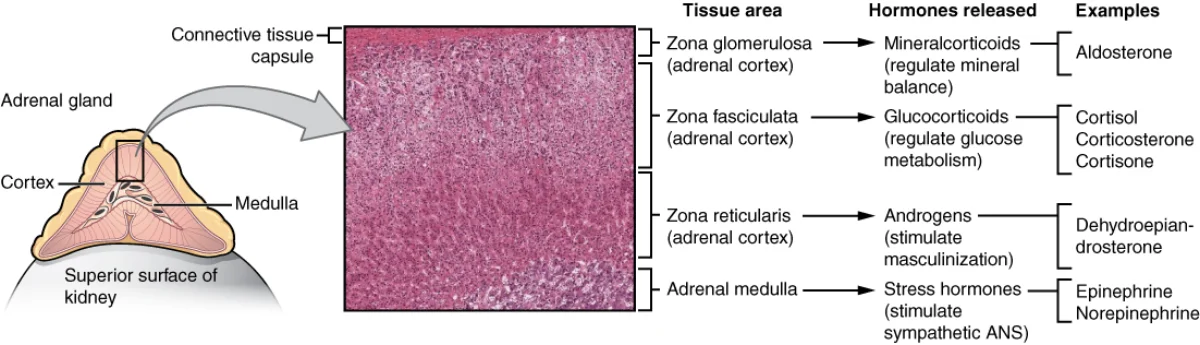
- Release of epinephrine and norepinephrine from the adrenal medulla
Endocrine Response (HPA Axis)
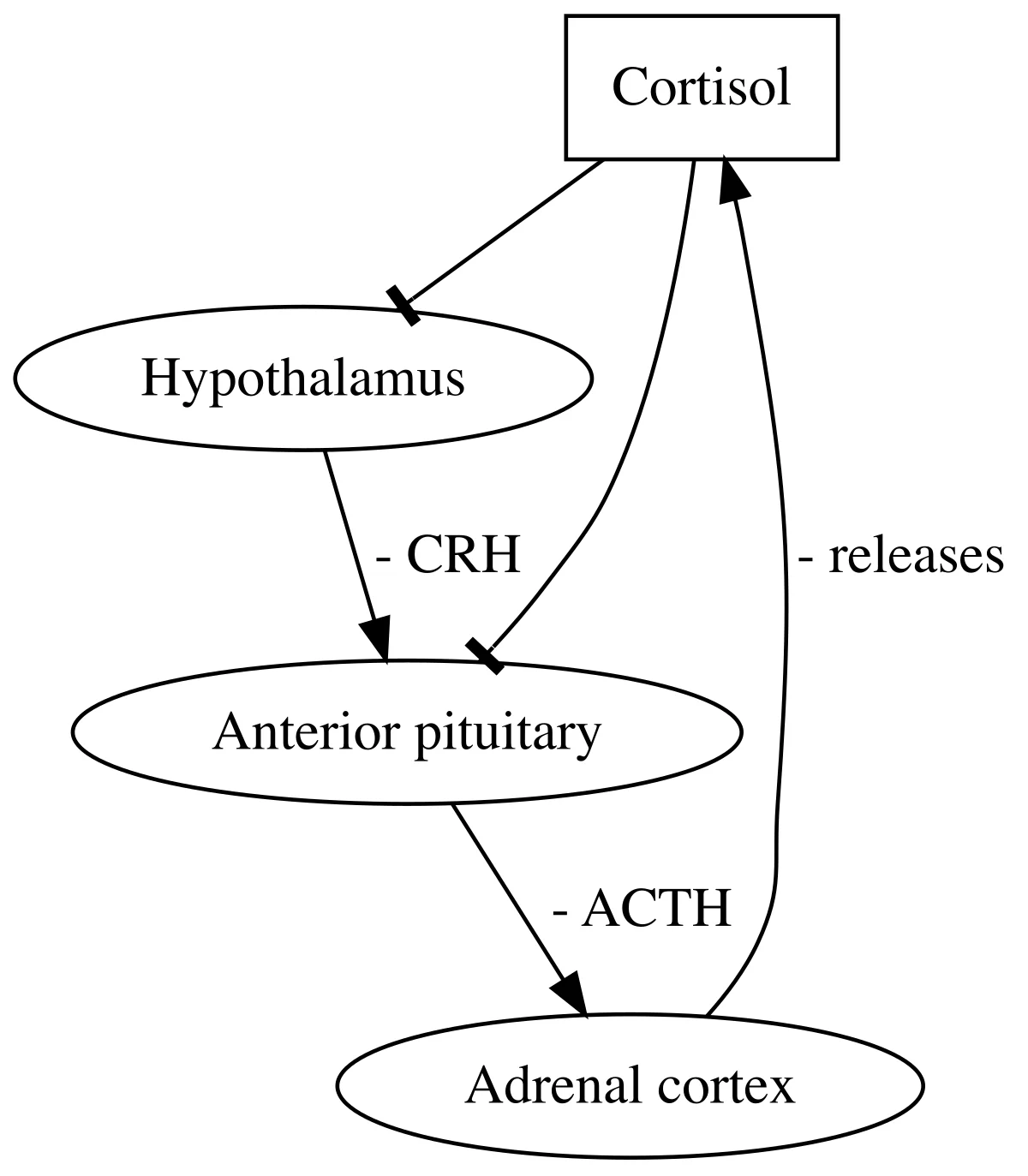
Slower hormonal signals route through the hypothalamus-pituitary-adrenal axis:
- Hypothalamus → CRH → anterior pituitary
- Pituitary → ACTH → adrenal cortex
- Adrenal cortex → cortisol (a glucocorticoid)
Cortisol mobilizes glucose (raises blood sugar), suppresses the immune system, and redirects energy to immediate needs. Mnemonic: COrtisol is released by the CORTex.
Tend-and-Befriend Response
Not everyone responds to stress with fight or flight. Tend and befriend is an alternative response, more common in women, characterized by seeking social support and caring for offspring. Driven partly by oxytocin (a bonding hormone linked to estrogen), it moderates the classic sympathetic response and favors affiliative behavior over aggression.
General Adaptation Syndrome (GAS)
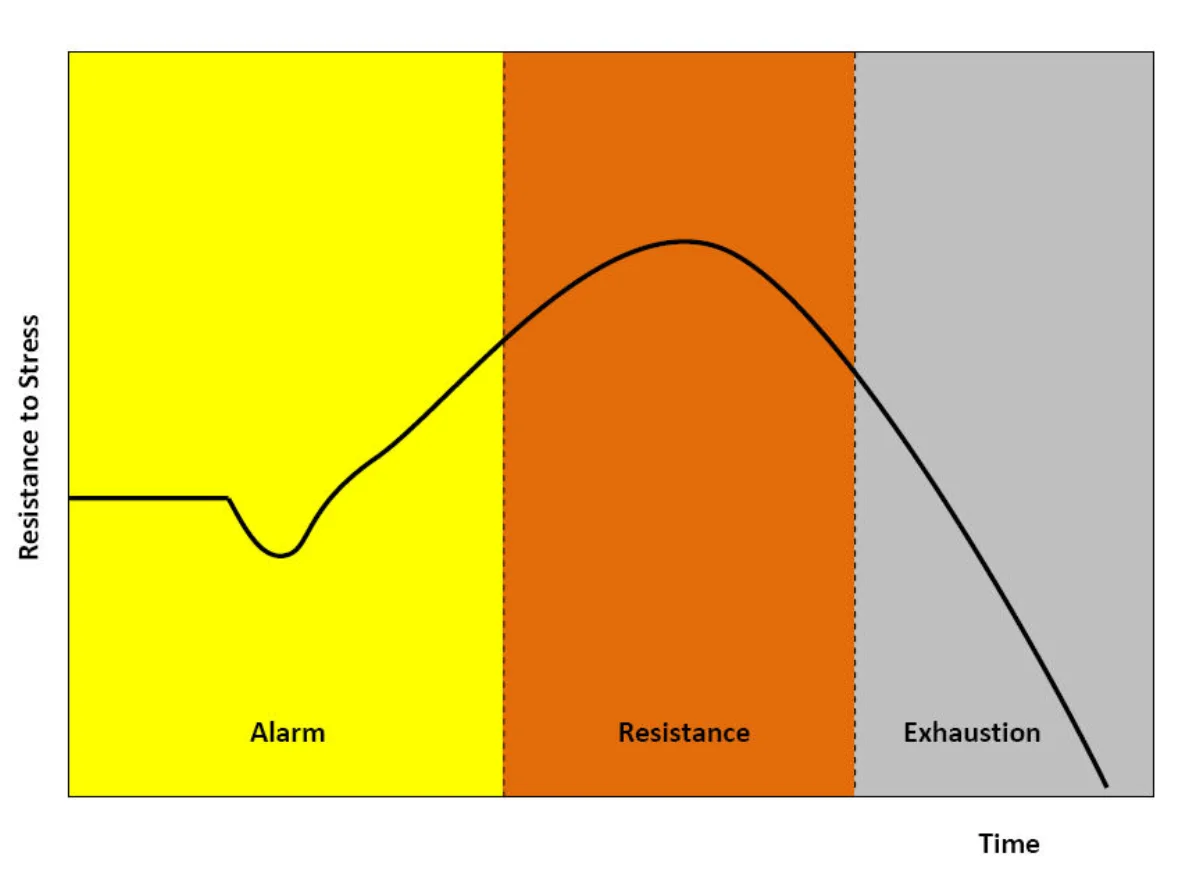
Hans Selye proposed that prolonged stress unfolds in three phases:
Phase 1: Alarm
Immediate stress reaction. Heart races, HPA axis kicks in, resources mobilized. “Ready for fight or flight.”
Phase 2: Resistance
The body adjusts to maintain function under continuing stress. Cortisol stays elevated, blood pressure high, breathing rapid. Short-term the body copes; long-term this is unsustainable.
Phase 3: Exhaustion
If the stressor doesn’t resolve, resources deplete. Tissues are damaged. Immunity drops. This is where chronic stress produces real disease: hypertension, heart disease, immunosuppression, metabolic problems, depression.