
Motivation and Maslow's Hierarchy
Motivation is the “why” of behavior. Why do you eat when hungry? Why do you study when tired? Why do you exercise even when no one’s watching? The MCAT tests five major theories, each offering a different answer.
Five Theories of Motivation
Instinct Theory
Some behaviors are innate, genetically programmed patterns: a baby rooting for a nipple, a spider spinning a web, birds migrating. Instinct theory was popular in the early 1900s, fell out of favor when it started to sound circular (“why do birds migrate? migratory instinct”), but evolutionary psychology has rehabilitated a modern version that looks for adaptive logic behind inherited behaviors.
Drive-Reduction Theory
Need (deprivation - no water) creates a drive (aroused state - thirst) that motivates behavior aimed at reducing the need (drinking water). Body wants to return to homeostasis. Clark Hull’s version dominated mid-20th-century psychology.
Great for explaining hunger, thirst, and temperature regulation. Not so great for things like curiosity or the pull of an amusement park ride, which increase arousal rather than reducing it.
Optimum Arousal Theory
People work to maintain an optimal level of arousal. Too little → seek stimulation (go to a concert, pick up a novel). Too much → seek quiet. Explains thrill-seeking behavior, why some people love roller coasters, and why a boring day drives you to your phone.
Connects cleanly to the Yerkes-Dodson law from the emotion section: mid-level arousal supports best performance.
Incentive Theory
Behavior is motivated by external rewards (incentives) - money, grades, praise, status. Emphasizes the pull of the future goal rather than the push of an internal need. Classic Skinnerian territory.
- Intrinsic motivation. Internal satisfaction drives the behavior. Doing something because you enjoy it.
- Extrinsic motivation. External rewards drive the behavior. Doing something for money, grades, or approval.
A surprising finding: offering external rewards for a behavior that was previously intrinsically motivated can reduce intrinsic motivation. The child who loved drawing loses interest when every drawing earns a sticker - the overjustification effect.
Cognitive Theory
Thoughts, expectations, and goals motivate behavior. You study because you think you’ll do better on the exam. You invest in a relationship because you expect long-term reward. Cognitive theory integrates with self-efficacy, expectancy-value theory, and goal-setting research.
Maslow’s Hierarchy of Needs
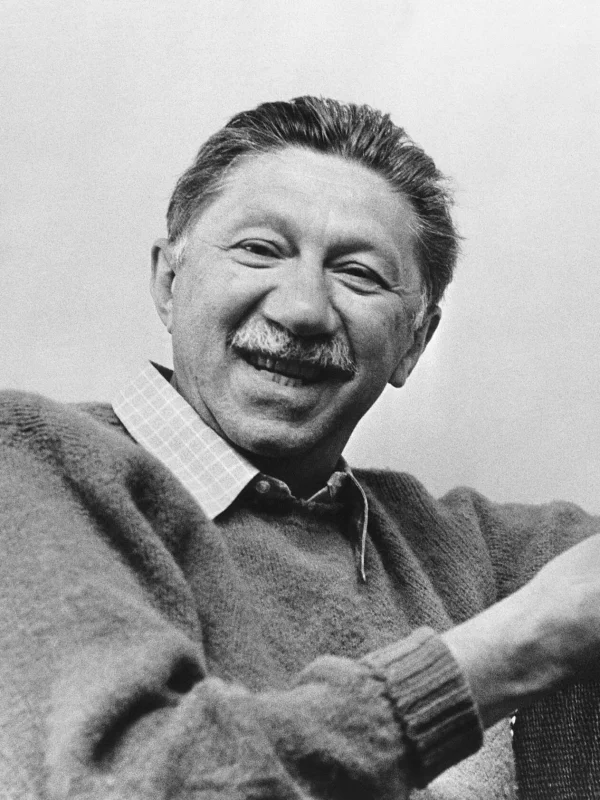
Abraham Maslow arranged human needs in a pyramid that must be fulfilled bottom-to-top. You can’t effectively work on higher needs until lower ones are met.
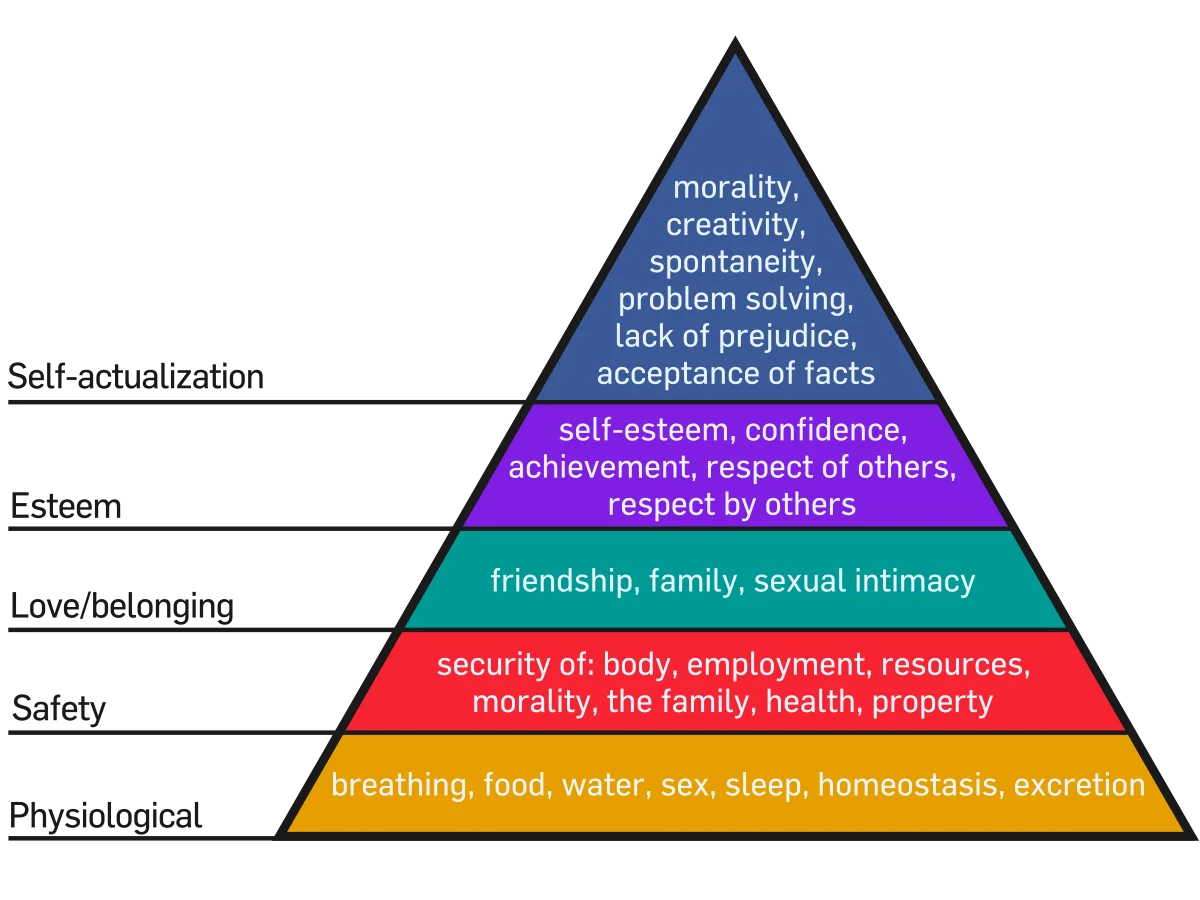
- Physiological needs. Food, water, air, sleep. Must be met first.
- Safety needs. Shelter, stability, security, health, property.
- Love and belonging. Friendship, family, intimacy, community.
- Esteem needs. Achievement, recognition, respect, competence.
- Self-actualization. Becoming the fullest version of yourself - realizing your potential, pursuing meaning, creativity. Different for every person.
Mnemonic: “Please Stop Liking Stupid Shit” (Physiological, Safety, Love, Self-esteem, Self-actualization).
The hierarchy explains why a starving student can’t focus on existential questions, why homelessness destroys educational attainment, and why the most successful professionals sometimes feel empty - they’ve met the bottom four needs and now need to address self-actualization. Maslow later added a sixth level (self-transcendence - serving something beyond yourself), though this is less commonly taught.
Freud’s Model of the Mind
Worth including here as a motivational theory.
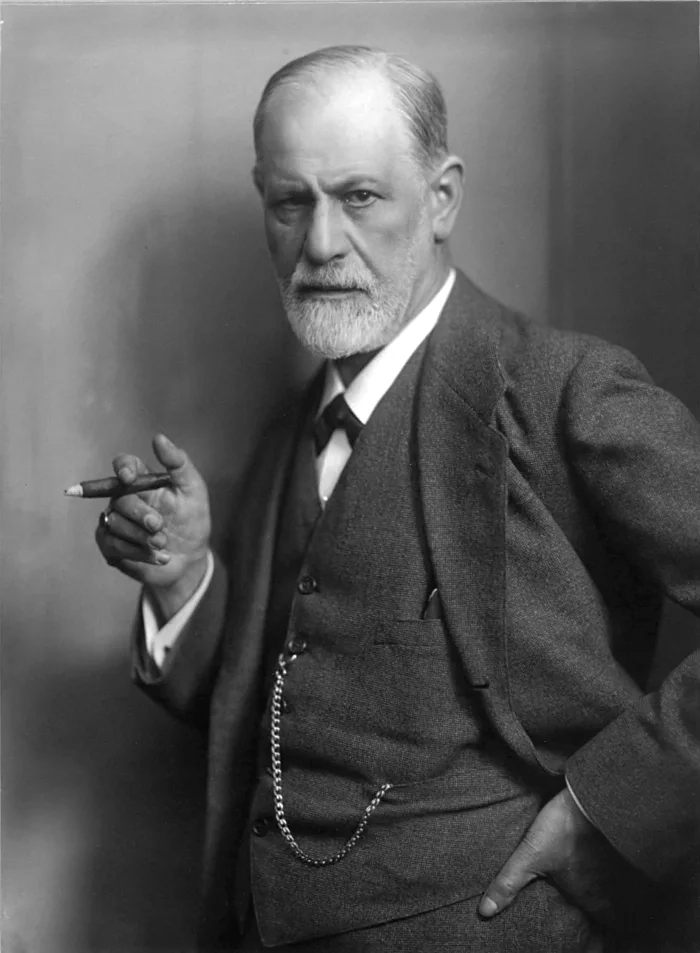
- Id. Innate, unconscious. Source of “psychic energy.” Operates on the pleasure principle - seeks immediate gratification. Present from birth. Drive-reduction theory in Freudian clothing.
- Ego. The reality principle. Mediates between the id’s demands and the constraints of reality. Delays gratification, plans, tolerates reality. “The self.”
- Superego. Internalized cultural morals and parental standards. Strives for perfection. The “conscience.”
If the ego is strong, it balances id and superego. If it’s weak, one dominates: an uninhibited id produces impulsive, pleasure-seeking behavior; an overactive superego produces guilt and perfectionism. Psychoanalytic therapy aims to make unconscious conflicts conscious so the ego can resolve them.
Biological Regulation: Food and Sex
Not all motivations are abstract. The hypothalamus regulates some of the most basic drives.
Hunger
- Lateral hypothalamus (LH) - stimulates eating. Damage → animal starves even in front of food. Mnemonic: LH = Lacks Hunger when damaged.
- Ventromedial hypothalamus (VMH) - stops eating (satiety). Damage → animal overeats. VMH = Very Much Hungry when damaged.
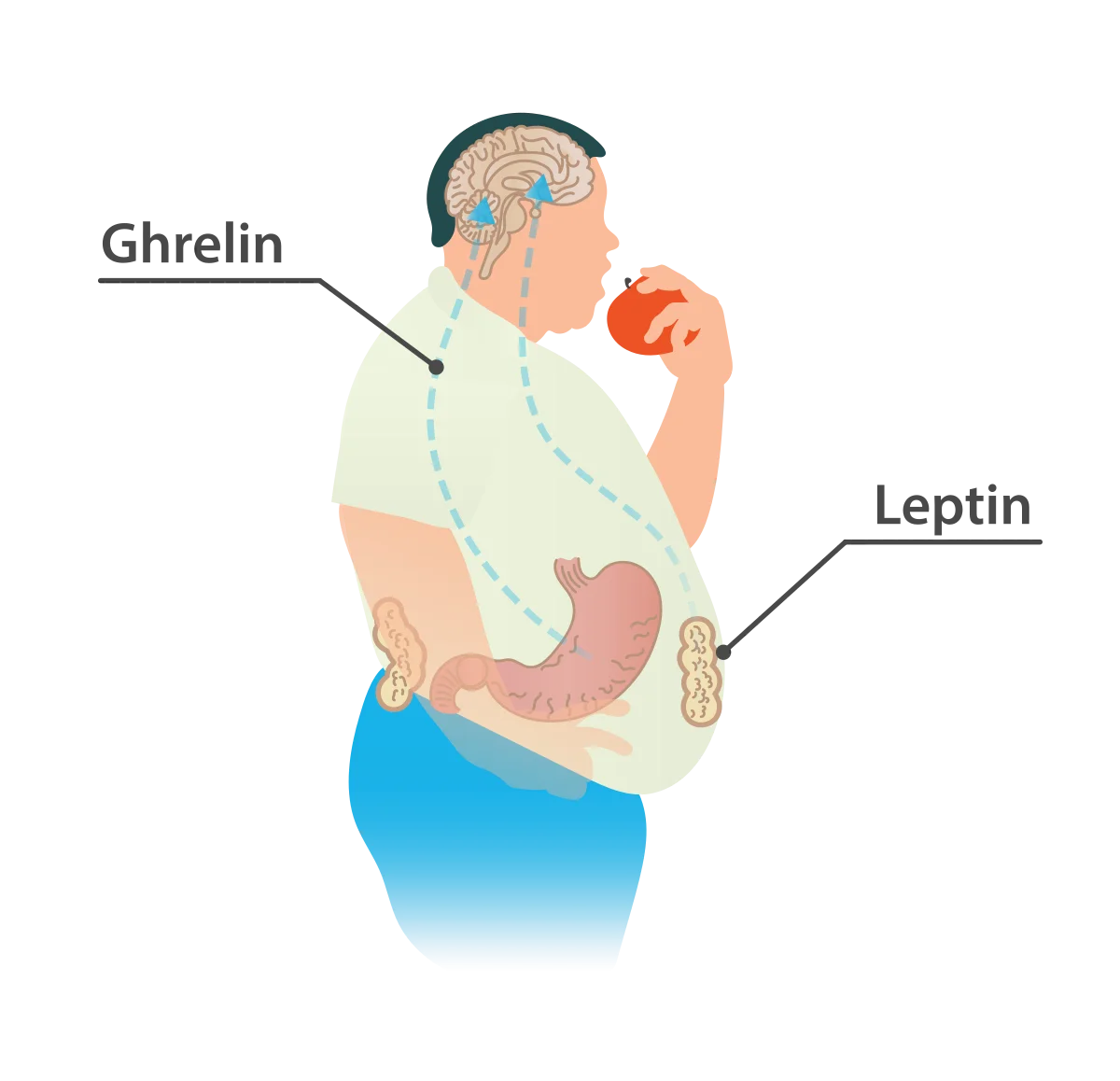
- Leptin (from fat cells) and insulin (from pancreas) signal satiety to the brain.
- Metabolic rate and a genetic set-point also constrain weight.
- Sociocultural factors: occasions, availability, stress, emotional eating.
Sexual Response (Masters and Johnson)
Masters and Johnson’s four-phase cycle:
- Excitement - arousal begins; heart rate, muscle tension, and blood flow increase.
- Plateau - sustained arousal.
- Orgasm - peak of physiological release.
- Resolution/refractory period - return to baseline. Refractory period is longer in men.
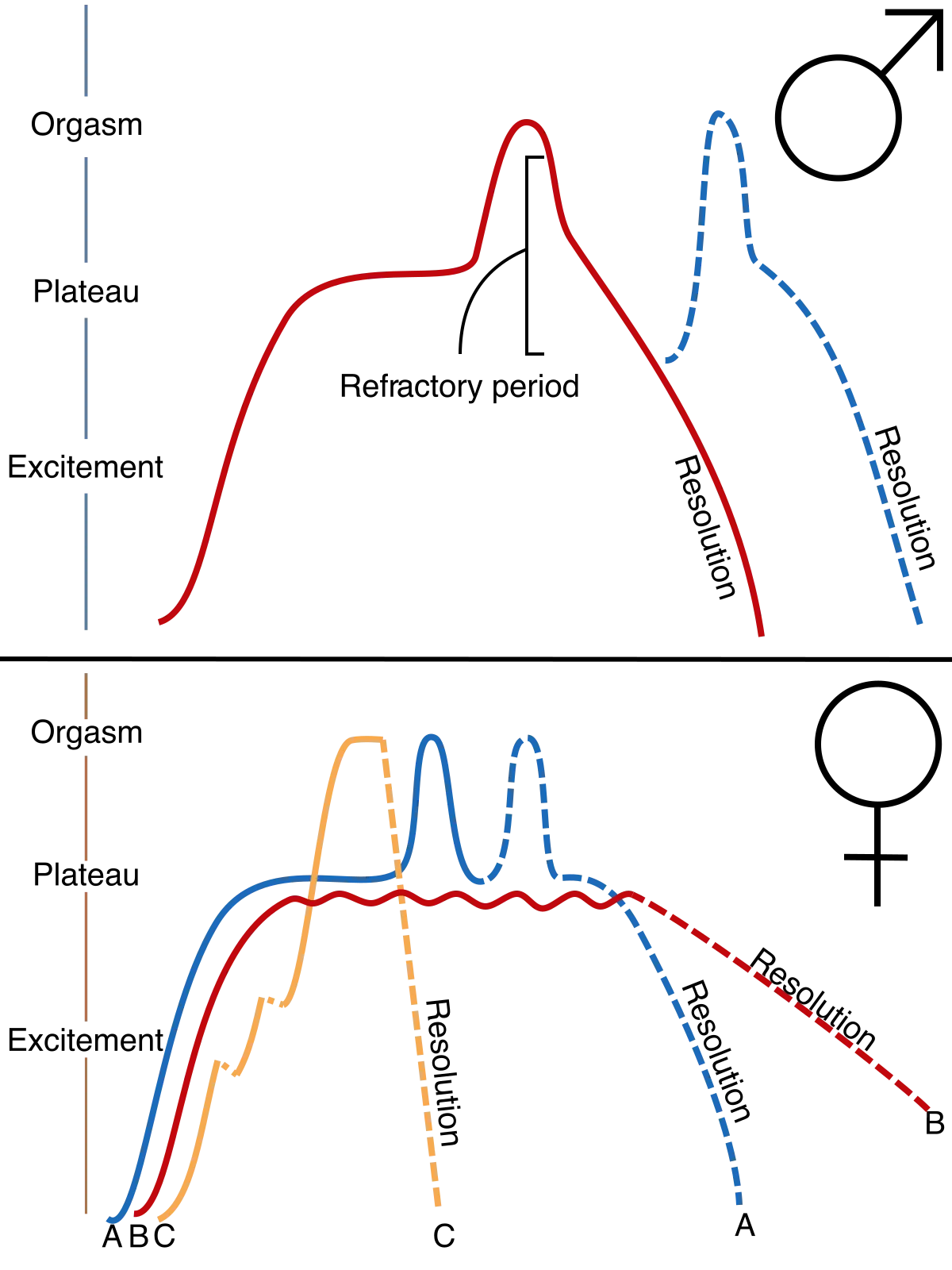
Post-orgasm, prolactin dampens further arousal; endorphins produce euphoria; oxytocin promotes bonding.
Sociocultural factors (age, culture, stimuli, emotions, desires) strongly shape expression, even though the biology is similar across individuals.