
Piaget, Schemas, and Problem Solving
Jean Piaget was a Swiss biologist who, early in the 20th century, argued something radical for his time: children are not miniature adults. Their minds do not merely accumulate more knowledge; they progress through qualitatively different stages of thinking. Every MCAT psych passage about cognitive development in children draws from Piaget’s framework.
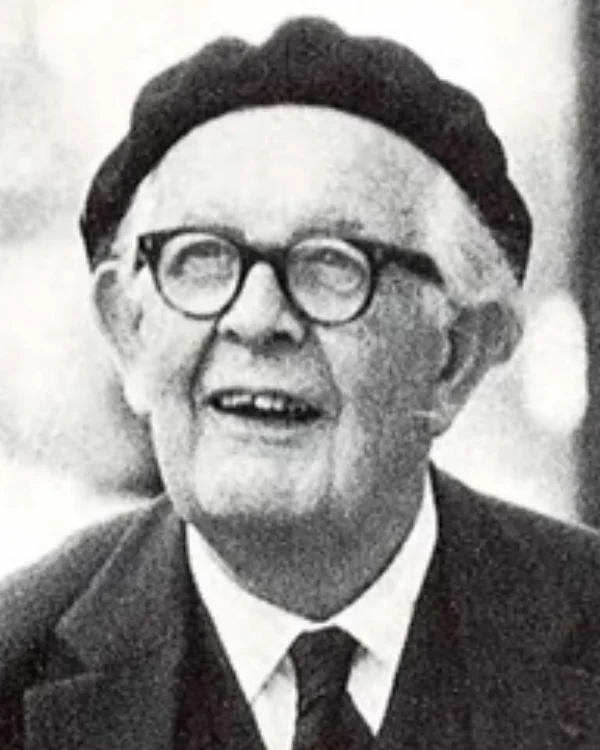
Piaget’s Four Stages of Cognitive Development
Memorize the ages and the landmark achievement of each stage.
Stage 1: Sensorimotor (0–2 years)
Infants explore the world through senses and motor actions. The developmental task of the stage is object permanence - understanding that objects continue to exist when out of sight. Before object permanence develops, an infant loses interest when you hide a toy under a blanket - as if it vanished. That is why peek-a-boo is hilarious to 6-month-olds: the face really does seem to disappear. Object permanence emerges around 8 months.
Also includes the development of stranger anxiety (around 8–12 months), which requires recognizing that the caregiver is distinct from strangers.
Stage 2: Preoperational (2 – years)
Children use symbols (words and images) to represent objects and engage in pretend play. But they lack logical “operations” on those symbols.
Key features:
- Egocentrism. Inability to take another’s perspective. A child hiding their eyes assumes you can’t see them because they can’t see.
- Magical thinking. Wishes can make things happen; inanimate objects have feelings.
- Failure of conservation. A child in this stage does not understand that pouring water from a short wide glass into a tall narrow glass leaves the amount unchanged. They judge quantity by appearance.
- Centration. Focus on one feature at a time (height OR width, not both).
Stage 3: Concrete Operational (7–11 years)
Children master logical reasoning about concrete (real, physical) objects. They can conserve volume, mass, and number. They understand reversibility (the water poured back would be the same amount). They develop the ability to take others’ perspectives (empathy) and perform basic math operations.
Key features:
- Conservation. Quantity does not change with appearance.
- Reversibility. Actions can be mentally undone.
- Decentration. Attention to multiple features at once.
- Loss of egocentrism.
Stage 4: Formal Operational (12+ years)
Abstract and hypothetical reasoning. Teens can think about things that are not physically present: hypotheticals (“what if gravity didn’t exist”), moral dilemmas, mathematical proofs, and long-term consequences.
Modern developmentalists note that children don’t always hit Piaget’s age targets cleanly, and many adults don’t fully master formal operations across all domains. But the rough progression is widely accepted.
Schemas, Assimilation, and Accommodation
Piaget also gave us the vocabulary of how children (and adults) organize knowledge.
- Schema. A mental framework that organizes information about a concept. A “dog schema” includes four legs, fur, barks, friendly.
- Assimilation. Incorporating a new experience into an existing schema. The child sees a wolf and labels it “dog.”
- Accommodation. Modifying an existing schema to fit a new experience. The child realizes wolves are different and creates a new “wolf” schema.
Cognitive development is a rhythm of assimilation and accommodation, driving toward equilibrium (a consistent set of schemas). Most new information can be assimilated; occasionally something doesn’t fit, and accommodation creates (or splits) a schema.
Problem Solving
Problem solving is moving from a current state to a goal state. Two kinds of problems:
- Well-defined - clear starting point, clear goal, clear rules. Solving a Sudoku.
- Ill-defined - ambiguous goal or path. “How do I live a happy life?” or “how do I fit a bookcase around a staircase?”
Methods of Problem Solving
- Trial and error. Try random solutions until one works. Inefficient; no memory of past attempts.
- Algorithms. A step-by-step procedure guaranteed to solve the problem. Exhaustive, slow, but reliable. Checking every possible 8-character password is an algorithm.
- Heuristics. Mental shortcuts that usually (not always) work. Faster than algorithms, but can produce wrong answers.
- Means-end analysis. Identify the biggest difference between current and goal state, attack that first, repeat.
- Working backwards. Start from the goal and trace the steps back to the current state. Useful for mazes and math proofs.
- Intuition. Gut instinct, pattern recognition from experience. Fast but unreliable.
- Insight. The “aha!” moment when a solution appears seemingly out of nowhere after a period of rest or incubation. Often follows fixation - getting stuck on a bad approach and unable to see alternatives.
Fixation
- Functional fixedness. Inability to see an object as anything other than its typical use. “I need a nail, but I don’t have a hammer” - a functionally fixed mind doesn’t consider using a wrench or rock to drive the nail.
- Mental set. A tendency to approach a problem with a strategy that worked before, even when the new situation calls for a different strategy.