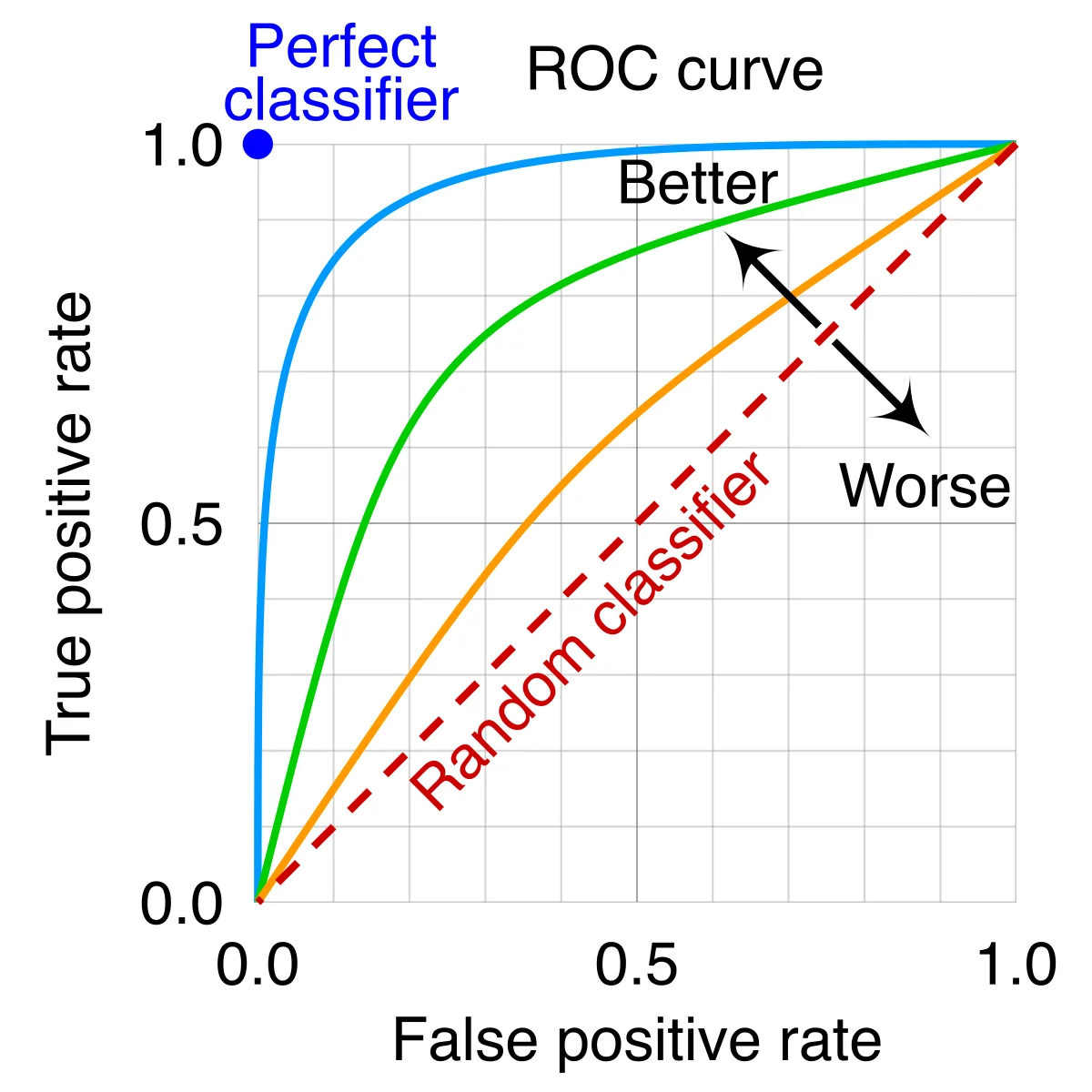
Sensation, Thresholds, and Signal Detection
You are trying to hear a phone vibrate across the room while your roommate runs the vacuum. Sometimes you catch it. Sometimes you swear you heard it and check your phone to find nothing there. Sometimes you miss a real call. This is not a trivial, everyday annoyance. This is the textbook setup for everything in signal detection theory, and the MCAT loves it.
Before we get to detection, we need to define what “sensing something” even means.
Sensation vs. Perception
Sensation is the physical conversion of a stimulus into a neural signal. A rod in your retina flips a molecule, fires a neuron. That is sensation.
Perception is what your brain makes of that signal. Your brain decides the neural blip means “my phone is vibrating.” That is perception.
The physical step of converting stimulus energy into neural energy is called transduction. Rods and cones transduce light. Hair cells transduce sound. Free nerve endings transduce pain. Every sense has its own transducers.
Absolute Threshold of Sensation
Your phone vibrates so gently you catch it only half the time. That crossover point - the intensity at which you detect a stimulus 50% of the time - is your absolute threshold of sensation. Below the threshold, you would correctly detect the stimulus less than half the time (it is below the line you called “detectable”). Above the threshold, you would detect it more than half the time.
Stimuli below absolute threshold are called subliminal. They still reach your sensory organs, but you do not consciously detect them more than half the time.
Absolute threshold is not a hard, fixed number. It slides around based on:
- Expectations. If you are waiting for a text, your threshold drops.
- Experience. A new parent can hear a baby’s whimper through two closed doors.
- Motivation. If you’re waiting to hear from someone important, you’re more sensitive to notifications.
- Alertness. A drowsy person misses signals a well-rested person would catch.
Just Noticeable Difference and Weber’s Law
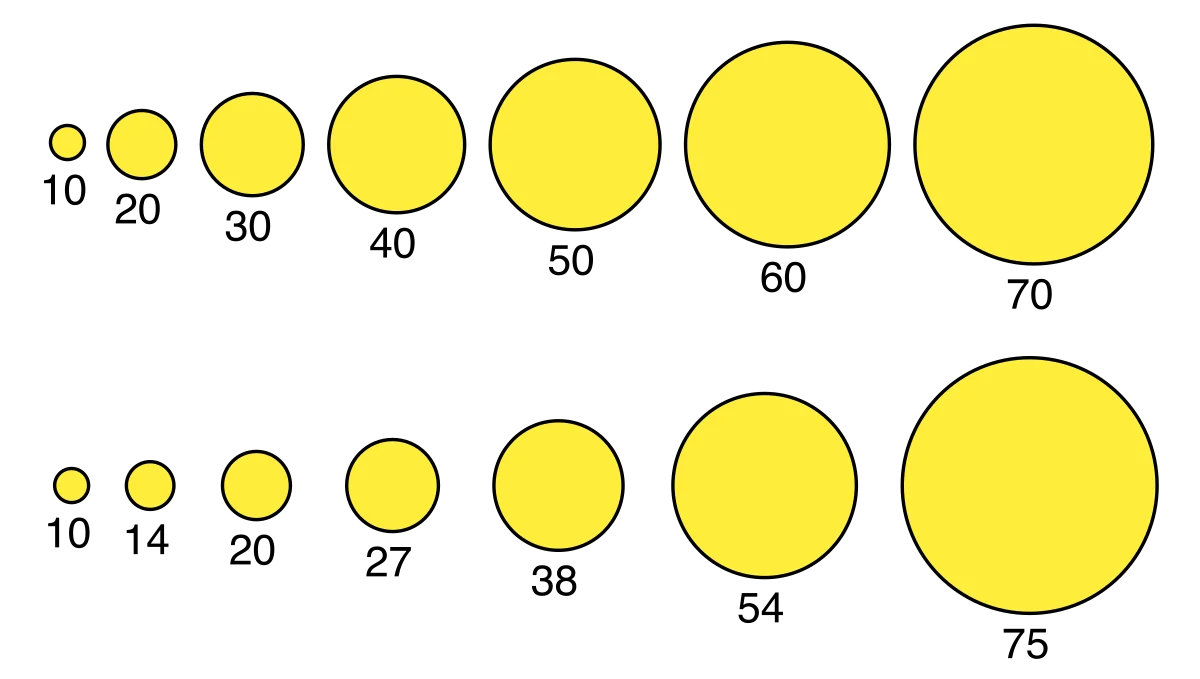
Absolute threshold asks, “Can you hear the phone at all?” The just-noticeable difference (JND) asks, “Can you hear the phone getting louder?” JND is the smallest change in a stimulus that a person can detect 50% of the time.
Here is the trick that the MCAT wants you to internalize: the JND is not a fixed amount, it is a fixed proportion. A 2 lb weight next to a 2.2 lb weight feels different - a 10% change. A 50 lb weight next to a 50.2 lb weight feels identical, because 0.2 is a tiny fraction of 50. To feel a change against 50 lb, you would need to add about 5 lb.
That proportionality is Weber’s Law:
where ΔI is the JND, I is the starting intensity, and k is a constant (the “Weber fraction”) specific to the sense. For weight, k is roughly 0.02 (a 2% change). For brightness, k is closer to 0.08.
Signal Detection Theory
Now to your vacuum-vs-vibrating-phone problem. Signal detection theory (SDT) models how we decide whether a stimulus is present when conditions are noisy. Your brain is constantly trying to distinguish signal (the phone) from noise (the vacuum, the dog, the wind).
There are four possible outcomes on any trial:
| Signal Present | Signal Absent | |
|---|---|---|
| You say “yes” | Hit | False Alarm |
| You say “no” | Miss | Correct Rejection |
- Hit. You say yes, the phone really was buzzing.
- Miss. You say no, but the phone actually was buzzing. You missed the call.
- False alarm. You say yes, but the phone never buzzed. You check and feel silly.
- Correct rejection. You say no, and nothing was there.
d’ (Sensitivity) and c (Bias)
Signal detection splits performance into two independent pieces:
d’ (d-prime) measures sensitivity. How far apart are the “signal” and “noise” distributions in the brain? A bigger d’ means the signal stands out clearly from noise. A small d’ means they overlap and you cannot reliably tell them apart no matter how carefully you try.
c measures response bias (strategy). At what intensity do you decide to say “yes”? This is a personality trait of a detector, not a feature of the signal.
- Conservative strategy. “I’ll only say yes when I’m 100% sure.” Many misses, few false alarms.
- Liberal strategy. “I’ll say yes if I even suspect it.” Many hits, but also many false alarms.