
Systems and Surroundings
Before you can track energy in a chemical reaction, you need to define what you are tracking. In thermodynamics, we split the universe into two parts: the system (the specific reaction or process you are studying) and the surroundings (everything else). The boundary between them determines what can cross - energy, matter, or neither.
The Three System Types
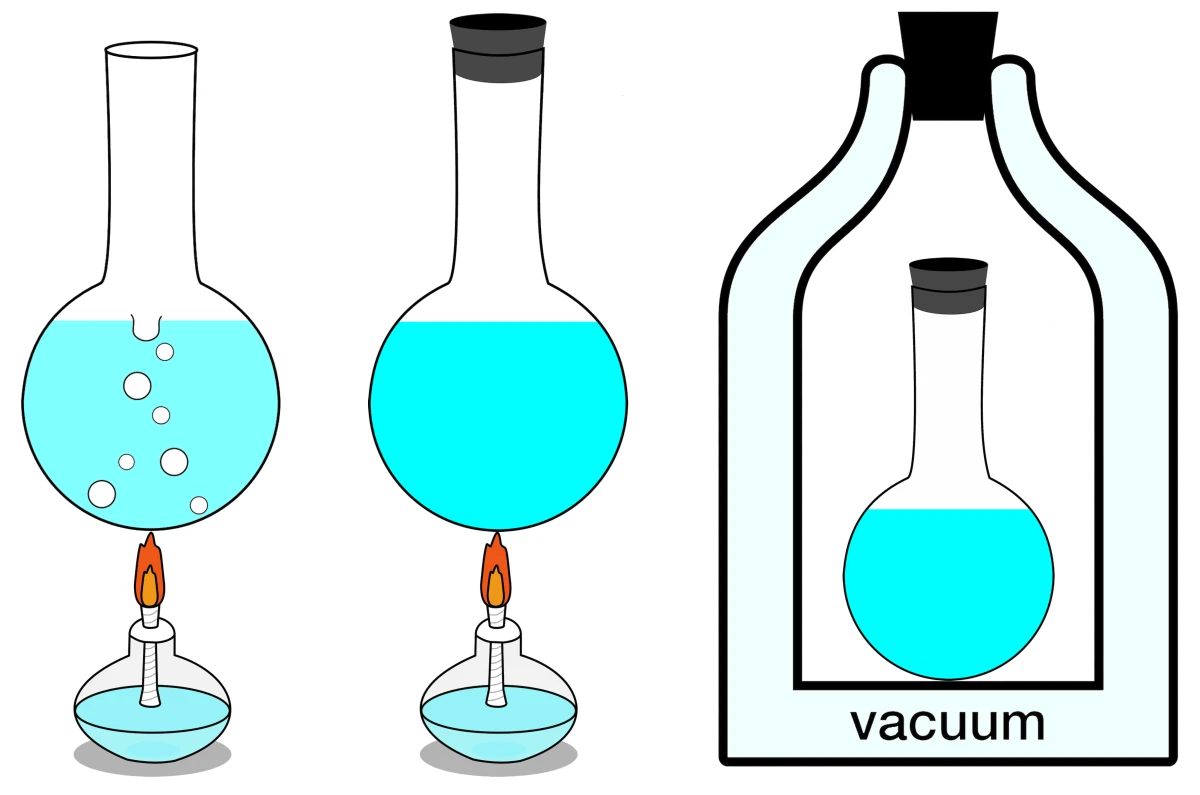
Open system: Both energy and matter can cross the boundary. A boiling pot of water without a lid is an open system. Heat enters from the stove (energy in), and steam escapes into the air (matter out). Most biological systems are open - your body constantly exchanges heat and chemicals with the environment.
Closed system: Energy can cross the boundary, but matter cannot. A sealed pressure cooker on a stove is a closed system. Heat flows in through the walls, but the water and steam stay trapped inside. Most chemical reactions studied on the MCAT take place in closed systems.
Isolated system: Neither energy nor matter can cross the boundary. A perfect thermos is the closest everyday example. In reality, truly isolated systems do not exist (every thermos eventually leaks heat), but the concept is useful for theoretical calculations. The entire universe is sometimes treated as an isolated system because there is nothing outside it to exchange with.
| System Type | Energy Transfer? | Matter Transfer? | Example |
|---|---|---|---|
| Open | Yes | Yes | Boiling pot without a lid |
| Closed | Yes | No | Sealed pressure cooker on a stove |
| Isolated | No | No | Ideal thermos (approximation) |
Why System Classification Matters
The type of system you are working with determines which thermodynamic quantities you measure. In a constant-pressure system (like a coffee cup calorimeter open to the atmosphere), the heat flow equals the enthalpy change (q = ΔH). In a constant-volume system (like a sealed bomb calorimeter), the heat flow equals the internal energy change (q = ΔU). You will see these distinctions again in Section 7.4 on calorimetry.
The First Law of Thermodynamics
The first law states that energy cannot be created or destroyed, only transferred or converted between forms. Mathematically:
Energy enters a system as heat (q) or work (w). If you add heat to a gas and it does not expand, all that energy increases the internal energy (temperature goes up). If the gas expands against external pressure, some energy goes into doing work, and the internal energy increases by less.
Sign Conventions
Getting signs right is critical on the MCAT. The convention used in most chemistry contexts:
| Quantity | Positive means… | Negative means… |
|---|---|---|
| q (heat) | Heat flows INTO the system (endothermic) | Heat flows OUT of the system (exothermic) |
| w (work) | Work done ON the system (compression) | Work done BY the system (expansion) |
| ΔU | System gains internal energy | System loses internal energy |