
Gastrulation
If early embryonic development is about making more cells, gastrulation is about organizing them. Think of it this way: cleavage built you a pile of bricks, and gastrulation is the architect showing up to arrange them into walls, floors, and a roof. This is where a hollow ball of nearly identical cells transforms into a three-layered structure with a clear body plan.
As the developmental biologist Lewis Wolpert famously said: “It is not birth, marriage, or death, but gastrulation which is truly the most important time in your life.” He was not exaggerating. Every organ you have - brain, heart, bones, gut, skin - traces directly back to one of the three layers established during gastrulation.
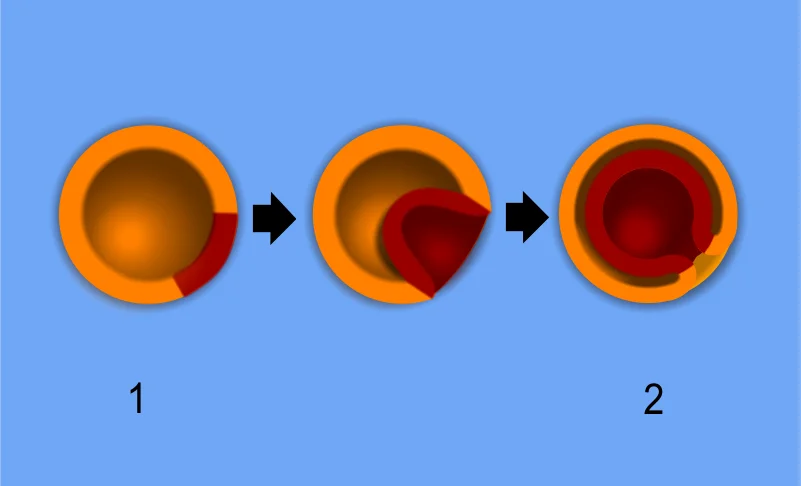
What Happens During Gastrulation
Gastrulation occurs during the third week of human development. The blastula (a hollow ball of cells) reorganizes into a gastrula - a multi-layered structure with three distinct germ layers:
- Ectoderm (outer layer) - “ecto” means outside
- Mesoderm (middle layer) - “meso” means middle
- Endoderm (inner layer) - “endo” means inside
The process begins with invagination - cells on the surface of the blastula fold inward, pushing into the interior. This inward folding creates a new internal pocket called the archenteron, the primitive gut cavity that will eventually develop into the lining of the digestive tract.
The opening of the archenteron to the outside is called the blastopore. The fate of this opening is one of the most tested embryology facts on the MCAT (more on that below).
Deuterostomes vs. Protostomes
The fate of the blastopore splits the animal kingdom into two major groups - and the MCAT expects you to know which group humans belong to.
In deuterostomes (“second mouth”), the blastopore becomes the anus, and the mouth forms as a second, separate opening. Humans, all vertebrates, and echinoderms (sea stars, sea urchins) are deuterostomes.
In protostomes (“first mouth”), the blastopore becomes the mouth, and the anus forms second. Insects, mollusks, annelids, and nematodes are protostomes.
| Feature | Deuterostomes | Protostomes |
|---|---|---|
| Blastopore becomes | Anus (mouth forms second) | Mouth (anus forms second) |
| Cleavage type | Indeterminate (radial) | Determinate (spiral) |
| Coelom formation | Enterocoely (pouches from gut) | Schizocoely (splitting of mesoderm) |
| Examples | Humans, vertebrates, echinoderms | Insects, mollusks, worms |
The Primitive Streak
In mammals specifically, gastrulation does not happen by simple invagination of a hollow ball (that model applies to simpler organisms like sea urchins). Instead, the human embryo is a flat disc at this point, and gastrulation is initiated by the formation of the primitive streak - a groove that appears on the surface of the embryonic disc (the epiblast).
Cells on the surface migrate through this groove in a process called ingression:
- Some cells move inward and displace the underlying layer to form the endoderm
- Other cells migrate between the ectoderm and endoderm to form the mesoderm
- The cells remaining on the surface become the ectoderm
The primitive streak also establishes the embryo’s body axes for the first time:
- Anterior-posterior (head to tail) - the streak forms at the posterior end
- Dorsal-ventral (back to belly)
- Left-right symmetry
This is the moment the embryo goes from a featureless disc to having a defined “front,” “back,” “top,” and “bottom.” Before the primitive streak, the embryo has no recognizable orientation.
The node at the anterior tip of the primitive streak acts as the organizer - it secretes signaling molecules that direct surrounding cells to adopt specific fates. This is analogous to the Spemann-Mangold organizer discovered in amphibian embryos (covered in more detail in Section 3.8, Developmental Signaling).
The Three Germ Layers: A Quick Preview
Each germ layer will give rise to specific tissues and organs. The full list is covered in Section 3.5, but here is the overview you need to start connecting the dots:
| Germ Layer | Position | Major Derivatives |
|---|---|---|
| Ectoderm | Outermost | Skin (epidermis), nervous system (brain, spinal cord, peripheral nerves), lens of the eye, inner ear, tooth enamel, adrenal medulla |
| Mesoderm | Middle | Muscles, bones, cartilage, blood, heart, kidneys, gonads, connective tissue, adrenal cortex |
| Endoderm | Innermost | Gut lining (epithelium of GI tract), lungs, liver, pancreas, thyroid, parathyroids, bladder lining |
Gastrulation Errors
Disruptions during gastrulation can have devastating consequences because this is when the entire body plan is laid down. Teratogens (substances that cause birth defects) are particularly dangerous during gastrulation because they can affect the formation of all three germ layers simultaneously.
Alcohol exposure during the third week of development - when gastrulation is occurring - is one reason why fetal alcohol spectrum disorders can affect so many different organ systems. The damage is not limited to one germ layer; it hits the organizational blueprint itself.