
Organization
Your body faces a constant stream of challenges - a hot stove, an approaching car, a change in blood pressure - and it needs a system that can respond in milliseconds. That system is the nervous system, the body’s rapid communication network. While the endocrine system handles slower, long-lasting signals through hormones, the nervous system uses electrical impulses and neurotransmitters to deliver near-instantaneous responses.
Understanding how the nervous system is organized is the foundation for every neuroscience topic on the MCAT, from action potentials to complex behaviors.
The Two Major Divisions: CNS and PNS
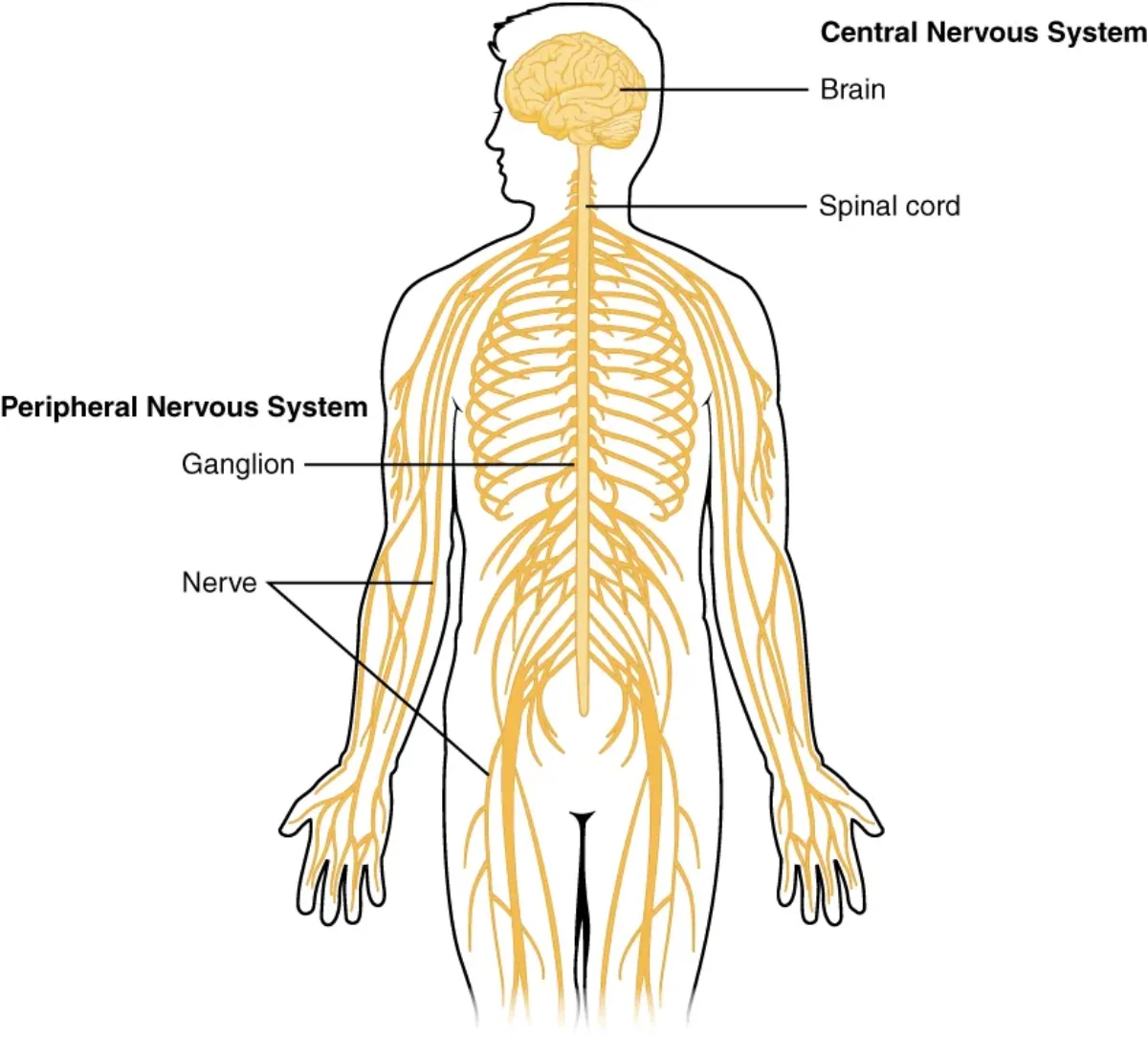
The nervous system is divided into two major structural components: the central nervous system (CNS) and the peripheral nervous system (PNS).
The CNS consists of the brain and spinal cord. It is the integration and command center of the body - where sensory information is processed, decisions are made, and motor commands originate. The CNS is protected by bone (skull and vertebral column), meninges (three protective membrane layers), and cerebrospinal fluid (CSF).
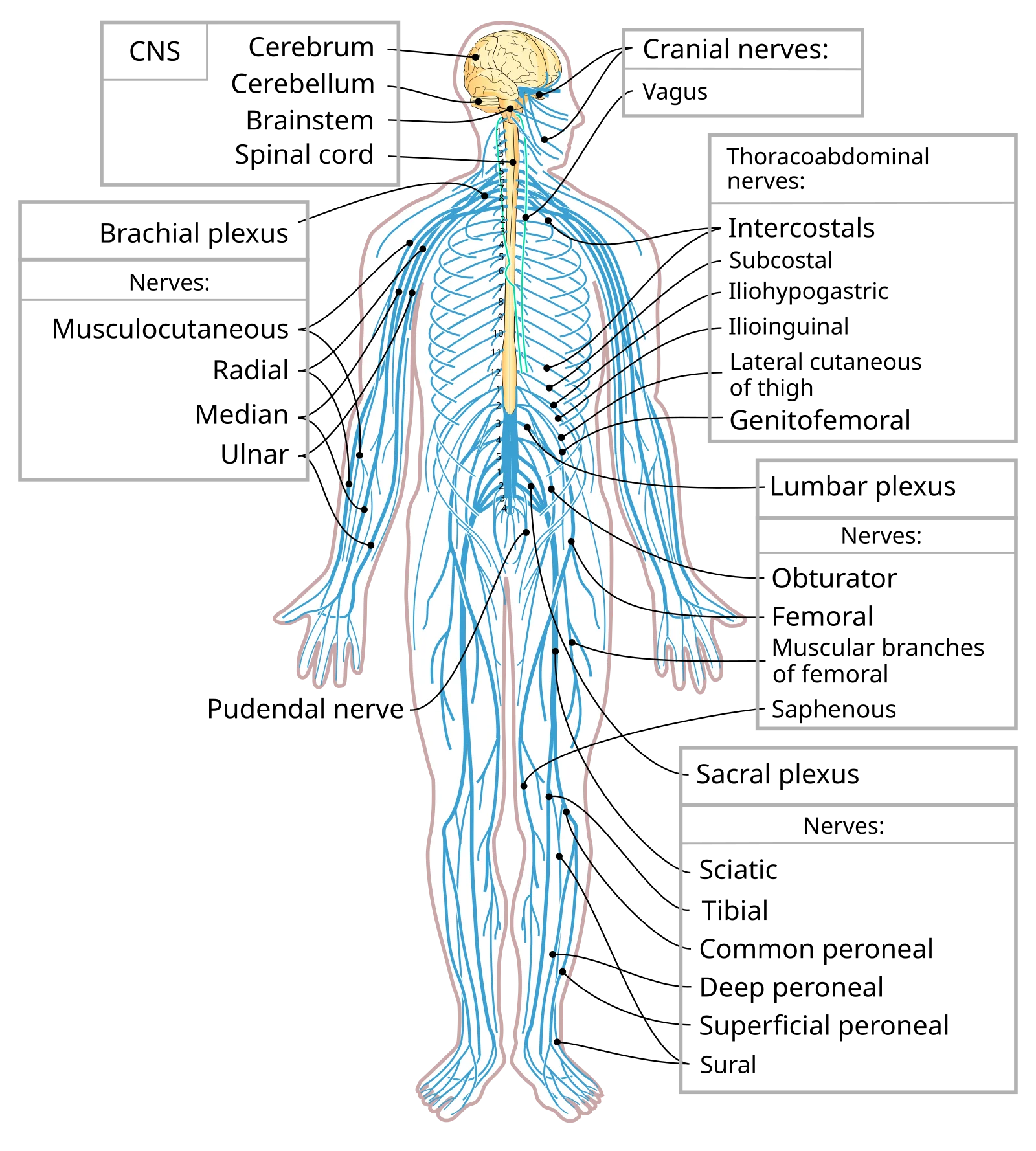
The PNS includes everything outside the brain and spinal cord. This means all 12 pairs of cranial nerves, 31 pairs of spinal nerves, ganglia (clusters of neuron cell bodies outside the CNS), and the extensive network of peripheral nerve fibers that reach every tissue in the body.
| Feature | Central Nervous System (CNS) | Peripheral Nervous System (PNS) |
|---|---|---|
| Components | Brain and spinal cord | Cranial nerves, spinal nerves, ganglia |
| Protection | Bone, meninges, CSF | Connective tissue sheaths (endoneurium, perineurium, epineurium) |
| Myelinating cell | Oligodendrocytes | Schwann cells |
| Regeneration | Very limited | Limited but possible (PNS axons can regrow) |
| Immune cell | Microglia | Macrophages |
PNS Subdivisions: Somatic, Autonomic, and Enteric
The PNS is further divided into functional subdivisions based on what it controls.
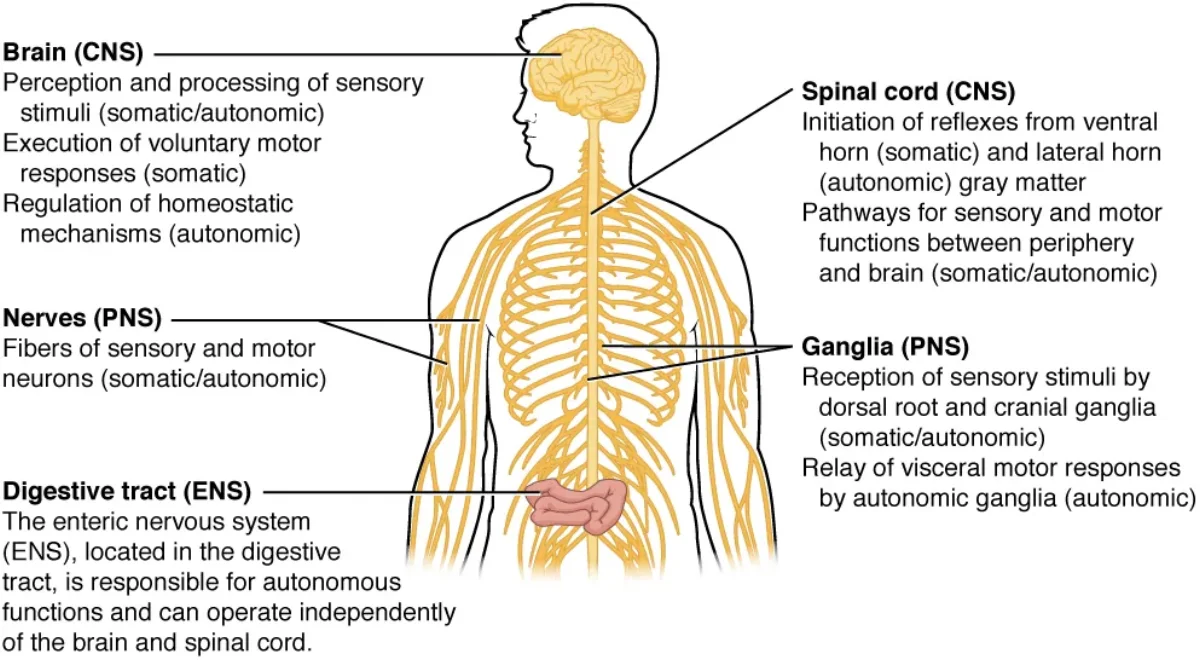
The somatic nervous system controls voluntary movements. It carries motor commands to skeletal muscles and returns sensory information from the skin, muscles, and joints. When you decide to pick up a pen, the somatic nervous system executes that command.
The autonomic nervous system (ANS) controls involuntary functions - things your body handles without conscious thought. This includes heart rate, digestion, respiratory rate, and glandular secretion. The ANS is further divided into the sympathetic (“fight or flight”), parasympathetic (“rest and digest”), and enteric divisions.
The enteric nervous system is sometimes classified separately because of its remarkable independence. It is a mesh-like network of neurons embedded in the walls of the gastrointestinal tract. It can coordinate digestion entirely on its own, which is why it is sometimes called the “second brain.” It contains roughly 100 million neurons - more than the spinal cord.
Afferent vs. Efferent Pathways
Regardless of which subdivision we are discussing, nerve signals travel in one of two directions:
Afferent neurons (sensory neurons) carry information toward the CNS. They detect stimuli - light, pressure, temperature, pain - and transmit that data to the brain and spinal cord for processing.
Efferent neurons (motor neurons) carry commands away from the CNS to effector organs such as muscles and glands. They execute the responses the CNS has determined are appropriate.
There is a third category worth knowing: interneurons reside entirely within the CNS and connect afferent and efferent neurons. They are responsible for integration, analysis, and the formation of complex circuits. The vast majority of neurons in your body are interneurons.
Putting It All Together: The Reflex Arc
The simplest example of nervous system organization in action is the reflex arc. When you touch a hot stove:
- Sensory receptors in your skin detect the heat.
- An afferent neuron transmits the signal through a dorsal root into the spinal cord (CNS).
- An interneuron in the spinal cord relays the signal directly to a motor neuron - no brain involvement needed.
- An efferent neuron exits through a ventral root and stimulates your arm muscles to pull away.
This entire process takes a fraction of a second. The signal also travels up to the brain so you consciously register the pain, but the reflex withdrawal happens before you even “feel” it.