
Aldehyde Oxidation
Aldehydes are easily oxidized to carboxylic acids because the aldehyde carbon still has a C-H bond that can be abstracted. Ketones, in contrast, have no C-H on the carbonyl carbon and therefore cannot be oxidized at that position without breaking a C-C bond. This selectivity difference - aldehydes oxidize easily, ketones do not - is the basis of several classic laboratory tests.
The Aldehyde-to-Carboxylic Acid Conversion
Every aldehyde oxidation goes through the same intermediate: the hydrate (gem-diol, covered in Section 6.5). The gem-diol has a C-H bond that the oxidant can pull off, along with one of the hydroxyls, giving a carboxylic acid:
RCHO + H₂O ⇌ RCH(OH)₂ → RCOOH + H⁻ (hydride captured by oxidant)
Because the gem-diol is the oxidation intermediate, any oxidant that works with alcohols will oxidize the aldehyde (via its hydrate). The exception: PCC operates in water-free conditions, so the hydrate does not form, and oxidation stops at the aldehyde. For all other oxidants with water present, the aldehyde is quickly oxidized further to the carboxylic acid.
Tollens’ Reagent: The Silver Mirror Test
Tollens’ reagent is an ammoniacal silver solution: Ag(NH₃)₂⁺ OH⁻. Silver ion is the oxidant; aldehydes reduce Ag⁺ to metallic silver, which deposits as a shiny mirror on the inside of the test tube.
RCHO + 2 Ag(NH₃)₂⁺ + 3 OH⁻ → RCOO⁻ + 2 Ag⁰ (silver mirror) + 4 NH₃ + 2 H₂O
The test is specific for aldehydes. Ketones give NO reaction (no silver mirror). This makes Tollens’ the classic way to distinguish aldehyde from ketone in a blind sample.
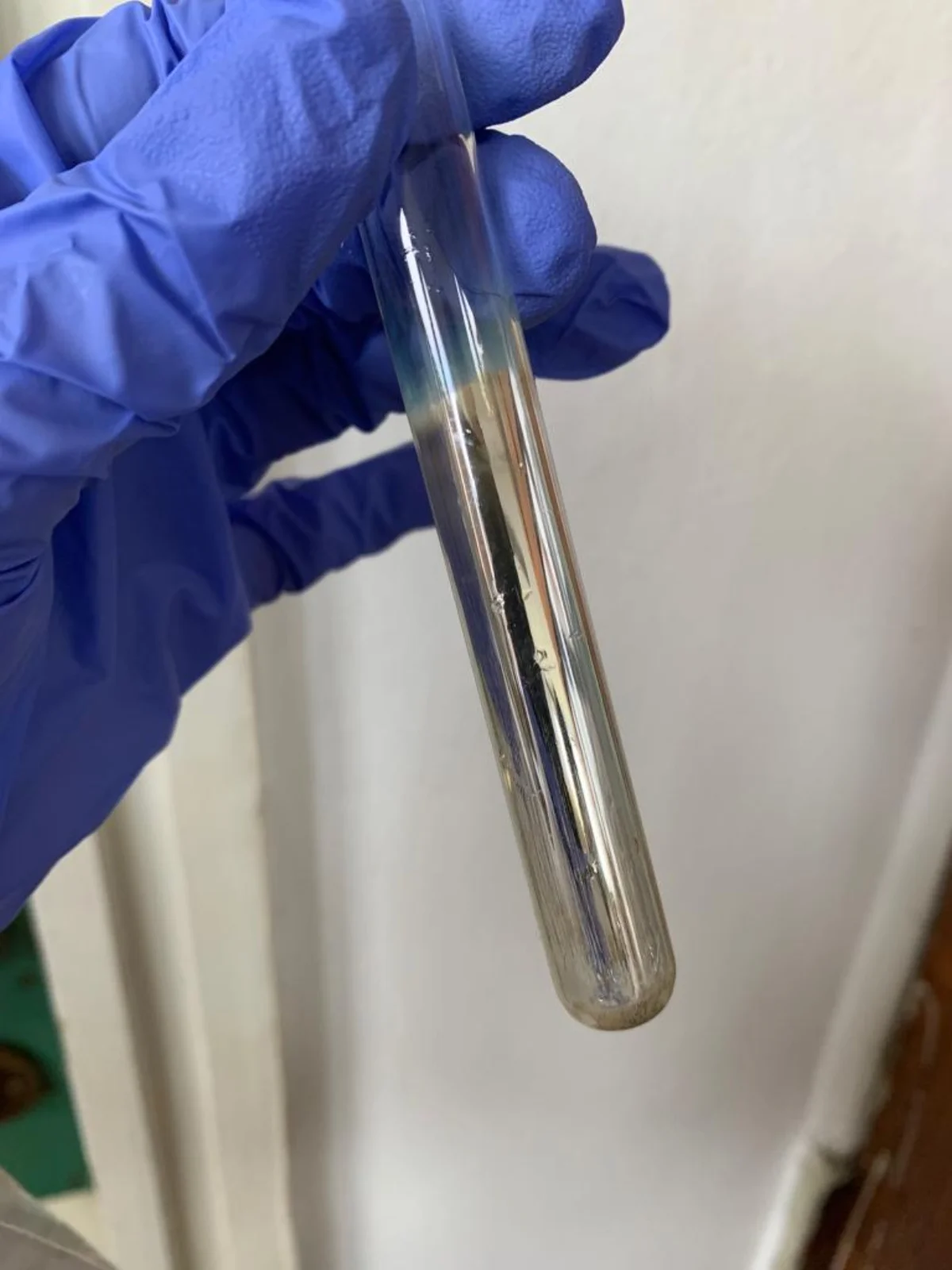
Note: sugars with free anomeric hydroxyls (reducing sugars like glucose, maltose, fructose) also give a positive Tollens’ test because they are in equilibrium with their open-chain aldehyde form. Sucrose does not (both anomeric centers are tied up in the glycosidic bond), so sucrose is a non-reducing sugar.
Jones Reagent (H₂CrO₄ / H₂SO₄ / acetone)
Jones reagent is chromic acid in acidic aqueous acetone. It oxidizes:
- Primary alcohols → carboxylic acids.
- Secondary alcohols → ketones.
- Aldehydes → carboxylic acids (via the hydrate).
Ketones do not react with Jones under normal conditions.
KMnO₄ (Potassium Permanganate)
Hot concentrated KMnO₄ is a very strong oxidant. It oxidizes:
- Primary alcohols → carboxylic acids.
- Secondary alcohols → ketones.
- Aldehydes → carboxylic acids.
- Alkenes → 1,2-diols (cold, dilute, basic) OR cleaves alkenes to carbonyls/carboxylic acids (hot, concentrated).
- Toluene side chains → benzoic acid (via methyl group oxidation).
KMnO₄ is rarely a selective choice - it oxidizes almost everything. Used when you want aggressive oxidation to a carboxylic acid.
Peracid Oxidation (Baeyer-Villiger)
A specialized oxidation: ketones can be converted to esters via the Baeyer-Villiger oxidation using a peracid (like mCPBA, meta-chloroperoxybenzoic acid). The mechanism involves insertion of an oxygen between one of the alkyl groups and the carbonyl carbon. The migration preference is:
tertiary > secondary > phenyl > primary > methyl
Baeyer-Villiger is how you can convert a ketone into an ester directly - useful when other synthetic routes are blocked. It is occasionally on the MCAT but not a high-frequency topic.
Why Ketones Resist Oxidation
Ketones have no C-H bond on the carbonyl carbon (both alpha carbons have C-R bonds, not C-H, assuming the carbonyl is NOT at the end of a chain). Oxidation to a carboxylic acid would require breaking a C-C bond - which is much harder than breaking a C-H bond.
Harsh oxidants (hot concentrated KMnO₄, strong acid at high temperature) CAN eventually break C-C bonds and cleave ketones to two carboxylic acids, but this is not standard practice.
For MCAT purposes: aldehydes oxidize easily; ketones do not oxidize under ordinary conditions.
Biological Aldehyde Oxidation
In biology, aldehydes are oxidized by aldehyde dehydrogenase using NAD⁺ as the hydride acceptor:
Aldehyde + NAD⁺ + H₂O → Carboxylate + NADH + H⁺
This is essentially the biological version of Tollens’ or Jones (using a hydride-accepting cofactor instead of silver or chromium). The liver uses this enzyme in alcohol metabolism: ethanol → acetaldehyde (by alcohol dehydrogenase) → acetate (by aldehyde dehydrogenase).
People with a variant aldehyde dehydrogenase (ALDH2*2, common in East Asian populations) accumulate acetaldehyde after drinking alcohol, producing the characteristic flush, headache, and nausea. The enzymatic mechanism mirrors the chemistry of lab oxidation.