
The Endocrine System
The endocrine system works alongside the nervous system to control behavior, but on a slower timescale. Nervous system = fast, targeted (neurotransmitters across a synapse). Endocrine system = slow, body-wide (hormones through the blood). Together they coordinate physiology.
Hormones: Three Types
- Peptide/protein hormones. Insulin, growth hormone, oxytocin. Water-soluble, bind cell-surface receptors, trigger second-messenger cascades inside the cell.
- Steroid hormones. Testosterone, estrogen, progesterone, cortisol. Lipid-soluble, pass directly through the plasma membrane, bind intracellular receptors that act as transcription factors.
- Tyrosine derivatives. Thyroid hormones (T3, T4) and catecholamines (epinephrine, norepinephrine). Made from the amino acid tyrosine.
The Hypothalamus-Pituitary Axis
The hypothalamus is the bridge between the nervous and endocrine systems. It controls the pituitary gland (“master gland”), which sits just below it.
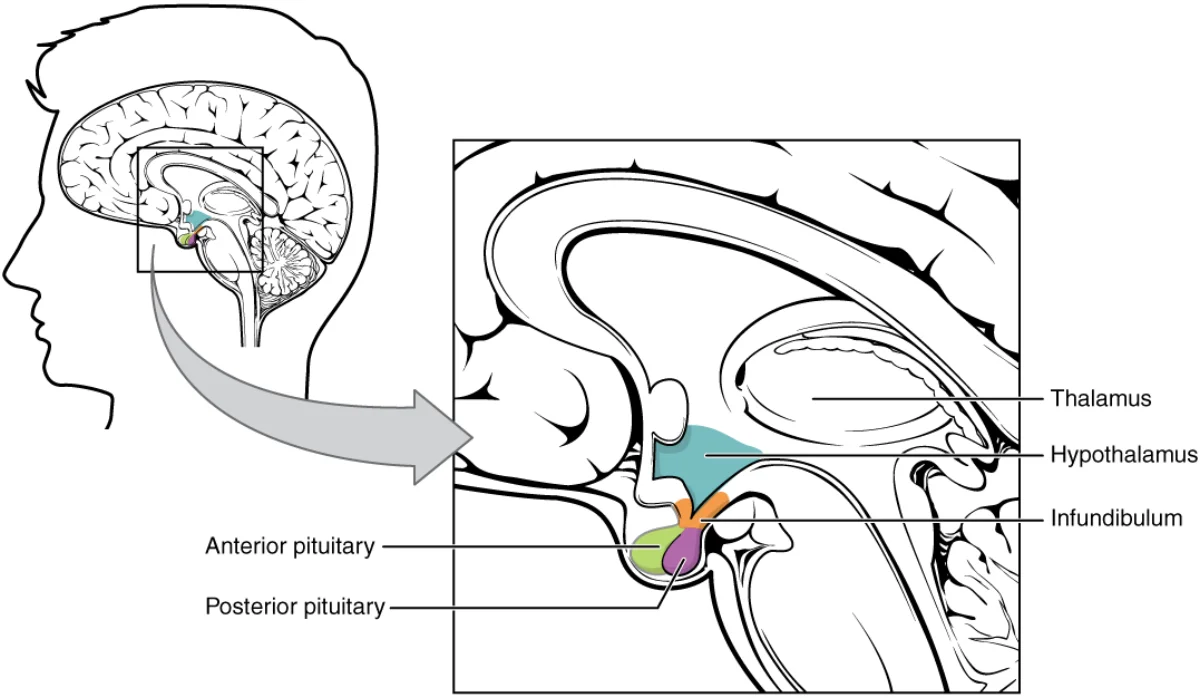
Anterior Pituitary
Releases hormones in response to releasing factors from the hypothalamus. Mnemonic: FLAT PEG:
- FSH - follicle-stimulating hormone (gonads)
- LH - luteinizing hormone (gonads)
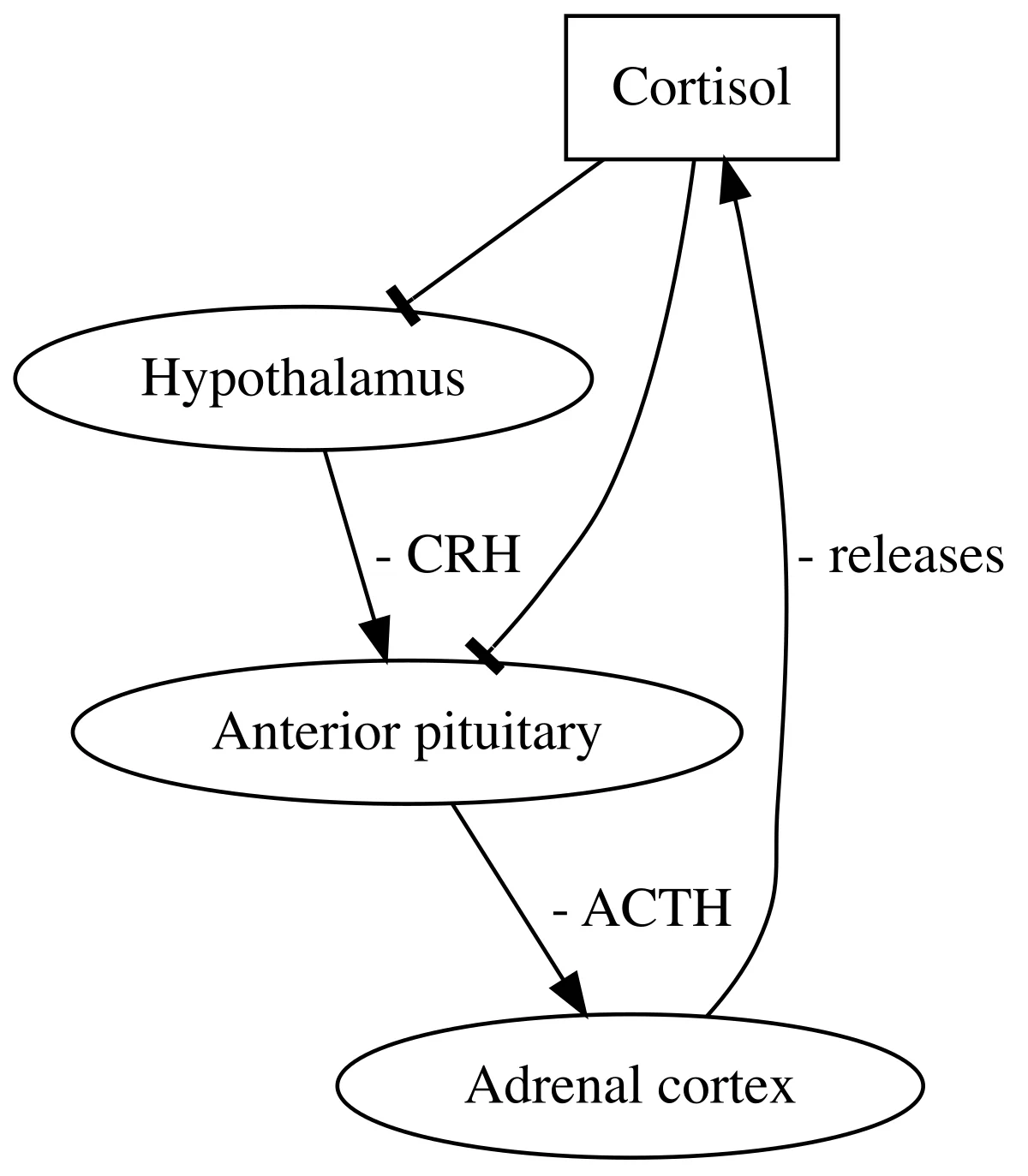
- ACTH - adrenocorticotropic hormone (adrenal cortex → cortisol)
- TSH - thyroid-stimulating hormone (thyroid)
- Prolactin - milk production
- Endorphins - pain modulation
- GH - growth hormone (body growth, triggers adolescent growth spurt)
Posterior Pituitary
Releases hormones produced in the hypothalamus (doesn’t make its own). Two main hormones:
- ADH (antidiuretic hormone/vasopressin) - water retention by the kidneys.
- Oxytocin - uterine contraction during labor, milk letdown, and social bonding.
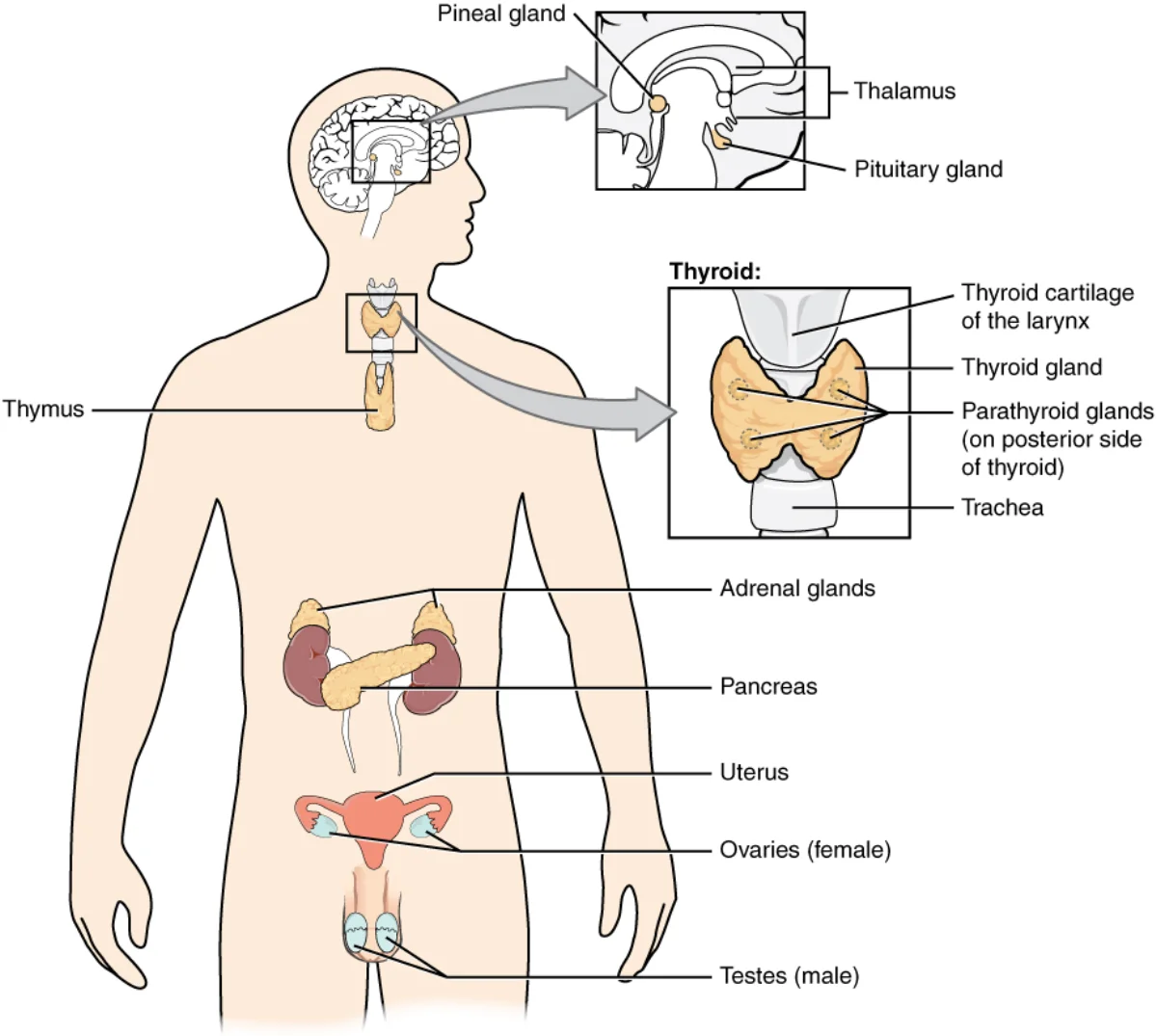
Other Endocrine Glands
Thyroid
- T3 and T4 (triiodothyronine and thyroxine) regulate metabolic rate and growth.
- Hypothyroidism → fatigue, weight gain, depression.
- Hyperthyroidism → anxiety, weight loss, heart palpitations.
- Controlled by TSH from the anterior pituitary.
Parathyroid
- Four glands on the back of the thyroid.
- Release parathyroid hormone (PTH) to regulate calcium levels.
Adrenal Glands
Each sits on top of a kidney. Two layers, different hormones:
- Adrenal medulla (inner) - releases catecholamines: epinephrine and norepinephrine. Fast stress response.
- Adrenal cortex (outer) - releases steroids including cortisol (glucocorticoid). Slower, sustained stress response. Also releases aldosterone (mineralocorticoid, salt/water balance) and sex steroids.
Mnemonic: “Cortisol from the CORTex.”
Gonads
- Ovaries: estrogen and progesterone; also produce eggs.
- Testes: testosterone; also produce sperm.
- Stimulated by LH and FSH from the anterior pituitary.
Pancreas
- Insulin (lowers blood glucose) and glucagon (raises blood glucose).
- Unusually, the pancreas is NOT controlled by the pituitary. Its hormone release is triggered directly by blood glucose.
Negative Feedback Loops
Most endocrine regulation works by negative feedback - the end product of a pathway inhibits its own production. Classic example, thyroid regulation:
- Hypothalamus → TRH → anterior pituitary
- Anterior pituitary → TSH → thyroid
- Thyroid → T3, T4 → tissues
- T3 and T4 inhibit TRH and TSH → loop turns itself off
This stable feedback keeps hormone levels within a narrow range. When the loop breaks (e.g., autoimmune destruction of the thyroid), the feedback fails, and levels of TSH skyrocket trying to rescue T3/T4 output.
Positive feedback loops do exist but are rare. Example: oxytocin during labor - uterine stretching triggers oxytocin release, which triggers more contractions, which stretch more, until delivery. Then the loop stops.