
Hypothalamus & Pituitary
If the endocrine system is a corporation, the hypothalamus is the CEO and the pituitary gland is middle management. The hypothalamus receives information from the nervous system - body temperature, blood osmolarity, stress signals, circadian rhythms - and translates that neural information into hormonal commands. The pituitary gland receives those commands and delegates them to the appropriate endocrine organ.
This hypothalamus-pituitary axis is the master control system for nearly every hormonal pathway in the body. Understanding it is not optional for the MCAT - it is the framework that connects thyroid, adrenal, gonadal, and growth hormone regulation into a single logical system.
The Hypothalamus: Where Nervous Meets Endocrine
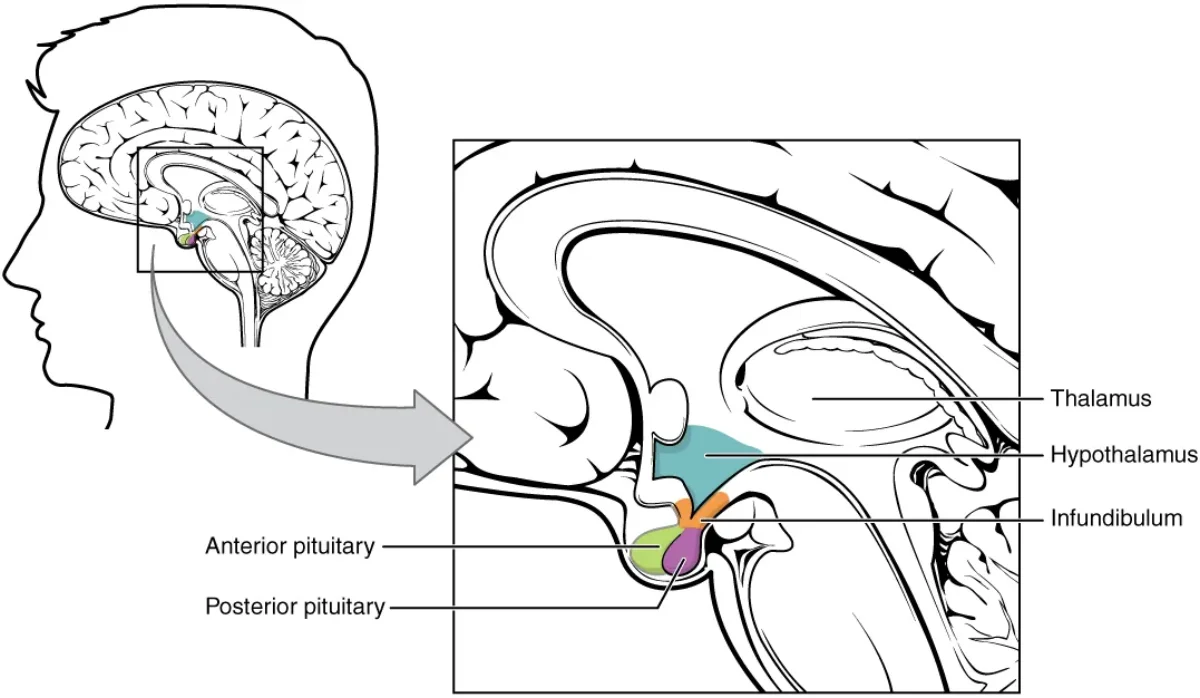
The hypothalamus is a small region at the base of the brain, sitting just above the pituitary gland. It is the critical link between the nervous system and the endocrine system - a neuroendocrine organ.
The hypothalamus produces releasing hormones and inhibiting hormones that travel to the anterior pituitary through a specialized blood vessel network called the hypophyseal portal system. This portal system is a direct vascular connection - hypothalamic hormones travel a very short distance through these portal vessels and arrive at the anterior pituitary in high concentrations, ensuring precise control.
Key hypothalamic hormones:
- GnRH (gonadotropin-releasing hormone) - stimulates FSH and LH release
- TRH (thyrotropin-releasing hormone) - stimulates TSH release
- CRH (corticotropin-releasing hormone) - stimulates ACTH release
- GHRH (growth hormone-releasing hormone) - stimulates GH release
- Somatostatin (growth hormone-inhibiting hormone) - inhibits GH (and TSH) release
- Dopamine (prolactin-inhibiting factor) - inhibits prolactin release
The Anterior Pituitary: FLAT PEG
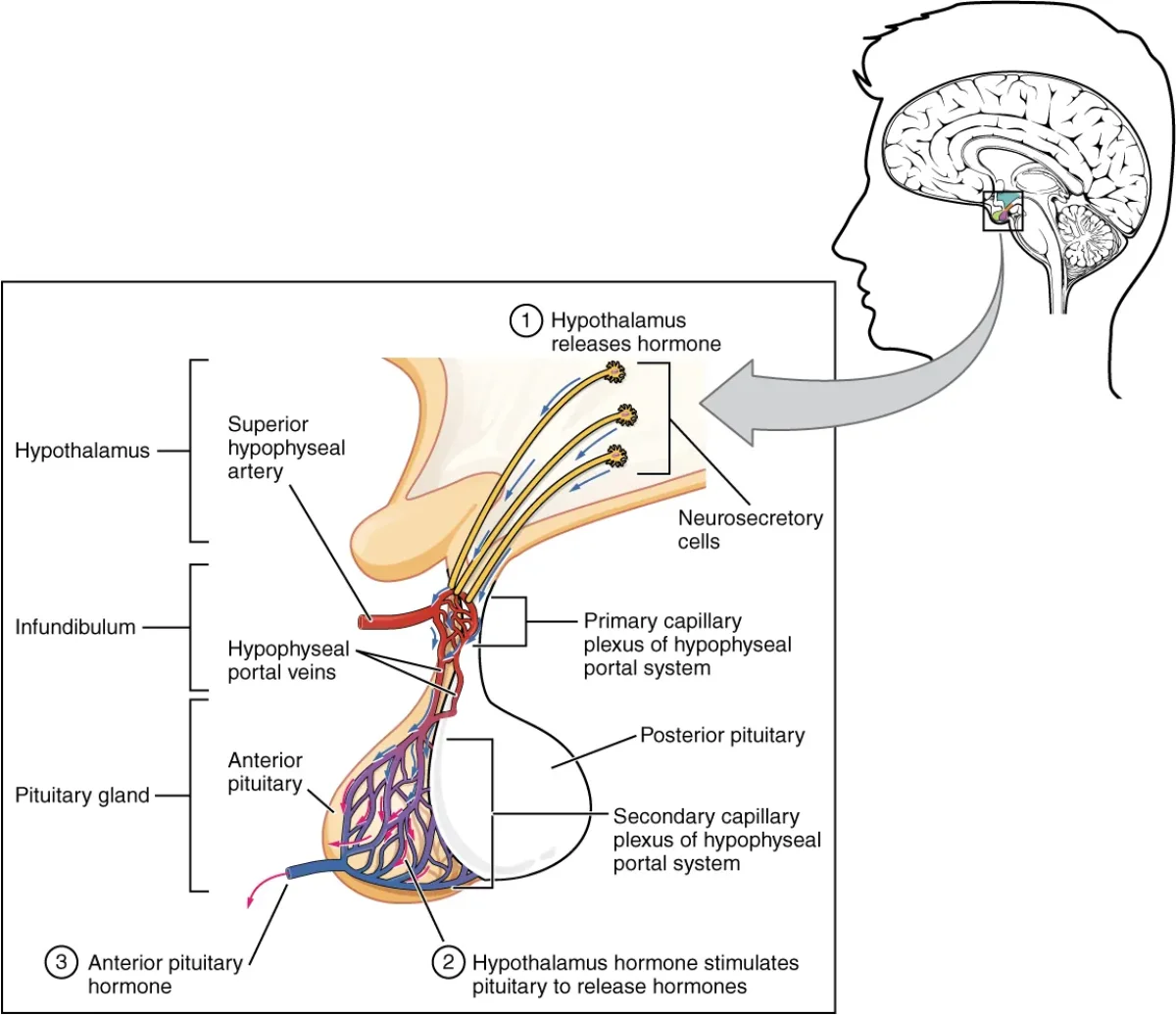
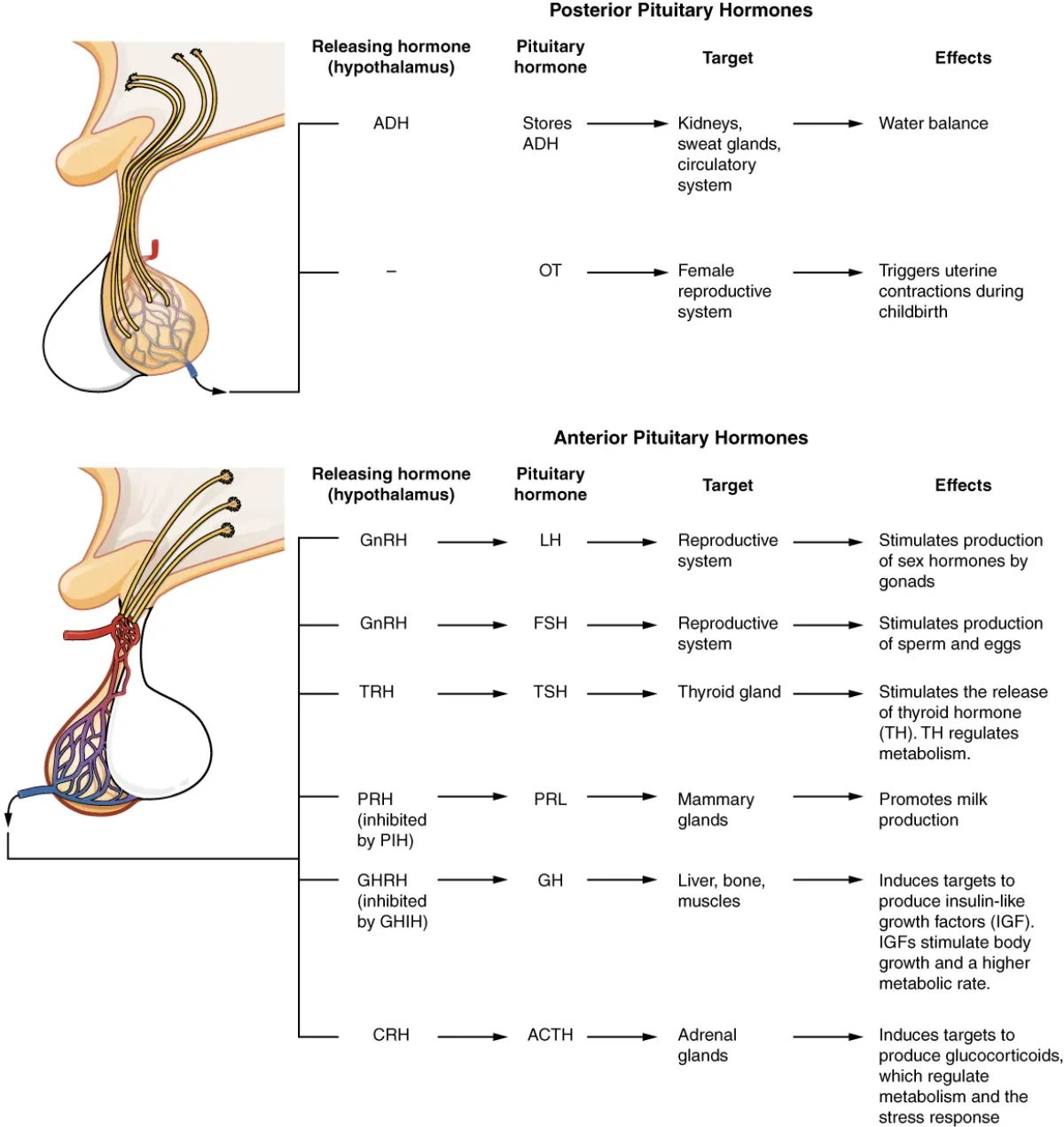
The anterior pituitary (adenohypophysis) contains five types of secretory cells, each producing specific hormones. The anterior pituitary synthesizes its own hormones in response to hypothalamic signals.
The Tropic Hormones (FLAT)
FSH (Follicle-Stimulating Hormone) - targets the gonads. In females, FSH stimulates growth of ovarian follicles and estrogen production by granulosa cells. In males, FSH acts on Sertoli cells in the seminiferous tubules to support spermatogenesis. Regulated by GnRH from the hypothalamus, with negative feedback from estrogen and inhibin.
LH (Luteinizing Hormone) - also targets the gonads. In females, an LH surge triggers ovulation at mid-cycle and supports the corpus luteum (which produces progesterone). In males, LH stimulates Leydig cells in the interstitial tissue of the testes to produce testosterone. Regulated by GnRH, with negative feedback from sex hormones.
ACTH (Adrenocorticotropic Hormone) - targets the adrenal cortex, specifically the zona fasciculata, to stimulate cortisol production. ACTH binds to GPCRs on adrenal cortical cells and activates the cAMP pathway. Regulated by CRH from the hypothalamus, with negative feedback from cortisol. This is the HPA axis (Hypothalamic-Pituitary-Adrenal axis).
TSH (Thyroid-Stimulating Hormone) - targets the thyroid gland to stimulate production and release of T3 and T4. Regulated by TRH from the hypothalamus, with negative feedback from circulating thyroid hormones. This is the HPT axis (Hypothalamic-Pituitary-Thyroid axis).
The Direct Hormones (PEG)
Prolactin - acts directly on mammary gland tissue to stimulate milk production. Under tonic inhibitory control by dopamine from the hypothalamus. During breastfeeding, suckling reduces dopamine release, allowing prolactin to rise - a positive feedback loop that continues as long as the infant nurses.
Endorphins - peptide hormones that bind to opioid receptors in the brain to reduce pain perception and produce feelings of well-being. Released during exercise, stress, and pain. The “runner’s high” is largely mediated by endorphins.
Growth Hormone (GH) - also called somatotropin. Acts on the liver to stimulate production of IGF-1 (insulin-like growth factor 1), which mediates most of GH’s growth-promoting effects: bone growth at epiphyseal plates, muscle mass increase, protein synthesis. GH also has direct metabolic effects - it raises blood glucose (anti-insulin effect), promotes lipolysis, and stimulates gluconeogenesis.
GH release is pulsatile - it peaks during deep sleep, exercise, puberty, and hypoglycemia. It is stimulated by GHRH and inhibited by somatostatin and IGF-1 (negative feedback).
The Posterior Pituitary: Oxytocin and ADH
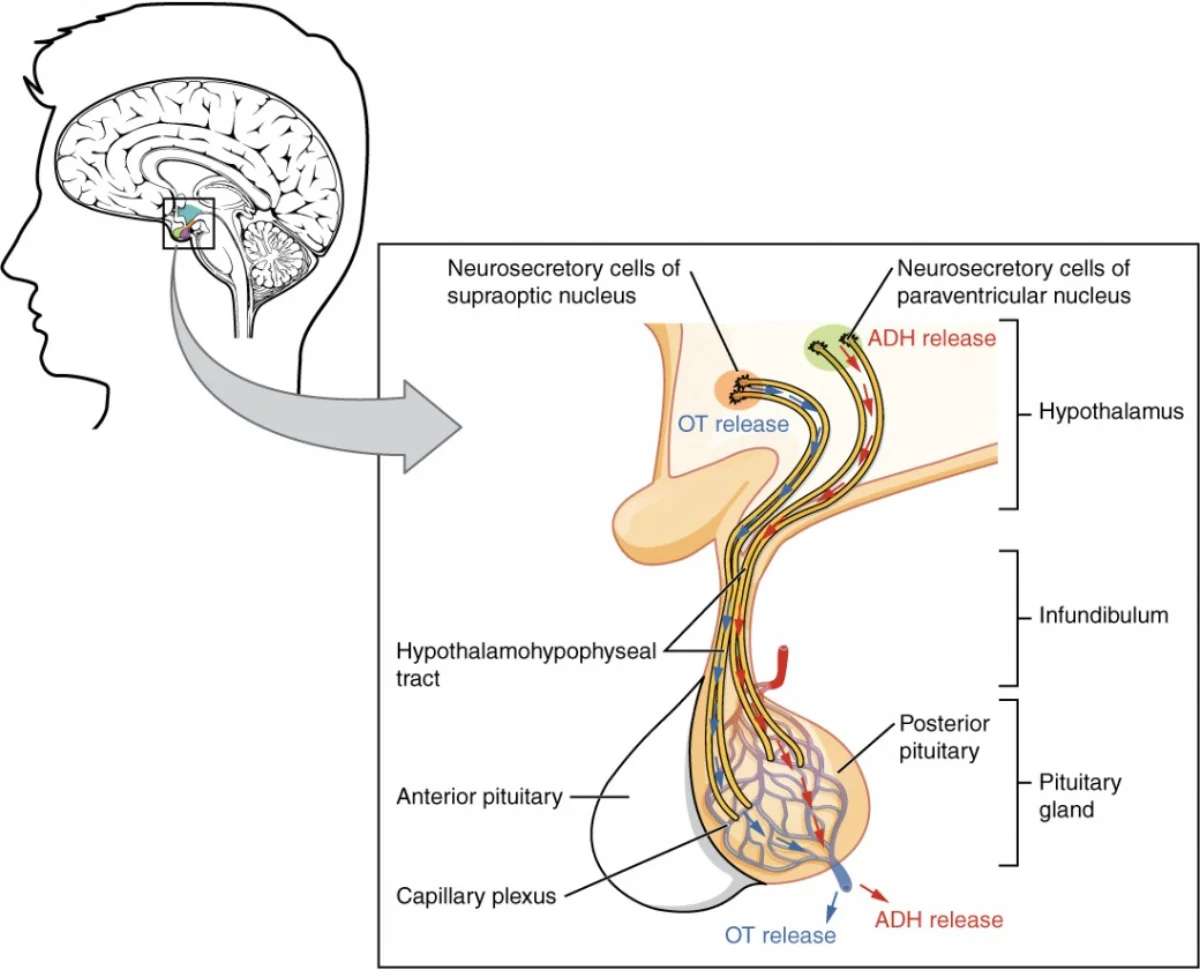
The posterior pituitary (neurohypophysis) is fundamentally different from the anterior pituitary. It does not synthesize any hormones. Instead, it stores and releases hormones that were made in the hypothalamus.
Neurons in the hypothalamus (specifically in the supraoptic and paraventricular nuclei) synthesize oxytocin and ADH in their cell bodies. These hormones travel down the axons of these neurons and are stored in the axon terminals within the posterior pituitary. When the neurons fire, the hormones are released directly into the bloodstream.
Oxytocin - stimulates uterine contractions during labor and milk ejection (letdown reflex) during breastfeeding. Also involved in social bonding and trust. During labor, oxytocin operates via a positive feedback loop: contractions push the baby’s head against the cervix, which signals more oxytocin release, which causes stronger contractions, which pushes harder on the cervix. The loop breaks when the baby is delivered and the stimulus is removed.
ADH (Antidiuretic Hormone) - also called vasopressin. Released in response to high blood osmolarity (detected by osmoreceptors in the hypothalamus) or low blood volume. ADH acts on the kidneys’ collecting ducts by binding to V2 receptors, which triggers insertion of aquaporin-2 channels into the cell membranes. This increases water reabsorption, concentrates the urine, and dilutes the blood. ADH also causes vasoconstriction (via V1 receptors on blood vessels), raising blood pressure. Alcohol inhibits ADH release - which is why drinking alcohol increases urine output and can lead to dehydration.
| Gland | Hormones | Targets | Key Regulators |
|---|---|---|---|
| Anterior pituitary | FSH, LH | Gonads | GnRH (+), sex hormones (-) |
| Anterior pituitary | ACTH | Adrenal cortex | CRH (+), cortisol (-) |
| Anterior pituitary | TSH | Thyroid | TRH (+), T3/T4 (-) |
| Anterior pituitary | GH | Liver, bone, muscle | GHRH (+), somatostatin (-), IGF-1 (-) |
| Anterior pituitary | Prolactin | Mammary glands | Dopamine (-), suckling (+) |
| Anterior pituitary | Endorphins | Brain (opioid receptors) | Stress, exercise |
| Posterior pituitary | Oxytocin | Uterus, mammary glands | Cervical stretch, suckling |
| Posterior pituitary | ADH | Kidneys, blood vessels | High osmolarity (+), low volume (+) |