
Prenatal and Childhood Development
Human development begins with one fertilized cell and ends, roughly nine months later, with a walking-talking toddler not many years after that. This section hits the MCAT-relevant highlights of how that journey unfolds, from fertilization through early childhood.
Fertilization and Embryogenesis
Fertilization (Week 2)
- Sperm travels through the female reproductive tract, binds the zona pellucida of the egg.
- Acrosome reaction - enzymes on the sperm head digest the zona pellucida.
- Sperm plasma membrane fuses with the egg’s, injecting genetic material.
- Cortical reaction - enzymes in egg cortical granules rapidly harden the zona pellucida, blocking other sperm (polyspermy block).
- Result: zygote with a full diploid genome.
Cleavage and the Morula
The zygote divides (cleavage, no growth) → 2 cells → 4 → 8 → 16 → morula (~32 cells). The outer cells begin to differ from the inner cells: trophoblast outside (will form placenta) and embryoblast inside (will form the embryo).
Blastulation
- Blastocyst forms: inner cell mass (embryoblast) + hollow cavity (blastocoel). Zona pellucida breaks down.
- Inner cell mass develops an amniotic cavity; cells split into epiblast (above) and hypoblast (below) - the bilaminar disc.
Gastrulation
Formation of the three germ layers from which all organs will develop:
- Ectoderm - outer layer. Becomes skin, nails, hair, sweat glands, nervous system, sensory organs. Mnemonic: “Ecto = outer.”
- Mesoderm - middle layer. Becomes muscles, bones, cardiovascular system, reproductive organs, kidneys. Mnemonic: “Meso = middle.”
- Endoderm - inner layer. Becomes the GI tract lining, lungs, liver, pancreas. Mnemonic: “Endo = insides.”
Neurulation
Special attention to the nervous system’s origin. A rod-like structure called the notochord forms in the mesoderm. It induces the overlying ectoderm to thicken into the neural plate. The neural plate folds up, forming the neural tube. The neural tube becomes the brain and spinal cord.
Failure to close the neural tube causes birth defects (spina bifida at the bottom, anencephaly at the top). Folic acid supplementation during early pregnancy reduces these risks - part of why prenatal vitamins matter.
Implantation and Placenta
The blastocyst (days 6-10 post-fertilization) burrows into the uterine wall (implantation). Trophoblasts differentiate into:
- Cytotrophoblast - inner layer.
- Syncytiotrophoblast - outer, forms villi that invade maternal blood vessels, eventually forming the placenta. The placenta provides oxygen and nutrients and removes waste.
Gestation Timeline
Total gestation is roughly 40 weeks, measured from the last menstrual period (LMP). Divided into trimesters or weeks.
- Week 0: LMP.
- Week 2: Fertilization.
- Weeks 2-10 (Embryonic Period): Major organ systems form. Most vulnerable to teratogens.
- Weeks 10-40 (Fetal Period): Growth and maturation.
- Before week 37: Preterm (complications increase).
- Week 24: ~50% survival if born.
- Weeks 37-42: Full term.
- After week 42: Post-term (complications).
Motor Milestones
Approximate ages (with wide individual variation - 50% of children meet each milestone before the listed age):
- 2-4 months: holds head up, chest up.
- 2-5 months: rolls over.
- 5-8 months: sits up (with support, then alone).
- 5-10 months: stands with support.
- 6-11 months: pulls up to standing.
- 7-12 months: crawls.
- 10-14 months: stands alone.
- 11-15 months: walks alone.
The sequence is highly conserved across cultures. Infants in every society roll before they crawl, crawl before they walk. The exact timing varies with individual genetics and environment (e.g., infants who sleep on their backs - safer for SIDS prevention - may crawl slightly later).
Head-to-toe (cephalocaudal) development: babies lift their heads before they move their arms, arms before legs. Proximal-to-distal: control of shoulders precedes control of fingers.
Neonatal Reflexes
Babies come pre-loaded with automatic, involuntary motor responses. Some persist (breathing, blinking, pupillary, swallowing). Others are neonatal reflexes that disappear with brain maturation:
- Rooting reflex. Stroke the cheek → baby turns head toward the stroke and opens mouth. Helps find the nipple. Disappears by 4 months.
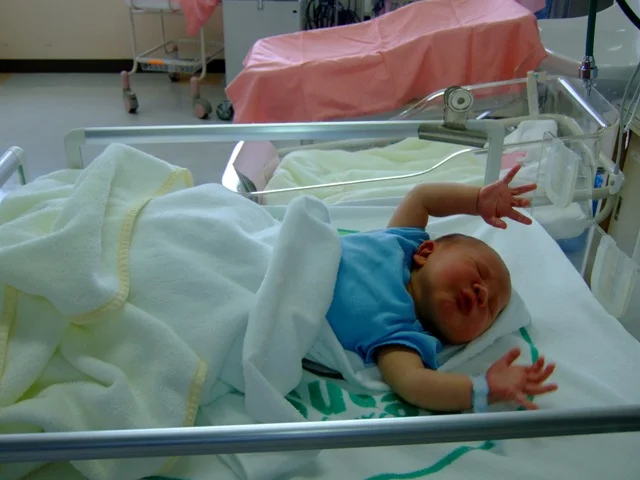
- Moro (startle) reflex. Sudden loud noise or loss of support → baby throws arms out, then brings them back. Disappears by 4-6 months.
- Babinski reflex. Stroke the sole → toes fan out and up. Disappears by ~12 months (normal response then flips to toes curling down). Re-emergence in adults is a sign of upper motor neuron damage.
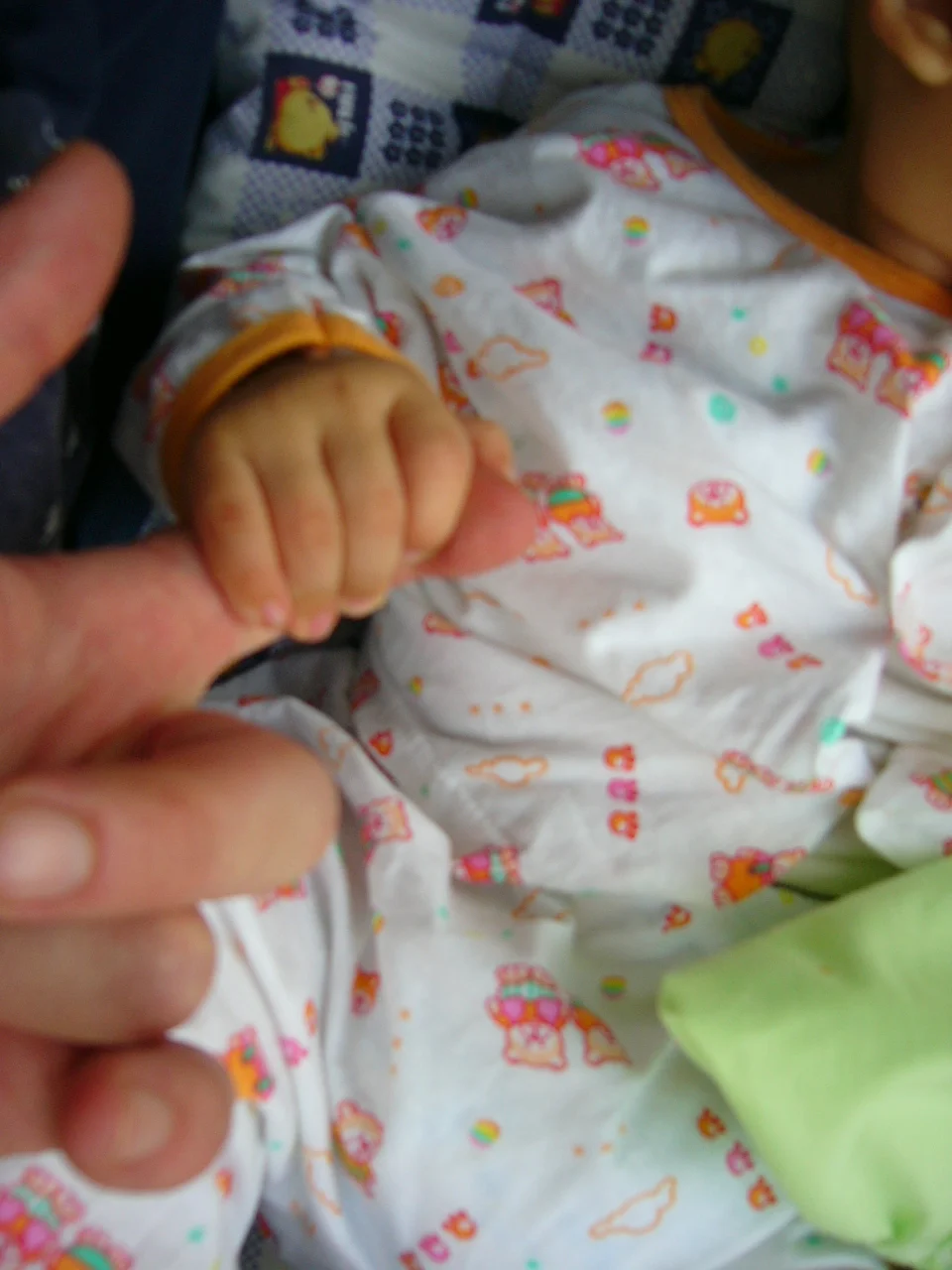
- Palmar grasp. Object touches palm → fingers close around it. Disappears by 3-4 months.
- Tonic neck reflex (fencing posture). Head turned to one side → arm on that side extends, other arm bends. Disappears by 6 months.
- Stepping reflex. Hold infant upright with feet on a surface → baby makes stepping motions. Disappears by 2 months.
- Sucking reflex. Object in mouth → baby sucks. Disappears by 4 months.
Persistence or re-emergence of these reflexes in older children or adults signals neurological problems (lack of cortical control of spinal reflexes).