
Sigma Bonds
Every bond between two atoms in organic chemistry starts with a sigma bond. It is the foundation - the first handshake between two atoms. Double bonds have one sigma and one pi. Triple bonds have one sigma and two pi. But no matter how many bonds connect two atoms, the sigma bond is always there, always first, always strongest.
How Sigma Bonds Form
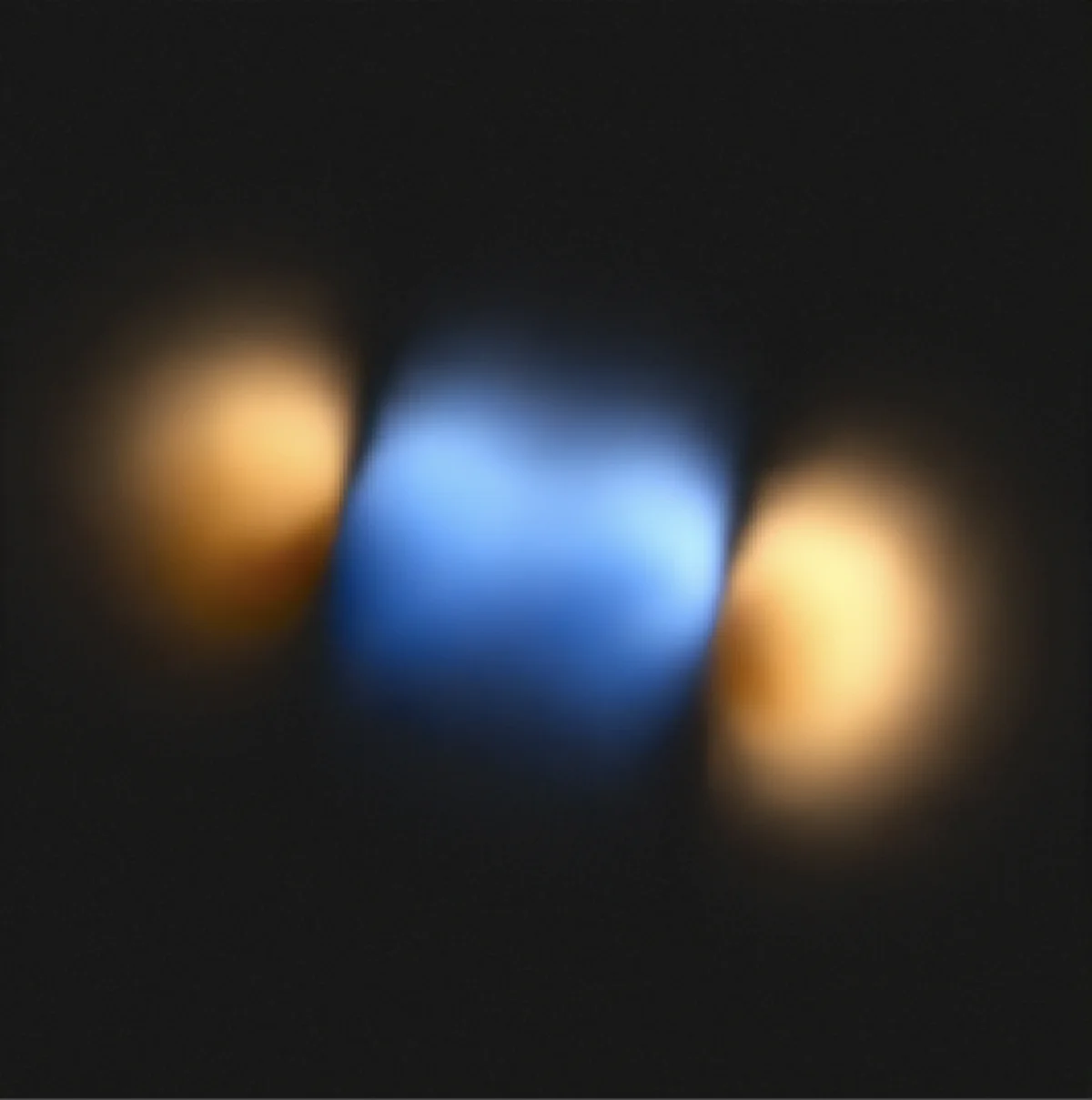
A sigma bond forms when two orbitals overlap head-on - directly along the internuclear axis (the imaginary line connecting the two nuclei). The electron density in a sigma bond is concentrated in a cylindrical region between and around this axis.
Several types of orbital overlap can create a sigma bond:
- s-s overlap: Two s orbitals overlap. Example: H-H bond in H2.
- s-sp3 overlap: An s orbital overlaps with an sp3 hybrid. Example: C-H bonds in methane.
- sp3-sp3 overlap: Two sp3 hybrids overlap head-on. Example: C-C bond in ethane.
- sp2-sp2 overlap: Two sp2 hybrids overlap head-on. Example: the sigma bond in ethene’s C=C.
- sp-sp overlap: Two sp hybrids overlap head-on. Example: the sigma bond in ethyne’s C triple bond.
- sp2-sp3 overlap: An sp2 hybrid overlaps with an sp3 hybrid. Example: the C-C bond where an alkene carbon meets a saturated carbon.
In every case, the key feature is the same: the orbitals point directly at each other along the bond axis.
Properties of Sigma Bonds
Sigma bonds have several characteristics that distinguish them from pi bonds:
1. They are strong. Head-on overlap is the most effective type of orbital overlap because it maximizes the shared electron density between the nuclei. A C-C sigma bond has a bond dissociation energy of approximately 347 kJ/mol.
2. They have cylindrical symmetry. If you could slice through a sigma bond perpendicular to the bond axis, the cross-section would be circular. Electron density is evenly distributed around the axis.
3. They allow free rotation. This is the most important property for organic chemistry. Because the electron density wraps symmetrically around the bond axis, the two atoms can rotate relative to each other without breaking the bond. Spinning one atom around the bond axis does not disrupt the overlap.
Free Rotation and Conformational Isomers
Free rotation around sigma bonds is what gives rise to conformational isomers (conformers). Ethane, for example, can rotate around its C-C sigma bond to adopt an infinite number of conformations, from perfectly staggered (lowest energy) to perfectly eclipsed (highest energy).
This rotation costs very little energy - at room temperature, molecules rotate rapidly around their sigma bonds, constantly interconverting between conformations. The energy barrier for rotation in ethane is only about 12 kJ/mol, easily overcome by thermal energy.
When Sigma Bond Rotation Is Restricted
Although sigma bonds generally allow free rotation, there are situations where rotation is effectively restricted:
- Bulky substituents: Very large groups on adjacent carbons create steric strain that makes certain rotational conformations unfavorable. The molecule spends most of its time in conformations that minimize steric clashes.
- Ring structures: Sigma bonds within rings cannot rotate freely because doing so would require breaking the ring. Cyclohexane’s ring bonds are sigma bonds, but their rotation is locked into chair, boat, and twist-boat conformations.
- Amide bonds: The C-N bond in amides has partial double-bond character due to resonance, restricting rotation. This is critical for protein structure - the peptide bond is planar because of this restricted rotation.
Counting Sigma Bonds in a Molecule
Every single bond in a molecule is a sigma bond. Every double bond contains one sigma bond (plus one pi). Every triple bond contains one sigma bond (plus two pi). This gives you a simple counting method:
Practice counting: Acetic acid (CH3COOH)
- 3 C-H bonds = 3 sigma bonds
- 1 C-C bond = 1 sigma bond
- 1 C=O bond = 1 sigma + 1 pi
- 1 C-O bond = 1 sigma bond
- 1 O-H bond = 1 sigma bond
- Total: 7 sigma bonds, 1 pi bond
Sigma Bond Strength and s Character
The strength of a sigma bond depends partly on the hybridization of the orbitals forming it. Orbitals with more s character overlap more effectively because s orbitals are closer to the nucleus and more tightly held.
| Bond type | Orbital overlap | Approximate strength |
|---|---|---|
| C(sp)-C(sp) | sp-sp | Strongest sigma |
| C(sp2)-C(sp2) | sp2-sp2 | Medium |
| C(sp3)-C(sp3) | sp3-sp3 | Weakest C-C sigma |
The trend makes sense: sp orbitals have 50% s character, so their head-on overlap is more concentrated and effective than sp3 orbitals with only 25% s character. This is why the C-C sigma bond in ethyne is shorter and stronger than the C-C sigma bond in ethane.