
Active vs. Passive Immunity
Not all immunity is created the same way. Some types you build yourself; others are borrowed. Some last a lifetime; others fade in weeks. The MCAT expects you to classify immunity along two dimensions: active vs. passive and natural vs. artificial.
The Two-by-Two Grid
The fastest way to organize immunity types:
| Natural | Artificial | |
|---|---|---|
| Active (you make your own antibodies) | Getting infected and recovering | Vaccination |
| Passive (you receive someone else’s antibodies) | Maternal antibodies (placenta and breast milk) | Injection of pre-formed antibodies (antiserum) |
Active Immunity: Building Your Own Defenses
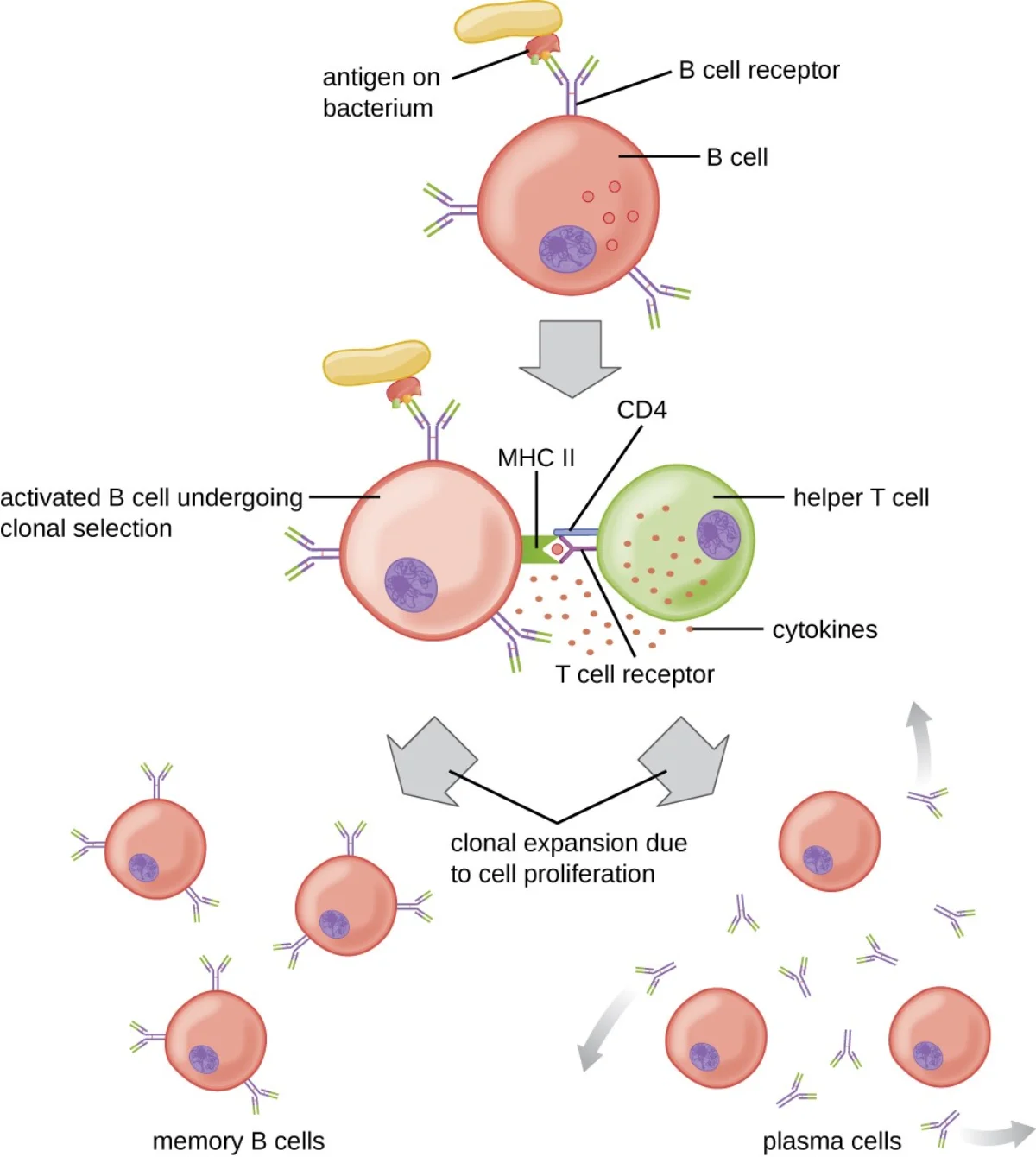
Active immunity occurs when your immune system encounters an antigen and mounts its own response, producing antibodies and memory cells.
Natural active immunity - You get infected, your immune system fights off the pathogen, and you develop lasting immunity. This is what happens when you catch chickenpox and become immune for life. The downside: you have to get sick first.
Artificial active immunity (vaccination) - A vaccine introduces a harmless version of the antigen to your immune system. Your body mounts a primary immune response and creates memory cells - without the risk of full-blown disease. When the real pathogen arrives later, the secondary response destroys it before symptoms develop.
Key features of active immunity:
- Slow to develop (days to weeks for primary response)
- Long-lasting (years to lifelong due to memory cells)
- Specific (targets one particular antigen)
- Produces memory (faster, stronger response on re-exposure)
Vaccine Types
| Vaccine Type | What It Contains | Examples | Key Detail |
|---|---|---|---|
| Live attenuated | Weakened (but living) pathogen | MMR, varicella, oral polio | Strongest immune response; cannot give to immunocompromised patients |
| Inactivated (killed) | Dead pathogen | Flu shot, rabies, hepatitis A | Safer but weaker response; may need boosters |
| Subunit/conjugate | Purified antigen (protein or polysaccharide) | Hepatitis B, HPV, pertussis (acellular) | Very safe; targets specific antigen |
| Toxoid | Inactivated toxin | Tetanus, diphtheria | Targets the toxin, not the organism itself |
| mRNA | mRNA encoding a pathogen protein | COVID-19 (Pfizer, Moderna) | Body’s cells produce the antigen temporarily |
Passive Immunity: Borrowed Protection
Passive immunity occurs when pre-formed antibodies are transferred from one individual to another. The recipient never activates their own immune system, so no memory cells are produced.
Natural passive immunity - A mother transfers antibodies to her child:
- IgG crosses the placenta during pregnancy, providing the fetus with protection
- IgA is in breast milk, protecting the infant’s GI tract mucosa
- This protection fades over ~3-6 months as maternal antibodies are degraded and not replaced
Artificial passive immunity - Pre-formed antibodies are injected into a patient:
- Antiserum/antitoxin - used for emergencies like snakebite (antivenin), rabies post-exposure, or tetanus when there is no time to wait for active immunity
- Monoclonal antibodies - engineered antibodies used to treat cancer, autoimmune diseases, and some infections
Key features of passive immunity:
- Immediate protection (works right away - antibodies are already made)
- Short-lived (weeks to months - antibodies degrade and are not replaced)
- No memory (the recipient’s immune system was never activated)
- Not specific to the recipient (antibodies were made by another organism)
Comparison Table
| Feature | Active Immunity | Passive Immunity |
|---|---|---|
| How acquired | Immune system produces own antibodies | Receives pre-formed antibodies |
| Speed of onset | Slow (days to weeks) | Immediate |
| Duration | Long (years to lifelong) | Short (weeks to months) |
| Memory cells? | Yes | No |
| Booster needed? | Sometimes (for vaccines) | Not applicable (just re-inject) |
| Natural example | Recovering from infection | Maternal IgG across placenta |
| Artificial example | Vaccination | Antiserum injection |
Herd Immunity
When a large enough percentage of a population is immune to a disease (through vaccination or prior infection), the pathogen cannot spread efficiently because it keeps encountering immune individuals. This provides indirect protection to people who are not immune (infants, immunocompromised patients, unvaccinated individuals).
The threshold percentage needed for herd immunity depends on how contagious the disease is:
- Measles (very contagious): ~95% immunity needed
- Polio (less contagious): ~80-85% immunity needed