
The Liver and Gallbladder
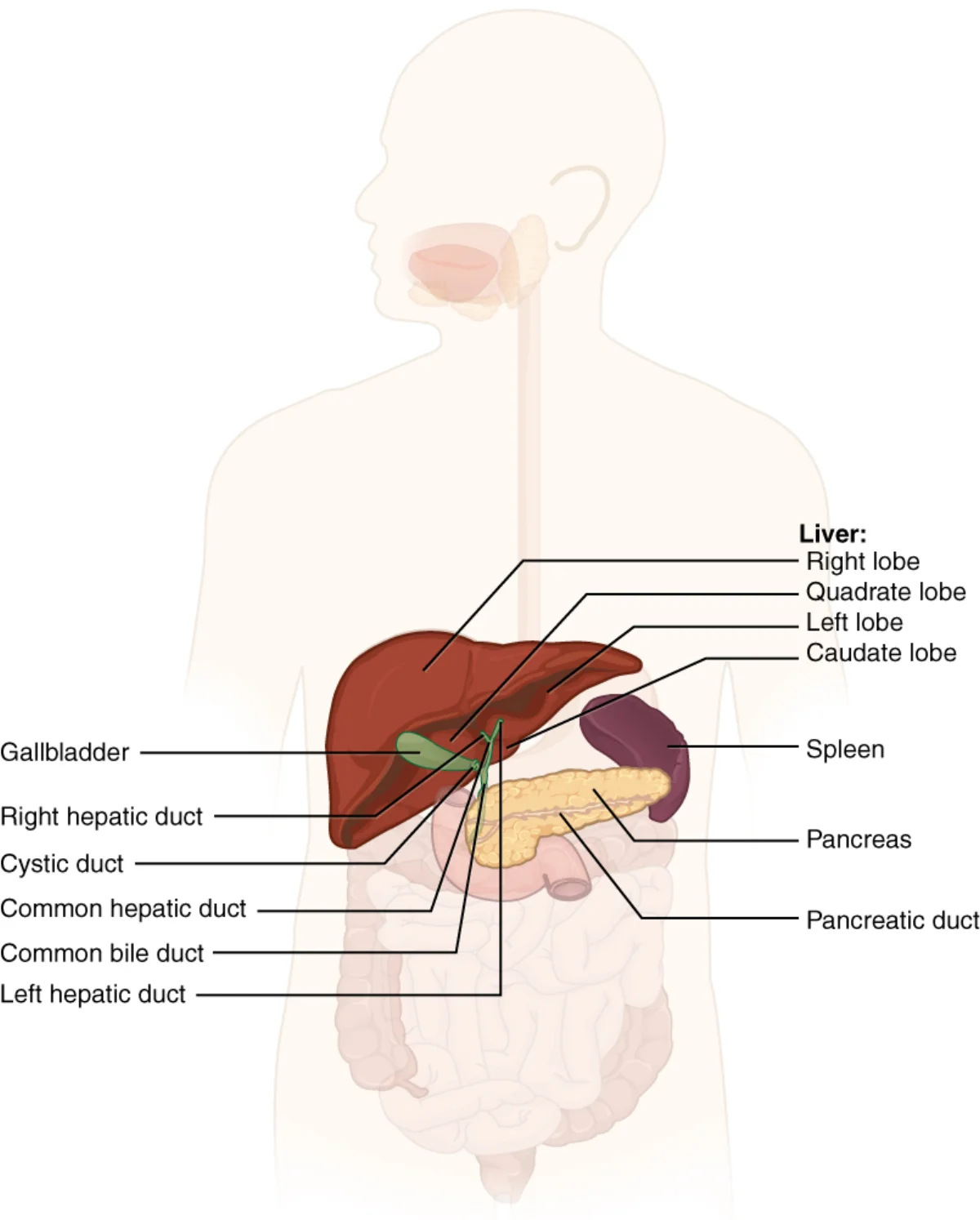
The liver is the body’s largest internal organ and the central processing hub for everything you absorb from the GI tract. The gallbladder is its sidekick - a small storage pouch that concentrates bile and squirts it into the duodenum on demand. Together, they make fat digestion possible.
Bile: Dish Soap for Fat
Bile is produced by hepatocytes (liver cells) and modified by bile duct cells. It contains:
| Component | Function |
|---|---|
| Bile salts | Amphipathic molecules that emulsify fat (the active ingredient) |
| Cholesterol | Precursor to bile salts; also excreted in bile |
| Phospholipids | Help form micelles |
| Bilirubin (conjugated) | Waste product from hemoglobin breakdown; gives bile its yellow-green color |
| Water, ions | Carrier fluid |
Critical distinction: Bile does NOT enzymatically digest fat. Emulsification is physical, not chemical - no covalent bonds are broken. Bile salts simply coat large fat globules with their amphipathic structure and split them into tiny droplets (and later micelles), increasing the surface area available for pancreatic lipase to act. Without bile, lipase can only attack the thin outer surface of a large fat glob, and fat digestion plummets. This is one of the clearest MCAT test points: bile is a detergent, not an enzyme.
The Bile Duct System
Bile flows through a branching duct system:
- Hepatocytes produce bile and secrete it into tiny bile canaliculi
- Canaliculi merge into the right and left hepatic ducts
- These join to form the common hepatic duct
- The cystic duct branches off to the gallbladder (for storage)
- Below the cystic duct junction, the common bile duct carries bile to the duodenum
- The common bile duct merges with the pancreatic duct at the ampulla of Vater
- The sphincter of Oddi controls flow into the duodenum
The Gallbladder: Storage and Concentration
Between meals, the sphincter of Oddi is closed, so bile backs up into the gallbladder via the cystic duct. The gallbladder concentrates bile by absorbing water and ions - making it 5-10x more concentrated than freshly produced hepatic bile.
When fatty chyme enters the duodenum, CCK is released. CCK causes the gallbladder to contract and the sphincter of Oddi to relax, squirting concentrated bile into the duodenum right when it is needed.
Enterohepatic Circulation: Recycling Bile
About 95% of bile salts are reabsorbed in the terminal ileum and returned to the liver via the hepatic portal vein. The liver recycles them into new bile. This recycling loop is called enterohepatic circulation, and bile salts may be reused 6-8 times per day.
The Hepatic Portal System: First Pass Through the Liver
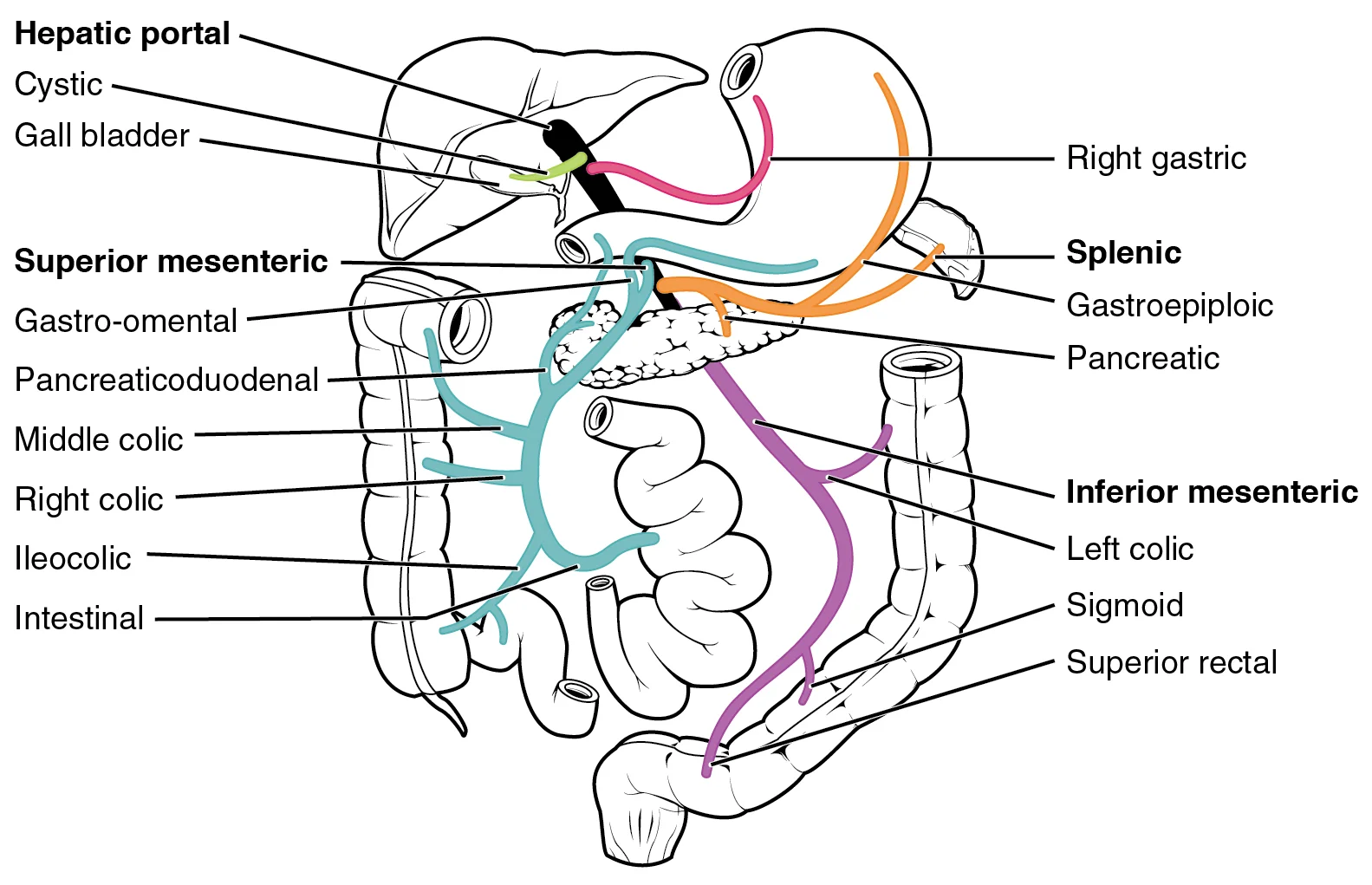
All water-soluble nutrients absorbed from the GI tract (amino acids, monosaccharides, water-soluble vitamins) enter intestinal capillaries and drain into the hepatic portal vein, which carries them directly to the liver before they enter general circulation.
This “first-pass” allows the liver to:
- Detoxify harmful substances (alcohol, drugs, ammonia)
- Store glucose as glycogen (glycogenesis) or release it when needed (glycogenolysis)
- Synthesize plasma proteins (albumin, clotting factors)
- Convert ammonia to urea (for renal excretion)
- Process absorbed nutrients before distributing them to the body
Bilirubin and Bile Pigments
Bilirubin is a yellow breakdown product of hemoglobin from old red blood cells. The liver conjugates (makes water-soluble) bilirubin and excretes it in bile. In the intestine, bacteria convert bilirubin into pigments that give stool its brown color. Some of these pigments are reabsorbed and excreted in urine, giving it a yellow color.