
Hormone Action
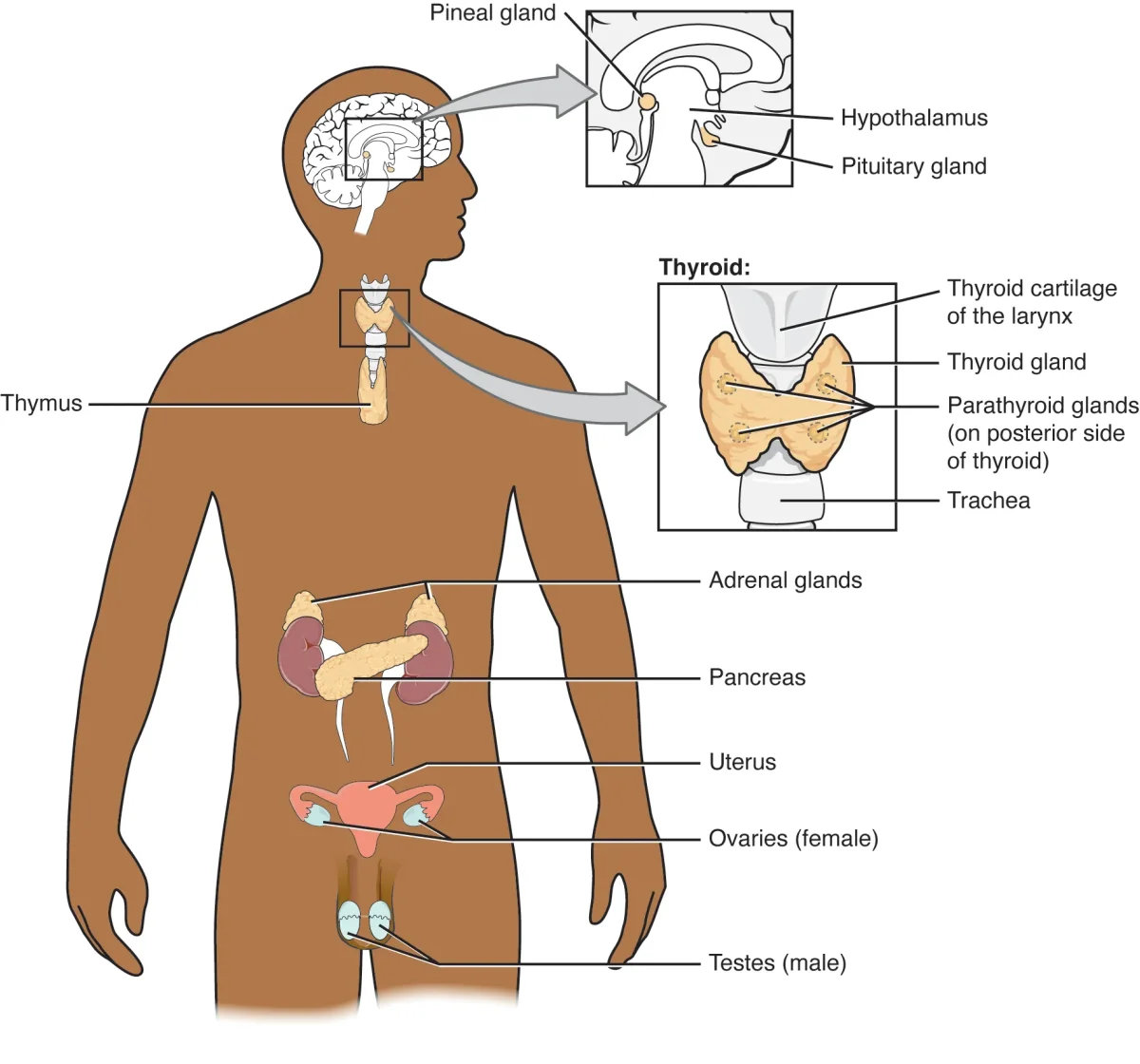
Not all hormones work the same way. A peptide hormone like insulin cannot cross a cell membrane - it has to ring the doorbell and wait for someone inside to relay the message. A steroid hormone like cortisol walks right through the front door and goes straight to the nucleus to change which genes get turned on. Understanding this difference is one of the most frequently tested concepts on the MCAT.
The key principle: a hormone’s chemical structure determines everything about how it works - how it travels in the blood, whether it can cross cell membranes, where its receptor lives, how fast it acts, and how long its effects last.
The Three Major Hormone Classes
Hormones fall into three structural categories. Each category has a predictable set of properties that you can reason through from first principles.
1. Peptide hormones are chains of amino acids - essentially small proteins. They are water-soluble (hydrophilic) because of their polar amino acid side chains. Examples include insulin, growth hormone, ADH, oxytocin, FSH, LH, ACTH, TSH, and prolactin.
2. Steroid hormones are derived from cholesterol. They are lipid-soluble (hydrophobic) because of their four-ring hydrocarbon structure. Examples include cortisol, aldosterone, testosterone, estrogen, and progesterone.
3. Amino acid-derived hormones are synthesized from single amino acids, primarily tyrosine and tryptophan. This class is tricky because it includes hormones that behave like peptide hormones AND hormones that behave like steroid hormones. Catecholamines (epinephrine, norepinephrine, dopamine) are water-soluble and act like peptide hormones. Thyroid hormones (T3, T4) are lipid-soluble and act like steroid hormones.
Peptide Hormone Signaling
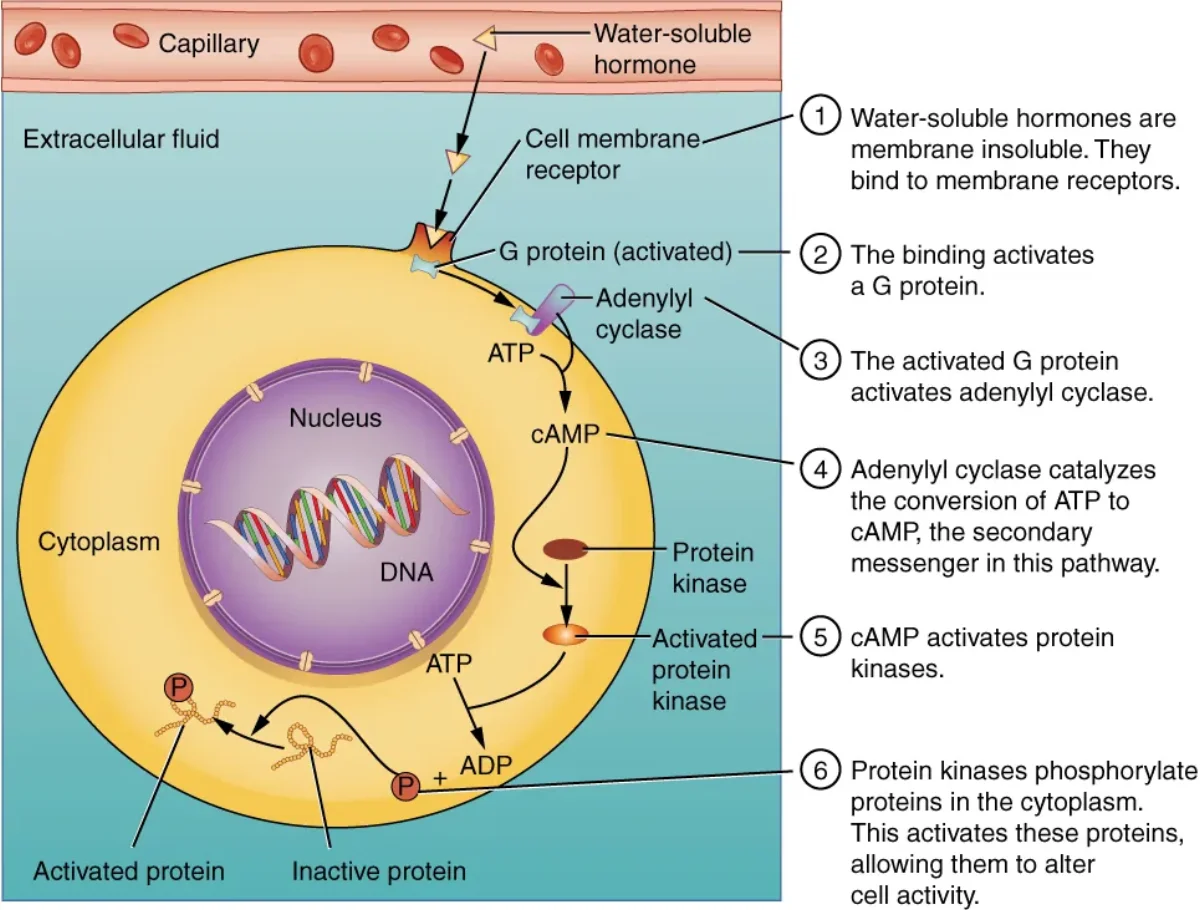
Because peptide hormones are water-soluble, they dissolve freely in blood plasma and do not need carrier proteins. However, they cannot cross the lipid bilayer of a target cell. Instead, they bind to receptors on the cell surface.
Most peptide hormone receptors are G-protein coupled receptors (GPCRs). When the hormone binds, the receptor activates a G-protein, which activates an enzyme (like adenylyl cyclase), which produces a second messenger (like cAMP), which activates downstream kinases (like protein kinase A). This cascade amplifies the signal enormously.
Other peptide hormones (like insulin) use receptor tyrosine kinases (RTKs) - the receptor itself has enzymatic activity and directly phosphorylates intracellular proteins when the hormone binds.
Key features of peptide hormone signaling:
- Fast onset (seconds to minutes) - no gene transcription required
- Short duration - effects stop when the signal cascade is deactivated
- Signal amplification - one hormone molecule can produce thousands of second messenger molecules
- Stored in vesicles - pre-made and released by exocytosis when needed
Steroid Hormone Signaling
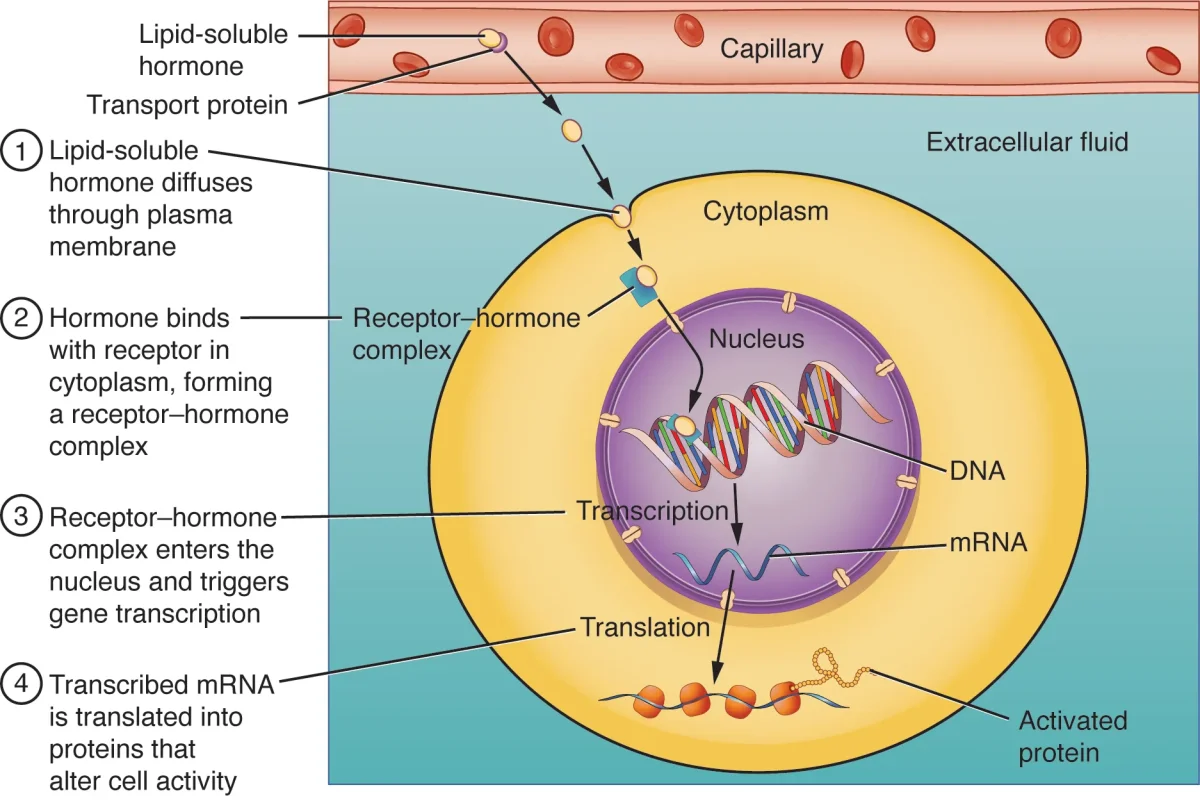
Steroid hormones are lipid-soluble, so they can diffuse directly through the cell membrane. But this lipid solubility creates a problem: they cannot dissolve in blood. They must travel bound to carrier proteins like albumin or specific binding globulins (e.g., sex hormone-binding globulin, cortisol-binding globulin).
Once a steroid hormone dissociates from its carrier and enters a target cell, it binds to an intracellular receptor - either in the cytoplasm or directly in the nucleus. The hormone-receptor complex then binds to specific DNA sequences called hormone response elements (HREs) and directly modulates gene transcription.
Key features of steroid hormone signaling:
- Slow onset (hours to days) - requires gene transcription and protein synthesis
- Long duration - effects persist because new proteins have been made
- No signal amplification at the receptor level - but gene transcription itself amplifies the response
- Not stored - synthesized on demand from cholesterol and released immediately (they diffuse right through the membrane)
Amino Acid-Derived Hormones: The Exception Class
This class is the MCAT’s favorite trick because the two subgroups behave completely differently:
Catecholamines (epinephrine, norepinephrine, dopamine) - derived from tyrosine in the adrenal medulla. Despite being modified amino acids, they are water-soluble. They bind to surface receptors (adrenergic receptors, which are GPCRs) and use second messenger cascades. They act fast - exactly like peptide hormones.
Thyroid hormones (T3, T4) - also derived from tyrosine, but in the thyroid gland with iodine incorporation. They are lipid-soluble (unusual for an amino acid derivative). They enter cells via transporter proteins, bind to nuclear receptors, and alter gene expression. They act slowly - like steroid hormones.
| Feature | Peptide Hormones | Steroid Hormones | Catecholamines | Thyroid Hormones |
|---|---|---|---|---|
| Structure | Amino acid chains | Cholesterol-derived | Tyrosine-derived | Tyrosine + iodine |
| Solubility | Water-soluble | Lipid-soluble | Water-soluble | Lipid-soluble |
| Blood transport | Free in plasma | Carrier proteins | Free in plasma | Carrier proteins |
| Receptor location | Cell surface | Intracellular | Cell surface | Nuclear |
| Mechanism | Second messengers | Gene transcription | Second messengers | Gene transcription |
| Speed of action | Fast (sec-min) | Slow (hrs-days) | Fast (sec-min) | Slow (hrs-days) |
| Duration | Short | Long | Short | Long |
| Storage | Vesicles | Not stored | Vesicles | Stored as thyroglobulin |
Types of Signaling
Hormones are classified not just by structure but also by how far their signal travels:
Endocrine signaling - hormones released into the bloodstream travel to distant target organs. This is the classic “endocrine” pathway. Example: insulin from the pancreas targeting liver and muscle cells.
Paracrine signaling - chemical messengers act on nearby cells without entering the bloodstream. Example: neurotransmitters at a synapse, or histamine released by mast cells affecting nearby blood vessels.
Autocrine signaling - a cell releases a signal that acts on itself. Example: immune cells releasing cytokines that bind to receptors on their own surface, amplifying their own activation.
Juxtacrine signaling - requires direct cell-to-cell contact. The signaling molecule stays anchored in the membrane of one cell and binds to a receptor on an adjacent cell. Example: Notch-Delta signaling during embryonic development, or antigen presentation between immune cells.
Direct vs. tropic hormones - direct hormones act on non-endocrine target tissues (insulin targets liver/muscle). Tropic hormones target other endocrine glands to stimulate hormone release (TSH targets the thyroid, ACTH targets the adrenal cortex). Tropic hormones create the hierarchical chains that the MCAT loves to test.