
Mitochondria
Mitochondria are the power plants of the cell. Every time you flex a muscle, fire a neuron, or pump a proton, the energy comes from ATP - and the vast majority of your ATP is produced inside mitochondria.
Structure
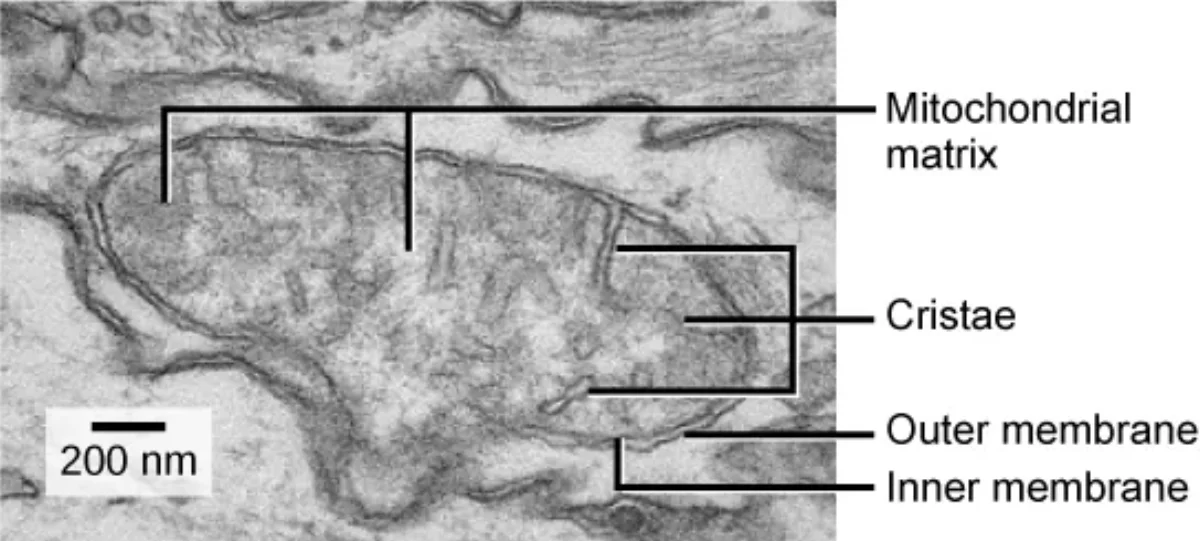
Mitochondria have a distinctive architecture:
- Outer membrane - smooth, contains pores (porins) that allow small molecules to pass freely
- Inner membrane - highly folded into structures called cristae. These folds dramatically increase the surface area available for the enzymes of the electron transport chain (ETC) and ATP synthase. The inner membrane is impermeable to most ions and polar molecules - this is critical, because it allows the buildup of a proton gradient.
- Intermembrane space - the gap between the outer and inner membranes. Protons (H+) are pumped into this space by the ETC, creating the electrochemical gradient that drives ATP synthesis.
- Mitochondrial matrix - the innermost compartment. Contains mitochondrial DNA, mitochondrial ribosomes, and the enzymes of the citric acid cycle (Krebs cycle) and fatty acid beta-oxidation.
Mitochondria as Semi-Autonomous Organelles
Here is something remarkable: mitochondria have their own circular DNA, their own 70S ribosomes (the same size as bacterial ribosomes, not eukaryotic 80S), and they replicate by binary fission - just like bacteria. They even have a double membrane, with the inner membrane resembling a bacterial plasma membrane.
This is not a coincidence. It is evidence for one of the most important theories in biology.
Mitochondria and Apoptosis
Mitochondria are not just about making energy - they are also key players in apoptosis (programmed cell death). When a cell receives the signal to die, the mitochondrial outer membrane becomes permeable, releasing cytochrome c into the cytoplasm. Cytochrome c triggers a cascade that systematically dismantles the cell from the inside. This dual role - sustaining life with ATP and initiating death through apoptosis - makes mitochondria one of the most important organelles in biology.